
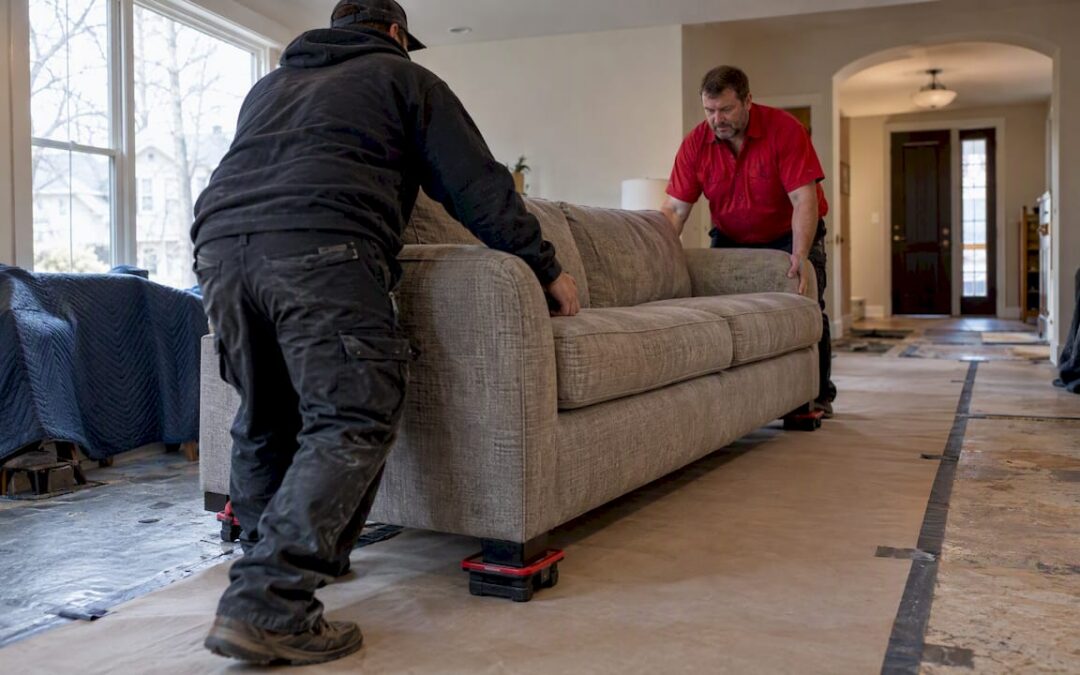
Most professional flooring crews will move ordinary furniture, either as part of the installation price or for an added fee, but nearly all of them draw the line at oversized or specialty items. Costs and coverage vary by company, so ask about both before signing anything. The National Wood Flooring Association and curing guidance from Pacmat both stress getting this scope in writing, and crews like ours build it into every estimate.
TL;DR:
- Most crews do not move oversized or fragile items like pianos, safes, or antiques, so scheduling specialty movers beforehand is advised.
- Furniture moving costs can range from included in the estimate to hourly rates or flat fees; always request a detailed, written quote specifying covered items.
- Proper staging and protection tools are essential, with items moved to adjoining rooms or staging areas before flooring installation begins.
- Light traffic on new floors can often resume within 24 hours for floating floors, but heavier furniture usually requires a curing period of up to three days.
- Preparing your space by measuring access points, clearing surfaces, and photographing items speeds up work and reduces the risk of damage.
Table of Contents
- What furniture installers typically move
- What installers usually will not move and why
- How furniture moving is usually billed
- How crews move and protect furniture on the job
- A room-by-room checklist before installers arrive
- When to put furniture back after installation
- How we handle furniture on real flooring jobs
- An installer’s take on what homeowners miss
- Get an estimate that covers furniture moving
- FAQ
- Sources
What furniture installers typically move
Flooring crews generally handle the everyday pieces that fill a living room or bedroom. That means sofas, armchairs, coffee tables, and dressers, along with bed frames that can be broken down quickly and reassembled afterward. Heavier case goods usually get shifted within the room rather than carried out entirely, since moving them twice wastes time on the job.
A typical workflow looks like this:
- Living room furniture gets slid to one side while that section is installed, then returned once the floor cures enough for light use.
- Bedroom furniture, including dressers and nightstands, moves to a cleared corner or an adjoining room.
- Dining tables and chairs get grouped and relocated to a kitchen or hallway that is not part of that day’s work.
Crews sequence rooms so finished areas are not blocked by furniture waiting to be reset, which keeps the job moving without double handling.
What installers usually will not move and why
Some items sit outside the scope of a standard installation crew, no matter how experienced the team is. Pianos, pool tables, gun safes, large aquariums, waterbeds, and antique furniture with fragile joinery fall into this category, along with full-size appliances that have not been disconnected from water or gas lines.
- Pianos and pool tables require specialized rigging and dedicated movers trained for their weight distribution.
- Safes and waterbeds pose injury and property risks that most contractor insurance policies exclude.
- Antiques with loose joints or old finishes can be damaged by standard moving techniques, even careful ones.
Pro Tip: Schedule a specialty mover for oversized or high-value items a day or two before your flooring crew arrives, so nothing holds up the installation.
How furniture moving is usually billed
Pricing for this service is not standardized across the flooring industry, which is exactly why it causes confusion. Some installation quotes include basic furniture moving at no extra charge. Others itemize it as a flat fee per room, and some charge an hourly rate for the crew’s time. A smaller number of contractors exclude it entirely and expect homeowners to clear every room themselves.
- Ask for a written estimate that names “furniture moving” explicitly, not a vague line like “may include additional services.”
- Confirm whether the fee covers reassembly of disassembled items like bed frames.
- Watch for contracts that leave moving costs open-ended; a fixed fee or hourly cap protects you from surprises.
Our flooring services page walks through what typically gets included in a Leonardo’s Flooring Corp quote, so you know what to expect before the crew shows up.
How crews move and protect furniture on the job
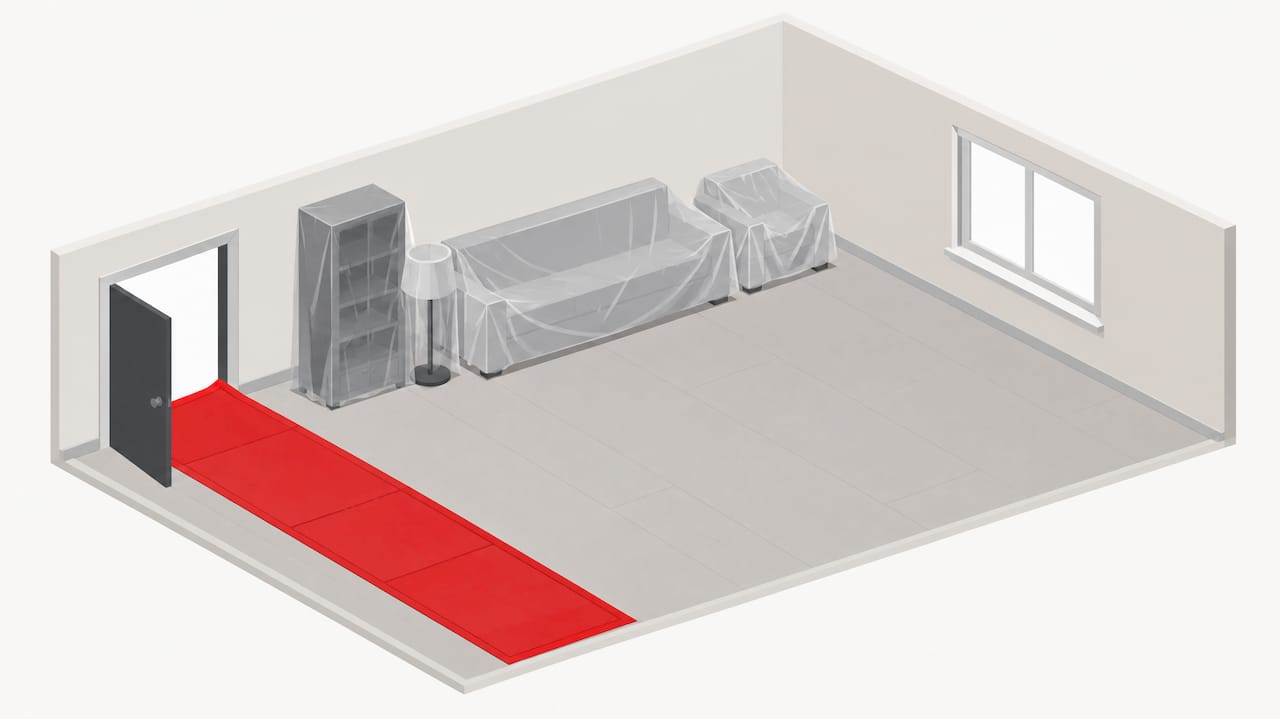
Professional crews rely on a handful of tools to move furniture without scratching floors or straining backs: furniture sliders, moving blankets, felt leg caps, and stair runners for anything going up or down a level. Floor protection boards get laid down in high-traffic paths before any heavy item crosses a finished surface.
A typical sequence looks like this:
- Clear a path and secure loose items, cords, or small hardware before anything gets lifted.
- Move furniture to a staged area, usually an adjoining room or a covered section of garage.
- Complete the flooring work in the cleared room.
- Return furniture once the floor can safely bear weight, then reassemble anything that was taken apart.
Before hiring, ask about liability limits and the claims process if something gets damaged. Light foot traffic is often allowed sooner than full furniture weight is, according to curing guidance from Pacmat, which separates walking on a new floor from loading it with heavy pieces right away.
A room-by-room checklist before installers arrive
A little prep work on your end speeds up the job and lowers the odds of something getting damaged. Start a few days ahead rather than the morning of.
General tasks for the whole house:
- Measure doorways and hallways so the crew knows what fits through without disassembly.
- Clear small items, picture frames, and lamps off every surface in the work area.
- Unplug electronics and photograph the wiring before disconnecting anything complicated.
- Empty dresser and cabinet drawers so furniture is lighter and easier to move safely.
- Label hardware bags for anything that gets taken apart, like bed frames or shelving units.
Room-specific notes:
- Kitchen: clear countertops, move small appliances off the floor, and confirm with your installer whether built-in appliances need to be disconnected first.
- Bedrooms: empty dressers and nightstands, strip mattress covers if the bed frame is coming apart.
- Living areas: unmount wall-hung TVs or shelving if they sit near the work zone, and clear floor lamps and rugs.
- Bathrooms and closets: remove rugs, bins, and anything stored directly on the floor.
Pro Tip: Take photos of each room before the crew arrives, especially anything with existing wear, so there is a clear record if a damage question comes up later.
Finish these tasks the night before installation starts. Crews can typically shift furniture already staged in the room, but they are not set up to do a full packing job, so the lighter the load on arrival, the faster things move.
When to put furniture back after installation
Timing depends heavily on the flooring type and the adhesives or finishes used. As a general rule, Pacmat’s guidance recommends waiting at least a day after completion before allowing any traffic, and heavier adhesives can call for up to three days before full furniture loads return.
- Floating laminate or vinyl plank: usually ready for light traffic within a day, since there is no wet adhesive or finish to cure.
- Glue-down vinyl or tile: often needs the fuller 48 to 72 hour window before heavy furniture goes back.
- Site-finished hardwood: finish coats commonly need one to three days between coats, plus a final cure period before heavy pieces are reset.
Our floating floor guide covers staging specifics for that installation type. Always confirm the exact window with your installer and the product manufacturer, since formulas and finishes vary.
How we handle furniture on real flooring jobs
We build furniture handling into the estimate rather than leaving it as an afterthought. We install hardwood, laminate, vinyl, and tile flooring, along with subfloor preparation, epoxy coatings, staircases, and finish carpentry like baseboards and quarter-round trim, and we tailor the plan to each project’s size, budget, and timeline.
Three questions worth asking any crew before work begins:
- Is furniture moving included in the quote, or billed separately?
- Which specific items are excluded from the crew’s scope?
- What is the damage and insurance procedure if something goes wrong?
Get the answers in writing, and photograph valuable or fragile items before the crew starts. Our hardwood installation guide covers other prep steps worth reviewing alongside this one.
An installer’s take on what homeowners miss
Two small habits save more headaches than almost anything else on moving day. First, empty your dresser drawers before the crew arrives. A dresser full of clothes and books is heavier and more likely to tip or strain someone’s back during a short carry. Second, label small hardware and photograph electronics wiring before anything gets disconnected. It takes five minutes and prevents a frustrating search for a missing screw or a mystery cable later.
— Jim
Get an estimate that covers furniture moving
If you would rather hand the whole job, furniture and all, to a crew that plans for it upfront, we offer hardwood, laminate, vinyl, tile, and epoxy flooring installation, along with subfloor prep, staircases, and finish carpentry.

Every written estimate we provide can include furniture-moving scope on request, naming which items are covered and which ones you will need to handle separately. If your project also touches other trades, coordinating with a bathroom remodeling contractor ahead of time keeps schedules from colliding. Visit our flooring installation page to request a written estimate that spells out furniture handling before your project starts.
FAQ
Do you have to move all your furniture for flooring installation?
Not always. Most crews move standard furniture like sofas, beds, and dressers as part of the job, but oversized or specialty items such as pianos and safes usually need to be removed beforehand or handled by a specialty mover.
How do floor installers move furniture?
Crews typically use furniture sliders, moving blankets, and floor protection boards to shift items to a staged area, like an adjoining room, before completing the work and returning everything once the floor can bear weight.
What should I do with furniture during floor replacement?
Clear small items and empty drawers before the crew arrives, and confirm with your installer which larger pieces they will relocate versus which ones you need to move yourself or have hauled by a specialty mover.
How long should I wait after hardwood installation to move furniture back in?
Site-finished hardwood commonly needs a cure period between finish coats and before furniture returns, with Pacmat’s guidance pointing to at least 24 hours for light traffic and longer for full furniture loads. Always confirm the exact timeline with your installer, since finish products vary.