
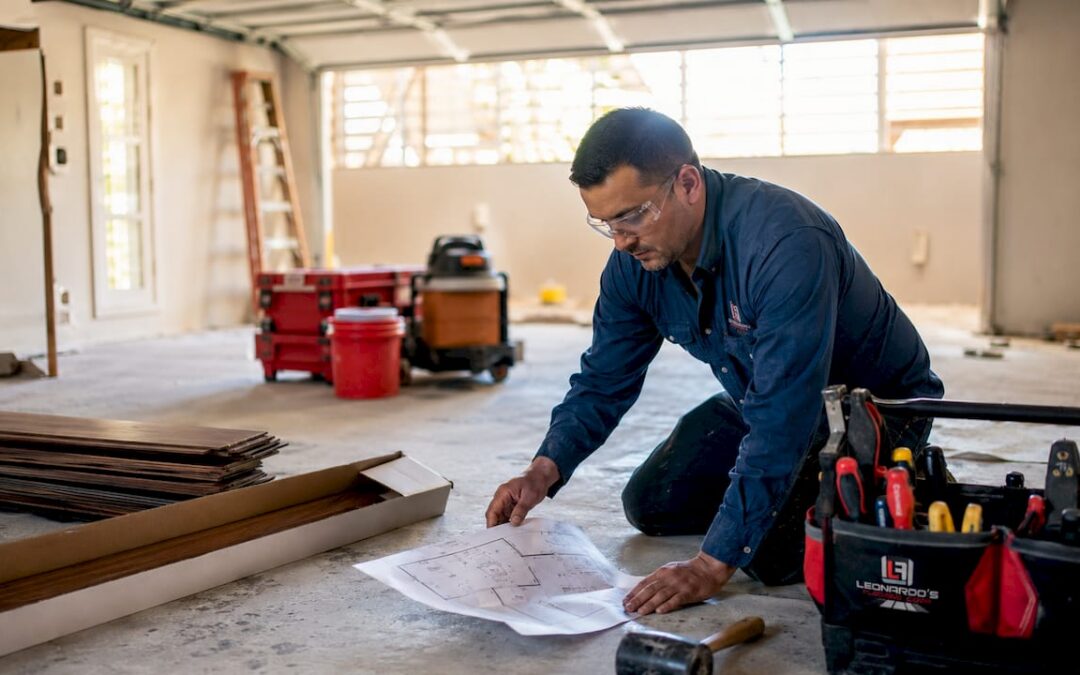
A floor installation subcontractor is a specialized trade contractor hired to perform flooring work within a construction project, operating under a general contractor’s oversight and focused exclusively on the installation scope. Most homeowners and property managers encounter this role without fully understanding it, which leads to misaligned expectations, scope disputes, and costly surprises. Knowing what a flooring subcontractor does, what they are responsible for, and how to hire one correctly protects your project from the most common and expensive finish-phase problems.
What is a floor installation subcontractor and how do they differ from a general contractor?
A floor installation subcontractor, also called a flooring sub or trade contractor, is a business or individual contracted specifically to install flooring materials. The general contractor manages the overall project schedule, permits, and budget, while the flooring sub focuses entirely on the defined installation scope. This division of labor is the foundation of how most residential and commercial construction projects are organized.
The distinction matters in practice. A general contractor coordinates plumbers, electricians, painters, and flooring crews. The flooring subcontractor answers to the general contractor, not directly to the property owner, though direct-hire arrangements do exist on smaller residential jobs. Understanding flooring contractor roles helps you know who to call when something goes wrong and who holds liability for what.
Licensing requirements vary by state. In Colorado, flooring contractors must hold a valid business license and carry appropriate insurance. Verifying these credentials before any contract is signed is not optional. It is the baseline for protecting your investment.
How flooring subcontractors fit into construction project workflows
Flooring installation sits near the end of the construction sequence, which makes the flooring sub one of the last trades on site. That position creates pressure. Every delay from predecessor trades, including drywall, painting, and HVAC, compresses the flooring sub’s schedule. Flooring installation requires predecessor trades to complete their work before flooring begins, because foot traffic, dust, and moisture from other trades damage installed floors.
The flooring subcontractor’s position in the project hierarchy involves several key coordination points:
- Scope of work agreement: The flooring sub receives a defined scope from the general contractor, specifying materials, areas, installation methods, and completion dates.
- Submittal process: Before work begins, the sub submits product data sheets, samples, and installation method statements for approval.
- Predecessor trade sign-off: The sub documents site conditions, including moisture readings and subfloor flatness, before accepting the substrate.
- Sequencing coordination: The sub schedules around other active trades to avoid damage to freshly installed floors.
- Punch list and closeout: After installation, the sub participates in inspections and addresses any deficiencies before final payment.
General contractors approve sequences and verify permits, but the flooring sub owns the technical execution. That boundary is where most disputes begin when it is not clearly written into the contract.
Key responsibilities and specialized skills of flooring subcontractors
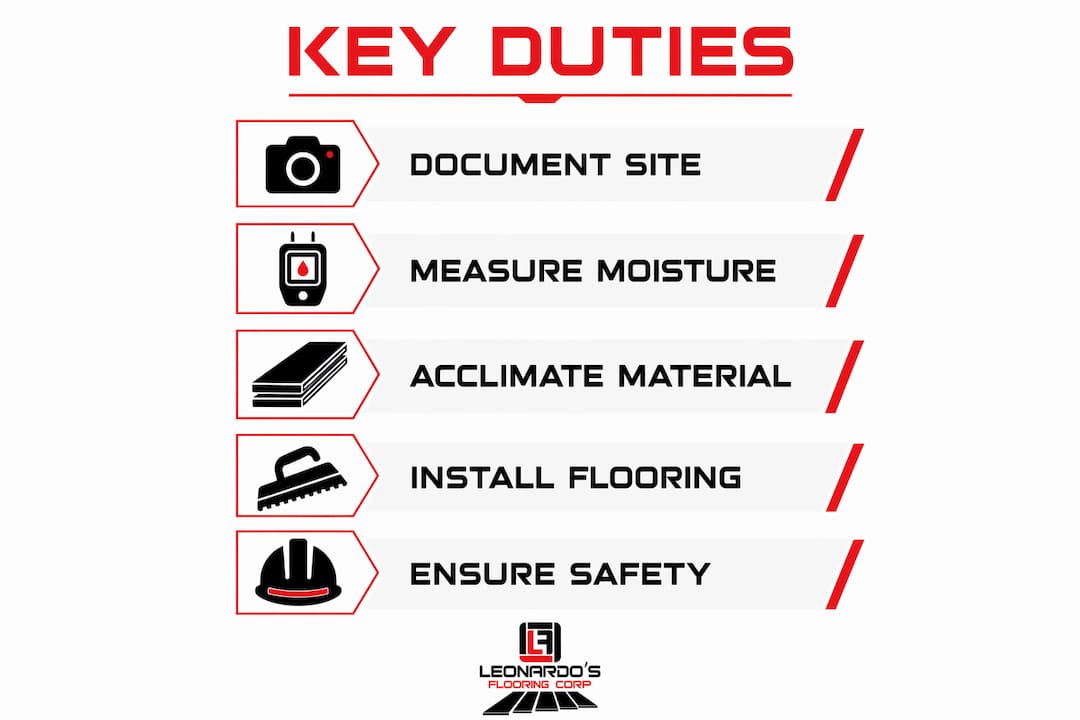
Flooring subcontractors carry a specific set of technical responsibilities that go well beyond simply laying material. Material acclimation, site condition documentation, and strict adherence to manufacturer guidelines are all standard duties. Skipping any one of them can void a manufacturer’s warranty and leave the sub liable for replacement costs.
Technical duties on every project
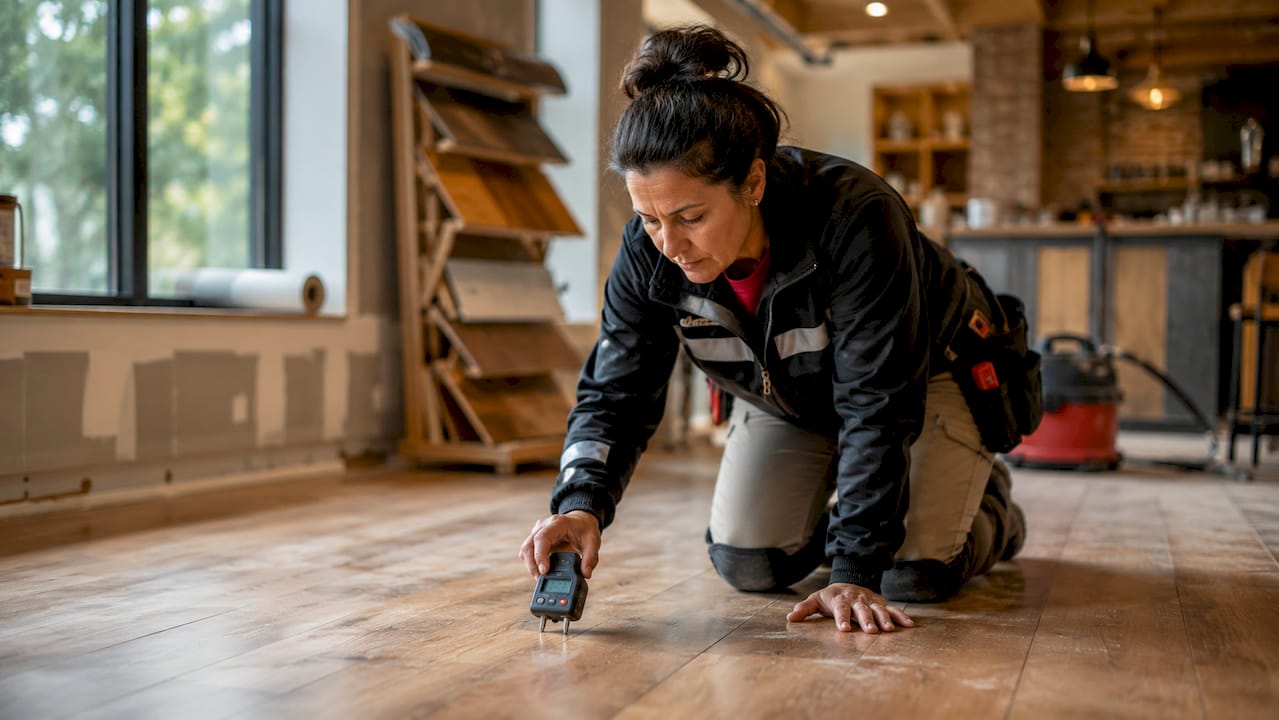
Site condition documentation is the first line of defense. Before installation starts, the sub measures moisture levels in the subfloor using methods compliant with ASTM F2170 for concrete slabs. If readings exceed the manufacturer’s threshold, the sub issues a formal rejection, which triggers a mandatory scheduling pause. This procedural step protects both the warranty and the sub’s legal standing.
Material acclimation is equally non-negotiable. Hardwood flooring, for example, must sit in the installation environment for a defined period so the wood reaches equilibrium moisture content with the space. Skipping acclimation causes cupping, gapping, and buckling after installation. Flooring specialists bring trade-specific expertise in acclimation and moisture thresholds that general contractors or handymen typically lack.
Specialized tools define the quality of the result. Flooring subs use pneumatic nailers, laser levels, tile wet saws, and epoxy mixing equipment that most general contractors do not own or know how to operate correctly. These tools, combined with daily hands-on experience, produce results that meet manufacturer certification requirements for warranty coverage.
Safety and regulatory compliance round out the responsibility list. Flooring subs must follow OSHA standards for dust control, chemical handling (particularly with adhesives and epoxy coatings), and personal protective equipment. On commercial projects, this compliance is verified through OSHA 300 logs and safety program documentation.
Pro Tip: Ask any flooring subcontractor for their ASTM F2170 moisture test results before they begin installation. A professional will have this documentation ready. If they do not, that is a red flag.
Common flooring types each carry unique installation challenges:
- Hardwood: Acclimation, nail spacing, and expansion gap requirements
- Laminate: Underlayment selection and locking joint integrity
- Vinyl (LVP/LVT): Subfloor flatness tolerance within 3/16 inch over 10 feet
- Tile: Mortar bed consistency, grout joint alignment, and lippage control
- Epoxy coatings: Surface profile preparation per ICRI CSP standards and pot life management
How to hire a flooring subcontractor: what to verify before signing
Hiring the right flooring sub requires a structured vetting process, not a gut check. Industry best practices call for verifying active insurance with at least $1 million per occurrence and $2 million aggregate general liability coverage, plus workers’ compensation. These minimums protect you from liability if a worker is injured on your property or if the installation causes damage.
Follow this sequence when evaluating candidates:
- Verify licenses and insurance. Request certificates of insurance directly from the sub’s insurer, not from the sub. Confirm the policy is active and the coverage limits meet your project requirements.
- Review the Experience Modification Rate (EMR). An EMR below 1.0 indicates a safer-than-average safety record. Anything above 1.2 warrants a direct conversation about their safety program.
- Request OSHA 300 logs for the past three years. These logs reveal recordable injuries and near-misses. A clean log is a strong signal of professional site management.
- Check financial references and lien history. A sub with unresolved liens or poor payment history to suppliers creates risk for your project. Suppliers may stop delivering materials mid-job.
- Review past projects and references. Ask for three completed projects similar in scope and material type. Call the references and ask specifically about schedule adherence and punch list response time.
- Evaluate the proposed contract scope. A professional sub provides a detailed written scope that specifies materials, installation methods, exclusions, and warranty terms. Vague scopes cause disputes.
Pro Tip: Request a copy of the sub’s manufacturer certification for the specific flooring product you are installing. Certified installers are required for many warranty claims. Without certification, your warranty may be void before the floor is even finished.
Understanding subfloor preparation responsibilities is also part of the vetting conversation. Ask explicitly whether substrate prep is included in the bid or excluded.
Common scope gaps in flooring subcontracts and how to avoid them
The largest source of finish-phase change orders in construction projects is unclear substrate preparation responsibilities. When the subcontract does not explicitly assign grinding, leveling, crack repair, and moisture remediation, those tasks become expensive surprises billed as change orders.
The table below shows the most common scope gaps and the consequences of leaving them undefined.
| Scope Item | When Undefined | When Clearly Assigned |
|---|---|---|
| Substrate grinding and leveling | Becomes a change order dispute mid-project | Included in bid, priced and scheduled upfront |
| Moisture testing and remediation | Sub refuses responsibility; delays mount | Assigned to sub or GC with clear ASTM F2170 standard |
| Cove base and transition strips | Neither party installs them; punch list grows | Ownership specified by material type and location |
| Warranty compliance documentation | Manufacturer denies claims; owner bears cost | Sub provides submittal package and installation records |
| Sequencing with predecessor trades | Flooring damaged by active trades; rework required | Coordination protocol written into subcontract |
Flooring scope gaps in substrate prep, moisture remediation, and transition strip ownership are the leading causes of disputes and warranty failures. Addressing them before bid day eliminates the most common sources of project conflict.
A well-structured subcontract translates a bid into enforceable obligations by specifying timing, submittal formats, sequencing, and scope definition. Without that structure, finish problems become site superintendent emergencies rather than subcontractor responsibilities. Pre-construction deliverables such as blocking specifications, submittal packages, and installation method statements are contractual prerequisites that protect the sub’s schedule and claims rights.
Key Takeaways
A floor installation subcontractor is a trade specialist whose value depends entirely on clear scope definition, verified credentials, and documented site conditions before work begins.
| Point | Details |
|---|---|
| Defined role | A flooring sub handles installation only; the general contractor owns schedule, permits, and budget. |
| Credential verification | Confirm $1M/$2M liability insurance, workers’ comp, EMR below 1.0, and OSHA 300 logs before hiring. |
| Site documentation | Moisture testing per ASTM F2170 and subfloor flatness checks must happen before any material goes down. |
| Scope clarity | Assign substrate prep, moisture remediation, and transition strips explicitly in the subcontract to prevent change orders. |
| Manufacturer certification | Certified installers are required for warranty coverage on most hardwood, tile, and epoxy products. |
Why I think most flooring problems start before the first board goes down
After years of working on flooring projects across Denver, I have seen the same pattern repeat. The floor fails, the owner blames the material, and the real cause turns out to be a moisture problem that was never tested or a subfloor that was never leveled. The flooring subcontractor gets blamed, but the subcontract never assigned those tasks to anyone.
The uncomfortable truth is that most flooring disputes are contract disputes in disguise. A skilled flooring sub can install hardwood floors that last 50 years. The same sub, working from a vague scope with no substrate prep assignment, will produce a floor that fails in two years and a legal argument that lasts longer than that.
Specialized flooring subcontractors bring something a general contractor cannot replicate: daily, material-specific experience. They know how Denver’s altitude and dry climate affect hardwood acclimation. They know which epoxy systems require ICRI CSP 3 surface profiles and which tolerate CSP 1. That knowledge does not come from a manual. It comes from doing the work every day.
My advice is direct. Hire a specialist, write a tight scope, and document site conditions before work starts. Those three steps prevent the vast majority of flooring failures I have seen in this industry.
— Jim
Flooring installation services from Leonardosflooringcorp
Leonardosflooringcorp has served the greater Denver area for over 10 years as a trusted flooring specialist and Home Depot Contractor. Whether you are a homeowner updating a single room or a property manager coordinating a full commercial renovation, the team brings the trade-specific expertise that protects your investment from day one.

From hardwood floor installation to laminate, vinyl, tile, and epoxy coatings, every project includes proper site documentation, moisture testing, and manufacturer-compliant installation. With 125+ five-star reviews and a commitment to honest, tailored service, Leonardosflooringcorp delivers results that hold up. Contact the team today for a consultation or project quote.
FAQ
What does a flooring subcontractor do on a job site?
A flooring subcontractor handles all installation tasks within their defined scope, including material acclimation, site condition documentation, and the physical installation of flooring materials. They report to the general contractor and are responsible for meeting manufacturer guidelines and safety standards.
How is a flooring subcontractor different from a floor installation contractor?
The terms are often used interchangeably, but a flooring subcontractor specifically works under a general contractor on a larger project, while a floor installation contractor may work directly with a homeowner or property manager on a standalone job.
What insurance should a flooring subcontractor carry?
A flooring subcontractor should carry at least $1 million per occurrence and $2 million aggregate in general liability insurance, plus active workers’ compensation coverage. Requesting certificates directly from the insurer confirms the policy is current.
What is the most common cause of flooring subcontract disputes?
Unclear substrate preparation responsibilities are the leading cause of finish-phase disputes and change orders. Assigning moisture testing, leveling, and crack repair explicitly in the subcontract prevents the majority of these conflicts.
Do flooring subcontractors need to be manufacturer certified?
Yes, for most hardwood, tile, and epoxy flooring products, manufacturer certification is required to validate warranty coverage. Hiring a certified installer protects you if a warranty claim becomes necessary after installation.