
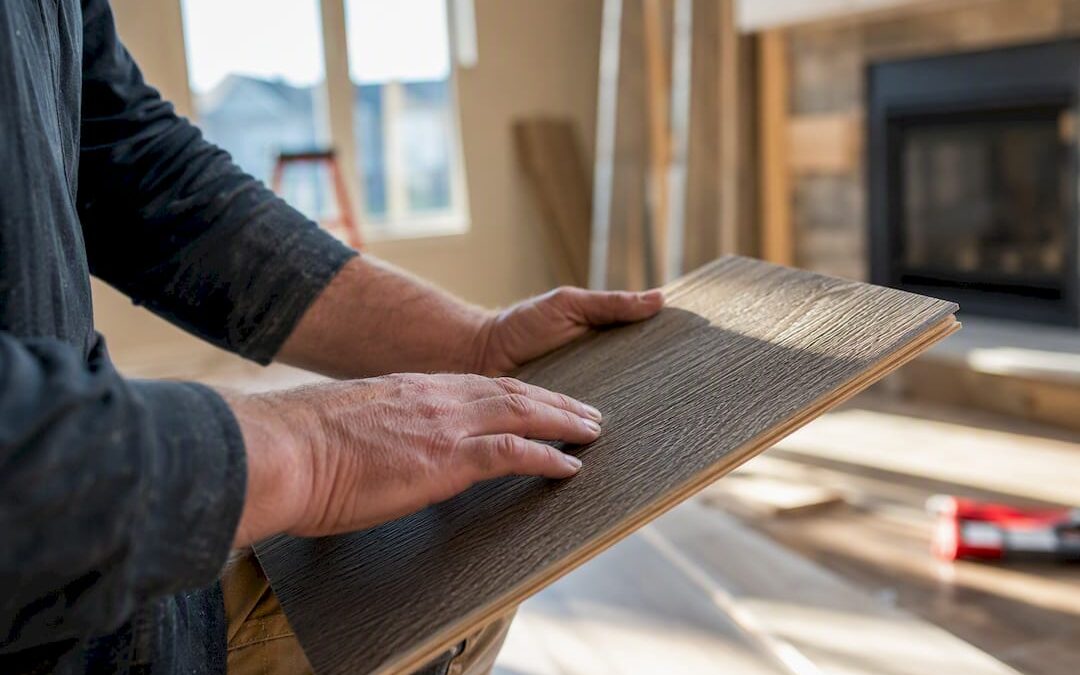
The most reliable way to cut indoor VOCs from a new floor is to combine a certified low-emitting surface material with certified low-VOC adhesives and underlayment, then run a short ventilation plan after installation. Look for FloorScore®, GREENGUARD, or CRI Green Label Plus on both the flooring and every installation product, not just the box it came in. Skip ahead for material-by-material picks, a verification checklist, and what to ask your installer before signing a contract.
TL;DR:
- Ensuring low VOC emissions requires certified products and verified adhesives, with certification standards like FloorScore® or GREENGUARD on every installation component.
- Certification labels alone are unreliable; demand detailed product data sheets, SDS documentation, and SKU-specific lab reports for all materials used.
- Post-installation off-gassing peaks within the first 24 to 72 hours, so proper ventilation, window cycling, and air filtration are crucial during this period.
- Water-based adhesives and factory-finished flooring significantly reduce VOC risks compared to solvent-based adhesives and site-finished surfaces.
- Homeowners should prioritize contractor accountability by requesting emissions data and certification verification before installation begins.
Table of Contents
- Low VOC Flooring Denver Homeowners Should Know About
- How Do You Verify a Low-VOC Flooring Claim?
- The Installation Materials That Usually Cause the Problem
- What to Expect After Installation: Ventilation and Timing in Denver
- Questions to Ask Before You Hire an Installer
- How Leonardo’s Flooring Corp Handles Low-VOC Installations
- What Actually Matters Here (And What Doesn’t)
- Get a Low-VOC Flooring Consultation in Denver
- Certifications and Resources Worth Checking
- Sources
Low VOC Flooring Denver Homeowners Should Know About
Not every “eco” floor performs the same once it’s actually on your subfloor. Here’s what each major category means for a Denver installation, and where the VOC risk usually hides.
Solid and engineered hardwood are strong choices when factory-finished. Curing happens at the plant under controlled ventilation, which means less off-gassing hits your living room air after installation, according to FloorChemDepot’s analysis of VOC sources in flooring. Site-finished wood, by contrast, cures in your house, so ask specifically for water-based polyurethane finishes and formaldehyde-free engineered cores.
Vinyl and LVT can be excellent low-emission performers, but only when verified. PVC-based products can release compounds like phenol and 2-ethylhexanol depending on formulation, according to a case study on flooring material emissions. Don’t take “low VOC” on faith here. Confirm FloorScore or GREENGUARD certification for the specific SKU you’re buying.
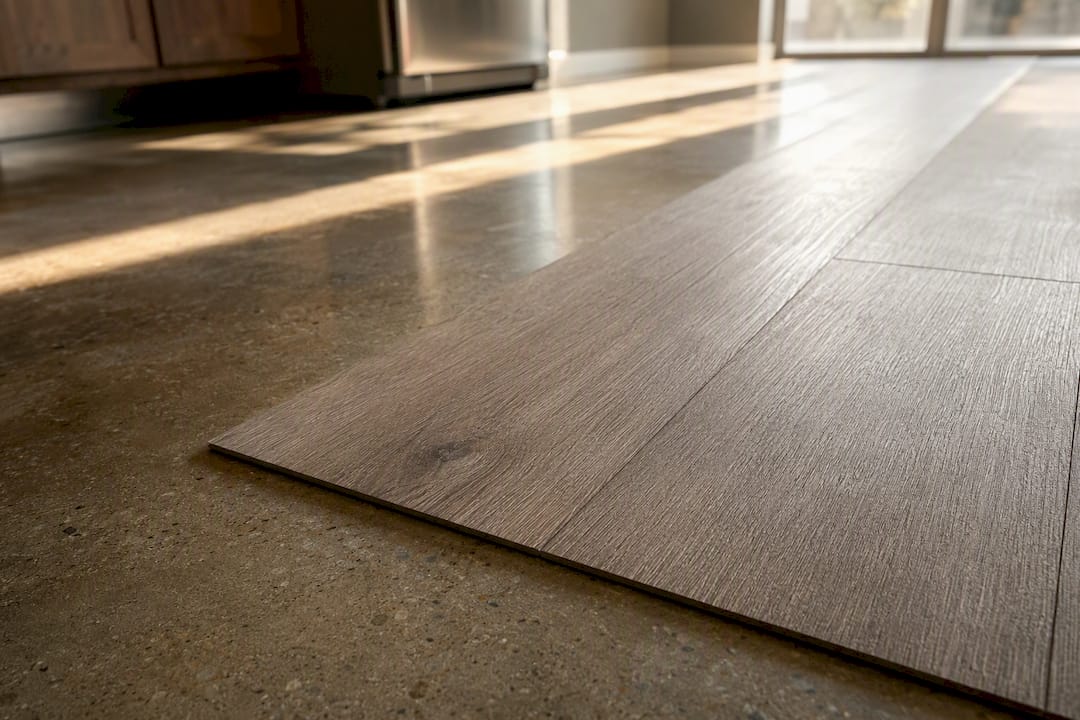
Laminate should carry CARB Phase 2 compliance or an equivalent low-formaldehyde core rating, since the core board (not the wear layer) is usually the emissions concern.
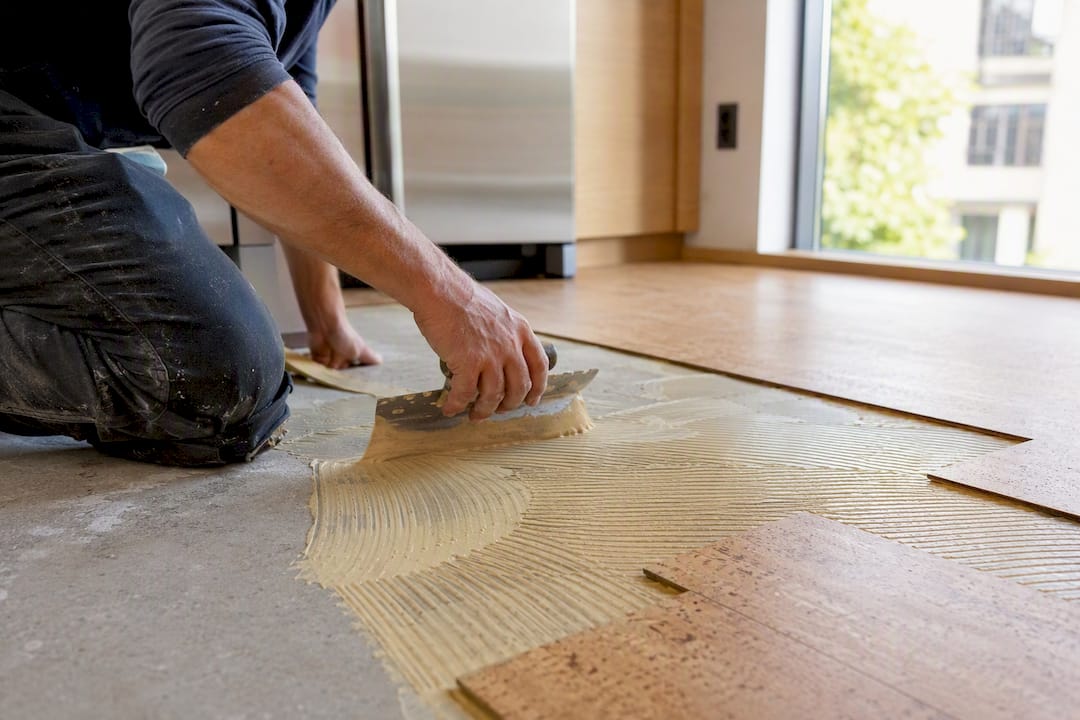
Cork and linoleum are naturally low in VOCs as raw materials, but the adhesive underneath can undo that advantage fast. Confirm the adhesive is certified separately.
Carpet needs CRI Green Label Plus certification on the carpet, the pad, and the adhesive. Carpet fiber can also act as a sorbent, absorbing and slowly releasing VOCs from other sources in the room for months.
If you want the simplest low-risk path, floating resilient flooring, cork, and factory-finished wood consistently score lower on real-world air testing than glue-down or site-finished alternatives. Our sustainable flooring options guide breaks down material tradeoffs in more depth if you’re still deciding between categories.
How Do You Verify a Low-VOC Flooring Claim?
Marketing language on a flooring box means almost nothing on its own. A floor labeled “eco-friendly” with no certification number attached is a claim, not a fact, according to Elemental Green’s reporting on misleading low-VOC labels.
Here’s the verification order that actually holds up:
- Check the certification. FloorScore® tests finished hard-surface flooring, adhesives, and underlayments for 35 individual VOCs using the California Section 01350 standard, and it’s accepted by LEED, WELL, CHPS, and Green Globes.
- Pull the product data sheet. It should list TVOC in µg/m³ or mg/m³, formaldehyde content, and the specific test method (CA Section 01350 or CDPH v1.2).
- Request the SDS for every component, not just the flooring itself, including adhesive and underlayment.
- Confirm the SKU, not the product family. A manufacturer that can’t produce a dated lab report for your exact item has nothing to back the claim.
Statistic to remember: Indoor VOC concentrations run 2 to 5 times higher than outdoor air on average, and can spike up to 1,000 times higher during activities like installation. That gap is exactly why certified products and ventilation matter more indoors than the label alone suggests.
One more distinction worth knowing: chamber tests (used for certification) measure emissions in controlled lab conditions, while in-situ measurements happen in an actual occupied room. Real homes tend to show faster VOC decay than chamber data predicts, but ventilation rate and material combinations in your specific space still drive the outcome.
The Installation Materials That Usually Cause the Problem
Homeowners obsess over the flooring surface and forget the stuff underneath it. That’s backwards. Adhesives, underlayments, and sealants are frequently the biggest VOC contributor in a new flooring job, according to FCNews’s coverage of adhesive formulations, often outweighing the flooring material itself.
Watch for these high-VOC red flags in a proposed materials list:
- Solvent-based adhesives instead of water-based formulations
- Oil-based site-applied finishes on wood floors
- Seam sealants with no certification listed
- Underlayment sold generically with no emissions data
Water-based adhesives and factory-applied finishes are the safer default across nearly every flooring category. When a full system, meaning flooring plus adhesive plus underlayment, carries matching certification, you’re getting the closest thing to a guarantee this market offers.
Pro Tip: Ask your contractor for a full bill of materials with emissions data before any work starts, not after. Once the adhesive is troweled onto your subfloor, there’s no verifying what went into the bucket.
What to Expect After Installation: Ventilation and Timing in Denver
Off-gassing is heaviest in the first 24 to 72 hours after installation, which lines up with when most people are tempted to move furniture back in immediately. Don’t. A 2025 in-situ study found that TVOC concentrations declined over roughly 36 hours of real indoor monitoring, with floating flooring showing the lowest emissions and best air quality outcomes of the materials tested. That decline doesn’t mean zero. Trace emissions can persist longer depending on temperature and humidity.
Denver’s dry climate actually works in your favor here, but only if you use it correctly:
- Run your HVAC system’s fresh-air intake setting, if it has one, for the first several days.
- Open windows in timed cycles rather than leaving them shut the whole first week.
- Add a portable air cleaner with an activated carbon filter in the room during the initial off-gassing period.
- Let wood acclimate to your home’s indoor humidity, especially in winter when Denver’s dry air can pull moisture out of solid wood faster than expected. Hold off on rugs and heavy furniture placement for at least a few days.
On cost: certified low-VOC materials themselves usually carry a modest premium over uncertified equivalents, but the bigger cost swing tends to come from installation choices, factory finish versus site finish, or a certified adhesive system versus a standard one, rather than from the certification itself, as explained in this custom home air quality improvements practical guide.
Questions to Ask Before You Hire an Installer
The certification on the box doesn’t matter if the installer swaps in a cheaper adhesive on install day. Vetting the contractor matters as much as vetting the product.
Ask directly:
- Will you use certified adhesives and underlayment, and can you name the certification?
- Can you provide SDS sheets and product data sheets for every material before work begins?
- Do you install factory-finished flooring, or will finishing happen on site?
- What ventilation steps do you follow during and after installation?
Red flags worth walking away from: refusal to provide an SDS, pushback toward solvent-based adhesives because they’re “what we always use,” or vague product names with no manufacturer or SKU attached. Get the materials list, emissions data, and installation warranty in writing before signing anything.
How Leonardo’s Flooring Corp Handles Low-VOC Installations
Leonardo’s Flooring Corp has installed floors across the Denver metro for over 10 years, backed by 125+ five-star reviews from local homeowners and property managers. That track record comes from a consistent process, not guesswork:
- Material vetting against certification standards (FloorScore, GREENGUARD, CRI Green Label Plus) before anything gets ordered
- SDS collection for every adhesive and underlayment component, kept on file for the project
- Certified low-VOC adhesives specified as the default, not the upsell
- A ventilation plan discussed with the homeowner before installation day
Whether the project involves hardwood or vinyl, the materials list gets documented before a single plank goes down.
What Actually Matters Here (And What Doesn’t)
Most advice on this topic still treats “low VOC” as a shopping decision, pick the right brand, read the right label, done. That’s not wrong, exactly. It’s incomplete. The certification on the flooring box tells you almost nothing about what’s happening underneath it, and the installation system, the adhesive, the underlayment, the finish applied on site, is where most of the real exposure risk lives.
The conventional wisdom also oversells the “zero VOC” label as a finish line. It’s a marketing term more often than a lab result, and a floor with a great certification can still off-gas heavily if it’s installed with a bargain-bin solvent adhesive nobody asked about.
If you take one thing from this, prioritize the installer’s accountability over the product’s marketing copy. Ask for the SDS. Ask for the SKU-specific test report. Ask what adhesive they’re planning to use before they show up with it. A homeowner who does that has done more for their indoor air quality than one who spent an extra $2 per square foot chasing a label with no system behind it.
— Jim
Get a Low-VOC Flooring Consultation in Denver
Leonardo’s Flooring Corp handles the certification legwork most Denver contractors skip. We source materials against FloorScore, GREENGUARD, and CRI Green Label Plus standards, collect SDS documentation before ordering, and build a ventilation plan into every project timeline, so you’re not left guessing what went into your subfloor after the crew leaves.

If a healthier indoor air plan matters to your next project, our hardwood floor installation service is a solid place to start for factory-finished, low-emission wood floors, and we handle laminate installation with the same materials-first approach. Request a free estimate and we’ll walk your project through the same verification checklist covered above before any work begins.
Certifications and Resources Worth Checking
For readers who want to verify claims directly: the FloorScore FAQ page explains what the certification tests, EPA’s indoor air quality guidance covers ventilation recommendations, the 2025 in-situ flooring emissions study shows real-world TVOC data, FloorScore’s certification comparison maps programs against LEED and WELL, and CRI’s Green Label Plus page covers carpet-specific standards.
Sources
- Volatile Organic Compounds’ impact on indoor air quality | US EPA
- FloorScore FAQs
- Indoor environmental quality of selected flooring materials (in‑situ study)