
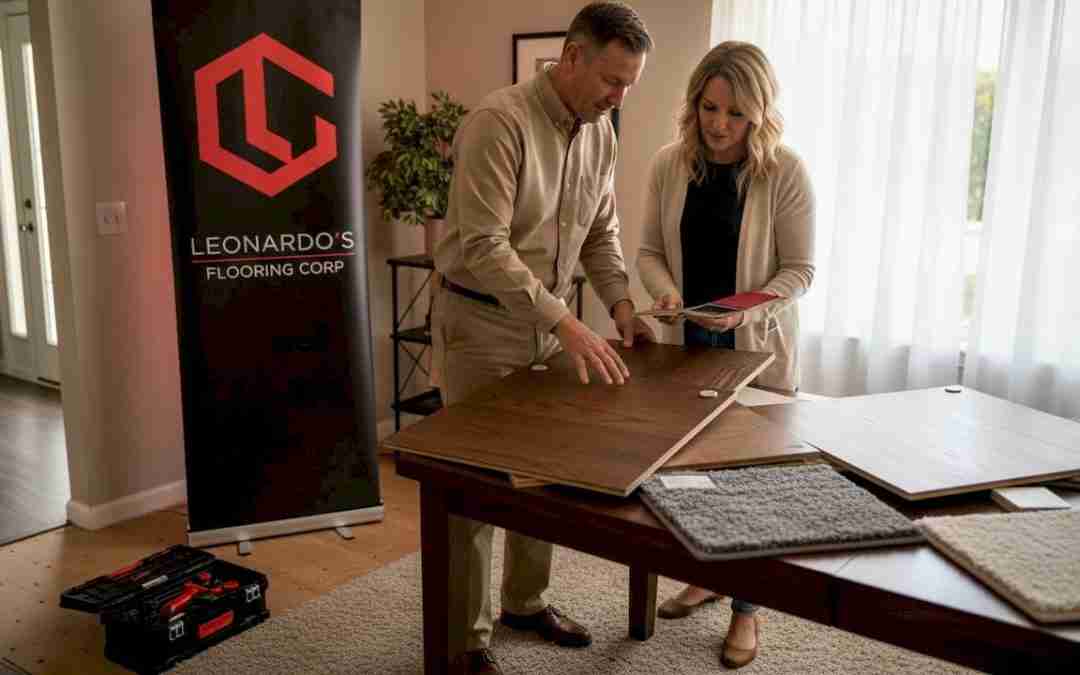
Choosing the right flooring in Arvada is not as simple as picking a style you like from a showroom catalog. The city sits at roughly 5,400 feet, with a semi-arid climate that swings from dry winter cold to intense summer UV exposure, and indoor humidity can plummet below 10% on a January night. These conditions punish floors that were not designed for them. Knowing the best flooring materials for Arvada means understanding how each option handles warping, fading, and moisture before a single plank gets installed. This guide covers exactly that.
Table of Contents
- Key criteria for choosing flooring in Arvada
- Luxury vinyl plank (LVP): durable and moisture-resistant
- Engineered and solid hardwood: natural elegance with climate considerations
- Additional flooring options for Arvada homeowners
- Comparing the best flooring materials for Arvada
- Why tailored flooring choices matter in Arvada’s unique environment
- Expert flooring installation and consultation in Arvada
- Frequently asked questions
Key Takeaways
| Point | Details |
|---|---|
| Climate-specific criteria | Choose flooring that resists Arvada’s dry air, temperature swings, and occasional moisture to avoid warping and damage. |
| Luxury vinyl plank benefits | LVP offers waterproof, durable, and UV-resistant properties ideal for high-traffic and moisture-prone areas. |
| Engineered hardwood suitability | Engineered hardwood provides natural beauty with better moisture stability, especially for basements and kitchens. |
| Consider additional options | Waterproof laminate and porcelain tile are durable alternatives suitable for bathrooms and budget-conscious projects. |
| Professional installation matters | Proper subfloor prep, acclimation, and expert installation ensure long-lasting floor performance in local conditions. |
Key criteria for choosing flooring in Arvada
Before you spend a dollar on materials, you need a clear set of conditions your floor must meet. Arvada’s climate is genuinely demanding, and what works in a humid Southern climate can fail spectacularly here.
Climate and humidity stability top the list. Indoor humidity often dips well below 30% in winter, which causes natural wood to shrink and gap. In summer, brief humidity spikes can push moisture in the other direction, creating a cycle of expansion and contraction that stresses every rigid flooring material. Local flooring pros recommend matching floor material to Arvada’s semi-arid, low-humidity and temperature-swing conditions, favoring hardwood, laminate, and luxury vinyl that resist warping.
UV exposure is another underrated factor. Colorado averages over 300 days of sunshine per year, and south-facing rooms can fade unprotected floors faster than most homeowners expect. UV-resistant wear layers and surface coatings are not a luxury here. They are a practical requirement.
High traffic and pets demand scratch resistance and surface hardness. If you have dogs or host a lot of foot traffic, the wear layer rating of your floor is as important as its looks. You’ll also want to check our flooring care advice to understand how different materials hold up with regular use.
Subfloor conditions in older Arvada homes deserve special attention. Many houses in the area were built in the 1960s and 70s, when subfloor preparation standards were less rigorous. Moisture infiltration and uneven surfaces are common surprises once old flooring gets pulled up.
Key criteria to evaluate before selecting any material:
- Moisture and humidity resistance rating
- UV fade resistance of wear layer or finish
- Scratch and impact hardness (measured by the Janka scale for wood, or mil thickness for vinyl)
- Compatibility with the existing subfloor condition
- Maintenance requirements for your household
Pro Tip: Before buying any flooring material, have your subfloor inspected for moisture content. A $30 moisture meter reading can save you thousands in buckled or warped floors down the road.
Luxury vinyl plank (LVP): durable and moisture-resistant
LVP has become one of the most popular flooring choices Colorado homeowners turn to, and Arvada is no exception. The reason is straightforward: its multi-layer construction is built for exactly the conditions Arvada throws at it.
A quality LVP product consists of a wear layer on top, a printed design layer beneath that, a rigid core (often stone polymer composite, or SPC), and an attached underlayment at the bottom. The wear layer, measured in mils (one mil equals one thousandth of an inch), determines how long the surface resists scratches and scuffs. For high-traffic homes or commercial spaces, look for at least 20 mil. For lower-traffic bedrooms, 12 mil works fine.
LVP is popular in Arvada for its multi-layer construction and ability to handle moisture and traffic, with installation methods tailored to subfloor conditions. You can install it as a floating click-lock floor over most surfaces, or glue it down when subfloor irregularities make floating impractical.
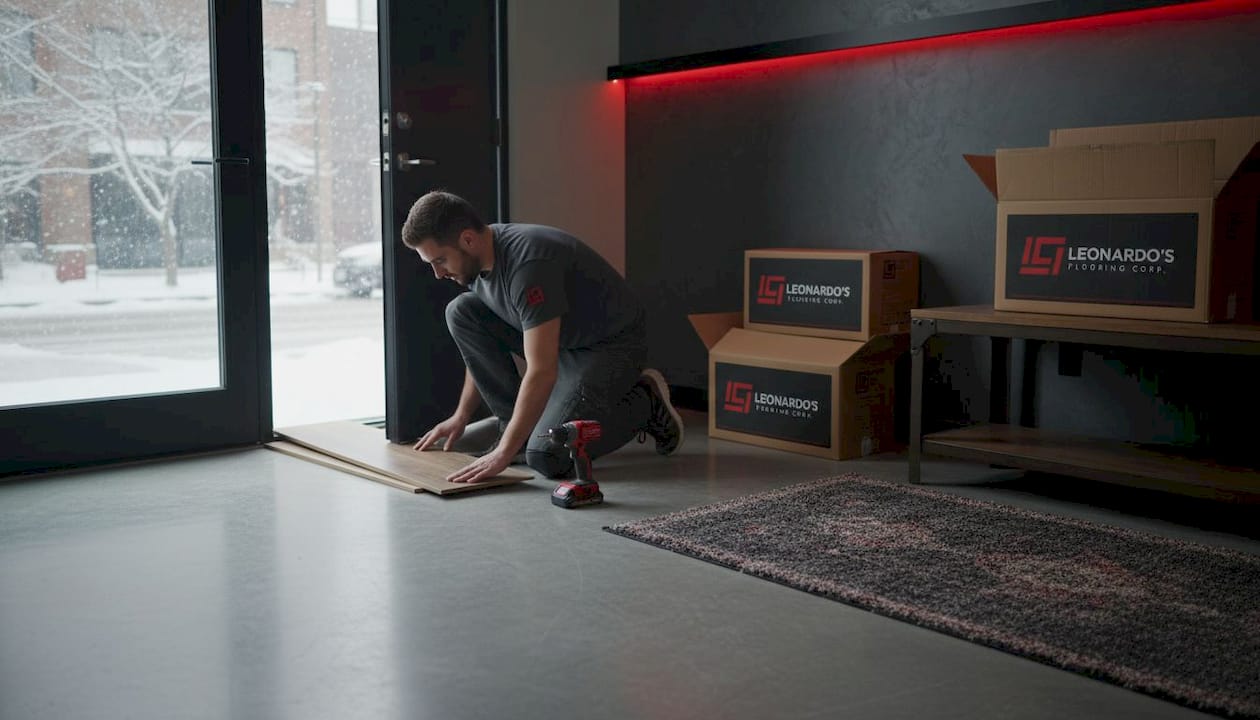
The waterproofing benefit is significant for Arvada’s entryways and mudrooms. Snow melt, slush, and road salt get tracked in from October through March, and high-quality LVP is 100% waterproof and suitable for Colorado’s variable climate, especially in entryways with snow, slush, and grit.
For sun-exposed rooms, choosing UV-resistant vinyl flooring ensures your floor holds its color through years of Colorado sun. Not all LVP products carry UV protection, so confirm this with your supplier before buying.
What makes LVP work well for Arvada properties:
- 100% waterproof core handles snow and moisture at entry points
- Handles subfloor imperfections better than tile or solid hardwood
- Wide width planks replicate the look of real wood convincingly
- Available in vinyl floor options ranging from budget-friendly to premium SPC
- Consider vinyl flooring installation by professionals to ensure correct subfloor prep and locking system engagement
Pro Tip: If you are installing LVP in a below-grade basement, choose an SPC (stone polymer composite) core rather than a basic WPC (wood polymer composite) core. SPC is denser, more dimensionally stable, and handles the temperature swings that come with underground spaces far better.
Engineered and solid hardwood: natural elegance with climate considerations
Hardwood flooring brings warmth and long-term value to any home, but in Arvada, the type of hardwood you choose and where you install it matters enormously.
Engineered hardwood is built with a real wood veneer on top bonded to multiple layers of plywood or high-density fiberboard running in alternating directions. That cross-ply construction is why engineered hardwood is more moisture-resistant and stable for basements and kitchens, while solid hardwood is best for above-grade rooms where moisture can be controlled. It is genuinely the best hardwood flooring option for Arvada spaces that see any humidity variation.
Solid hardwood is a single piece of milled wood, which makes it beautiful and refinishable multiple times over its lifetime. The trade-off is sensitivity to moisture. In Arvada’s dry winters, solid hardwood can develop gaps between boards. This is not a defect. It is a natural response to humidity. Maintaining indoor humidity between 30% and 50% helps prevent wood floor gapping and checking in the Denver metro area. A whole-home humidifier is worth considering if you invest in solid hardwood.
Installation steps that matter for both types:
- Acclimate the wood in the room where it will be installed for at least 3 to 5 days before installation to let it adjust to local temperature and humidity.
- Evaluate the subfloor for moisture content and levelness. A moisture variance of more than 4% between the subfloor and the wood can cause problems.
- Leave expansion gaps of at least 3/4 inch around all walls and fixed objects to allow seasonal movement.
- Use appropriate fasteners or adhesives matched to the specific engineered or solid product and subfloor type.
- Install a vapor barrier on concrete subfloors to block moisture from rising.
You can explore the full range of engineered wood benefits before committing to a specific product, and professional hardwood floor installation ensures those critical steps are handled correctly.
Additional flooring options for Arvada homeowners
Beyond hardwood and LVP, several materials work well depending on your room, budget, and lifestyle. Here is what you need to know about each.
Waterproof laminate has quietly become a strong contender among affordable flooring materials in Arvada. Traditional laminate uses a high-density fiberboard core that absorbs moisture and swells at the edges, making it a poor choice for any room that sees liquid. But waterproof laminates with sealed cores are gaining traction as a strong option in Colorado’s climate over traditional laminates that swell. They look nearly identical to hardwood at a fraction of the price.
Porcelain and ceramic tile excel in bathrooms, laundry rooms, and kitchens. Porcelain tile excels in bathrooms for moisture resistance, durability, and compatibility with radiant heat, which is a meaningful benefit for Colorado winters. The one downside is installation complexity. Tile needs a flat, solid subfloor, and any movement in the subfloor over time can crack grout lines. Visit our tile floor installation page to understand what proper tile prep involves.
Concrete flooring (polished or epoxy-coated) is gaining popularity in open-plan Arvada homes and commercial spaces. It handles temperature extremes well, resists moisture with the right sealant, and can be finished to look industrial, rustic, or modern.
Top options at a glance:
- Laminate flooring: budget-friendly and realistic wood look, but only waterproof versions work in moisture-prone areas
- Porcelain tile: best moisture and stain resistance, ideal for bathrooms and kitchens
- Concrete/epoxy: extremely durable, low maintenance, suits commercial and modern residential spaces
| Material | Moisture resistance | Durability | Avg. cost per sq. ft. | Climate suitability |
|---|---|---|---|---|
| LVP (SPC core) | Excellent | Very high | $3 to $7 | Excellent |
| Engineered hardwood | Good | High | $5 to $12 | Good |
| Solid hardwood | Low to moderate | Very high | $6 to $14 | Moderate |
| Waterproof laminate | Good | Moderate | $2 to $5 | Good |
| Porcelain tile | Excellent | Very high | $4 to $10 | Very good |
| Concrete/epoxy | Very good | Excellent | $3 to $8 | Excellent |
Pro Tip: For Arvada bathrooms with radiant in-floor heating, porcelain tile is your best bet. It conducts heat evenly and tolerates the temperature cycling that can delaminate vinyl or warp wood over time.
Comparing the best flooring materials for Arvada
With so many options in play, a side-by-side view helps clarify which material fits which situation. The SPC core of SPC vinyl offers the highest dimensional stability for Colorado’s wild temperature and humidity swings, making it the top choice for below-grade spaces and high-traffic entryways.
Summary of strengths by material:
- LVP (SPC core): Best overall for moisture-heavy zones, basements, entryways, and commercial spaces. Hardest to damage. Most forgiving on imperfect subfloors.
- Engineered hardwood: Best balance of natural aesthetics and climate resilience. Ideal for living rooms, bedrooms, and above-grade kitchens.
- Solid hardwood: Best long-term investment for above-grade rooms with controlled humidity. Refinishable and beautiful.
- Waterproof laminate: Best budget choice with a realistic wood look for dry-to-moderate moisture areas.
- Porcelain tile: Best for moisture-intensive rooms and radiant heat applications. Least forgiving on uneven subfloors.
- Concrete/epoxy: Best for commercial properties and open-plan modern homes where durability outranks comfort underfoot.
One factor that gets overlooked in most comparison guides: comfort underfoot. Tile and concrete are hard and cold, which can be uncomfortable in living areas even if they are technically durable. LVP with an attached underlayment and engineered hardwood both offer significantly more cushion and warmth. When selecting your material, factor in who uses the space and for how long each day. Browse our flooring installation services to understand the full scope of work involved in any of these options.
Why tailored flooring choices matter in Arvada’s unique environment
Here is what most flooring articles will not tell you: the material itself is rarely the biggest failure point. The installation and the subfloor underneath it are where most Arvada floor problems start.
We have seen beautiful LVP buckle because the installer skipped a vapor barrier on a concrete slab. We have seen solid hardwood develop wide gaps after one winter because it was installed without proper acclimation. Subfloor moisture and vapor barriers are critical variables in preventing buckling and mold, often overlooked in installations. In a city like Arvada, where you have a wide range of home ages and construction types, this matters more than most people realize.
The other thing worth saying plainly: choosing flooring by appearance alone, then picking whoever gives you the lowest installation quote, is one of the most expensive decisions a homeowner can make. A $1 per square foot savings on installation often costs $8 per square foot in repairs or early replacement. Professional assessment of your specific subfloor conditions, room usage, and household needs is what turns a good-looking floor into a floor that actually performs.
Our professional flooring services are built around exactly this kind of site-specific evaluation. We look at what is already there before we recommend anything new.
Expert flooring installation and consultation in Arvada
At Leonardo’s Flooring Corp, we have spent over 10 years installing floors across the Denver metro area, and we know Arvada’s housing stock well. Every project starts with an honest conversation about your space, your budget, and what the floor actually needs to do.
Whether you are looking at hardwood floor installation for a living room renovation, laminate flooring installation to refresh a rental property on a budget, or vinyl flooring installation in a moisture-prone basement, we handle it all with the same attention to subfloor prep, proper acclimation, and quality finish. Our 125+ five-star reviews reflect one consistent commitment: we install floors the right way, the first time.
Frequently asked questions
What is the best flooring for homes in Arvada, CO?
LVP is popular in Arvada for its waterproof and durable properties, and engineered hardwood handles Colorado humidity swings well, making both top choices depending on the room and subfloor conditions.
How does Arvada’s climate affect flooring choices?
Arvada’s semi-arid climate favors flooring that resists warping from low humidity and temperature fluctuations, which eliminates traditional laminate and untreated wood as safe choices for moisture-prone areas.
Is hardwood flooring suitable for Arvada’s basements?
Engineered hardwood is more moisture resistant and practical for basement or below-grade areas in Arvada, while solid hardwood should stay above grade where humidity can be monitored and controlled.
What maintenance tips help protect flooring in Arvada’s climate?
Maintaining proper indoor humidity between 30% and 50%, choosing UV-resistant wear layers, wiping up snow and slush immediately at entryways, and scheduling annual subfloor checks are the most effective ways to extend floor life in Colorado conditions.