
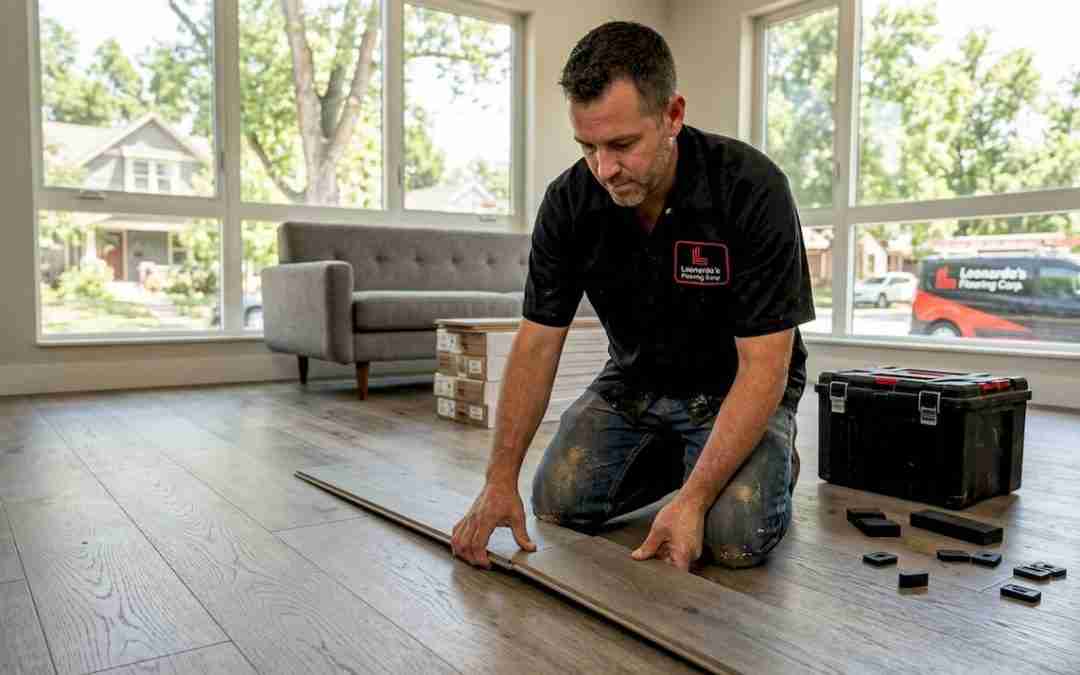
Solid hardwood has long been the gold standard for beautiful floors, but it’s not always the most practical choice for every Denver home. Engineered wood flooring has quietly become the go-to option for homeowners who want the warmth and elegance of real wood without the headaches that come with Colorado’s wild humidity swings and temperature changes. If you’ve been confused about what engineered wood actually is, how it compares to solid hardwood, or whether it’s right for your renovation, this guide breaks it all down clearly so you can make a confident decision.
Table of Contents
- What is engineered wood flooring?
- Engineered wood vs. solid hardwood: Key differences
- Types and styles of engineered wood flooring
- Installation and maintenance tips for Denver homeowners
- Our take: What most Denver homeowners miss about engineered wood flooring
- Get help with your engineered wood flooring project
- Frequently asked questions
Key Takeaways
| Point | Details |
|---|---|
| Engineered wood basics | Engineered wood flooring is made from layers of real wood for durability and design versatility. |
| Great for Denver climate | Engineered wood handles changing temperatures and humidity better than solid hardwood, making it well-suited for Denver homes. |
| Multiple style options | You can choose from a wide range of wood species, finishes, and plank sizes to match your home’s aesthetics. |
| Installation flexibility | Engineered wood suits basements, kitchens, and living areas and offers several installation methods for different subfloors. |
| Professional advice matters | Experienced flooring experts can help you select, install, and maintain engineered wood for lasting results. |
What is engineered wood flooring?
Engineered wood flooring is real wood, but it’s built differently from traditional solid hardwood planks. The structure is what sets it apart. Each plank is made up of multiple layers bonded together under heat and pressure. The top layer, called the wear layer or veneer, is genuine hardwood. Below that sits a core made of high-density fiberboard, plywood, or cross-layered wood. A backing layer at the bottom completes the sandwich, giving the plank stability and resistance to warping.
Engineered wood flooring consists of multiple layers of wood bonded together, which is exactly what makes it more dimensionally stable than a single solid plank. Solid hardwood expands and contracts as moisture levels change. Engineered wood, because of its layered construction, resists that movement far better.
Here’s a quick breakdown of the layer structure:
| Layer | Material | Function |
|---|---|---|
| Wear layer (top) | Real hardwood veneer | Appearance and durability |
| Core | Plywood or HDF | Stability and moisture resistance |
| Backing | Wood or composite | Balance and structural support |
The wear layer thickness matters enormously. It typically ranges from 2mm to 6mm. A thicker wear layer means more sanding cycles over the floor’s lifetime, which extends how long the floor stays beautiful.
Common wood species available in engineered format include:
- Oak (the most popular, works with almost any interior style)
- Maple (lighter tone, great for modern or Scandinavian aesthetics)
- Hickory (bold grain, extremely durable)
- Walnut (rich, dark tones for a luxurious feel)
- Acacia (distinctive grain, excellent for statement floors)
Surface finishes range from high-gloss to matte, wire-brushed, hand-scraped, and smooth. Each finish changes the look and feel dramatically, so it’s worth seeing samples in your actual home lighting before committing.
Pro Tip: Always ask for the wear layer thickness in millimeters before purchasing. Anything under 3mm limits your refinishing options significantly. A 4mm to 6mm wear layer gives you the flexibility to sand and refinish the floor at least once or twice during its lifetime, which can add decades to its usable life.
For professional hardwood floor installation in Denver, the choice of wear layer thickness is one of the first conversations we have with homeowners, because it directly affects the long-term value of the investment.
Engineered wood vs. solid hardwood: Key differences
Both engineered wood and solid hardwood look stunning. Walk into a well-finished room with either product and most people cannot tell the difference just by looking. The real differences show up in performance, cost, and where you can actually install them.
Here’s a direct comparison:
| Feature | Engineered wood | Solid hardwood |
|---|---|---|
| Real wood content | Yes (top layer) | Yes (full plank) |
| Humidity resistance | High | Low to moderate |
| Installation locations | Basements, on concrete | Above grade only |
| Cost (material) | $3 to $10 per sq. ft. | $5 to $15 per sq. ft. |
| Refinishing potential | 1 to 3 times | Multiple times |
| Radiant heat compatible | Usually yes | Rarely |
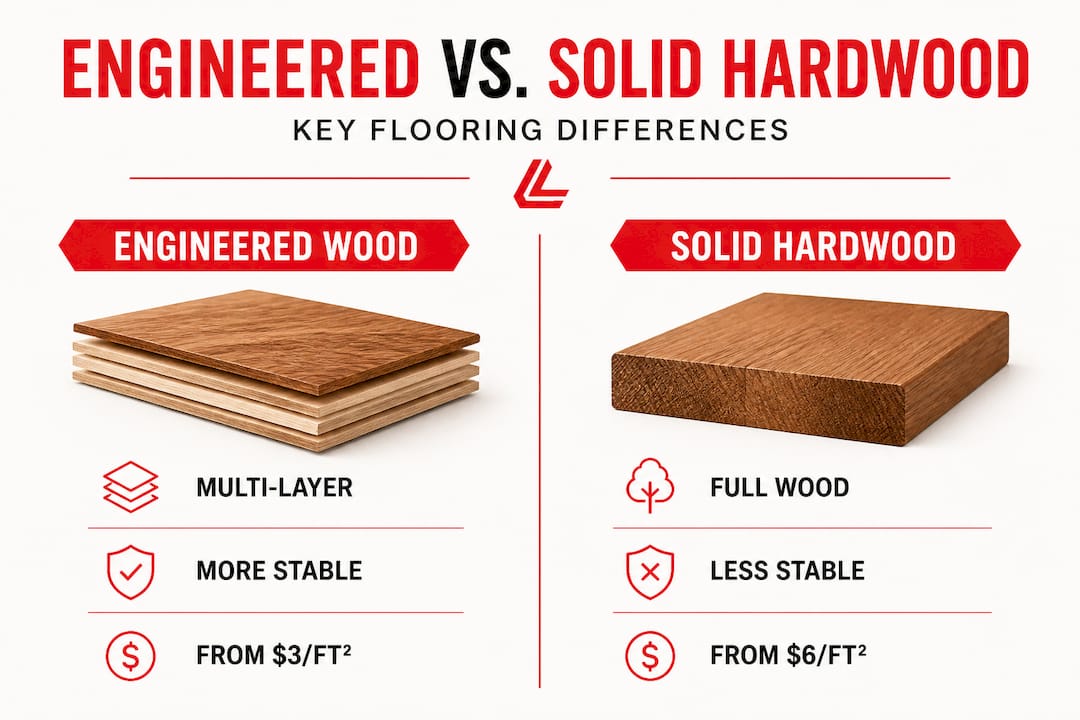
Denver’s climate is genuinely tough on floors. The city sits at over 5,000 feet elevation with low average humidity, but the seasons bring dramatic swings. Summer monsoon moisture, dry winter heating, and rapid temperature changes can cause solid hardwood to gap, cup, or buckle. Engineered wood performs better than solid hardwood in areas with humidity swings, which makes it a particularly smart pick for Colorado homes.
Basements are a perfect example. Solid hardwood is not recommended below grade because of moisture risk. Engineered wood, however, handles that environment well. Many Denver homeowners finishing their basements now choose engineered wood specifically for this reason. For rooms where engineered wood might not be the best fit, tile floor installation is another durable option worth considering.
Best scenarios for engineered wood:
- Basements and below-grade rooms
- Rooms with radiant floor heating
- Homes with significant seasonal humidity changes
- Open-plan spaces where you want wood throughout without transitions
- Renovations where budget matters but aesthetics cannot be compromised
Best scenarios for solid hardwood:
- Main floor living areas in climate-controlled homes
- Homeowners who plan to refinish floors multiple times over 50+ years
- Historic renovations where authenticity is required
- Rooms above grade with stable humidity year-round
The cost difference is also meaningful. Engineered wood typically runs $3 to $10 per square foot for materials, while solid hardwood often starts at $5 and can exceed $15 per square foot for premium species. When you factor in installation labor and the fact that engineered wood can go over concrete without expensive subfloor work, the savings add up quickly.
Types and styles of engineered wood flooring
One of the biggest surprises for homeowners shopping engineered wood for the first time is just how many options exist. This is not a one-size-fits-all product. The variety in species, finish, plank width, and thickness means you can find something that fits almost any interior style, from a modern Capitol Hill loft to a traditional Highlands craftsman bungalow.
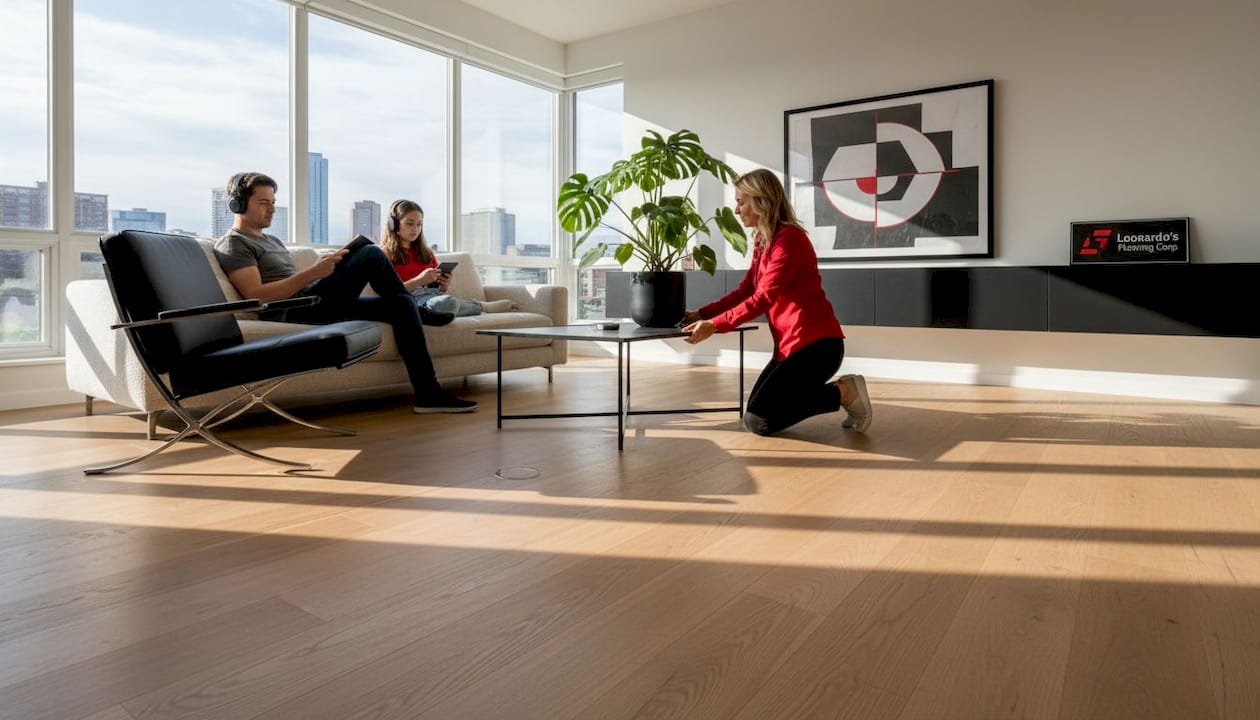
Engineered wood comes in a range of wood species, finishes, and plank sizes, giving Denver homeowners enormous flexibility in matching floors to their home’s personality.
Here’s a look at how plank width affects the overall feel of a space:
| Plank width | Visual effect | Best room size |
|---|---|---|
| Narrow (under 3 inches) | Traditional, formal | Smaller rooms |
| Standard (3 to 5 inches) | Balanced, versatile | Any room |
| Wide (5 to 7 inches) | Modern, open, airy | Larger open spaces |
| Extra-wide (over 7 inches) | Statement, luxurious | Great rooms, open plans |
Wide plank vs. narrow plank: What to consider
- Wide planks show more of the natural wood grain, making each board a visual feature
- Narrow planks create a busier pattern that can make small rooms feel more traditional
- Wide planks can make small rooms feel larger by reducing the number of seams
- Narrow planks tend to be more forgiving in high-traffic areas because scratches are less visible across a smaller surface
- Wide planks are currently the most popular choice in Denver new construction and high-end renovations
Surface finishes also change the entire character of the floor. A hand-scraped finish adds texture and warmth, hiding everyday scuffs and scratches beautifully. A wire-brushed finish gives a slightly rustic look while still feeling smooth underfoot. High-gloss finishes look sleek and modern but show dust and footprints more readily. Matte finishes are incredibly popular right now because they look natural and are much more forgiving in busy households with kids and pets.
For Denver homes specifically, lighter oak tones work well in south-facing rooms that get intense Colorado sunshine. Darker species like walnut can add drama to a dining room or primary bedroom. Hickory’s bold, varied grain pattern is a fantastic choice for mountain-style homes or anyone who wants a floor with real character.
Installation and maintenance tips for Denver homeowners
Choosing the right product is only half the job. How engineered wood is installed and maintained determines how long it performs and how good it looks five or ten years down the road.
Engineered wood can be installed as a floating floor, glued, or nailed depending on the subfloor type. Each method has its place. Floating installation is the fastest and works well over concrete or existing floors. Glue-down is ideal for concrete subfloors in basements. Nail-down works over wood subfloors and provides the most solid, traditional feel underfoot.
Here’s a step-by-step overview of what proper installation looks like:
- Inspect and prepare the subfloor. The subfloor must be flat (within 3/16 inch over 10 feet), dry, and structurally sound. Any high spots or dips need to be corrected first.
- Test for moisture. In Denver basements or over concrete slabs, moisture testing is non-negotiable. High moisture levels will ruin even the best engineered wood floor.
- Acclimate the flooring. Let the boxes of flooring sit in the room where they’ll be installed for 48 to 72 hours. This allows the wood to adjust to the room’s temperature and humidity before installation begins.
- Install a moisture barrier if needed. Over concrete, a vapor barrier or moisture-resistant underlayment protects the floor from below.
- Install the flooring. Follow the manufacturer’s recommended method (float, glue, or nail) and leave expansion gaps around the perimeter.
- Install trim and transitions. Baseboards, quarter-round molding, and transition strips complete the installation and allow for natural wood movement.
- Final inspection and cleanup. Check for any gaps, squeaks, or uneven boards before the job is called complete.
“One of the most common mistakes we see on DIY installs is skipping acclimation. In Denver’s dry climate, wood that hasn’t adjusted to the room’s conditions can gap noticeably after installation. Give it the time it needs before the first plank goes down.” — Leonardo’s Flooring Corp installation team
Pro Tip: In Denver basements or any room built over a concrete slab, always use a moisture barrier even if the concrete feels dry. Concrete releases moisture slowly and seasonally, and that moisture will eventually damage unprotected flooring from below.
For ongoing maintenance, engineered wood is straightforward. Sweep or vacuum regularly to remove grit that can scratch the surface. Use a damp mop (not wet) with a pH-neutral cleaner designed for hardwood. Avoid steam mops entirely because the heat and moisture can damage the wear layer and cause the layers to separate over time. Place felt pads under furniture legs and use area rugs in high-traffic zones to extend the life of the finish.
Connecting with professional flooring installation experts and exploring Denver flooring services available locally can also help you identify the right maintenance products specific to your floor’s finish type.
Our take: What most Denver homeowners miss about engineered wood flooring
After more than a decade of installing floors across Denver, we’ve noticed a pattern. Homeowners do their research, compare engineered wood to solid hardwood, and often still hesitate because of two persistent myths. The first is that engineered wood looks fake or cheap. The second is that it cannot be refinished and is therefore a throwaway product.
Both are wrong, and believing them leads people to make flooring decisions that cost them more in the long run.
The “fake” concern usually comes from people who have seen low-quality laminate and assumed engineered wood is the same thing. It is not. Laminate has a photographic image of wood printed on a plastic layer. Engineered wood has actual wood on top. When you walk into a room with quality engineered oak, you are looking at real oak grain, real texture, and real character. The difference is in the construction below the surface, not the surface itself.
The refinishing myth is more nuanced. It is true that thin-veneer engineered products (under 2mm) cannot be refinished. But quality products with 4mm or 6mm wear layers absolutely can be sanded and refinished. We have refinished engineered floors in Denver homes that were 15 years old and brought them back to looking brand new.
Here is the insight that most articles skip: Denver’s altitude actually accelerates UV fading in floors. At over 5,000 feet, UV radiation is significantly more intense than at sea level. That means floors near large windows or in south-facing rooms fade faster here than they would in most other U.S. cities. Asking your installer about UV-resistant finishes is not just a nice-to-have, it is genuinely important for Colorado homes. We have seen beautiful walnut floors turn noticeably lighter in just two years because UV protection was not part of the finish specification.
We also see engineered wood perform exceptionally well in Denver’s older neighborhoods like Washington Park, Congress Park, and the Highlands, where homes have concrete or older wood subfloors that make solid hardwood installation complicated and expensive. Engineered wood solves those challenges without sacrificing the look that makes those neighborhoods so desirable. For more insights from real Denver projects, check out flooring tips for Denver homes on our blog.
Get help with your engineered wood flooring project
Choosing engineered wood is a smart move for most Denver homeowners, but getting the details right, from wear layer thickness to subfloor prep to finish selection, makes the difference between a floor that looks good for a few years and one that looks great for decades.

At Leonardo’s Flooring Corp, we have been helping Denver homeowners navigate exactly these decisions for over 10 years. Our team handles everything from initial product selection to full Denver hardwood floor installation, with honest advice and no pressure to upsell you on something you do not need. Whether you are finishing a basement, updating a main floor, or tackling a whole-home renovation, we offer a full range of flooring services tailored to your space, budget, and timeline. Reach out for a free estimate and let’s find the right floor for your home.
Frequently asked questions
Is engineered wood flooring real wood?
Yes, engineered wood flooring consists of real wood layers, with genuine hardwood on the top surface and stabilizing wood-based layers underneath. It is not laminate or vinyl.
Can you refinish engineered wood flooring?
Many engineered wood floors can be refinished at least once if the top layer is thick enough. Wear layer thickness determines refinishing capability, so look for products with 4mm or more for the best long-term flexibility.
Is engineered wood good for Colorado’s climate?
Yes. Engineered wood handles environmental changes well, making it a better fit than solid hardwood for Colorado’s dry winters, humid summers, and dramatic temperature swings.
How is engineered wood installed?
Engineered wood installation methods include floating, gluing, or nailing, depending on the subfloor type and the specific product being used. A professional can recommend the right method for your home.
What are the best rooms for engineered wood flooring?
Living rooms, bedrooms, basements, and kitchens are all excellent candidates. Colorado homeowners especially benefit from engineered wood in basements and rooms over concrete, where solid hardwood is not a practical option.
Recommended
- Flooring Tips & Advice for Denver Homeowners | Leonardo’s Flooring Corp
- Colorado Hardwood Flooring: Complete Installation Guide
- Tile Floor Installation in Denver, CO | Leonardo’s Flooring Corp
- Hardwood Floor Installation in Denver, CO | Leonardo’s Flooring Corp
- 8 Types of Wood Flooring: Durability & Style – Expert Wood Floor Refinishing Company | Savera Hardwood Services