
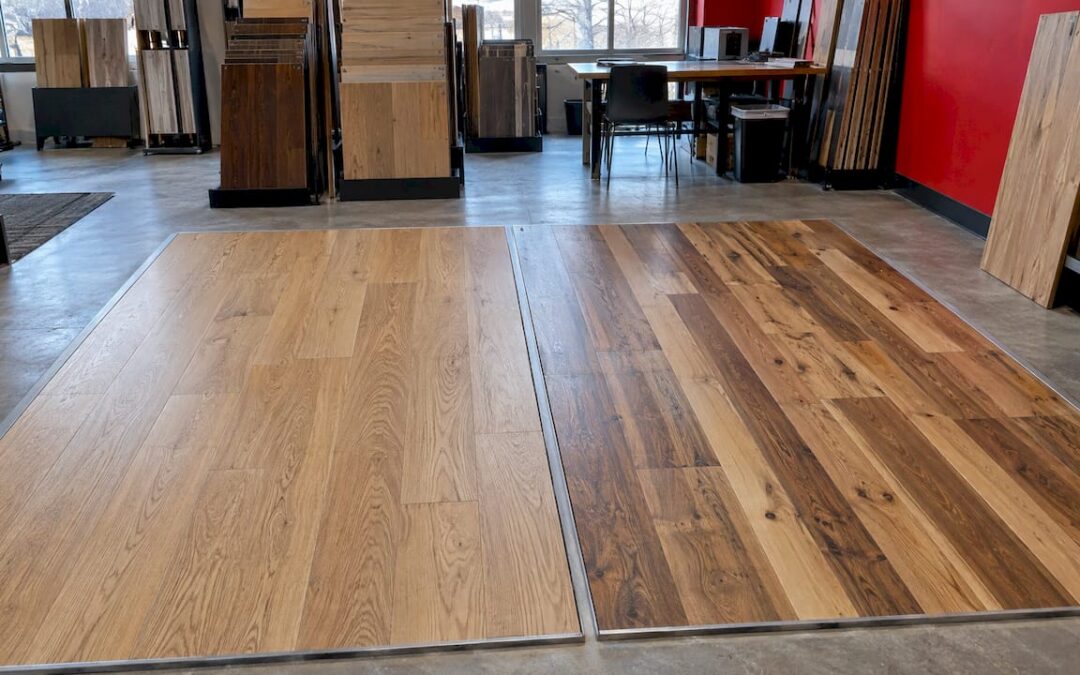
Oak is the easier, more forgiving floor: it takes stain evenly, sands cleanly and suits almost any style. Hickory is the harder, bolder floor: it resists dents best and shows strong color and grain contrast. Maple sits between them in hardness and offers the calmest, lightest look. Which one is right depends on your traffic, your taste and, in the Denver area, how the floor is installed for our dry air.
We install hardwood across the Denver metro, and the species choice is only half of the decision. Here is how the woods compare, what they cost, and what to know before you sign a contract.
What are the key differences between oak, hickory, and maple flooring?
- Hickory is the hardest of the group (1,820 lbf on the Janka scale), then hard maple (1,450), white oak (1,360) and red oak (1,290).
- Oak is the most versatile: even stain, cleaner refinishing, a grain that hides scratches.
- Hickory is the pick for pets, kids and heavy traffic if you like a rustic, high-contrast look. Maple suits a bright, smooth, modern look.
- Denver-area installed prices run roughly $8 to $16 per square foot for solid oak, $10 to $18 for maple and $13 to $23 for hickory.
- In Colorado’s dry air, acclimation and humidity control matter as much as the species.
Table of Contents
- How hardness is measured, and what it means for a floor
- Oak: the versatile classic
- Hickory: the hard, high-character option
- Maple: the bright, smooth alternative
- Side-by-side comparison
- What each costs in the Denver area
- Colorado’s dry air matters more than the species
- Which one should you choose?
- Our perspective
- Get your floor installed by Denver-area specialists
- FAQ
- Sources
How hardness is measured, and what it means for a floor
The Janka scale measures the force needed to push a 0.444-inch steel ball halfway into a piece of wood. According to the National Wood Flooring Association, maple, hickory and oak are all harder than walnut, cherry and birch, and Janka values apply to solid wood, not engineered flooring.
The published averages:
| Species | Janka (lbf) |
|---|---|
| Hickory/pecan | 1,820 |
| Hard maple | 1,450 |
| White oak | 1,360 |
| Red oak | 1,290 |
By that measure, hickory is the hardest domestic flooring species, around 34% harder than white oak and 41% harder than red oak. In practice that means dropped pans, heels and chair legs dent hickory less.
Keep the numbers in proportion. The Janka difference describes indentation resistance in a test piece, and it does not make any finished floor scratch-proof. Species in the 1,000 to 1,500 lbf range, including both oaks and maple, are a practical minimum for high-traffic residential floors, so none of these woods is a weak choice for a home.
Oak: the versatile classic
American oak is the most common and popular hardwood floor. It comes in two types:
- Red oak has a pink or reddish tint with a straight, coarse grain, according to Floor Covering Weekly.
- White oak tends toward gray or green undertones, which is why it is so popular for neutral, natural and Scandinavian-style interiors.
Oak’s open grain accepts stain more evenly than closed-grain species like maple, per the NWFA’s species publication. That gives you more freedom with finish color, from natural to espresso. It also sands and refinishes to a cleaner, more consistent surface than hickory, which matters over a floor’s 20 to 30 year life.
Oak’s visible grain also hides everyday scratches well, which partly offsets its lower hardness.
Hickory: the hard, high-character option
Hickory’s color and grain vary widely. The American Hardwood Export Council describes pale to dark yellow-brown heartwood, white to brown sapwood, and deep purple mineral streaks and bird pecks that are natural characteristics rather than defects. Planks can run from nearly white to dark brown in the same box, and the striated grain looks best on wider planks.
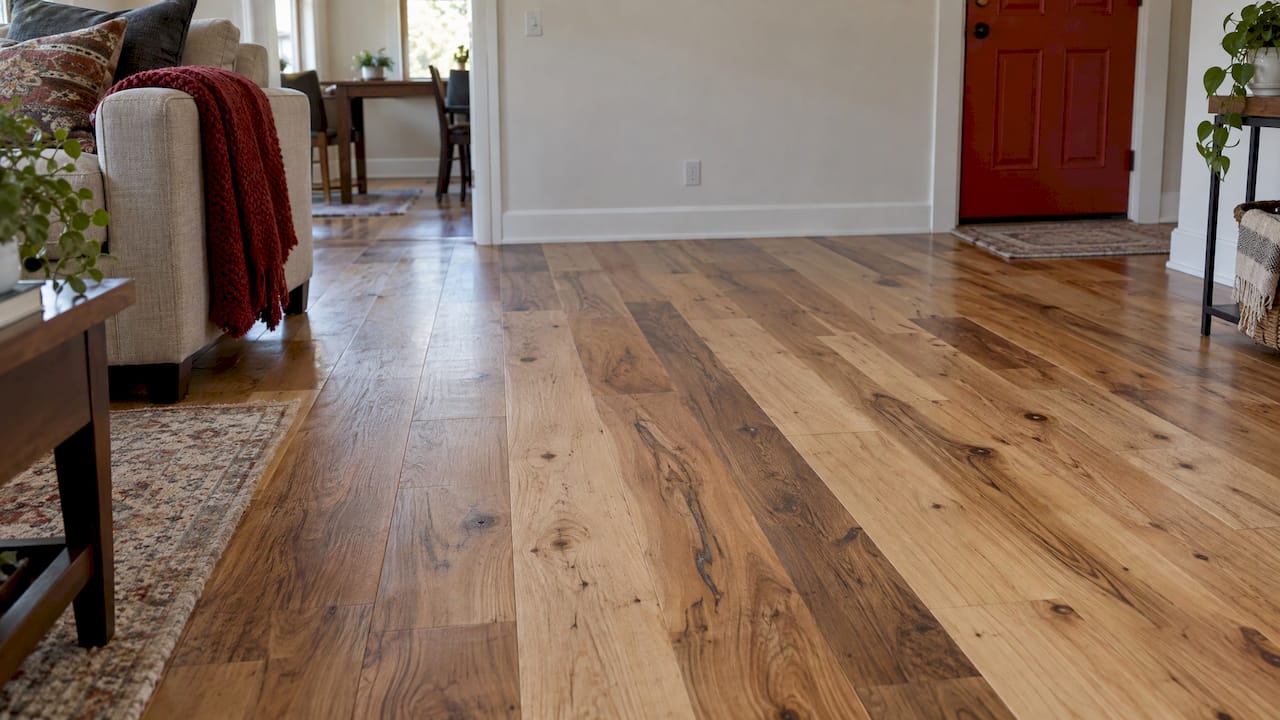
That contrast is the draw for many homeowners: a rustic, lively floor that hides wear in busy rooms. If you want a quiet, uniform surface, it can feel busy.
Two practical points for hickory:
- It moves more with humidity changes than oak, and takes stain less evenly, so it is usually chosen in its natural tones or with a carefully tested finish. (National Hardwood)
- It is harder to sand, so refinishing calls for an installer who handles it regularly.
Maple: the bright, smooth alternative
Maple comes up in nearly every oak comparison. Its sapwood is creamy white with a close, fine, straight grain, and plank-to-plank color is fairly consistent. That makes it the specialist choice for a bright, calm, contemporary room.
Compared with white oak:
- Maple is a little harder (1,450 vs. 1,360 lbf), but scratches are easier to hide on oak because of its more pronounced grain.
- Maple’s closed grain can stain unevenly, so it is typically finished in natural or light tones. It can also yellow with age under clear coats.
- Oak’s visible grain and color range work across traditional, transitional and modern interiors, which is why white oak is often called the stronger all-rounder.
How do oak, hickory, and maple flooring compare side-by-side?
| Red oak | White oak | Maple | Hickory | |
|---|---|---|---|---|
| Hardness | Lowest of the four | Mid | Higher | Highest |
| Look | Warm, pink-red tint, bold grain | Neutral, gray-green undertone | Pale, smooth, subtle grain | Strong contrast, rustic |
| Stain | Takes evenly | Takes evenly | Can be blotchy | Can be uneven |
| Refinishing | Straightforward | Straightforward | Fine grain shows detail | Harder to sand |
| Best for | Budget-friendly, classic | Versatile, any style | Modern, bright rooms | Pets, kids, busy homes |
What each costs in the Denver area
A Denver-focused cost guide from 2024 puts installed hardwood at $8 to $23 per square foot across the metro: solid oak $8 to $16, solid maple $10 to $18, and solid hickory or exotic species $13 to $23. Material-only prices are lower. A 2026 national guide lists materials at $2 to $6 per square foot for red oak, $4 to $7 for white oak, $3 to $10 for maple and $3 to $7 for hickory, plus $3 to $8 per square foot for installation.
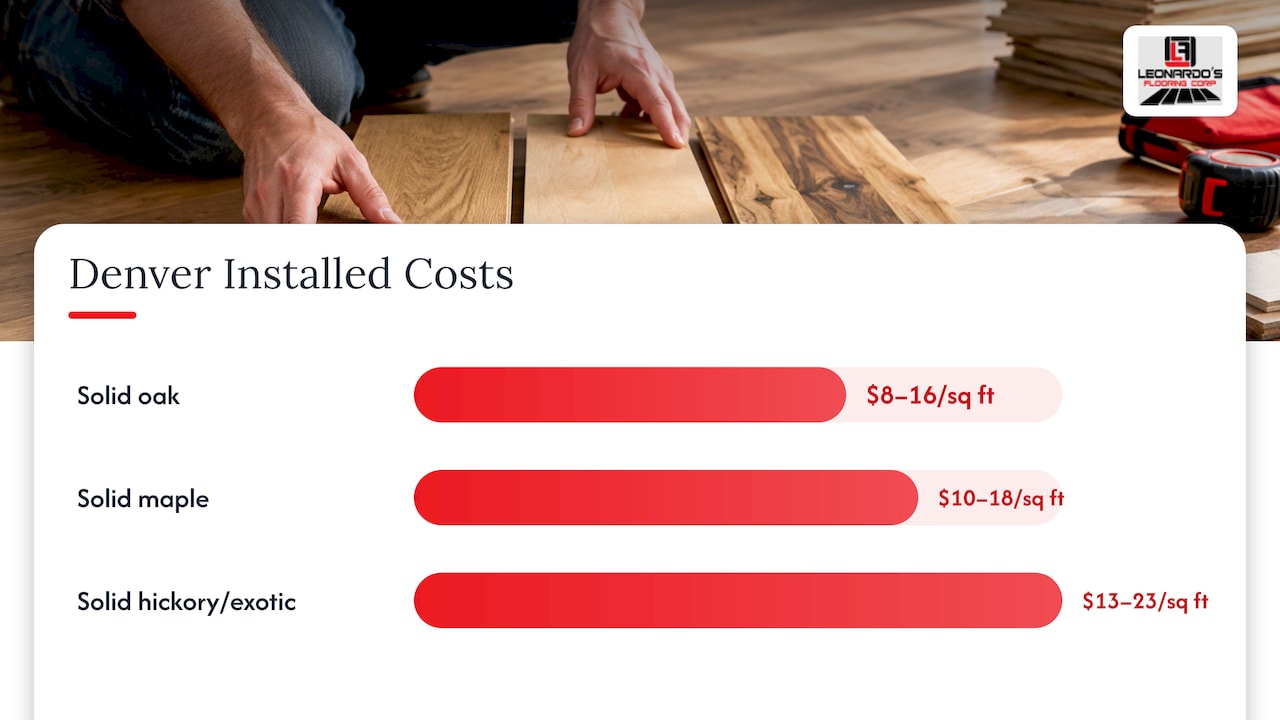
Prices shift with grade, plank width, finish, subfloor condition and stair or trim work, so treat these as ranges. For a quote on your actual rooms, use our services page.
Colorado’s dry air matters more than the species
Whichever wood you choose, the Front Range climate decides how it ages. A Denver guide identifies the installer’s handling of dry, low-humidity air as the biggest performance variable after species, and skipping acclimation as the most common reason floors show gaps in their first winter. The same guide notes that engineered hardwood handles humidity swings better than solid wood.
That is especially relevant for hickory, which moves more than oak. Plan on:
- Acclimation. Let the boards adjust to the home before installing. Our guide to hardwood floor acclimation explains the timing.
- Indoor humidity. Keep the house in a steady range through winter; see our indoor humidity checklist.
- A realistic schedule. Our installation timeline for Denver owners shows what happens and when.
If water ever reaches a hardwood floor, act fast: this guide to hardwood water damage covers the first steps.
Which one should you choose?
- Dogs, kids, rentals or a busy commercial space: hickory, if you like the character. Its dent resistance is the highest of the group, and the busy grain camouflages wear.
- A home where you may change decor or refinish later: white oak or red oak. They take stain evenly and refinish cleanly.
- A light, modern, minimalist room: maple in a natural tone, or white oak with a light finish.
- A tighter budget: red oak is typically the lowest-priced of the four.
- Matching existing floors: bring a sample of what you have. Hickory and oak look very different side by side, so transitions need planning.
If you are also weighing a refinish on existing boards, this explainer on refinishing versus recoating helps you see which one your floor needs.
Our perspective
Most people ask us which wood is best. The better question is which wood you will still love in ten years, installed in a way that suits Colorado.
We tailor every project to your needs, budget and timeline, so we start with how you live: pets, kids, sunlight, the look you want. Then we match the species and plank to that. A floor you chose with open eyes rarely disappoints.
We treat every floor as if it were going into our own home, and that includes the unglamorous parts: subfloor preparation, careful installation and finishing carpentry like baseboards and quarter-round trim. Those details are what make a floor look finished.
Jim
Get your floor installed by Denver-area specialists
Leonardo’s Flooring Corp has served the greater Denver area for over 10 years, for homes and businesses alike, with 125+ five-star reviews. We install and refinish hardwood, prepare subfloors, and handle staircase treads and risers and trim, so one team covers the whole job.

To talk through oak, hickory or maple for your property, start at our flooring installation page.
FAQ
Is hickory harder than white oak?
Yes. Hickory rates about 1,820 lbf on the Janka scale against 1,360 for white oak and 1,290 for red oak. Hard maple falls between at 1,450. Hickory therefore resists dents best.
Is maple or oak better for flooring?
Oak is the better all-rounder: it stains evenly, hides scratches and suits many styles. Maple is slightly harder and has a smooth, bright look, which fits modern rooms. Choose by the appearance you want.
What color is hickory flooring?
Hickory ranges from creamy white to gray, tan and dark brown, often in the same room, with darker streaks. Its strong contrast gives a rustic look, especially in wider planks.
Is white oak or red oak better?
Both are durable. White oak is a bit harder and has neutral, gray-green undertones, while red oak has a warmer pink-red tint and is typically less costly. Both accept stain well.
Sources
- NWFA Homeowner’s Handbook to Real Wood Floors
- NWFA Wood Species (2023)
- NWFA Species Used in Wood Flooring
- Hickory vs. Oak Flooring: Hardness, Grain & Cost
- White Oak vs Maple Flooring
- Hardwood Flooring Species Compared
- Hardwood: Know Your Species
- A Guide to Sustainable American Hardwoods
- Hickory vs. Oak Flooring: Key Differences
- Maple Hardwood Flooring Basics
- Oak Flooring vs Maple and Hickory Flooring
- Hardwood Flooring Cost in Colorado: A Denver Guide
- Best Types of Hardwood Floors (2026)
- Hardwood Floor Water Damage
- Refinishing vs. Recoating Hardwood Floors