
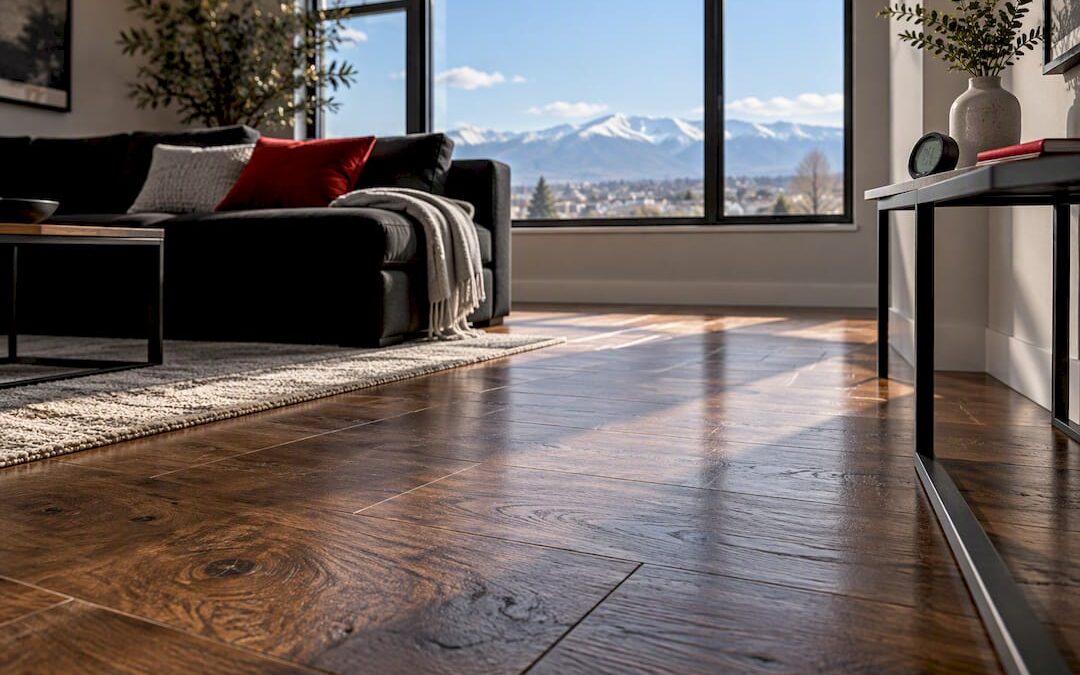
Keep indoor relative humidity within recommended moderate levels and maintain temperature in a comfortable range to protect hardwood floors from cupping, gapping, and cracking. These ranges limit how much the wood swells or shrinks and keep mold risk low. If your hygrometer reads outside that window, adjust your HVAC system, run a dehumidifier or humidifier, and recheck within a day or two.
TL;DR:
- Maintaining indoor relative humidity between 30% and 50% and temperature from 60°F to 80°F minimizes hardwood floor damage from swelling, shrinking, and mold growth.
- Proper acclimation involves running HVAC systems for five to fourteen days before installation to match the flooring’s moisture content with indoor conditions.
- Regular monitoring with a hygrometer and moisture meter helps detect patterns and prevent long-term moisture-related problems, with a focus on trends over single measurements.
- Short-term tools like dehumidifiers and fans can control humidity spikes, but long-term stability requires whole-home solutions such as humidifiers, dehumidifiers, and proper crawlspace sealing.
- Risks increase significantly when indoor humidity stays above 70% for extended periods, leading to mold growth and more severe hardwood damage modes like buckling or cupping.
Table of Contents
- Recommended humidity and temperature ranges for hardwood floors
- How humidity affects hardwood: the damage modes to watch for
- Measuring humidity and wood moisture: tools and metrics homeowners should use
- How to control indoor humidity for hardwood floors
- Acclimating wood before installation and timeline recommendations
- Troubleshooting humidity-related floor problems and when to call a pro
- Author perspective and practical tips from Leonardo’s Flooring Corp
- What the humidity guidance gets wrong for most homeowners
- How Leonardo’s Flooring Corp can help
- Sources
- FAQ
Recommended humidity and temperature ranges for hardwood floors
The National Wood Flooring Association recommends holding indoor relative humidity between 30% and 50%, with indoor temperature between 60°F and 80°F, to minimize the seasonal swelling and shrinkage that damages hardwood. Those figures are not a rigid line you must never cross. Wood responds to averages over days and weeks, not to a single reading, so brief swings during a heat wave or a cold snap rarely cause lasting harm.
Seasonal drift is normal. What matters is how long the air stays there and whether your HVAC system pulls it back.
If your home has a history of window condensation, musty smells, or a damp basement, aim for tighter control of indoor humidity rather than the wider moderate range.
- Recheck weekly with a hygrometer during the first season after installation.
- Address any known moisture source, such as a sump pump issue or an unvented crawlspace, before assuming the HVAC system alone will fix it.
How humidity affects hardwood: the damage modes to watch for
Hardwood moves with moisture, and each failure pattern points to a different cause. Recognizing the pattern early can save you from a full refinish or replacement.
- Cupping: board edges rise higher than the center, usually from excess moisture underneath, such as a wet crawlspace or a leak.
- Crowning: the center of the board rises above the edges, often a sign of over-drying after a cupped board was sanded flat while still wet.
- Gapping: visible seams between boards appear during dry winter months as the wood loses moisture and shrinks.
- Buckling: boards pull away from the subfloor entirely, typically the result of standing water or a major, sustained moisture event.
- Splitting: boards crack along the grain, most common when indoor air turns very dry for extended periods.
Mold adds a separate risk on top of these damage modes. Sustained indoor relative humidity above about 70% creates conditions where mold grows readily on wood and other organic materials, and the same guidance recommends keeping indoor humidity no higher than 50 to 60% as a practical safeguard.
Sustained RH above 70% is the threshold to treat as a warning sign, according to the CDC. Check for early signs around the house: doors that suddenly bind in their frames, visible gaps opening or closing with the seasons, and musty odors near basements or attics where moisture tends to collect first.
Measuring humidity and wood moisture: tools and metrics homeowners should use
Three tools tell you three different things, and mixing them up leads to bad decisions. A hygrometer measures the moisture in the air around the floor. A moisture meter, either pin or non-pin (pinless), measures the moisture content inside the wood itself. Equilibrium moisture content, or EMC, is the point where wood stops gaining or losing moisture because it has matched the surrounding air.
To get a reading that actually means something, follow a simple routine:
- Place a hygrometer at floor level in at least two rooms, away from vents and windows.
- Take moisture meter readings on several boards, not just one, spacing them across the room.
- Record readings daily for about a week rather than relying on a single measurement.
- Compare readings taken in the morning and evening to catch swings tied to heating or cooling cycles.
- Note the room’s temperature alongside each reading, since EMC depends on both RH and temperature together.
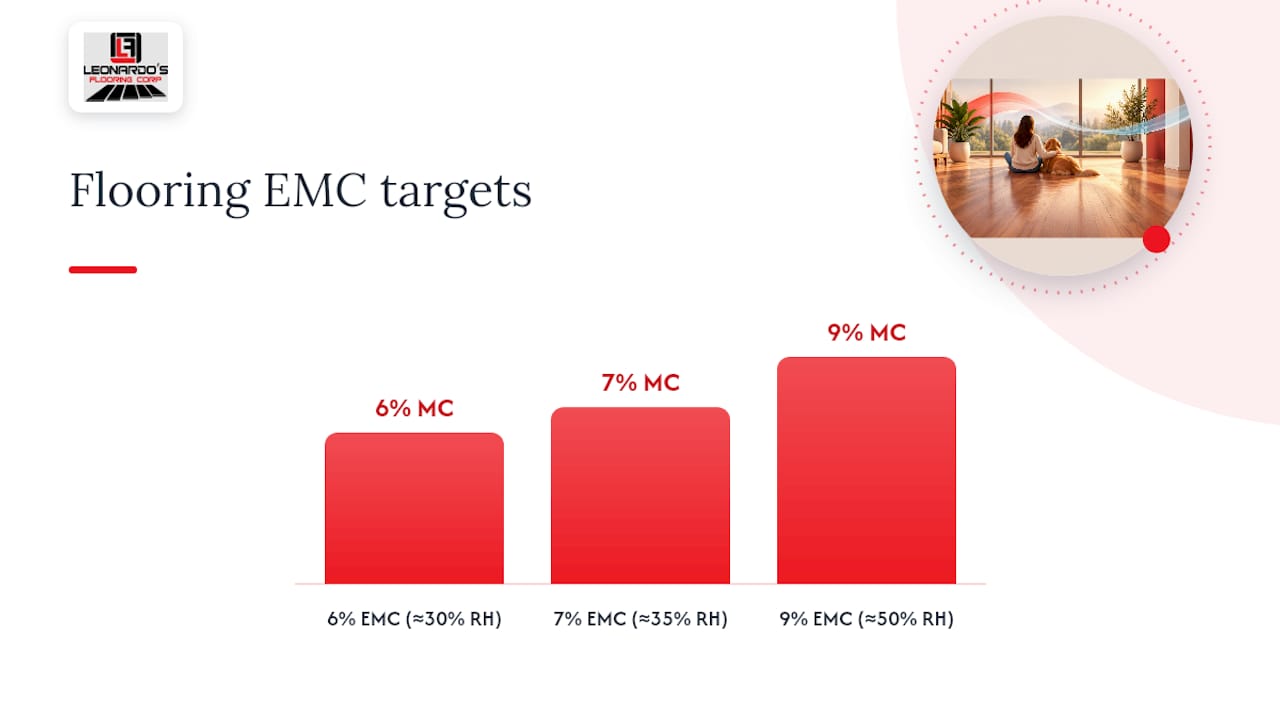
EMC links wood moisture directly to air conditions. According to the PNNL RED wood moisture content tool, installers generally aim for flooring EMC around 6% to 9% before installation, which corresponds to roughly 30% to 50% RH at typical indoor temperatures, with 7% moisture content landing near 35% RH at 70°F. The same source notes that a short-term spike or dip in RH matters less than a sustained trend, so homeowners should track patterns over several days rather than reacting to one number.
Pro Tip: Keep a small notebook or phone note with your weekly hygrometer readings. A pattern over a month tells you far more than any single number on a bad-weather day.
How to control indoor humidity for hardwood floors
Short-term tools handle temporary swings. A portable dehumidifier in a damp basement or a window unit air conditioner during a humid stretch can pull a single room back into range within a day. Box fans help circulate air after a spill or a cleaning session, speeding evaporation before moisture soaks into the boards.
Whole-home fixes matter more for long-term stability:
- A whole-house humidifier attached to the furnace adds moisture during dry winter months.
- A whole-house dehumidifier tied into the HVAC system manages humid summer conditions across every room at once.
- Sealing and ventilating a crawlspace reduces the moisture load the whole system has to fight.
- Balancing HVAC airflow room to room prevents one area, often a sunroom or finished basement, from running far outside the target range while the rest of the house reads normal.
Daily habits close the gap between equipment and results. Vent bathroom fans and the clothes dryer to the outside rather than into an attic or crawlspace, since building science guidance lists unvented moisture sources as a leading contributor to elevated indoor humidity. Run your HVAC system’s fan periodically even when the temperature is already comfortable, since air exchange alone helps even out humidity pockets.
Pro Tip: Set your thermostat’s fan to “auto” rather than “on” during humid months. Continuous fan operation can reintroduce moisture the AC just removed.
Acclimating wood before installation and timeline recommendations
Acclimation means letting new flooring reach the same moisture content as the room it will live in before anyone nails or glues it down. The industry target is an EMC around 6% to 9%, which lines up with the same 30% to 50% RH and 60°F to 80°F range used for finished floors, according to PNNL’s EMC guidance.
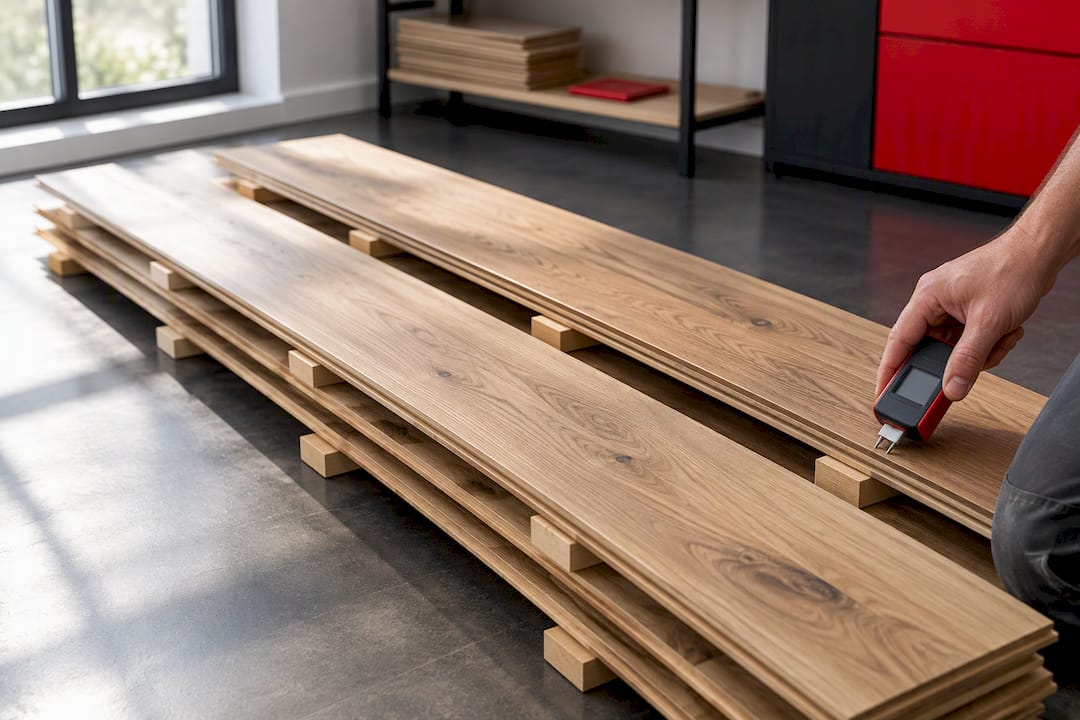
Getting there takes a stable house, not just stacked boxes of flooring sitting in a room. NWFA guidance on winter installations recommends running the HVAC system for several days to weeks before delivery so the space reaches normal living conditions, and the CDC’s construction guidance similarly notes that HVAC systems should run for at least 5 to 14 days before flooring delivery to establish those conditions.
A careful installer checks more than the calendar:
- Confirm subfloor moisture content with a meter before any boards go down.
- Compare subfloor and flooring moisture readings, looking for a gap no wider than the manufacturer’s stated tolerance.
- Verify HVAC has held steady temperature and humidity for the required run-in period, not just been turned on the day before.
- Document readings in writing so there is a record if a problem surfaces months later.
Skipping this step is one of the most common installation mistakes homeowners run into, and it is far cheaper to fix before installation than after.
Troubleshooting humidity-related floor problems and when to call a pro
When something looks off, start with measurement, not guesswork.
- Take hygrometer and moisture meter readings in the affected area and compare them to an unaffected room.
- Isolate any visibly wet spots and check nearby plumbing, windows, or exterior walls for a leak source.
- Photograph the affected boards weekly to track whether the problem is worsening, stable, or improving.
Homeowners can safely handle some of this on their own: stabilize the room’s humidity with a dehumidifier or humidifier, stop any active leak immediately, and use fans or a shop vacuum for localized drying after a spill. Continue monitoring for a week or two before deciding whether the problem has resolved. Our guide to salvaging water-damaged hardwood walks through the early drying steps in more detail.
At that point the fix usually involves more than a dehumidifier.
Author perspective and practical tips from Leonardo’s Flooring Corp
The most common moisture mistake we see is installers skipping the HVAC run-in period to hit a deadline. Before hiring anyone, ask for the subfloor and flooring moisture meter readings in writing, not just a verbal assurance that “it looked fine.” A straight answer with numbers attached tells you more than a confident tone. Our subfloor prep process always includes a moisture check before flooring goes down, because a subfloor reading that looks acceptable in isolation can still be too high relative to the new boards.
What the humidity guidance gets wrong for most homeowners
The wood does not care about one bad afternoon. It cares about weeks of sustained conditions.
The bigger blind spot is acclimation. Homeowners obsess over post-installation humidity control while skipping the step that matters most: making sure the HVAC system ran long enough before the floor went in. A floor installed into an unstable house starts out fighting a losing battle no dehumidifier can fully fix later.
If you take one thing from this, prioritize measurement over instinct. A ten-dollar hygrometer and a week of honest readings will tell you more than any amount of worrying about whether your house “feels” dry or damp. Trust the numbers, act on trends, and treat single-day extremes as noise rather than emergencies.
— Jim
How Leonardo’s Flooring Corp can help
We build moisture testing, HVAC run-in checks, and proper subfloor preparation into every hardwood installation we handle across the Denver metro, so the floor starts stable instead of fighting your home’s humidity from day one.

If you’re planning a new installation or want a moisture assessment on an existing floor, our hardwood flooring services page outlines what a visit includes and how to get a project started.
Sources
- Problem Prevention | National Wood Flooring Association | NWFA
- Mold | Centers for Disease Control and Prevention (CDC)
- PNNL RED wood moisture content tool
FAQ
What humidity is too high for hardwood floors?
Relative humidity sustained above 50% to 60% starts to push hardwood toward cupping and swelling, and readings above about 70% raise mold risk significantly. A brief spike during a humid week is less concerning than humidity that stays elevated for days at a time.
Is 70% humidity too high for a house?
Yes, sustained indoor relative humidity near or above 70% is considered a high-risk threshold for mold growth on wood and other organic surfaces.
How long should a wood floor sit in the house before installing?
Guidance from the NWFA recommends stabilizing the home’s HVAC system for several days to a couple of weeks before delivery, so the flooring can acclimate to normal living conditions of 60°F to 80°F and 30% to 50% RH. The exact timeline depends on how far the site’s starting conditions are from that target.
At what moisture level does mold grow on wood?
Mold growth becomes a real risk when indoor relative humidity stays sustained above about 70%, according to CDC guidance.