

A Denver flooring style guide helps you choose materials that look great and hold up to the city’s demanding climate. Luxury vinyl plank and engineered hardwood are the top choices for Denver homes and businesses in 2026, thanks to their durability, style range, and ability to handle the city’s wide humidity swings. Denver sits at 5,280 feet, and that altitude brings dry air, intense UV exposure, and temperature shifts that punish the wrong flooring fast. Getting the material right from the start saves you money, maintenance headaches, and regret.
1. What are the most popular flooring materials in Denver?
Five materials dominate Denver flooring options, each with a clear role based on performance and price.
- Luxury Vinyl Plank (LVP): The most popular choice in Denver, with installed costs of $4.50–$9.00 per square foot. LVP is waterproof, scratch-resistant, and available in dozens of wood and stone looks. It works on any level of the home, including basements.
- Engineered hardwood: The premium pick for main living areas. It costs $7.00–$15.00 per square foot installed and lasts 25–40 years with proper care. Its layered construction handles humidity changes better than solid wood.
- Solid hardwood: Beautiful but limited in Denver. Installed costs run $9.00–$20.00 per square foot, and it cannot go below grade or on slab foundations without serious risk of warping.
- Porcelain tile: The go-to for kitchens, bathrooms, and high-traffic commercial areas. Porcelain is nonporous and stain-resistant, making it one of the most durable and low-maintenance options available.
- Natural fiber carpet: Wool and other natural fiber carpets support indoor air quality and add warmth to bedrooms and living rooms. FSC-certified hardwoods and wool carpets outperform synthetic alternatives for wellness and home value.
Pro Tip: If you want the look of hardwood without the climate risk, LVP in a wide-plank, matte finish is nearly indistinguishable from real wood and costs a fraction of the price.
2. How does Denver’s climate affect flooring performance?
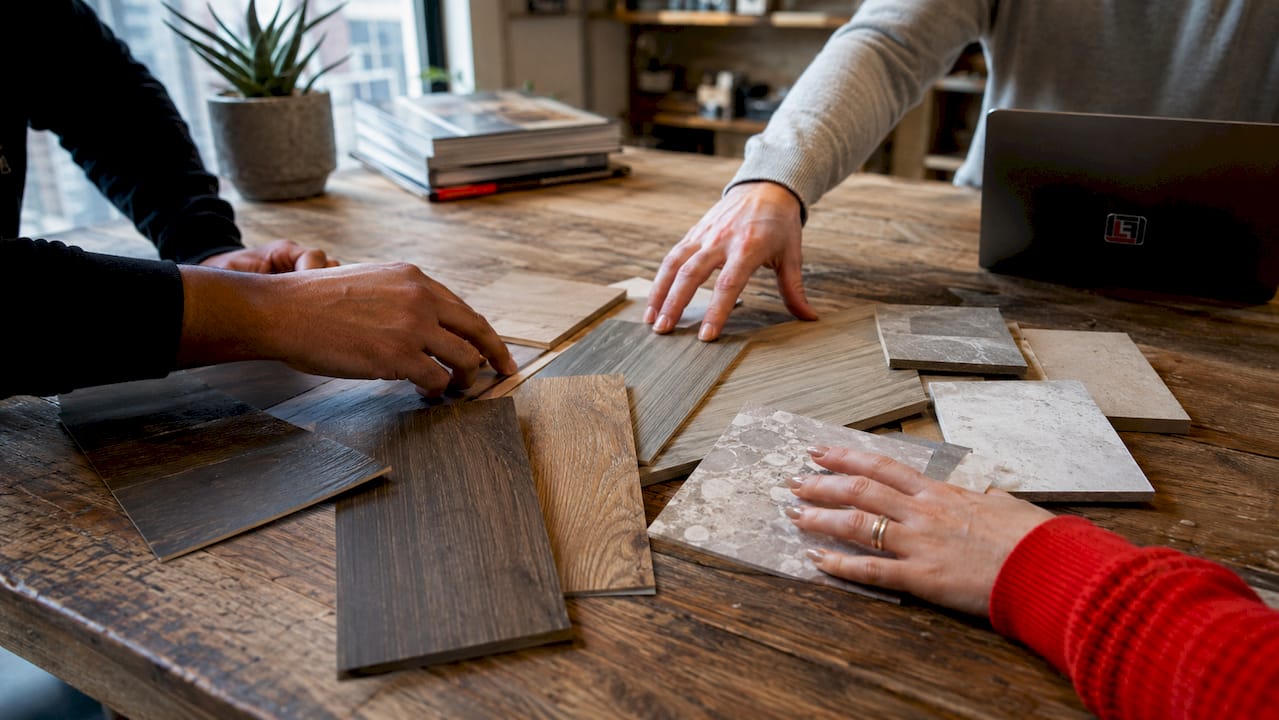
Denver’s low humidity is the single biggest factor in flooring selection. The city’s indoor humidity regularly swings between 20% and 55%, and flooring must handle that full range to avoid cracking, cupping, or gapping. Solid hardwood expands and contracts with every humidity shift. Over time, those movements cause visible gaps in winter and swelling in wetter months.
Engineered hardwood handles these swings far better. Its cross-ply construction limits movement, which is why it outperforms solid wood in Denver’s conditions. LVP is dimensionally stable and fully waterproof, making it the safest bet for basements and any room with moisture exposure. Porcelain tile does not move at all with humidity changes, which is why it excels in bathrooms and laundry rooms.
Pro Tip: Run a whole-home humidifier during Denver’s dry winters and keep indoor humidity above 35%. This single habit extends the life of any wood-based flooring by years.
Maintenance matters as much as material choice. Engineered hardwood can be refinished 2–3 times over its lifespan, giving you a fresh look without full replacement. LVP requires only regular sweeping and occasional damp mopping. Tile needs grout sealing every few years to stay stain-free. Knowing the maintenance commitment before you buy prevents surprises later.
3. What design styles work best with Denver flooring?
Denver interiors lean toward three dominant styles: rustic mountain, modern industrial, and transitional. Each pairs naturally with specific flooring materials and finishes.
- Rustic mountain style calls for wide-plank engineered hardwood or LVP in warm brown, amber, or gray-washed tones. Distressed and hand-scraped finishes add texture that fits the Colorado aesthetic without looking overdone.
- Modern industrial style works best with large-format porcelain tile in concrete or slate looks, or LVP in cool gray tones with a matte finish. Clean lines and minimal grout joints keep the look sharp.
- Transitional style is the most flexible. Medium-toned engineered hardwood in a satin finish bridges traditional warmth and contemporary simplicity. It also photographs well, which matters for resale value.
Wood tone has a direct impact on how a room feels. Light floors open up smaller Denver bungalows and condos. Dark floors add drama to larger open-plan spaces but show dust and pet hair more readily. Mid-tone floors in the honey-to-walnut range are the most forgiving and the most popular with Denver interior designers.
For pet owners and families, look for LVP with a wear layer of at least 12 mil, or family-friendly flooring options rated for heavy residential use. Matte finishes hide scratches better than gloss. Textured surfaces also provide better traction for dogs on hard floors.
4. How do costs and installation compare across flooring types?
Cost is where most Denver homeowners make their first mistake. They focus on material price and underestimate installation, subfloor prep, and long-term maintenance costs. The table below gives a realistic picture of total installed costs and key performance factors.
| Flooring type | Installed cost per sq ft | Durability | Maintenance level |
|---|---|---|---|
| Luxury Vinyl Plank | $4.50–$9.00 | High | Low |
| Engineered hardwood | $7.00–$15.00 | Very high | Medium |
| Solid hardwood | $9.00–$20.00 | High (above grade only) | Medium-high |
| Porcelain tile | $8.00–$18.00 | Excellent | Low |
| Natural fiber carpet | $4.00–$10.00 | Moderate | Medium |
Subfloor preparation is a hidden cost that Denver homeowners frequently overlook. Denver’s older homes often have uneven concrete slabs or wood subfloors that need leveling before any new flooring goes down. Skipping this step causes premature wear, squeaking, and voided warranties. Leonardosflooringcorp includes subfloor assessment in every project estimate, which prevents cost surprises mid-installation.
LVP installs faster than most materials because it floats over the existing subfloor without adhesive in most cases. Tile takes the longest due to mortar curing time. Engineered hardwood falls in the middle and can be glued, nailed, or floated depending on the subfloor type. For budget-conscious projects, vinyl flooring installation delivers the best combination of speed, cost, and performance.
5. What are the best flooring choices by room and situation?
The right flooring depends on where it goes and who uses it. General recommendations rarely account for the specific conditions in your home or business.
- Basements and below-grade spaces: LVP is the only wood-look option that works reliably here. Solid hardwood is not recommended for below-grade or slab installations in Denver. Tile is also a strong choice for basement bathrooms and utility areas.
- Main living areas and dining rooms: Engineered hardwood delivers the warmth and prestige of real wood with the climate stability Denver demands. Pair it with area rugs to reduce noise and add comfort.
- Kitchens and bathrooms: Porcelain tile is the standard for a reason. It handles spills, steam, and heavy foot traffic without degrading. Large-format tiles with minimal grout lines are easier to clean and look more current.
- Bedrooms: Natural fiber carpet or engineered hardwood both work well. Wool carpet adds acoustic insulation and supports better indoor air quality compared to synthetic options.
- Commercial spaces: LVP with a commercial-grade wear layer handles high foot traffic and is easy to maintain. Epoxy coatings work well for warehouses, garages, and industrial spaces where durability is the top priority.
For wellness-focused homeowners, sustainable flooring options like FSC-certified hardwood and wool carpet reduce off-gassing and support healthier indoor air. This matters more in Denver’s tightly sealed, energy-efficient homes where air exchange is limited.
Key Takeaways
The best Denver flooring choices balance climate performance, design style, and total cost, with LVP and engineered hardwood leading for most residential and commercial applications.
| Point | Details |
|---|---|
| LVP leads in value | Installed at $4.50–$9.00 per sq ft, LVP suits every room including basements. |
| Engineered hardwood lasts longest | With 25–40 year lifespan and 2–3 refinishes, it offers the best long-term return. |
| Climate drives material choice | Denver’s 20–55% humidity swings rule out solid hardwood for most installations. |
| Design style shapes the decision | Rustic, modern, and transitional styles each pair with specific materials and finishes. |
| Subfloor prep is non-negotiable | Skipping subfloor leveling causes premature wear and voids most flooring warranties. |
What I’ve learned after years of Denver flooring projects
The most common mistake I see Denver homeowners make is choosing flooring based on how it looks in a showroom under perfect lighting. Showrooms are climate-controlled, flat, and clean. Your home is not. A floor that looks stunning on a display can cup, gap, or scratch within a year if it is not matched to your specific conditions.
The second mistake is undervaluing subfloor preparation. I have seen beautiful engineered hardwood installations fail within 18 months because the concrete slab underneath had moisture vapor issues that nobody tested for. A simple moisture test before installation costs almost nothing. Fixing a failed floor costs thousands.
One trend I find genuinely worth paying attention to is the shift toward wellness-focused flooring. Homeowners are asking more questions about off-gassing, VOC content, and indoor air quality than they were five years ago. FSC-certified hardwoods and natural wool carpets are not just marketing terms. They make a measurable difference in homes where people spend most of their time. If you have kids or pets, this is worth the extra research.
My honest recommendation for most Denver homeowners: start with LVP if budget is a concern, and invest in engineered hardwood for the rooms where you spend the most time. Do not cut corners on installation. A well-installed mid-range floor will outperform a poorly installed premium one every single time.
— Jim
Professional flooring installation in Denver
Choosing the right material is only half the job. The installation determines whether that material performs as promised for 10, 20, or 40 years.
Leonardosflooringcorp has served the Denver metro for over 10 years, handling everything from hardwood floor installation to LVP, tile, and epoxy coatings for both residential and commercial properties. Every project starts with a real conversation about your space, your budget, and your timeline. With 125+ five-star reviews and a reputation built on honest service, Leonardosflooringcorp treats every floor like it is going into their own home. If you want to get the flooring right the first time, reach out for a consultation and get a clear plan before any work begins.
FAQ
What is the best flooring for Denver’s dry climate?
Engineered hardwood and luxury vinyl plank are the best choices for Denver’s climate. Both handle the city’s wide humidity swings without warping or gapping the way solid hardwood does.
Is solid hardwood a good option for Denver homes?
Solid hardwood works above grade in Denver but is not recommended for basements or slab foundations. Engineered hardwood or LVP are safer long-term investments in most Denver installations.
How much does flooring installation cost in Denver?
Installed costs range from $4.50 per square foot for LVP to $20.00 per square foot for solid hardwood. Engineered hardwood typically runs $7.00–$15.00 per square foot installed, including labor.
What flooring works best in a Denver basement?
LVP is the top choice for Denver basements because it is fully waterproof and dimensionally stable. Porcelain tile is also a strong option for basement bathrooms and utility areas.
How do I maintain wood flooring in Denver’s low humidity?
Keep indoor humidity between 35% and 55% using a whole-home humidifier during dry months. This prevents gapping, cracking, and cupping in both engineered and solid hardwood floors.