
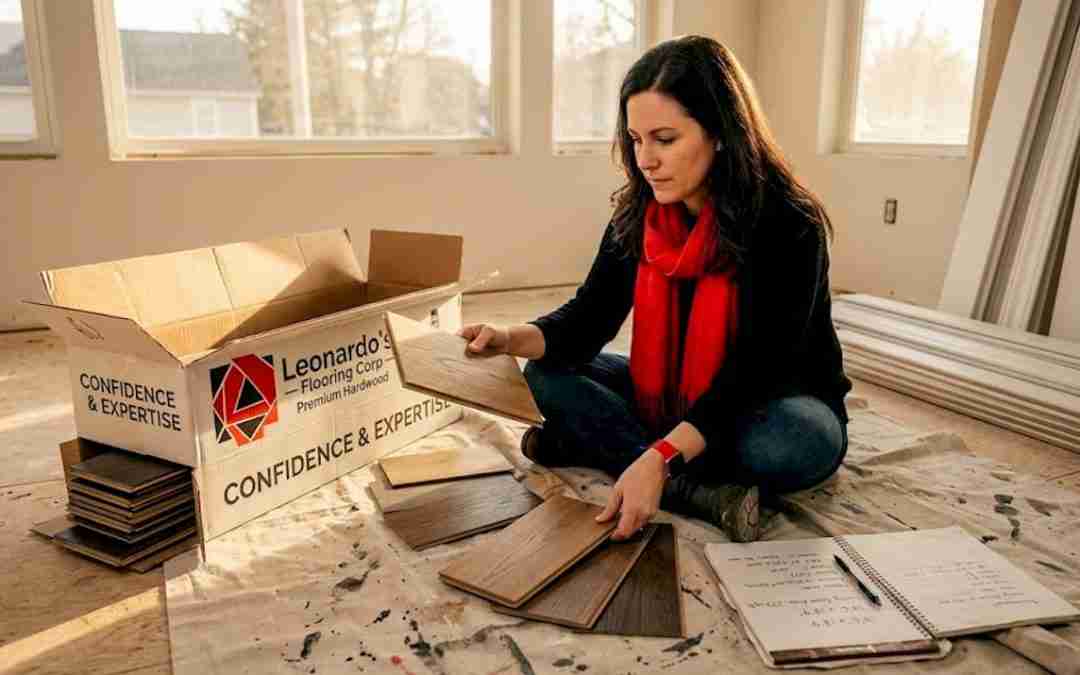
Picking the right floor in 2026 is harder than it looks. You have more material options than ever, a flood of competing style trends, and a wide range of price points that can make your head spin before you’ve even stepped into a showroom. This flooring selection guide 2026 cuts through that noise. Whether you’re renovating a Denver home, updating a commercial space, or starting from scratch, what follows gives you a clear framework covering material types, current trends, real installation costs, and eco-friendly choices so you can make a decision you’ll still feel good about five years from now.
Table of Contents
- Key takeaways
- Your 2026 flooring selection guide to material types
- 2026 flooring trends worth following
- Preparing for installation: costs and measurements
- Eco-friendly and health-conscious flooring choices
- My honest take on flooring decisions
- Let Leonardo’s Flooring Corp handle the hard part
- FAQ
Key takeaways
| Point | Details |
|---|---|
| Match material to room conditions | Moisture-prone rooms need tile, vinyl, or linoleum. Bedrooms and living areas can handle hardwood or carpet. |
| Subfloor prep affects your budget | Leveling an uneven subfloor adds $2.00 to $5.00 per sq ft and is often left out of initial quotes. |
| Warm neutrals are the safe trend bet | Neutral tones pair with almost any interior and protect your resale value better than bold trend colors. |
| Check certifications, not just materials | GREENGUARD Gold and CARB 2 certifications apply to adhesives and finishes too, not just the floor itself. |
| Professional installation pays for itself | Quality subfloor preparation and expert installation directly determine how long your floors actually last. |
Your 2026 flooring selection guide to material types
Choosing a material is the most consequential decision in this whole process. Get it wrong and no amount of good styling will save you from a floor that warps, scratches, or just looks tired within a few years.
Hardwood is still the gold standard for living rooms, dining rooms, and bedrooms. Solid hardwood can typically be refinished 4 to 6 times, while engineered hardwood gives you only 1 to 2 refinishes depending on veneer thickness. That difference matters enormously if you’re planning a 20-year floor. Hardwood installed costs average $22.00 to $23.50 per square foot once you factor in materials, labor, and freight. Not cheap, but few floors add more resale value.
Laminate gives you the look of hardwood or stone at a fraction of the price. It’s a strong pick for high-traffic areas and households with kids or pets. The tradeoff is that laminate cannot be refinished. Once the wear layer is gone, you replace it. Still, for budget-conscious projects, it delivers style versatility that is hard to beat.
Luxury vinyl plank (LVP) and luxury vinyl tile (LVT) are the fastest-growing categories in the market right now. LVP is a top choice for kitchens and bathrooms because it is fully waterproof, highly scratch resistant, and can mimic wood or stone convincingly. With a life expectancy around 20 years, well-maintained vinyl competes seriously with much pricier options. If you want to explore the full picture, the waterproof flooring guide from Leonardo’s Flooring Corp breaks down exactly where vinyl outperforms other materials.
Carpet still wins in bedrooms and family rooms where comfort matters more than durability. It absorbs sound, feels warm underfoot, and is usually the most affordable option per square foot. The catch is maintenance. Carpets trap allergens and need consistent cleaning to stay looking good.
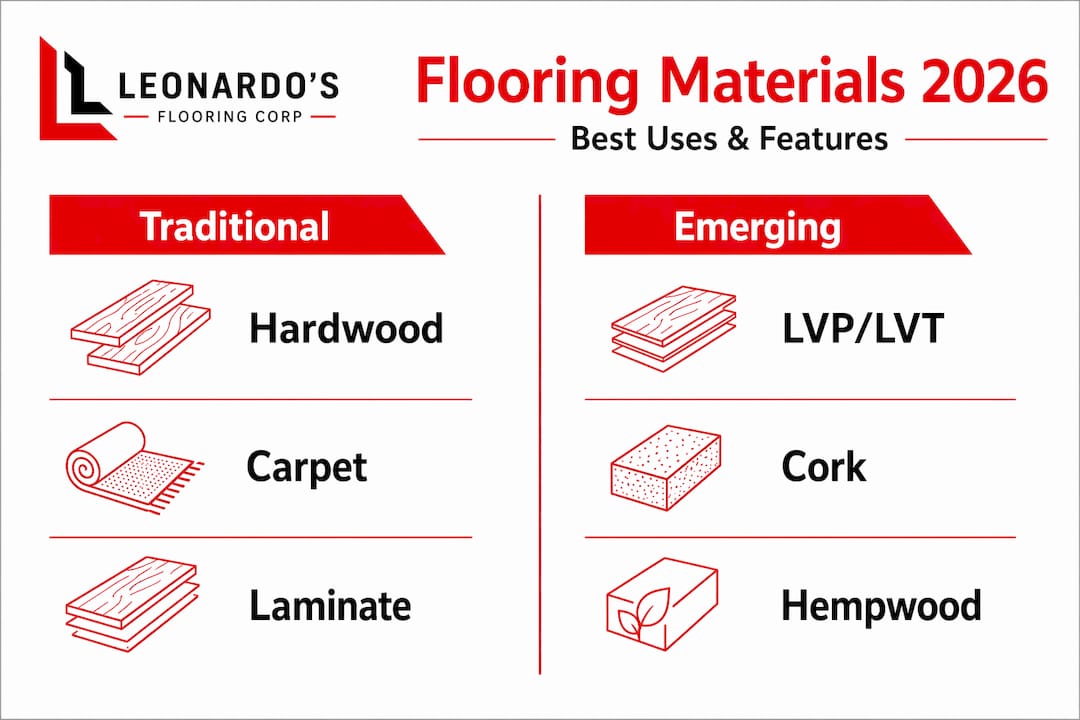
Emerging materials like hempwood, cork, and natural linoleum are gaining ground among eco-conscious buyers. They offer solid durability and a lower environmental footprint compared to conventional materials. Cork, for instance, is naturally antimicrobial and provides excellent sound insulation.
| Material | Avg. installed cost | Best rooms | Refinishable |
|---|---|---|---|
| Solid hardwood | $22 to $23.50/sq ft | Living, bedroom, dining | Yes (4 to 6 times) |
| Engineered hardwood | $8 to $15/sq ft | Living, bedroom | Yes (1 to 2 times) |
| Luxury vinyl plank | $3 to $8/sq ft | Kitchen, bath, basement | No |
| Laminate | $3 to $7/sq ft | High-traffic areas | No |
| Carpet | $3 to $6/sq ft | Bedroom, family room | No |
| Cork | $5 to $12/sq ft | Home office, bedroom | Limited |
Pro Tip: The Janka hardness scale rates wood species by resistance to denting. White oak scores around 1,290, making it a practical middle ground between the softness of pine and the premium price of hickory. It’s one of the most popular neutral options for 2026 installs.
2026 flooring trends worth following
Trends are useful when they align with your practical needs. They become expensive mistakes when you chase them at the cost of durability or long-term style.
The biggest movement in 2026 flooring design is the shift toward warm neutral tones. Think honey oak, toasted almond, and warm greige. These shades pair with virtually any furniture style and act as a long-term investment for resale value. They don’t date your home the way that, say, a super dark espresso floor or a stark white tile will.
Wide plank flooring continues to gain momentum. Planks of five inches and wider create a sense of visual space, reduce the number of seams in a room, and show off the natural grain of wood species more effectively than narrow planks. For commercial spaces, wide plank also reads as more premium, which matters for client-facing environments.
A few other trends shaping 2026 flooring decisions:
- Matte finishes are replacing high-gloss across wood and vinyl categories. Matte hides everyday scuffs and scratches far better than glossy surfaces, which means your floors look cleaner with less effort.
- Herringbone and chevron patterns are having a strong moment, particularly in entryways, bathrooms, and kitchens. They add visual interest without requiring an expensive material.
- Stone-look tile is showing up in spaces where real stone would be too heavy or too costly. Porcelain options now replicate marble and travertine convincingly enough that most guests won’t know the difference.
- Bold statement floors in deep greens, blues, or terracotta are appearing in design media, but proceed cautiously. Warm neutrals provide far safer long-term resale outcomes than trend-heavy colors.
The trend to skip in 2026 is overly gray-toned flooring. The cool gray and ash finishes that dominated the 2015 to 2020 era are already feeling dated. If you installed them, you’re not in crisis. But if you’re starting fresh, move toward warmer undertones.
Preparing for installation: costs and measurements
The biggest source of budget surprises in flooring projects isn’t the material cost. It’s what happens before a single plank goes down.
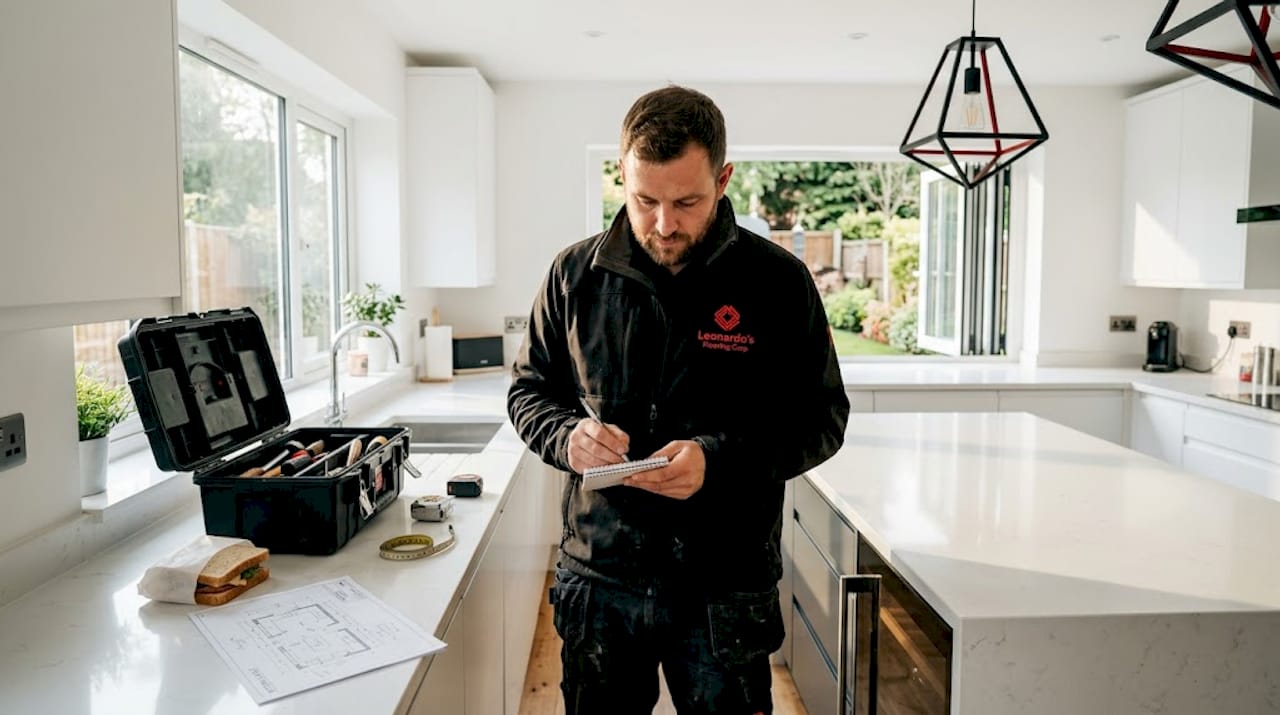
Start with accurate measurements. Incorrect measurements cause both waste and shortages, and each of those outcomes costs you money. Measure every room including closets and hallways. Add 10% to your total square footage for waste, cutting, and pattern matching. For herringbone or diagonal patterns, go up to 15%.
Next, assess your subfloor before getting a single quote. This step is where most homeowners get caught off guard. Leveling an uneven subfloor adds $2.00 to $5.00 per square foot to your total, and many contractors either don’t include it in their initial estimates or won’t know the subfloor condition until demo begins. Budget for it early.
Here’s a practical cost breakdown to plan against:
- Material cost: Varies by type (see table above). Get quotes including freight, which adds $1.50 or more per sq ft for most materials.
- Labor cost: Typically $8.00 to $9.00 per square foot for hardwood installation. Vinyl and laminate tend to run lower.
- Subfloor preparation: Budget $2.00 to $5.00 per sq ft as a contingency. If the subfloor is clean and level, great. If not, you’re covered.
- Removal and disposal: Factor in costs to remove existing flooring, which many quotes exclude.
- Finishing and transitions: Baseboards, reducers, and thresholds add up quickly in multi-room projects.
Pro Tip: For larger projects, commercial-grade procurement through specialized suppliers rather than retail outlets can reduce material costs by 25 to 30%. This approach also tends to come with better warranties. Ask your contractor if they have access to commercial pricing.
On DIY versus professional installation: vinyl click-lock and laminate floating floors are genuinely manageable for a confident DIYer. Hardwood, tile, and anything requiring a new subfloor are not. A poor hardwood installation will squeak, cup, and gap within a year. Professional flooring installation is one area where the investment directly protects the material investment you’ve already made.
Eco-friendly and health-conscious flooring choices
Most buyers focus on the floor itself when evaluating eco-friendly options. That’s the right instinct, but it misses the full picture. Adhesives often pose greater health risks than the flooring material itself. VOC emissions from glues and finishes can off-gas into your indoor air for months after installation.
The practical checklist for eco-friendly flooring choices looks like this:
- Verify GREENGUARD Gold certification on both the flooring product and any adhesive used. This certification confirms low chemical emissions and is especially important in bedrooms and spaces where children spend time.
- Ask about CARB 2 compliance for any composite wood product like engineered hardwood, laminate, or MDF-core vinyl. CARB 2 is California’s formaldehyde emission standard and represents one of the strictest benchmarks available.
- Consider hempwood and cork for their sustainability credentials. Hempwood is harder than red oak and grows to harvestable size in months rather than decades. Cork is harvested from bark without cutting the tree, making it genuinely renewable.
- Natural linoleum (not to be confused with vinyl) is made from linseed oil, cork dust, and wood flour. It’s biodegradable, antimicrobial, and one of the most durable resilient floor options available.
- Sustainably sourced hardwood bearing the Forest Stewardship Council (FSC) certification gives you the beauty of wood with verified responsible sourcing.
“Consumers should evaluate adhesive and finish VOC content, not just the flooring material, to achieve healthier indoor air quality.” Healthiest Flooring Options Ranked 2026
Maintenance habits also affect long-term environmental impact. Hardwood requires moisture protection, carpet needs frequent cleaning, and vinyl and laminate are lower maintenance. A floor that lasts 30 years with proper care is always a better environmental choice than a cheaper option replaced every decade.
My honest take on flooring decisions
I’ve seen hundreds of flooring projects across Denver, and the most common mistake I’ve watched homeowners make is choosing based on how a floor looks in a showroom photograph. That photograph is taken in perfect lighting with perfect furniture. Your kitchen at 7 a.m. with four kids and a dog is a different environment entirely.
In my experience, the buyers who are happiest two years after their install are the ones who matched flooring to room conditions and lifestyle first, and then found the best-looking option within that shortlist. The ones who did it in reverse order, style first and practical fit second, are usually the ones calling about premature wear, moisture damage, or squeaky floors.
I also think the sustainable flooring conversation is more practical than most guides acknowledge. Hempwood and cork aren’t niche anymore. They’re available, competitively priced, and genuinely durable. If you’re putting floors in a home office or a bedroom, they deserve serious consideration, not just a mention at the bottom of your list.
Subfloor prep is the other hill I’ll always die on. It’s unglamorous, nobody photographs it for Instagram, and it’s easy to skip or underfund. But quality subfloor preparation is what separates a floor that performs for decades from one that starts failing in year three.
— Jim
Let Leonardo’s Flooring Corp handle the hard part
Reading a flooring buying guide gets you oriented. Having the right team in your corner gets the floor installed correctly. Leonardo’s Flooring Corp has been helping Denver homeowners and business owners turn flooring decisions into finished projects for over 10 years, and the process is genuinely straightforward when you work with people who know their materials.
Whether you’re looking at hardwood floor installation, laminate flooring for a high-traffic commercial space, or luxury vinyl options for moisture-prone rooms, the team at Leonardo’s Flooring Corp will walk you through every choice without the sales pressure. You get honest recommendations, accurate quotes that include subfloor considerations, and installation by crews who treat your home the way they’d treat their own. With 125 plus five-star reviews and a full range of flooring installation services across Denver, getting started is as simple as reaching out to schedule a consultation.
FAQ
What is the most durable flooring option in 2026?
Porcelain tile and luxury vinyl plank are among the most durable options available. LVP offers waterproof protection, high scratch resistance, and a life expectancy of about 20 years with proper maintenance.
How much does flooring installation cost in 2026?
Costs vary significantly by material. Hardwood averages $22.00 to $23.50 per square foot installed, while vinyl and laminate run $3.00 to $8.00 per square foot. Always budget an additional $2.00 to $5.00 per square foot for potential subfloor leveling costs.
What flooring is best for kitchens and bathrooms?
Tile, luxury vinyl plank, and natural linoleum are the top choices for wet areas. All three provide waterproof protection and hold up well against moisture, spills, and humidity.
Are eco-friendly flooring options worth it in 2026?
Yes. Cork, hempwood, and natural linoleum are now competitively priced, genuinely durable, and backed by verifiable certifications. Make sure any product you choose carries GREENGUARD Gold or CARB 2 certification, which covers both the material and the adhesive used during installation.
What flooring colors are trending in 2026?
Warm neutral tones like honey oak and warm greige are the dominant 2026 flooring trends. They provide timeless versatility and protect resale value better than bold or heavily cool-toned colors that can date quickly.