
Most people buy waterproof flooring expecting zero worries about water. Then they discover a warped plank near the bathroom door, or moisture creeping under the edges of a kitchen floor that was marketed as “100% waterproof.” This guide will show you exactly what waterproof flooring is, how the major types compare, what the labels really mean, and how to make sure your investment actually holds up. Whether you’re renovating a Denver basement, updating a commercial kitchen, or just tired of replacing floors after every spill, this is the practical guide you need.
Table of Contents
- What does ‘waterproof flooring’ actually mean?
- Types of waterproof flooring: a comparison
- Installation and maintenance: what most people miss
- Where waterproof flooring works best in Denver homes and businesses
- A flooring expert’s perspective: why what’s underneath may matter more than the planks
- Get durable, stylish waterproof flooring installed right
- Frequently asked questions
Key Takeaways
| Point | Details |
|---|---|
| Know what ‘waterproof’ means | Waterproof flooring resists water, but only when installed and maintained correctly. |
| Choose the right material | SPC/WPC rigid-core vinyl, tile, and epoxy are top choices for high-moisture areas. |
| Proper installation is critical | Installation details like perimeter sealing and subfloor prep make or break waterproof performance. |
| Best in moisture-prone spaces | Install waterproof flooring in basements, kitchens, bathrooms, and entryways for maximum benefit. |
| Pros ensure flawless results | Professional installers understand local challenges and deliver durability that DIY often can’t. |
What does ‘waterproof flooring’ actually mean?
The word “waterproof” gets thrown around a lot in flooring showrooms, and it creates real confusion. Here’s the honest breakdown: water-resistant flooring can handle brief exposure to moisture before damage sets in. Waterproof flooring, by contrast, has a core material that moisture literally cannot penetrate. That’s a meaningful difference, but it’s not the whole story.
“Waterproof” in flooring means the plank or tile itself won’t absorb water, expand, or degrade when wet. It does not mean the entire floor system is immune to moisture damage under every condition.
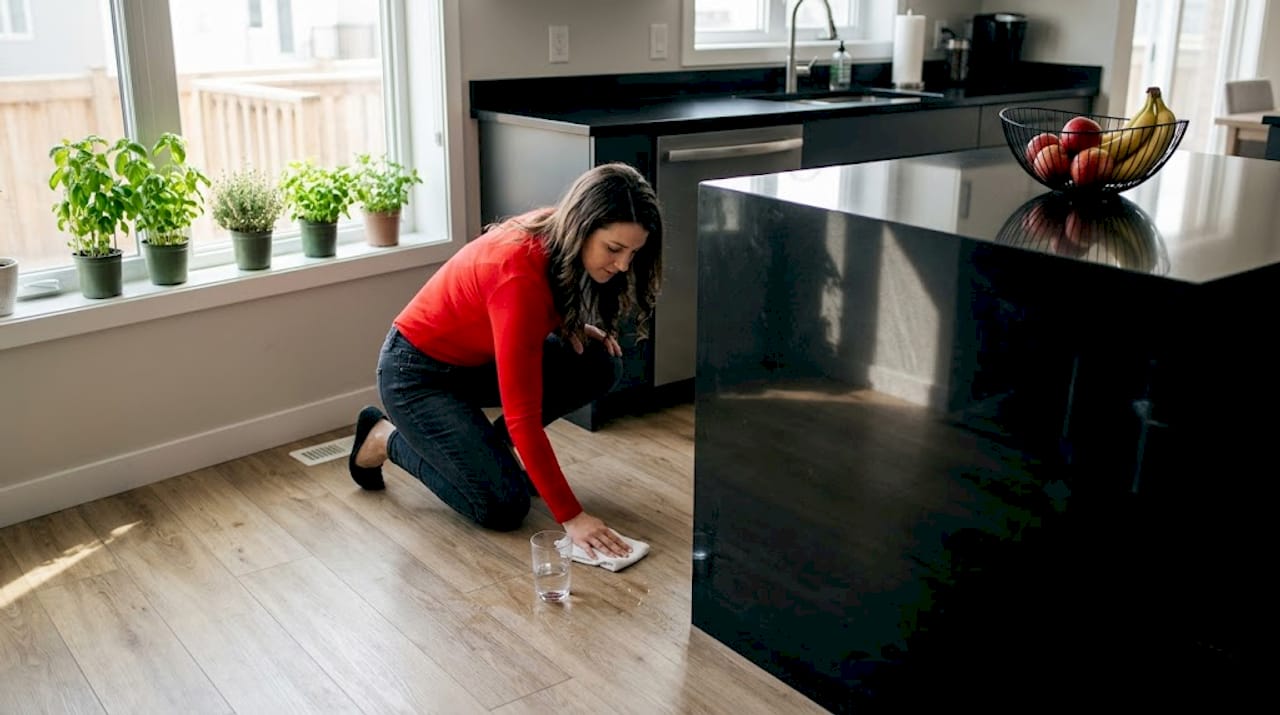
A rigid-core luxury vinyl plank, for example, won’t swell when you spill a glass of water on it. But if that same water seeps under the floor through an improperly sealed edge, you can still end up with mold in the subfloor or adhesion failures. The plank stayed fine. Everything beneath it didn’t.
What’s commonly marketed as waterproof flooring includes rigid-core luxury vinyl (both SPC and WPC formats), most porcelain and ceramic tile, and cured epoxy floor coatings. Standard laminate flooring, even so-called “water-resistant” laminate, is not waterproof and can delaminate with prolonged moisture exposure.
Common misconceptions homeowners have:
- Waterproof floors are flood-proof (they’re not; standing water still causes problems if it seeps underneath)
- All waterproof products perform the same (SPC vinyl and porcelain tile behave very differently)
- Water-resistant and waterproof mean the same thing (they don’t, and confusing them leads to wrong product choices)
- Once you install waterproof flooring, you never need to worry about moisture again (installation and sealing still matter enormously)
- Waterproof flooring means the subfloor is also protected (it isn’t, unless moisture barriers are installed correctly)
Understanding the real definition saves you from expensive surprises. When a salesperson says “waterproof,” your follow-up question should always be: “Does that include the edges, the subfloor prep, and the seams?”
Types of waterproof flooring: a comparison
Now that we’ve defined what waterproof flooring is, let’s see how the different types compare in performance and suitability. The Denver metro presents specific challenges: snow tracked in from outside, dramatic temperature swings between seasons, dry indoor air in winter, and a wide range of home ages with varying subfloor conditions. Not every waterproof product handles all of that the same way.
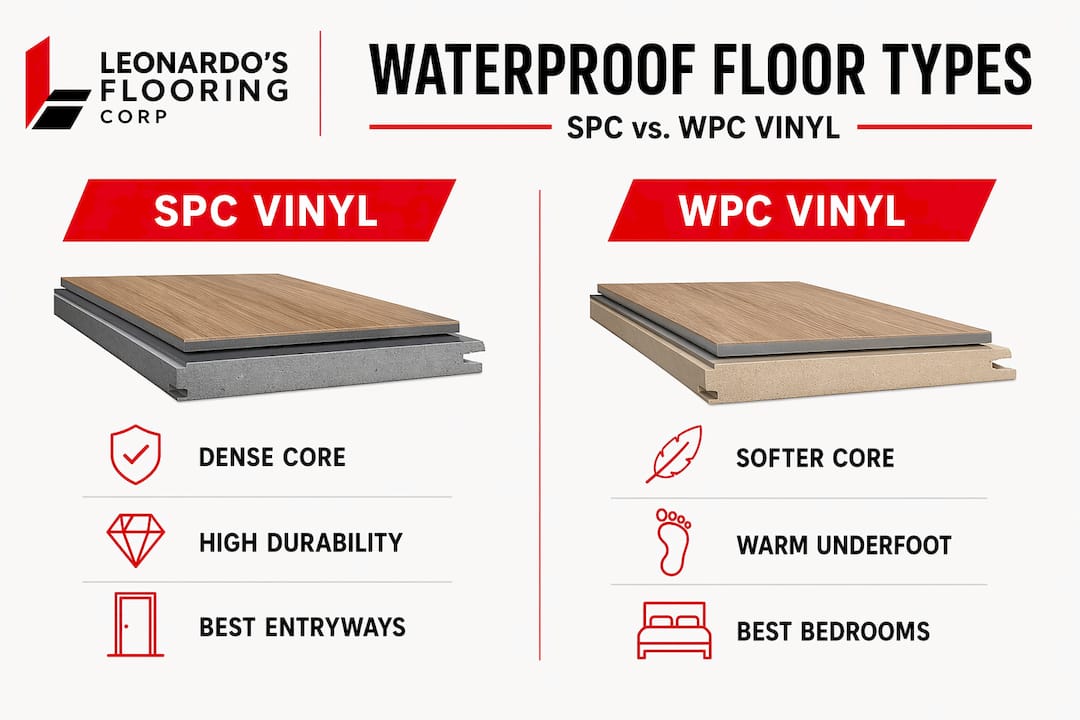
Rigid-core vinyl comes in two main formats. SPC (stone-plastic composite) has a denser, harder core made from limestone powder and PVC, making it extremely rigid and ideal for high-traffic commercial spaces. WPC (wood-plastic composite) uses a foamed wood-polymer core that feels softer underfoot and offers better noise reduction, making it popular for living areas and laminate floor alternatives. Both provide 100% waterproof cores, meaning the planks themselves will not absorb or be damaged by moisture.
| Material | Waterproof performance | Looks | Typical use areas | Cost range (per sq. ft.) | Durability |
|---|---|---|---|---|---|
| SPC rigid-core vinyl | Excellent | Realistic wood/stone looks | Basements, commercial, high-traffic | $3 to $7 | Very high |
| WPC vinyl | Excellent | Warm, realistic wood looks | Living rooms, bedrooms, kitchens | $4 to $9 | High |
| Porcelain tile | Outstanding | Stone, wood, or graphic | Bathrooms, entryways, kitchens | $5 to $15+ installed | Very high |
| Epoxy coating | Outstanding | Seamless, industrial or decorative | Garages, commercial floors, basements | $3 to $12 | Extremely high |
Porcelain tile and epoxy coatings are genuinely impervious to water when properly installed. Tile has grout lines, though, and those grout lines must be sealed to prevent moisture absorption. Epoxy creates a seamless surface, which is why it performs so well in garages and commercial kitchens. The tradeoff is that epoxy can feel hard and cold, and surface preparation requirements are more demanding. A failed epoxy bond from poor prep is one of the most common flooring repair calls in the industry.
Pro Tip: Match the product to the specific space. Denver entryways take a beating from snow melt and mud, so a dense SPC plank or porcelain tile handles that grit and moisture far better than WPC, which is better suited to interior rooms where comfort matters more than heavy-duty abuse.
Families with kids and pets, or anyone dealing with Denver winters, should prioritize products that handle both wet and abrasive conditions simultaneously. A slippery-when-wet surface rating also matters, especially near exterior doors and in bathrooms.
Installation and maintenance: what most people miss
Understanding the types of waterproof flooring is just the start. Proper installation is what keeps your floors truly water-safe. This is where the gap between marketing claims and real-world performance shows up most dramatically.
The single most important step before any waterproof floor goes down is moisture testing the subfloor. Concrete slabs, even in newer Denver homes, can emit significant moisture vapor from below. If that vapor has nowhere to go, it will find the path of least resistance, which is often right through adhesive bonds or up through flooring seams. A professional installer uses a calcium chloride test or a relative humidity probe in the concrete to measure this before committing to an install.
Three most common installation errors that cause waterproof flooring to fail:
- Skipping the moisture barrier or vapor test. Especially critical in Denver basements, where ground moisture is a constant concern regardless of the season.
- Not leaving proper expansion gaps at walls and transitions. Rigid-core vinyl still expands and contracts with temperature changes. Eliminate that gap, and planks buckle. Denver’s temperature swings between summer and winter make this especially relevant.
- Poor perimeter sealing at edges, transitions, and around fixtures. This is where water gets underneath. As installation experts note, even perfectly waterproof planks can fail because of poor sealing at the perimeter, incorrect expansion gaps, or inadequate subfloor moisture testing. The planks don’t fail. The install does.
Proper subfloor preparation includes not just moisture testing but also checking for levelness (floors should not deviate more than 3/16 inch over 10 feet for most vinyl products), repairing any soft or damaged areas, and ensuring the subfloor is clean and free from debris.
For maintenance after installation, the basics are straightforward. Wipe spills quickly, even on waterproof floors, because prolonged pooling near seams is still a risk. Use a damp mop rather than a soaking wet one. Keep dirt and grit swept up, because abrasive particles scratch wear layers over time. Avoid steam mops, which can force hot moisture into seams and transitions. Reseal grout lines in tiled areas at least every one to two years.
Pro Tip: Work with professional flooring installers who have direct experience with Denver-area conditions. Local climate knowledge is not a small thing. An installer who has handled dozens of Denver basements and knows how Colorado concrete behaves in different seasons is worth far more than the cheapest bid you can find online.
Where waterproof flooring works best in Denver homes and businesses
After you’ve chosen the right floor and ensured proper installation, location and use-case matter most. Not every room has the same risk profile, and matching the product to the environment is how you get long-term performance without callbacks or regret.
| Room/area | Recommended material | Risk level | Rationale |
|---|---|---|---|
| Basement | SPC rigid-core vinyl | High | Ground moisture, flood risk, temperature variation |
| Kitchen | SPC vinyl or porcelain tile | High | Spills, grease, foot traffic |
| Bathroom | Porcelain tile or SPC vinyl | Very high | Standing water, humidity, splash zones |
| Entryway | Porcelain tile or SPC vinyl | High | Snow melt, mud, salt, grit from Denver winters |
| Laundry room | SPC vinyl or epoxy | High | Appliance leaks, humidity |
| Living/dining | WPC vinyl | Medium | Comfort priority, occasional spills |
| Commercial kitchen | Epoxy coating | Very high | Heavy washdowns, grease, chemical cleaners |
| Retail floor | SPC vinyl | Medium-high | High traffic, cart wear, occasional wet entry |
WPC and SPC rigid-core vinyl have become the dominant choice for residential waterproof applications because they balance performance, comfort, and realistic aesthetics at accessible price points. But for truly wet commercial environments, epoxy or large-format porcelain tile remains the most reliable option.
Signs you genuinely need waterproof flooring:
- Pets that track in water, mud, or have occasional accidents
- A basement with any history of water intrusion or high humidity
- Bathrooms used by children or elderly family members
- Entryways that take on snow, slush, and road salt from November through March
- Commercial spaces with regular wet cleaning or food and beverage service
- Any room above a crawl space with known moisture issues
Denver-specific concerns are worth calling out directly. The area’s freeze-thaw cycles affect not just roads and sidewalks but the ground around and under your home’s foundation. Ground moisture levels change significantly between spring and late summer. If you’ve noticed any efflorescence (white salt deposits) on your basement walls, that’s a signal that moisture is actively moving through your concrete slab, and your flooring choice needs to account for that. Reviewing a complete Denver flooring guide or consulting with a local expert before committing to a product is always worthwhile. Pair your waterproof floor with tile in wet zones like bathrooms and entryways for the best results.
A flooring expert’s perspective: why what’s underneath may matter more than the planks
Here’s something the flooring industry doesn’t say loudly enough: most waterproof floor failures we see aren’t product failures. They’re prep failures. And after over ten years of installs across the Denver metro, this pattern is as consistent as anything else in the trade.
Homeowners come to us after a previous installer put down a “100% waterproof” floor that buckled, grew mold underneath, or started lifting at the seams within a year. Nine times out of ten, the product itself was fine. What failed was the subfloor prep, the moisture testing, or the perimeter sealing. Exactly as installation research confirms, improper installation details defeat the product’s intended moisture resistance even when the planks themselves resist water.
Conventional wisdom says: buy the best waterproof product you can afford. Our experience says: invest just as much thought in what happens before the first plank goes down. A $4 per square foot SPC floor installed over a properly prepared, moisture-tested subfloor will outperform a $9 per square foot product dropped over a suspect slab.
Moisture in Denver doesn’t just come from spilled coffee. It comes up from below, especially in homes built before modern vapor barriers were standard. It comes in around perimeter edges in freeze-thaw cycles. It migrates through walls in older basements. The product label says nothing about any of that. Only good prep and careful installation address it.
The biggest return on investment in any waterproof flooring project is time and money spent on lasting flooring results, not just on the surface material. That means hiring installers who will test, who will seal, who will ask about your basement’s history before they quote. It means not accepting the lowest bid from someone who skips those steps. A floor that lasts fifteen years costs less than three floors that each last five.
Get durable, stylish waterproof flooring installed right
Waterproof flooring works beautifully when the right product meets the right prep and a skilled installation. That combination is what Leonardo’s Flooring Corp has delivered across hundreds of Denver-area homes and commercial properties for over a decade.
We specialize in waterproof vinyl installation and tile floor solutions for bathrooms, kitchens, basements, entryways, and commercial spaces throughout the Denver metro. Every project starts with honest advice about what your specific space needs, not what’s easiest to sell. Our 125+ five-star reviews reflect that approach. Explore your waterproof vinyl options and reach out to schedule a consultation. We’ll assess your space, explain your options in plain language, and give you a clear quote with no surprises.
Frequently asked questions
Is waterproof flooring really 100% immune to water damage?
No. Even waterproof floors can fail if installation details are overlooked, because moisture can still penetrate at unsealed edges, transitions, or through the subfloor.
What are SPC and WPC in waterproof flooring?
SPC (stone-plastic composite) and WPC (wood-plastic composite) are the rigid-core vinyl formats that make luxury vinyl planks waterproof by using an impervious core that water simply cannot penetrate.
Is waterproof flooring suitable for basements?
Yes, and it’s often the best choice. WPC and SPC vinyl handle ground moisture effectively, though a proper vapor barrier and moisture test are still essential before installation.
Does waterproof flooring need special cleaning products?
Not usually. Most waterproof floors clean well with standard non-abrasive cleaners and a damp mop, but always follow the manufacturer’s guidelines to avoid voiding the product warranty.
Can waterproof flooring be installed over existing tile or wood?
It can, as long as the existing surface is flat, structurally sound, and properly prepared. Professional subfloor assessment is strongly recommended before going this route to avoid hidden moisture or levelness issues.