
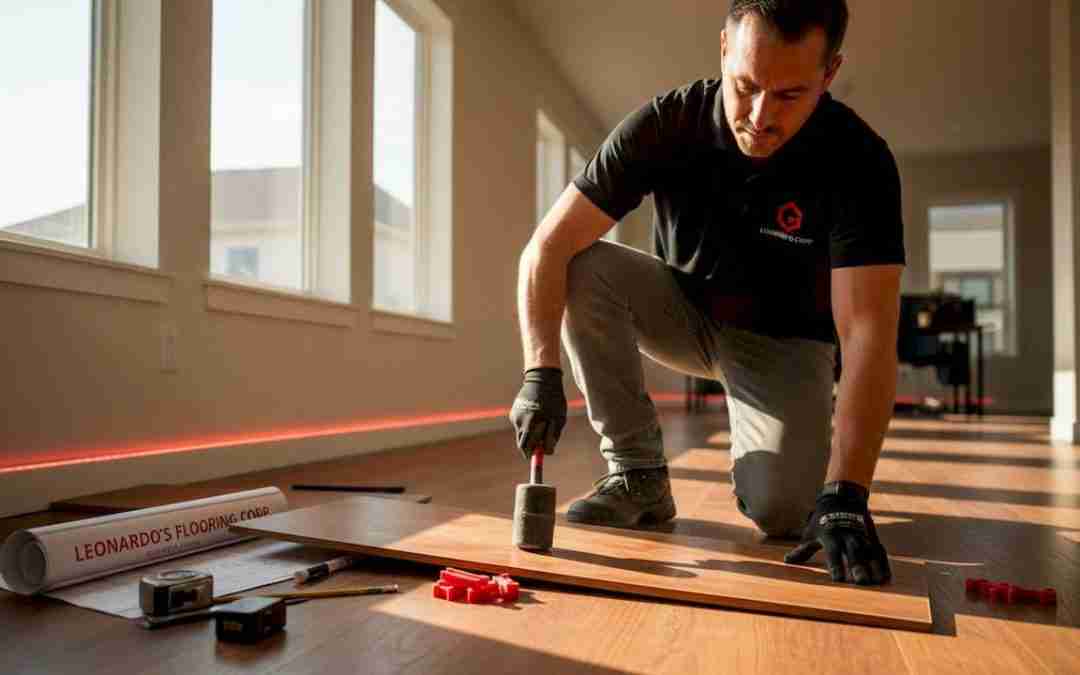
Most flooring failures aren’t caused by cheap materials. They’re caused by what happened before the first plank was ever laid. Homeowners across the Denver metro spend thousands on beautiful hardwood, luxury vinyl, or premium tile, only to watch it buckle, gap, or crack within a year. The culprit is almost always the same: missed preparation steps, skipped acclimation, and installation shortcuts that no amount of quality material can overcome. This article breaks down exactly what professional installers do differently, why it matters for Denver’s unique climate, and how the right installation approach protects your investment for the long haul.
Table of Contents
- What makes professional flooring installation different?
- The risks of DIY and cut-rate installs
- Benefits of professional installation for Denver properties
- Why commercial projects demand certified installers
- The uncomfortable truth most experts won’t tell you about flooring installation
- Experience the difference with certified flooring professionals
- Frequently asked questions
Key Takeaways
| Point | Details |
|---|---|
| Acclimation prevents failures | Proper acclimation by professionals minimizes moisture-related expansions and repairs. |
| Substrate prep is essential | Certified installers check and prep subfloors to ensure smooth installation and durability. |
| DIY risks are high | Many DIY installations lead to unexpected repair costs and voided warranties. |
| Commercial needs expertise | Professional installers help commercial properties avoid risk and ensure performance. |
| Denver-specific benefits | Professional installation methods are tailored for Denver’s climate, maximizing floor lifespan. |
What makes professional flooring installation different?
With the context set, let’s explore exactly what professionals do that distinguishes their work from a weekend DIY attempt or a bargain-bin crew.
The most obvious difference is training. Certified flooring installers complete formal coursework and hands-on apprenticeships that cover substrate assessment, moisture testing, adhesive chemistry, and material-specific techniques. That’s not something you pick up from a YouTube tutorial. Credentials like those from the International Certified Flooring Installers Association (CFI) require ongoing education, which means a certified pro stays current with evolving materials and installation standards.
But credentials are just the starting point. Here’s what the actual process looks like on a professional job site:
- Substrate inspection: Professionals check for levelness, structural integrity, and moisture content before anything else. A subfloor that’s even slightly out of level can cause tile to crack or laminate to separate.
- Moisture testing: Using calibrated meters, pros measure moisture in both the subfloor and the flooring material itself. Denver’s semi-arid climate creates unique moisture dynamics, especially in basements.
- Acclimation: Flooring materials are stored on-site for a defined period before installation. Proper acclimation of wood flooring is a methodology pros use to reach equilibrium moisture content with the jobsite, reducing expansion, contraction, and moisture-related problems that can otherwise trigger costly callbacks and repairs.
- Expansion gap management: Professionals account for seasonal movement by leaving precise gaps at walls and transitions, something most DIYers either skip or underestimate.
- Adhesive and fastener selection: The wrong adhesive for a radiant heat floor or a high-traffic commercial space can cause premature failure. Pros match the product to the application.
“Acclimation isn’t optional. It’s the foundation of every successful installation. Skip it and you’re gambling with the entire project.”
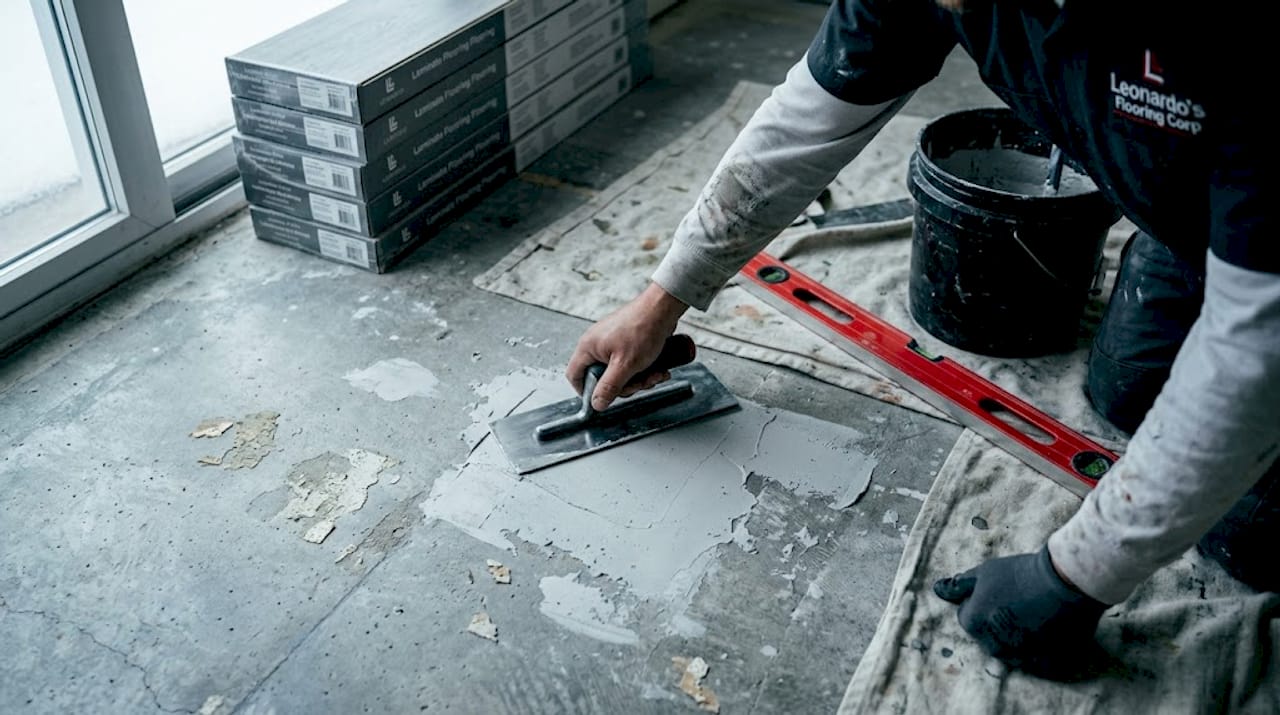
Proper subfloor preparation is arguably the most undervalued step in any flooring project. Grinding down high spots, filling low areas, and applying appropriate underlayment are time-consuming tasks that cut-rate installers routinely skip. When they do, the floor pays the price, often within the first heating season.
For practical guidance on what to expect during a professional install, our flooring installation tips cover the specifics in plain language.
The risks of DIY and cut-rate installs
Now that you know what professionals do differently, let’s examine the common errors and risks that arise without their expertise.
The appeal of DIY flooring is understandable. Material costs are visible. Labor costs feel optional. But the hidden costs of an improper install are where homeowners get blindsided, and those costs almost always exceed whatever was “saved” upfront.
Here are the most common failure points in non-professional installations:
- Skipped moisture testing: Without proper readings, flooring goes down over a wet subfloor. Within months, you’re dealing with mold, buckled planks, or adhesive failure.
- No acclimation period: Rushing installation means the flooring hasn’t adjusted to the room’s temperature and humidity. Acclimation, when done properly, mitigates expansion, contraction, and warping while helping avoid moisture-related failures. Skip it, and those problems become your reality.
- Improper subfloor leveling: Even a 3/16-inch variation over 10 feet can cause tile to crack or floating floors to develop hollow spots and squeaks.
- Wrong fasteners or adhesives: Using the wrong product voids manufacturer warranties instantly.
- Inadequate expansion gaps: Floors need room to breathe. Without proper gaps, planks buckle during Denver’s warm, dry summers.
Pro Tip: Always ask any installer for their credentials, proof of insurance, and at least three references from jobs completed in the past 12 months. A legitimate professional will have all three ready without hesitation.
The financial consequences add up fast. Consider this comparison:
| Cost category | DIY or cut-rate install | Professional installation |
|---|---|---|
| Upfront labor cost | Low or zero | Moderate to higher |
| Material waste from errors | High (10-20% overage) | Low (5-8% standard) |
| Repair costs within 2 years | $500 to $3,000+ | Minimal to none |
| Warranty coverage | Often voided | Fully maintained |
| Reinstallation risk | High | Very low |
The math isn’t subtle. A quality flooring installation done right the first time costs less over a five-year period than a bargain install that requires repairs, partial replacement, or full reinstallation.
One category that surprises homeowners is laminate installation. Laminate looks forgiving and straightforward, but it’s highly sensitive to moisture and subfloor imperfections. It’s one of the most commonly botched DIY projects, precisely because people assume it’s easy.
Benefits of professional installation for Denver properties
Understanding the risks is crucial, but the real value comes from the positive results professionals deliver, especially in Denver’s unique environment.
Denver sits at 5,280 feet with low relative humidity, intense UV exposure, and dramatic seasonal temperature swings. Those factors affect every flooring material differently. Hardwood expands and contracts more aggressively here than in humid coastal cities. Tile grout can crack under freeze-thaw cycles in poorly insulated spaces. Vinyl can lift in direct sunlight if the adhesive isn’t rated for temperature extremes.
Professional installers who work regularly in the Denver metro understand these dynamics. They choose materials and methods that account for local conditions, not generic national standards.
Here’s what you can expect when you invest in professional installation:
- Longer floor lifespan. Floors installed with proper acclimation and substrate prep routinely last 20 to 30 years. Rushed installs often fail within 3 to 5 years.
- Fewer repairs. Correct installation eliminates the root causes of most common failures. You’re not patching problems every season.
- Full warranty protection. Manufacturers require certified installation for warranty eligibility. One missed step can void coverage entirely.
- Better resale value. Real estate appraisers and buyers notice flooring quality. A professionally installed floor adds measurable value to your home.
- Peace of mind. Knowing your floor was installed correctly means you’re not wondering what’s happening underneath every time you hear a creak.
Stat callout: According to Floor Covering News, proper acclimation adjusts flooring to jobsite temperature and relative humidity. When done correctly, it prevents the expansion, contraction, and warping that drive the majority of post-installation complaints and warranty claims.
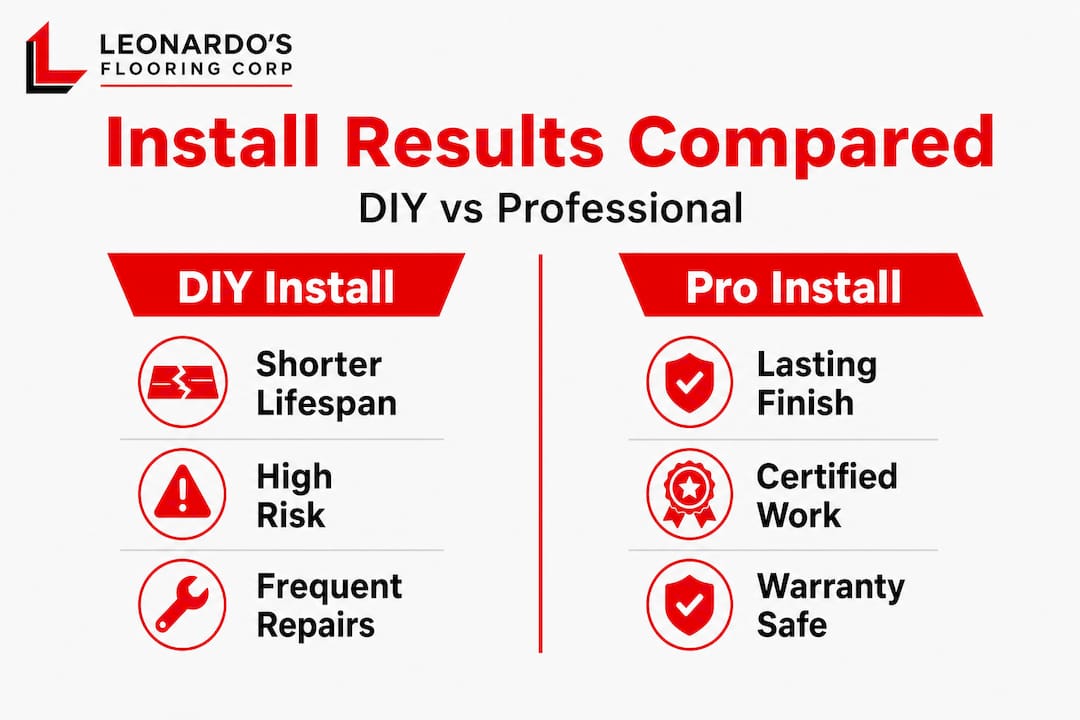
| Outcome | DIY or bargain install | Professional install in Denver |
|---|---|---|
| Average lifespan | 3 to 7 years | 15 to 30+ years |
| Warranty status | Often voided | Fully maintained |
| Moisture-related failures | Common | Rare |
| Seasonal movement issues | Frequent | Managed and mitigated |
| Resale impact | Neutral or negative | Positive |
For Denver homes specifically, Denver subfloor prep is a critical first step that shapes every outcome above. Skipping it in a climate with Denver’s humidity swings is a gamble that rarely pays off.
If you’re considering tile flooring installation, the substrate requirements are even stricter. Tile has zero flexibility, meaning any subfloor movement translates directly into cracked grout or broken tiles. And for those exploring vinyl flooring in Denver, the material is excellent for our climate but only when installed with the right adhesive and underlayment for temperature variation.
Why commercial projects demand certified installers
While these benefits apply to homes, commercial properties face even greater risk if shortcuts are taken.
The stakes in a commercial flooring project are fundamentally different from a residential job. A failed floor in a retail store, office building, or medical facility doesn’t just look bad. It creates liability exposure, disrupts business operations, and can result in lease violations or code compliance issues. There’s simply no margin for the kind of errors that a homeowner might tolerate while waiting for a repair appointment.
Certified commercial installers approach every project as a performance assurance exercise. Here’s what that looks like in practice:
- Pre-installation site assessment: Commercial substrates are often concrete slabs with embedded plumbing or electrical conduit. Professionals map the slab before cutting or fastening anything.
- Moisture vapor barrier installation: Commercial concrete slabs emit moisture vapor even when they look dry. Without a proper barrier, adhesive-down flooring fails within months.
- Traffic pattern analysis: High-traffic zones need different materials and installation methods than low-traffic areas. Certified installers design the layout accordingly.
- Phased installation planning: Many commercial projects can’t shut down entirely. Professionals plan installations in phases to minimize business disruption.
- Documentation and compliance: Commercial clients need records of installation methods, materials used, and substrate conditions for warranty and insurance purposes.
“Installer qualification and substrate preparation are treated as performance-assurance issues, reducing variance and callbacks across commercial flooring projects.” INSTALL’s 25-year track record demonstrates how certification programs have systematically reduced failure rates in commercial installations.
For property managers overseeing multiple units or large commercial spaces, the value of certified installation isn’t just about one floor. It’s about establishing a reliable process that produces consistent results across every project. Our Colorado installation guide covers the specific considerations for both residential and commercial properties in our state.
Whether you’re managing a single office suite or a multi-tenant retail center, our Denver flooring services are designed to meet commercial-grade standards without the bureaucratic overhead of large national contractors.
The uncomfortable truth most experts won’t tell you about flooring installation
Having seen why commercial projects require expertise, let’s step back for a frank perspective from inside the industry.
After more than a decade installing floors across the Denver metro, here’s what we’ve learned that most contractors won’t say out loud: every failed floor has a story, and that story almost always involves a step that was skipped to save time or money. It’s rarely the material’s fault. It’s almost always the process.
The flooring industry has a quiet problem. Because installation looks simple from the outside, buyers default to price as the primary decision factor. They compare quotes, pick the lowest number, and assume the results will be similar. They won’t be. The difference between a $3-per-square-foot install and a $6-per-square-foot install isn’t profit margin. It’s acclimation time, moisture testing, substrate leveling, and the experience to catch problems before they become permanent.
We’ve walked into homes where a previous installer laid beautiful hardwood over a subfloor that was visibly wet. The homeowner had no idea. The floor looked fine for six months, then started cupping and separating. The entire floor had to come out. The “savings” from the cheap install cost them three times as much to fix.
Acclimation and substrate preparation are not optional steps that professionals do to justify their rates. They are the reason professional floors last. Proper subfloor prep isn’t glamorous, but it’s the foundation everything else depends on.
Pro Tip: Before any installer begins work, ask them to provide written documentation of their acclimation plan and substrate assessment results. If they can’t or won’t, that’s your answer about how they work.
The uncomfortable reality is that saving $500 upfront on installation can easily cost you $3,000 to $8,000 in repairs, replacement materials, and labor within two to three years. We’ve seen it happen repeatedly. The homeowners who invest in certified, professional installation from the start are the ones who call us years later to thank us, not to ask for help fixing someone else’s mistakes.
Experience the difference with certified flooring professionals
Ready to ensure your next flooring project delivers lasting value? Certified professionals can make all the difference.
At Leonardo’s Flooring Corp, we’ve spent over 10 years installing floors the right way across the Denver metro, with 125+ five-star reviews to show for it. We don’t cut corners on acclimation, substrate prep, or moisture testing because we know those steps are what separate a floor that lasts from one that fails.
Whether you’re looking for hardwood flooring in Denver, need laminate flooring professionals who understand Denver’s climate demands, or want to explore vinyl flooring choices for a high-traffic space, we’ll help you find the right solution and install it correctly the first time. Every project is tailored to your specific space, budget, and timeline. No cookie-cutter approaches, no surprises. Just honest work and floors built to last.
Frequently asked questions
What is flooring acclimation and why does it matter in Denver?
Acclimation means allowing flooring materials to adjust to a jobsite’s temperature and humidity before installation. In Denver’s semi-arid climate, skipping acclimation dramatically increases the risk of expansion, warping, and moisture-related failures after the floor is laid.
Can I do my own flooring installation and get the same results?
Most DIY installations lack proper substrate checks and acclimation protocols, which are the two leading causes of flooring failure. Proper acclimation alone mitigates the expansion, contraction, and warping issues that turn DIY projects into expensive repair jobs.
How does professional installation help with warranties?
Manufacturers require certified installation methods to maintain full warranty coverage, and any deviation can result in a denied claim. Certified installers follow the exact protocols required, including acclimation and moisture control, keeping your warranty intact from day one.
Is professional installation important for commercial flooring projects?
Absolutely. In commercial settings, installer qualification and substrate preparation are treated as performance-assurance measures that directly reduce variance, callbacks, and liability exposure across the life of the floor.