
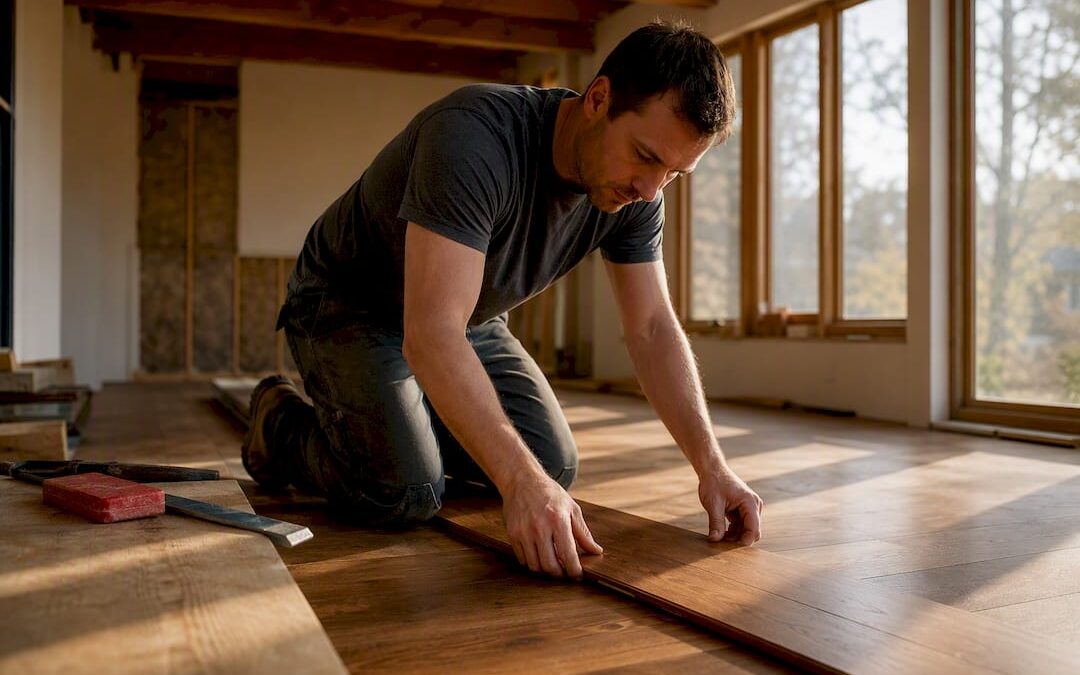
Hardwood installation cost typically runs $6 to $25+ per square foot installed, with most homeowners landing in a mid-range band of $10 to $16 per square foot once materials, labor, and finish are all counted. A common national baseline sits around $14 per square foot, with full projects ranging roughly $1,310 to $11,600 depending on square footage and finish choices.
Here’s what that means for actual rooms:
- 150 sq ft bedroom: roughly $1,500 to $2,400
- 500 sq ft living/dining combo: roughly $5,000 to $8,000
- 1,000 sq ft main level: roughly $10,000 to $16,000
If your layout includes stairs, tight closets, or a concrete slab, hire a pro. Simple, open rooms on a wood subfloor are where DIY savings are real.
Key Takeaways
Hardwood installation cost depends most on material tier and installation method, and the subfloor is where budgets most often break down.
| Point | Details |
|---|---|
| National baseline | Expect roughly $14 per square foot installed as a mid-range planning figure. |
| Method drives labor | Floating runs $2.50 to $5.50 per sq ft; glue-down runs up to $9.50. |
| Engineered saves money | Engineered wood costs 10 to 25% less installed than solid for a similar look. |
| Acclimation prevents repairs | Skipping the 48 to 72 hour acclimation window commonly causes cupping or gapping. |
| Get a written, itemized bid | Leonardo’s Flooring Corp provides line-item quotes covering subfloor prep, labor, and finish for Denver-area projects. |
Table of Contents
- Hardwood Installation Cost Breakdown by Component
- Solid vs. Engineered Wood: Which Fits Your Budget?
- How Installation Method Changes Your Labor Cost
- Sample Hardwood Flooring Project Estimates
- DIY vs. Professional Hardwood Installation
- How to Get an Accurate Contractor Quote
- Why Trust This Guide
- The Real Budget Advice Nobody Gives You
- Get a Written, Itemized Hardwood Estimate
- Frequently Asked Questions
- Sources
Hardwood Installation Cost Breakdown by Component
A hardwood floor bid is never one number. It’s five or six line items stacked together, and knowing what belongs in each one is how you catch a lowball quote before it turns into a change order.
Materials swing the widest. Species, grade, plank width, and whether the boards are factory-finished all move the price per square foot before a single nail goes in. Wider planks and select grades cost more; factory pre-finished boards often cost less overall once you skip site finishing.
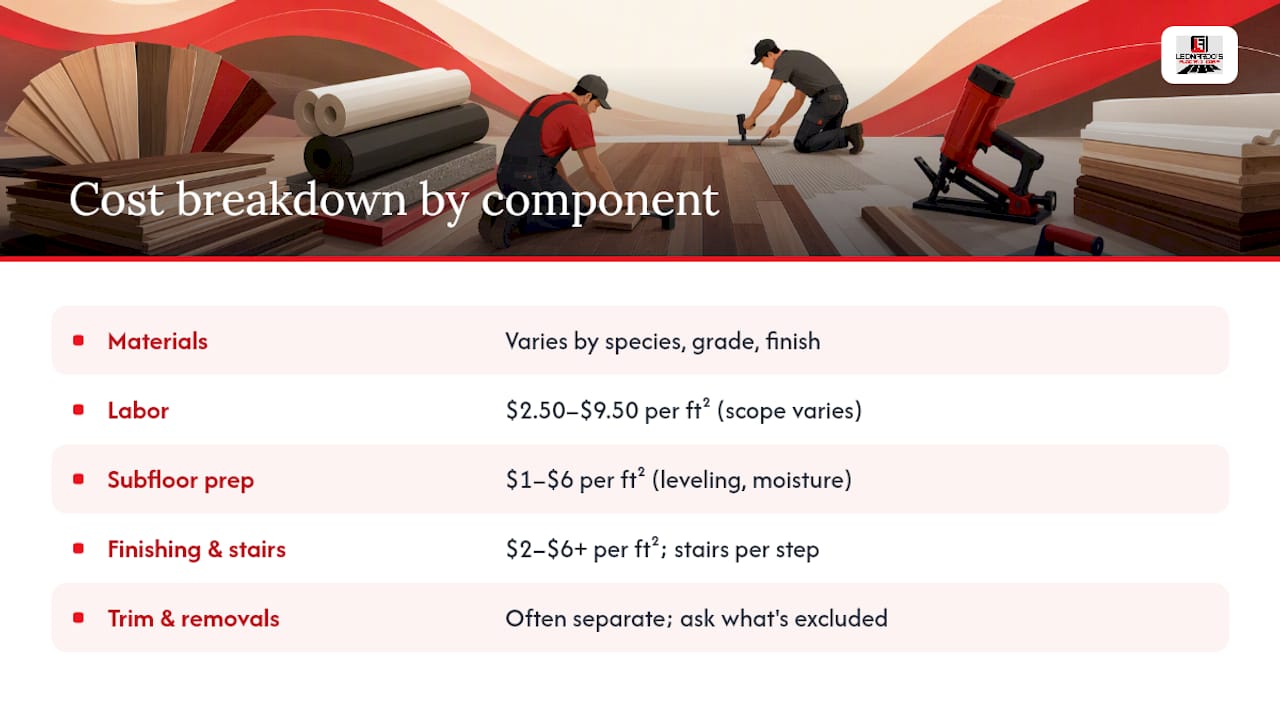
Labor typically runs $2.50 to $9.50 per square foot depending on method, and installers don’t all include the same scope. Some quotes cover old-floor removal and disposal; many don’t. Always ask what’s excluded, not just what’s included.
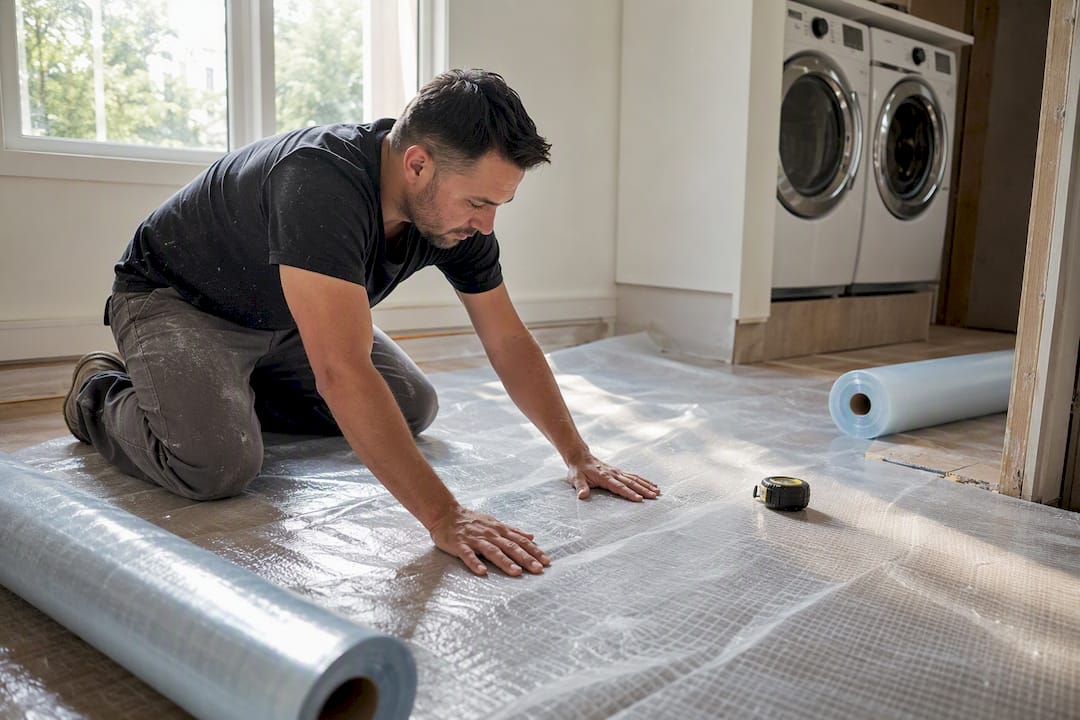
Subfloor prep and moisture control add $1 to $6 per square foot or more when the existing subfloor needs leveling, patching, or a moisture barrier. This is the line item most homeowners forget to budget for, and it’s often the single biggest cost surprise on a renovation.
Finishing and stairs get quoted separately. Site-applied stain and polyurethane add $2 to $6+ per square foot for sanding and multiple coats, and stair treads and risers are priced per step, not folded into the square-footage rate. Trim work like quarter-round and baseboards is usually its own add-on too.
Solid vs. Engineered Wood: Which Fits Your Budget?
Species and grade create their own price tiers:
- Solid oak or maple: mid-tier pricing, widely available, moderate hardness
Some situations force the decision for you. Radiant heat systems and concrete slabs generally require engineered wood because solid boards react poorly to temperature swings and can’t be nailed into concrete. Condo buildings frequently mandate engineered options with sound-rated underlayment, regardless of what you’d prefer.
How Installation Method Changes Your Labor Cost
The install method you choose (or your subfloor forces on you) shifts labor pricing more than almost any other single decision:
- Staple-down sits close to nail-down pricing and is common with engineered boards over plywood subfloors.
Concrete slabs and condo units often add sound-control underlayment, which pushes the total higher regardless of which method you pick. A concrete slab installation cost calculator can help you gauge whether slab prep is going to be a factor before you even call a flooring contractor.
Sample Hardwood Flooring Project Estimates
Here’s how the math actually plays out once you apply a 10% waste allowance and stack every line item together.
The premium column assumes solid exotic species, site-finished, with meaningful subfloor prep. The mid-range column assumes engineered or standard solid oak, factory-finished, over a subfloor in decent shape.
Pro Tip: Get your square footage measured by the contractor, not estimated from a floor plan. A 5% measurement error on 1,000 sq ft is 50 sq ft of unexpected material cost.
Local labor rates matter here too. The Bureau of Labor Statistics’ Occupational Employment and Wage Statistics data shows flooring installer wages vary significantly by metro area, so a bid that looks high compared to a national average might just reflect your local labor market.
DIY vs. Professional Hardwood Installation
DIY can genuinely save money, but only in specific situations. Floating engineered floors over a flat, dry subfloor are the best DIY candidate. Nail-down solid wood and anything requiring site finishing is where amateur mistakes get expensive fast.
- DIY all-in cost typically covers materials, tool rental (nailer, rollers), and your own time. Savings mostly come from skipping the labor line, often $3 to $9 per square foot.
- Common DIY failure modes include skipping acclimation, missing subfloor problems, and finish errors that show up months later as gaps, cupping, or uneven sheen.
- Repair costs from a failed DIY job frequently exceed the labor savings, especially once you’re paying a pro to fix what’s already down instead of installing fresh.
Hire a professional for staircases, site-finished floors, and any layout with transitions between rooms or flooring types. Our guide on common hardwood installation mistakes covers the specific errors that turn a DIY savings plan into a repair bill.
How to Get an Accurate Contractor Quote
A vague quote is the biggest red flag in this entire process. Here’s how to make sure the bids you collect are actually comparable.
- Measure every room yourself first and note doorways, closets, and stair count so contractors quote the same scope.
- Share photos of the subfloor if it’s already exposed, since subfloor condition drives moisture-testing and prep costs more than almost anything else.
- Ask about acclimation time (48 to 72 hours is standard) and whether it’s built into the project timeline or billed separately.
- Request the warranty in writing, including what’s covered on labor versus materials.
- Ask what happens if they find subfloor damage once they pull up the old flooring, and get that contingency rate in writing upfront.
Pro Tip: Walk away from any contractor who demands full payment before work starts. A deposit is normal; the balance should be due at completion or in stages tied to progress.
Watch for quotes with no line-item breakdown, no references, or no mention of acclimation at all. Those are the projects that end up $2,000 over budget by the final walkthrough.
Why Trust This Guide
Leonardo’s Flooring Corp has installed hardwood floors across the Denver metro for over 10 years as a Home Depot Contractor, backed by 125+ five-star reviews.
- We assess subfloor condition and run moisture tests before quoting, not after demo starts.
- We write acclimation time into every scope so gapping and cupping don’t show up six months later.
- We give a detailed, line-item written quote so you know exactly what’s covered.
Want a quote built on your actual home, not a national average? Start with our hardwood floor installation page.
The Real Budget Advice Nobody Gives You
Most hardwood pricing content sells you a species and a finish, then treats labor and subfloor prep as an afterthought. That’s backward. The subfloor is where budgets actually break, not the plank choice.
Homeowners obsess over oak versus hickory when the bigger financial risk is a contractor who never mentions moisture testing or acclimation until it’s already a problem. A 48 to 72 hour acclimation window costs you nothing but a few days of patience. Skipping it costs you a floor replacement.
If there’s one thing worth doing differently: stop comparing quotes by their bottom-line number and start comparing them by what’s included in that number. A $9,000 bid with subfloor inspection, moisture testing, and a written warranty beats an $7,500 bid that’s silent on all three. The cheaper quote usually gets expensive later, just under a different name: “change order.”
Budget for the subfloor before you budget for the species. Everything else follows from that.
Get a Written, Itemized Hardwood Estimate
Every scenario above assumes a fair, accurate bid. The way to actually get one is to work with a contractor who measures on-site, tests moisture before quoting, and writes acclimation time into the schedule instead of skipping it to save a week.
Leonardo’s Flooring Corp has handled hardwood installations across the Denver metro for more than a decade as a Home Depot Contractor, with 125+ five-star reviews backing that track record. We don’t quote off a floor plan sketch. We assess your subfloor, test for moisture, and give you a written, line-item estimate so the number you sign off on is the number you pay, not a number with hidden gaps waiting to surface mid-project. If your home has a concrete slab, radiant heat, or stairs, that assessment matters even more, since those are exactly the conditions that push generic online estimates off track.
Ready to see what your project actually costs? Request a quote through our hardwood floor installation service page and get a real number for your home, not a national average.
Frequently Asked Questions
What is the average cost to install hardwood floors?
Most projects fall between $10 and $16 per square foot installed for mid-range materials and standard installation methods, with a national typical baseline around $14 per square foot.
Does hardwood floor installation cost include removing old flooring?
Not always. Removal and disposal of existing flooring are frequently quoted as a separate line item, so confirm this is included before comparing bids.
Is engineered or solid hardwood cheaper to install?
Engineered hardwood typically costs 10 to 25% less installed than solid wood for a comparable appearance, mainly due to faster installation and factory finishing.
How much does subfloor preparation add to the total cost?
Subfloor prep and moisture control commonly add $1 to $6 per square foot or more, depending on how much leveling or repair the existing subfloor needs.
Can I save money by installing hardwood floors myself?
DIY savings are real on floating engineered floors over a flat, dry subfloor, but nail-down and site-finished projects carry a higher risk of costly mistakes that erase the savings.
Sources
For local rate adjustments and industry standards, consult the National Wood Flooring Association and a hardwood flooring cost calculator for your city and material choice.