
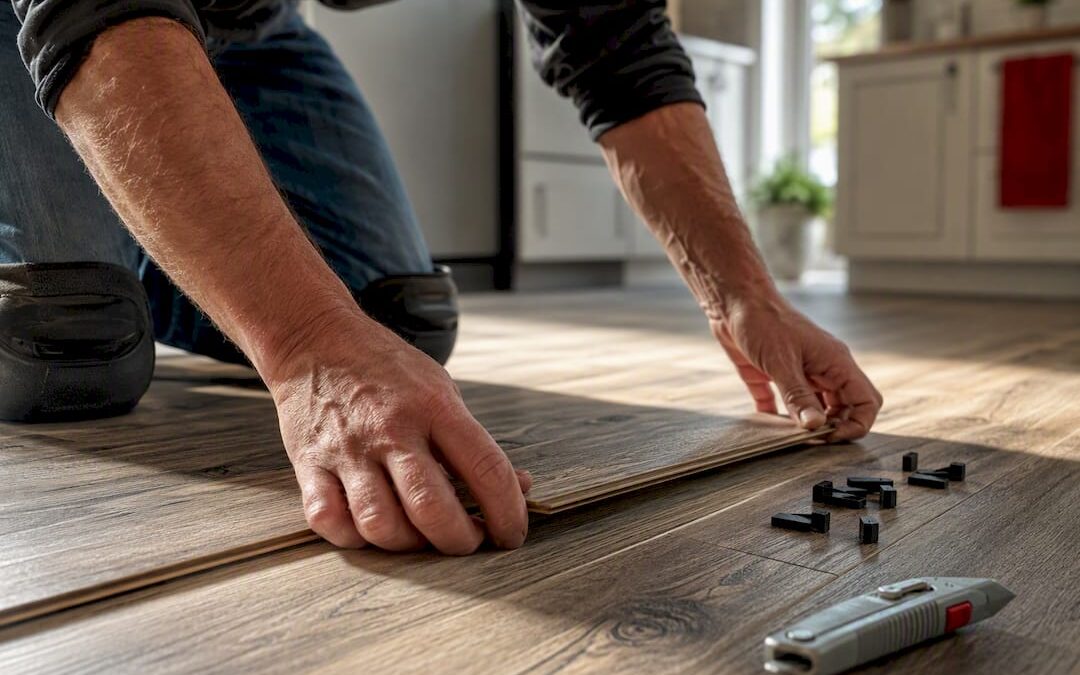
An AC rating measures how much abrasion, impact, and staining a laminate floor can survive before it wears out, based on a battery of lab tests, not one single number. The scale runs from AC1 to AC5. Most homes do fine with AC3 or AC4. Kitchens and busy family rooms should lean toward AC4. AC5 is built for commercial traffic, not your living room. The rating system comes from EPLF and EN 13329, the European standard that laminate manufacturers worldwide still reference, alongside NALFA in North America.
Quick reference:
- AC1-AC2: Light residential use, bedrooms, closets
- AC3: General residential, most rooms in the house
- AC4: High-traffic residential, kitchens, hallways
- AC5: Commercial spaces, heavy foot traffic
Key Takeaways
The right laminate floor comes down to matching a verified AC rating to your room’s traffic and moisture exposure, then protecting that rating with proper installation.
| Point | Details |
|---|---|
| AC is a composite score | A floor must pass abrasion, impact, stain, and furniture tests together to earn its AC class. |
| Match rating to room | Most homes need AC3-AC4; kitchens and entryways should lean AC4; AC5 is for commercial spaces. |
| AC doesn’t cover moisture | Waterproof performance requires a separate spec, since AC testing never evaluates water resistance. |
| Verify before buying | Request the spec sheet, confirm the model number, and check for EN 13329 or NALFA references. |
| Installation protects the rating | Leonardosflooringcorp preps subfloors and sources certified laminate so the rated performance actually holds up in Denver homes. |
Table of Contents
- What Does AC Rating Mean for Laminate Flooring?
- How Do You Decode AC1 Through AC5?
- What Tests Actually Make Up an AC Rating?
- Which AC Rating Fits Your Room?
- How Does AC Rating Compare to Wear Layer and Waterproofing?
- How Do You Verify a Laminate Product’s AC Rating?
- How Does a Professional Installer Protect Your AC Rating?
- Sources
What Does AC Rating Mean for Laminate Flooring?
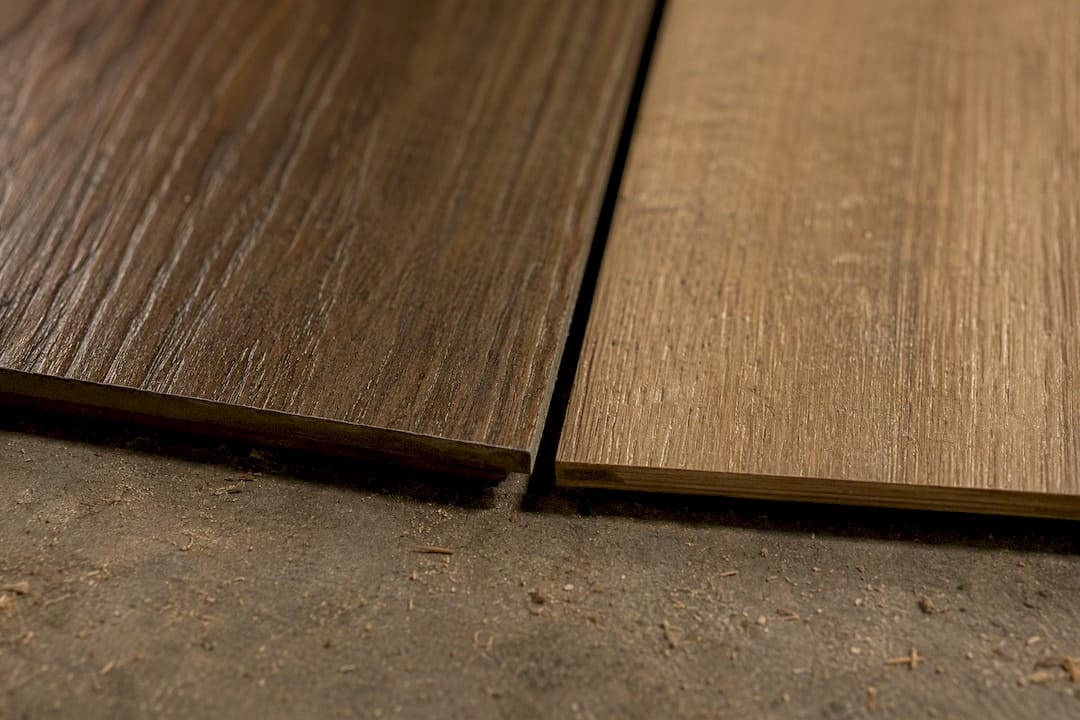
The AC rating (Abrasion Class) grades laminate flooring’s surface durability against a set of standardized tests, not just how thick the wear layer looks on paper. A manufacturer runs a sample through abrasion, impact, staining, and furniture-leg tests, and the product only earns a given class if it passes every single one. Fail one test and the whole rating drops, no matter how well the floor performed everywhere else.
That composite structure is why two floors can look nearly identical in a showroom and still carry different AC numbers. One has a denser core or a tougher overlay that survives the castor chair and abrasion tests; the other doesn’t. You won’t see that difference by running your hand across the surface.
How Do You Decode AC1 Through AC5?
Each AC level maps to a real-world traffic scenario, and the numbers behind them come from Taber abrasion cycle counts, essentially how many rotations of an abrasive wheel the surface can take before it starts to wear through.
- AC1: Light residential use, bedrooms, closets, guest rooms with minimal foot traffic.
- AC2: General residential rooms with moderate use, dining rooms, home offices.
- AC3: Standard living areas and hallways in a typical household.
- AC4: Kitchens, entryways, and busy family rooms where grit and daily wear stack up fast.
- AC5: Commercial spaces such as retail floors and offices, built for volume traffic. AC1 through AC3 were never designed to handle.
Those cycle minimums are widely cited across the industry, though individual manufacturers sometimes test to slightly different internal benchmarks.
Pro Tip: If you’ve got a large dog with untrimmed nails or kids who treat the living room like a skate park, buying one AC level above the minimum for that room buys you years of extra life before the surface starts to dull.
Most homeowners never need AC5. It’s overbuilt for a house, and you’ll pay a premium for commercial-grade toughness your living room will never actually test.
What Tests Actually Make Up an AC Rating?
An AC number isn’t measuring one property. It’s a pass/fail scorecard across several distinct lab tests, and a laminate plank has to clear all of them to claim its class.
- Abrasion resistance (Taber test, related to ISO 24338): Measures how many rotations of an abrasive wheel the wear layer survives before it breaks through.
- Impact resistance (EN 17368): Tests how the surface holds up against dropped objects, from a phone to a cast iron pan.
- Stain and burn resistance: Checks whether household chemicals, cigarette burns, or spills leave permanent marks.
- Castor chair test (EN ISO 4918): Simulates rolling office chairs to see if the surface pits or scuffs.
- Indentation resistance (EN ISO 24343-1): Measures how the floor responds to concentrated weight, like furniture legs or high heels.
A product that aces abrasion but fails the stain test doesn’t get to claim the higher AC class. That’s the part shoppers miss most often. It’s also worth knowing what this test battery skips entirely: water resistance, indoor air quality, and slip resistance aren’t part of the EN 13329 classification at all.
Which AC Rating Fits Your Room?
Room-by-room, the decision comes down to foot traffic, moisture exposure, and how much grit gets tracked in daily.
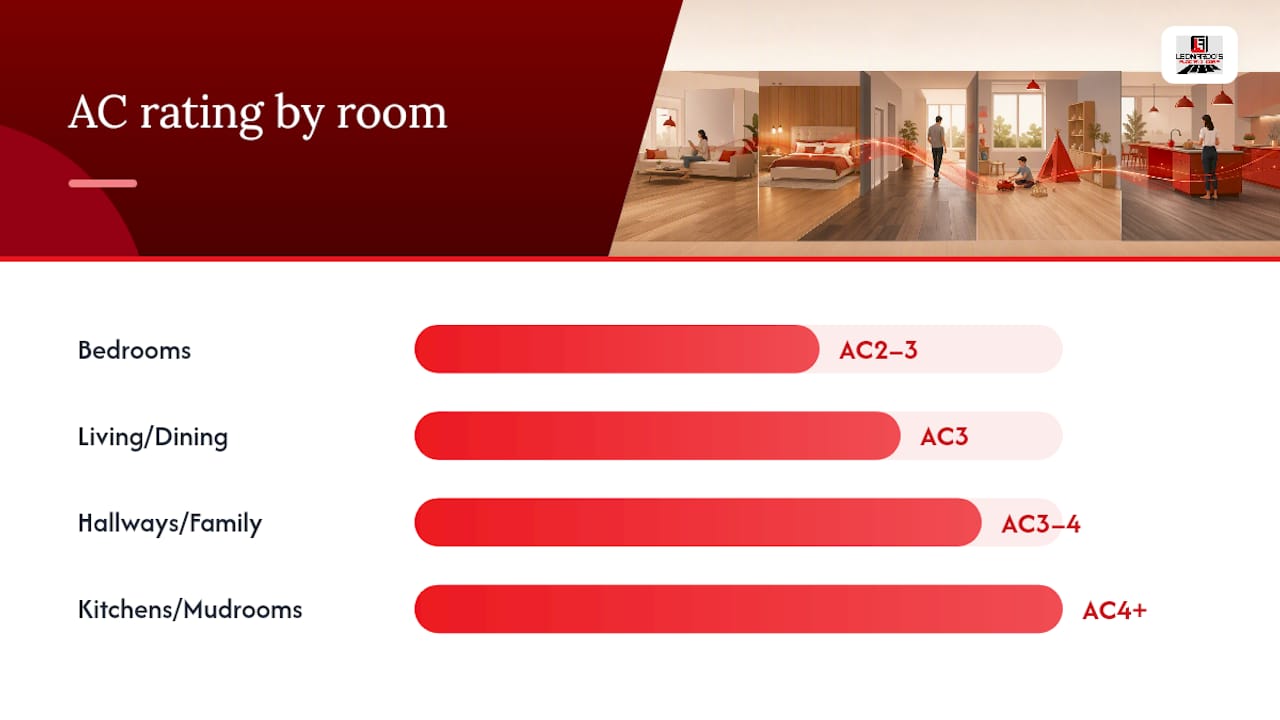
Bedrooms and formal living rooms rarely need more than AC3, since traffic stays light and consistent. Hallways and family rooms benefit from AC4, especially if they connect to an entryway where dirt and small stones get dragged across the surface. Kitchens are a special case: go AC4 minimum, and pair that rating with a genuinely water-resistant product, since AC says nothing about moisture. Bathrooms and basements need that same moisture conversation before AC even enters the picture. Industry guidance consistently points to AC3 or AC4 as sufficient for the vast majority of family homes.
Lifestyle changes the math. Homes with large dogs, toddlers, or rolling office chairs should step up one AC level from the room’s baseline recommendation. Rental properties benefit from the same logic, since tenants rarely treat floors as carefully as owners do.
- Bedrooms, closets: AC2-AC3
- Living rooms, dining rooms: AC3
- Hallways, family rooms: AC3-AC4
- Kitchens, mudrooms: AC4 minimum
- Home offices with rolling chairs: AC4
The trade-off is real. Higher AC ratings usually mean a harder wear layer, which some homeowners find feels less forgiving underfoot than a softer AC2 or AC3 product. Cost climbs too. Buying AC5 for a spare bedroom is money spent on toughness that room will never demand.
How Does AC Rating Compare to Wear Layer and Waterproofing?
AC rating and wear-layer thickness measure two different things, and confusing them leads to bad purchases. Wear layer is a physical measurement in mils, the transparent top coat protecting the printed design layer. AC rating is the outcome of a full test battery, abrasion, impact, and stain resistance combined. A thick wear layer doesn’t automatically produce a high AC class, and a thin one doesn’t automatically fail.
Waterproof claims sit entirely outside this system. AC testing never evaluates moisture performance, so an AC4 floor can still swell if water sits on it. When shopping, weigh AC rating alongside wear-layer thickness, a separate water-resistance spec, and the manufacturer’s written warranty terms together, not any single number in isolation.
How Do You Verify a Laminate Product’s AC Rating?
Marketing copy sometimes rounds up or leaves the AC number off entirely. Confirming it before you buy takes a few minutes and saves headaches later.
- Request the manufacturer’s spec sheet and look for the explicit AC number, not just words like “commercial grade.”
- Check for certification marks referencing EN 13329 or a NALFA listing, which indicate third-party testing standards were followed.
- Search the model number directly on the manufacturer’s website to confirm the listed AC class matches what your retailer or contractor quoted.
- Ask whether the warranty is tied to performance, meaning it actually references wear resistance, not just manufacturing defects.
- Confirm installer responsibilities in writing, since improper installation can void a warranty regardless of how high the AC rating is.
This spec-sheet verification approach is standard practice among experienced flooring buyers and it takes almost no extra time at the point of purchase.
How Does a Professional Installer Protect Your AC Rating?
Leonardosflooringcorp has spent over a decade installing laminate flooring across the Denver metro, and one lesson holds firm: a high AC rating means nothing if the subfloor underneath is uneven or damp. Grit left un-swept during install, poor acclimation, or skipped underlayment can undercut even an AC5 floor’s rated lifespan. Professional installers verify specs before ordering, source certified products, and prep subfloors properly so the rated performance actually holds up.
A straight answer before you buy
Buy based on the room, not the marketing copy. Check the spec sheet, match the AC number to how that space actually gets used, and if a rating claim seems inflated compared to what EN 13329 or NALFA documentation shows, ask a qualified installer to confirm it before you commit.
— Jim
Get the Right Laminate Installed the First Time
An AC rating only protects your floor if the installation respects it. Grit trapped under planks, a subfloor that wasn’t leveled, or underlayment skipped to save an afternoon can wear through even an AC4 or AC5 product years ahead of schedule.

Leonardosflooringcorp has installed laminate across the Denver metro for over ten years, backed by 125+ five-star reviews from homeowners who wanted the job done right the first time. The team verifies product specs before ordering, handles subfloor prep properly, and matches the AC rating to your actual room and lifestyle instead of guessing. If you’re weighing options for a kitchen remodel, a busy hallway, or a full-home refresh, request a quote through the laminate flooring installation page and get a straight answer on what rating your space actually needs.
Sources
- Laminate A-Z – Association of the European Producers of Laminate Flooring (EPLF)
- E03C Flooring – Floor Covering Reference Manual
- What is a laminate flooring AC rating? – BuildDirect blog
- EN 13329:2023 Laminate floor coverings – Genorma summary