

If you’ve ever stood in a flooring showroom wondering what is laminate flooring and how it actually differs from hardwood or vinyl, you’re not alone. Laminate is one of the most misunderstood products in home renovation, often written off as cheap or flimsy based on outdated impressions. The reality is that today’s laminate flooring is a technically advanced, genuinely durable product that can look stunning in almost any room. This guide breaks down exactly how it’s made, how long it lasts, how it compares to other materials, and how to pick the right type for your home.
Table of Contents
- Key takeaways
- What is laminate flooring made of?
- How durable is laminate flooring?
- Laminate flooring vs. hardwood and LVP
- Choosing and installing the right laminate
- My honest take after years in the field
- Ready to install laminate in your Denver home?
- FAQ
Key takeaways
| Point | Details |
|---|---|
| Layered construction | Laminate is built from four distinct layers that work together for looks, stability, and protection. |
| AC rating determines durability | The wear layer’s AC rating, not the plank thickness, tells you how scratch-resistant your floor will be. |
| Moisture is the main weakness | Standard laminate can warp if water sits on it; choose a waterproof core for kitchens or bathrooms. |
| Costs less than hardwood | Laminate delivers realistic wood visuals at a fraction of the price, making it a smart budget choice. |
| Match the product to the room | Traffic level, moisture exposure, and room function should all guide your laminate selection. |
What is laminate flooring made of?
Most people look at laminate flooring and assume it’s one solid piece of pressed material. It’s actually a precisely engineered four-layer product, and each layer has a specific job.
The four layers explained
Backing layer. The bottom of the plank is a moisture-resistant backing that stabilizes the board and protects the core from subfloor humidity. On lower-quality products, this layer is thin and offers minimal protection. Better laminates use a thicker, denser backing that adds real rigidity.
HDF core. This is the structural heart of the plank. The HDF core contains 80 to 85% wood fibers, typically sourced from softwoods like pine or eucalyptus, pressed together with synthetic resin binders under high heat and pressure. The result is a board with a density of 800 to 1,000 kg per cubic meter, which gives laminate its dimensional stability and resistance to denting.
Photographic design layer. This is where laminate’s visual magic happens. The design layer is a high-resolution image printed on specialty paper and impregnated with melamine resin for durability and moisture resistance. Advanced imaging and surface technology now produce grain patterns, knots, and color variation so realistic that even flooring professionals have to look twice.
Wear layer. This clear top coat is the armor. It contains aluminum oxide particles bonded to the surface to protect against scratches, scuffs, and stains. The thickness and composition of the wear layer determine the floor’s AC rating and overall longevity.
Pro Tip: When shopping for laminate, ask to see the cross-section of a sample board. A well-made plank will have a thick, dense HDF core and a noticeably hard wear surface. If the sample feels light and hollow, move on.
Here’s a quick reference for each layer’s primary function:
| Layer | Primary material | Main function |
|---|---|---|
| Backing | Moisture-resistant resin paper | Stability, subfloor protection |
| HDF core | Wood fibers and resin | Structural strength, impact absorption |
| Design layer | Melamine-impregnated photographic paper | Visual appearance |
| Wear layer | Aluminum oxide clear coat | Scratch, stain, and fade protection |
Global laminate production exceeded 10 million cubic meters in 2023, which tells you this is not a niche product. It’s mainstream, and manufacturing quality has risen sharply alongside that scale.
How durable is laminate flooring?
This is where most homeowners have the biggest gap between expectation and reality. Laminate has improved dramatically, yet many buyers still judge it by floors installed in the 1990s.
Understanding the AC rating system
The AC rating system is the most reliable tool you have when comparing laminate durability. It ranges from AC1 to AC6:
- AC1 and AC2: Light residential use. Bedrooms and closets where traffic is minimal.
- AC3: General residential use. Suitable for living rooms, dining rooms, and hallways.
- AC4: Heavy residential and light commercial use. A strong choice for busy family homes.
- AC5: Heavy commercial use. Think retail stores or offices with constant foot traffic.
- AC6: Very heavy commercial use. Rarely needed for homes.
For most Denver homes, an AC3 or AC4 rating covers everything from a quiet study to a high-traffic entryway. One of the most persistent myths in flooring is that thicker laminate means better scratch resistance. That’s not how it works. Thickness contributes to sound dampening and underfoot stability, but the wear layer’s composition and AC rating are what actually determine how well the surface holds up to daily abuse.
The 2026 NALFA standard update
The industry just raised the bar. NALFA, the North American Laminate Flooring Association, updated its LF-01 performance standard in May 2026 to tighten independent testing requirements across the board. The LF-01 standard now covers wear resistance, impact resistance, moisture exposure, staining, light exposure, dimensional stability, and overall product integrity. This is significant because it means any NALFA-certified product sold today has passed rigorous third-party testing, not just the manufacturer’s own internal checks.
“Modern laminate flooring has evolved, improving water resistance and durability, but consumer perceptions are still influenced by older views and competing marketing.” Floor Covering News
The takeaway: if you’re evaluating laminate flooring durability, look for NALFA certification and check the AC rating. Those two data points tell you far more than price or brand name alone. For a deeper look at what makes residential flooring hold up over time, the Denver homeowner’s durability guide covers these standards in full.
Laminate flooring vs. hardwood and LVP
Once you understand what laminate is, the next natural question is how it stacks up against hardwood and luxury vinyl plank. Here’s an honest comparison.
| Feature | Laminate | Hardwood | Luxury vinyl plank |
|---|---|---|---|
| Cost per sq. ft. (installed) | Low to moderate | High | Low to moderate |
| Appearance | Very realistic visuals | Natural, authentic | Good, but often less nuanced |
| Scratch resistance | Excellent (AC-rated) | Moderate | Good |
| Water resistance | Moderate (improved cores available) | Poor | Excellent |
| Fade resistance | Strong | Moderate | Moderate |
| Refinishable | No | Yes | No |
| Resale value impact | Moderate | High | Moderate |
Hardwood brings something laminate genuinely cannot replicate: the ability to sand and refinish it over decades, and the material value that resonates with home buyers at resale. If you’re in a home for the long haul and have the budget, hardwood is a serious investment. Laminate, though, costs significantly less upfront while delivering highly realistic wood visuals that most guests won’t question.
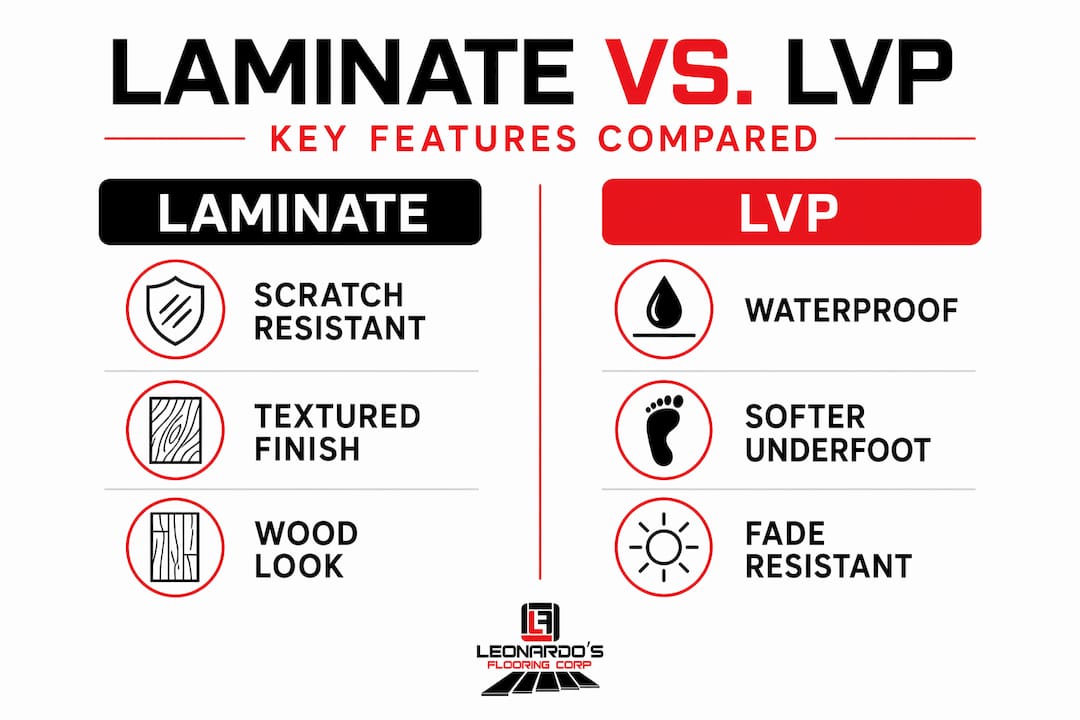
The comparison with luxury vinyl plank is closer. Laminate typically resists scratches and fading better than LVP, which gives it an edge in sunny rooms or homes with pets and kids. LVP, on the other hand, handles moisture far better. A waterproof flooring guide can help you sort out which option makes more sense for rooms where spills are a regular occurrence.
If you’re deciding between flooring types for a specific area of the house, a kitchen flooring guide is a useful resource for understanding how moisture and traffic demands shape the decision.
Choosing and installing the right laminate
Picking the right laminate flooring starts with being honest about how you actually live in your home.
-
Assess the room’s traffic and moisture level. Living rooms and bedrooms can handle an AC3 rating comfortably. High-traffic hallways and family rooms benefit from AC4. For kitchens or laundry rooms, moisture can warp laminate if the product isn’t designed for it, so look specifically for boards with waterproof cores and moisture-resistant backing.
-
Choose the right texture and finish. Modern laminate comes in smooth, hand-scraped, wire-brushed, and embossed finishes. Hand-scraped and wire-brushed options do the best job of hiding minor scratches and everyday scuffs in high-use areas. High-gloss finishes look striking but show every footprint.
-
Match the plank size to the room. Wider planks and longer boards make smaller rooms feel larger. Narrow planks can look more traditional or suit period-style homes. When you match laminate flooring to the scale of the room, the result always looks more intentional.
-
Understand your installation options. Most laminate today uses a click-lock floating system, meaning the planks snap together and are not glued or nailed to the subfloor. This makes DIY-friendly installation genuinely achievable for experienced DIYers on straightforward subfloors. Uneven or damaged subfloors, however, need to be addressed first or the floor will flex, squeak, and fail prematurely.
-
Plan for maintenance from day one. Laminate is low maintenance, but it does have rules. Never wet mop it. Use a damp cloth or a microfiber mop with a laminate-approved cleaner. Clean up spills quickly, especially near seams. Laminate flooring resists fading and handles heavy foot traffic well, but standing water is its genuine vulnerability.
Pro Tip: Buy 10% more laminate than your square footage requires. Cuts, mistakes, and future repairs all need material from the same production batch. Color can vary slightly between batches, and mismatched planks will stand out immediately.
Selecting the right laminate for moisture-prone areas requires matching the product’s waterproof specs to the room’s actual conditions, not just the marketing language on the box.
My honest take after years in the field
I’ve been inside hundreds of Denver homes, and I’ve watched homeowners make the same flooring mistakes over and over. The most common one with laminate? Buying based on looks alone and ignoring the AC rating entirely.
I’ve seen beautiful AC2-rated laminate installed in a kitchen by a family with three kids and two dogs. Within two years, the wear layer was visibly failing. The floor looked terrible, not because laminate is a bad product, but because the wrong product was chosen for that environment.
The second mistake I see constantly is dismissing laminate because of old assumptions. I’ve installed modern laminate in homes where guests genuinely couldn’t tell the difference from engineered hardwood. The durability and quality evolution in this category over the last decade has been real and meaningful.
My advice to anyone weighing their options: look at the warranty, not just the price tag. A manufacturer willing to back their product for 25 or 30 years is telling you something about the quality of their wear layer. Short warranties are a red flag worth taking seriously. And if you’re unsure which AC rating fits your household, talk to a flooring professional before you buy, not after.
— Jim
Ready to install laminate in your Denver home?
At Leonardosflooringcorp, we’ve helped homeowners across the Denver metro find and install the right laminate flooring for their specific needs and budget, no guesswork, no pressure. Whether you’re updating a single bedroom or replacing floors throughout the house, our team handles everything from subfloor prep to final installation.

Browse our laminate flooring options to explore styles, textures, and waterproof products suited to every room in your home. When you’re ready to talk specifics, our Denver installation team is available to walk you through options, pricing, and timelines. With 125+ five-star reviews and over a decade of local experience, we’ll get it right the first time.
FAQ
What is laminate flooring made of?
Laminate flooring is a four-layer product consisting of a moisture-resistant backing, a high-density fiberboard core, a photographic design layer, and a protective wear layer containing aluminum oxide particles.
Is laminate flooring durable enough for families with pets and kids?
Yes. An AC4-rated laminate is built for exactly that environment, handling heavy foot traffic, scratches, and daily scuffs better than most people expect from a budget-friendly floor.
What’s the difference between laminate flooring and hardwood?
Hardwood is a solid or engineered natural wood product that can be refinished multiple times, while laminate uses a photographic layer to simulate wood’s appearance at a much lower cost and cannot be refinished.
How does laminate flooring handle moisture?
Standard laminate can warp if water seeps into the seams or beneath the planks. Modern products with waterproof cores and sealed edges perform significantly better, but no laminate should have standing water left on it for extended periods.
How do I match laminate flooring to my existing decor?
Focus on plank width, undertone, and finish texture. Wider planks in a warm brown tone with a matte or hand-scraped finish coordinate well with most traditional and transitional interiors, while narrow planks in cool grays suit contemporary spaces.