
Most Denver homeowners assume hardwood is the gold standard for durable flooring. It’s classic, it’s beautiful, and it’s been in homes for centuries. But when you measure what makes flooring durable against real-world conditions like Denver’s dry winters, humid summers, and gritty Front Range foot traffic, hardwood often falls short of other options. Material hardness, moisture resistance, wear layer thickness, and installation quality all determine whether your floors look great in year two or year twenty. This guide breaks down the factors that actually matter, compares the best long-lasting flooring types for Denver conditions, and helps you make a smarter, better-informed choice.
Table of Contents
- What makes flooring durable: key factors explained
- Comparing durable flooring types for Denver homes
- Installation and environmental influences on flooring durability
- Caring for durable flooring: maintenance practices that extend lifespan
- Choosing the right durable flooring for your Denver property
- The underrated trade-offs in durable flooring choices Denver homeowners miss
- Explore durable flooring options with Leonardo’s Flooring Corp in Denver
- Frequently asked questions
Key Takeaways
| Point | Details |
|---|---|
| Material hardness matters | Porcelain tile’s high hardness level makes it extremely resistant to scratches and dents. |
| Water resistance is crucial | Low water absorption or waterproof floors prevent swelling and warping in Denver’s climate. |
| Installation affects durability | Proper acclimation and subfloor prep are essential for hardwood floors to avoid damage. |
| Maintenance prolongs lifespan | Regular sweeping and avoiding harsh cleaning protect finish layers and keep floors lasting longer. |
| Know your usage | Choose flooring that matches your home’s traffic level, moisture exposure, and lifestyle needs. |
What makes flooring durable: key factors explained
Durability isn’t one thing. It’s a combination of material properties, manufacturing quality, and how well a floor handles the specific stresses your household puts on it every day. Before comparing products, you need to understand the underlying factors that separate a floor that lasts a decade from one that lasts forty years.
Abrasion resistance is the floor’s ability to withstand surface wear from foot traffic, grit tracked in from outside, and everyday friction. Denver homes see more grit than most cities, given the sandy soils and outdoor lifestyle. Porcelain tile outperforms all other flooring in abrasion resistance and moisture protection, which is why it’s common in high-traffic commercial spaces and mudrooms.
Water absorption rate determines how much a floor swells, warps, or stains when exposed to moisture. Wood absorbs water readily. Porcelain absorbs almost none. Luxury vinyl is fully waterproof. This single factor rules out several materials for kitchens, bathrooms, and basement installations.
Hardness is measured two ways depending on the material. The Janka hardness scale measures force required to embed a steel ball halfway into wood, relevant for hardwood and engineered hardwood floors. The Mohs scale measures mineral hardness, used for tile. Higher numbers mean better scratch and dent resistance. A Brazilian walnut floors at around 3,680 lbf on the Janka scale, while a white oak sits around 1,360 lbf. The difference matters if you have dogs, kids, or heavy furniture.
Protective finishes and wear layers are the manufactured armor on top of the core material. Polyurethane coatings on hardwood, ceramic wear layers on LVP, and glazed surfaces on tile all extend the floor’s resistance to scratching, fading, and staining. The thickness of these layers directly affects how long the floor looks new.
- Abrasion resistance relates directly to grit damage over time
- Water absorption under 0.5% is the threshold for truly moisture-safe flooring
- Janka ratings above 1,000 lbf indicate solid scratch resistance for most homes
- Wear layers thicker than 20 mil on LVP dramatically extend scratch-free lifespan
- Subfloor preparation and installation quality protect the material’s built-in durability
Pro Tip: Before buying any flooring, ask the retailer for the wear layer thickness or hardness rating in writing. Vague answers like “very durable” are not specifications. Real data protects your investment.
You can also find additional flooring tips for durability on our blog, covering material comparisons and care guidance specific to Denver homes.
Comparing durable flooring types for Denver homes
Understanding these factors, let’s compare the most popular flooring types to see which ones fit Denver homes best.
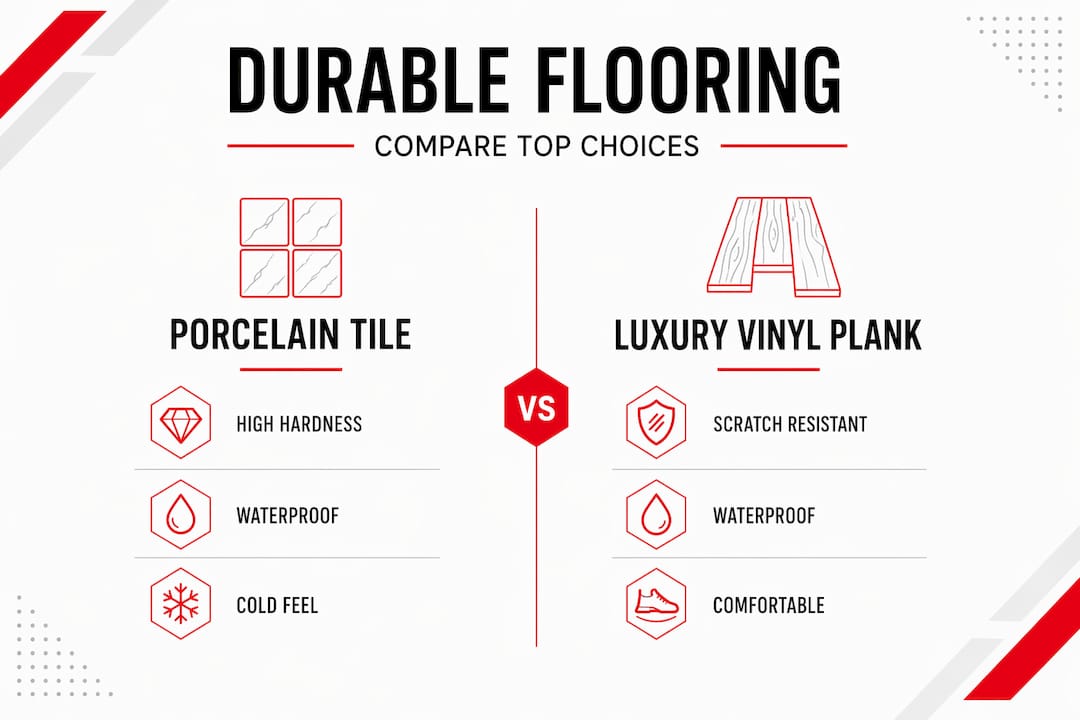
Porcelain tile sits at the top of any durable flooring solutions compilation for good reason. Porcelain achieves Mohs hardness 7, water absorption below 0.5%, and a PEI Class 5 rating for heavy commercial traffic. It won’t scratch from pet nails, won’t swell from a leaking dishwasher, and doesn’t fade from sunlight. For durable flooring for kitchens, bathrooms, entryways, and mudrooms, porcelain is nearly impossible to beat on raw performance metrics.
Luxury vinyl plank (LVP) has become one of the most popular durable flooring options on the market for good reason. LVP with wear layers over 20 mil is fully waterproof and scratch-resistant for 15 to 25 years in residential use. For Denver homes, SPC (stone plastic composite) cores are preferable over WPC (wood plastic composite) cores because SPC is denser and more dimensionally stable under temperature swings. WPC can expand and contract more noticeably when your heat kicks on in January and your house goes from 20% to 35% humidity overnight.
Engineered hardwood is the most underrated of the long-lasting flooring types for Denver specifically. The plywood core construction makes it far more stable than solid hardwood under Denver’s humidity fluctuations, which can swing from 20% in winter to 60% in summer. A thick wear layer (3mm or above) allows multiple refinishing cycles, meaning the floor can be renewed rather than replaced. See more about engineered hardwood durability and why it outperforms solid wood in Colorado’s climate.
Laminate offers solid scratch resistance thanks to its aluminum oxide wear surface, but its laminate flooring durability drops significantly in moisture-prone areas. The HDF (high-density fiberboard) core swells when water penetrates seams. Laminate works well in bedrooms and dry living areas but is a risky choice for any room with water exposure.
| Flooring type | Scratch resistance | Water resistance | Refinishable | Best use in Denver |
|---|---|---|---|---|
| Porcelain tile | Excellent (Mohs 7) | Excellent (< 0.5%) | No | Kitchens, baths, mudrooms |
| LVP (SPC core) | Very good (20+ mil) | Excellent (waterproof) | No | High-traffic, wet areas |
| Engineered hardwood | Good (Janka varies) | Moderate | Yes (1-6 times) | Living areas, bedrooms |
| Laminate | Good (aluminum oxide) | Poor to moderate | No | Dry rooms, bedrooms |
Pro Tip: For durable flooring for offices and rental properties, SPC-core LVP is often the best financial decision. It handles heavy traffic, requires minimal maintenance, and replacement costs less than hardwood if a tenant causes damage.
Explore the vinyl flooring benefits that make LVP a practical choice for Denver property managers and high-use residential spaces.
Installation and environmental influences on flooring durability
Durability depends not only on material but also on proper installation and adapting to Denver’s environment.
A floor can have excellent material specifications and still fail prematurely if it’s installed incorrectly. In Denver, two environmental factors create most of the installation-related problems: humidity swings and temperature cycles.
-
Acclimate hardwood and engineered hardwood properly. Hardwood must acclimate 7 to 14 days at indoor humidity levels before installation. Skipping this step is the single most common cause of gapping, cupping, and buckling in Denver hardwood floors. The wood needs to reach moisture equilibrium with your home’s environment before it’s nailed or glued down.
-
Test subfloor moisture before any wood installation. Subfloor moisture content should be below 12% before hardwood goes down. A moisture meter is not optional. Installing over a damp subfloor traps moisture and causes warping from below, which no amount of surface finish can prevent.
-
Clean the subfloor thoroughly before LVP installation. LVP requires no acclimation unlike wood, but grit, dust, and debris left on the subfloor will grind against the underside of the planks with every footstep. That friction creates early wear from underneath, where you can’t see it until planks start cracking.
-
Match expansion gap requirements to the material. All floating floors need room to expand. In Denver, where indoor humidity can drop to 15% in winter, wood and laminate need slightly larger expansion gaps than manufacturers specify for temperate climates.
-
Use the right underlayment for your subfloor type. Concrete subfloors in basements and lower levels require moisture-barrier underlayment even under waterproof LVP. Hydrostatic pressure from the slab can still work against the adhesive or interlock system over time.
Pro Tip: Before any installation, consult your flooring installation best practices checklist or work with a local professional who knows Denver’s specific subfloor and humidity conditions. What works in Houston does not automatically work at 5,280 feet.
Caring for durable flooring: maintenance practices that extend lifespan
With durable materials and proper installation, good maintenance habits are the final key to long-lasting floors.
The most expensive floor in the world will look worn and damaged within a few years without proper care. Maintenance is not complicated, but it has to be consistent.
- Sweep daily with a soft broom or dust mop. Daily sweeping prevents 90% of scratches by removing the grit that acts like sandpaper under foot traffic. In Denver, with its sandy outdoor environment, this is even more critical than in other cities.
- Avoid steam mops on tile, LVP, and hardwood. Steam drives moisture into grout lines, seams, and wood pores. It also degrades the adhesive in click-lock LVP over time and can cloud hardwood finishes.
- Wipe spills immediately. Even waterproof floors have seams. Sitting water eventually finds a way in, especially on laminate and hardwood.
- Put felt pads under all furniture legs. Chair legs without pads create concentrated point pressure that dents even hard floors. Replace pads every six months as they compress and collect grit.
- Keep indoor humidity between 35% and 55%. Running a humidifier in winter and air conditioning in summer protects wood floors from the seasonal expansion and contraction cycle that causes gapping and squeaking.
- Refinish or recoat hardwood before the wear becomes visible. Waiting until you see bare wood means the damage is already done. A recoat every five to seven years extends hardwood life dramatically at a fraction of replacement cost.
Pro Tip: Use a microfiber mop with a pH-neutral cleaner for weekly damp cleaning on LVP and tile. It lifts residue without leaving film, which protects the wear layer better than most marketed “floor cleaners.”
Find more flooring maintenance advice for Denver-specific conditions on our blog, including seasonal care tips for hardwood in dry Colorado winters.
Choosing the right durable flooring for your Denver property
Equipped with this knowledge, you can confidently select flooring that meets your Denver home’s durability needs and style.
The factors affecting flooring durability only matter when you match them to your actual living situation. Here’s how to apply this framework room by room.
-
Assess your household’s specific stressors first. Heavy foot traffic, pets, young children, and moisture exposure all point toward different durable flooring choices. A single adult in a condo has very different needs than a family of five with two dogs.
-
Choose porcelain tile for kitchens, bathrooms, mudrooms, and entryways. Porcelain is the top choice for moisture-prone areas. It handles spills, cleaning chemicals, and high traffic without degrading. Durable floors for kitchens in Denver’s active outdoor lifestyle homes need this level of protection.
-
Select engineered hardwood for living rooms and dining areas. The plywood core handles Denver’s humidity swings better than solid wood, and the refinishing option means the floor can be updated without full replacement. Look for wear layers of 3mm or thicker.
-
Use SPC-core LVP in high-traffic utility areas, basements, and rentals. It’s waterproof, scratch-resistant, and significantly easier to install and replace than tile or hardwood. For durable flooring for offices or rental units, LVP offers the best balance of durability and cost.
-
Reserve laminate for dry, lower-traffic rooms with budget constraints. It’s a reasonable durable flooring choice for a guest bedroom or home office, but keep it away from anywhere moisture is a realistic possibility.
-
Plan for professional installation. Material quality only translates to real-world durability when the installation is done right. Improper subfloor prep, wrong expansion gaps, and skipped acclimation steps void warranties and shorten lifespan regardless of what you paid for the material.
Explore hardwood installation in Denver, laminate installation Denver, and vinyl flooring options to see the full range of durable flooring solutions available for your project.
The underrated trade-offs in durable flooring choices Denver homeowners miss
Here’s a perspective most flooring articles won’t give you: the best material on paper is not always the best floor for your specific life.
Porcelain tile scores highest on nearly every durability metric. But porcelain’s brittleness and coldness underfoot are real drawbacks that don’t show up in comparison charts. Drop a cast iron skillet on porcelain and you may crack a tile. Stand on it barefoot during a Denver winter morning and you’ll feel every degree of that 65-degree slab. Porcelain also demands near-perfect subfloor flatness. Even small voids beneath a tile can cause it to crack under point pressure. Installation cost for large-format porcelain tile can run two to three times higher than LVP per square foot installed. It’s durable, but it’s not simple or forgiving.
Solid hardwood has a romance to it that influences buyers emotionally. But in Denver’s climate, it requires more active management than most homeowners expect. Humidity control, regular refinishing, and careful spill management are non-negotiable, not optional. Engineered hardwood’s plywood core addresses Denver’s humidity swings far better than solid wood, giving you the same visual warmth with significantly less maintenance anxiety.
The insight that most separates experienced flooring buyers from first-timers is this: installation and maintenance have more impact on floor longevity than material choice in most real-world conditions. A well-installed, well-maintained laminate floor will outlast a poorly installed porcelain installation. We’ve replaced “durable” tile floors that failed in three years because the subfloor wasn’t properly prepped, and we’ve seen budget LVP installations that look perfect after a decade because the homeowner sweeps daily and keeps humidity controlled.
When you’re choosing flooring, stop asking only “what’s the most durable material?” Start asking “what level of maintenance am I actually willing to do, and which material fits that honestly?” The most durable floor is the one that fits your real habits, not your ideal ones.
Explore durable flooring options with Leonardo’s Flooring Corp in Denver
Ready to upgrade your flooring? At Leonardo’s Flooring Corp, we’ve been helping Denver homeowners and property managers navigate exactly these decisions for over ten years. We know Denver’s climate, its subfloor challenges, and the materials that actually hold up here.
Whether you’re weighing hardwood installation services, exploring laminate flooring options, or ready to commit to vinyl flooring solutions for a high-traffic property, our team will walk you through every option with honest recommendations tailored to your budget and timeline. No upselling, no guesswork. Just experienced local advice and installation backed by 125+ five-star reviews. Contact us today for a free consultation.
Frequently asked questions
What is the most durable flooring material for high-traffic Denver homes?
Porcelain tile is the top choice for raw durability, offering superior abrasion and moisture resistance that outperforms every other flooring type in heavily used spaces. For areas needing warmth or softer underfoot feel, SPC-core LVP is the closest alternative.
How does Denver’s climate affect hardwood flooring durability?
Denver’s humidity swings between roughly 15% in winter and 60% in summer cause solid hardwood to expand, contract, gap, and cup. Engineered hardwood’s plywood core resists these dimensional changes far better, making it the smarter choice for most Denver homes.
Can luxury vinyl plank (LVP) flooring last in moisture-prone Denver homes?
Yes. LVP with a wear layer over 20 mil and an SPC rigid core is fully waterproof and scratch-resistant for 15 to 25 years under typical residential conditions, making it one of the best durable flooring options for kitchens, basements, and rental properties.
What maintenance helps prolong flooring durability?
Daily sweeping with a soft broom, prompt spill cleanup, avoiding steam mops, and keeping indoor humidity between 35% and 55% collectively prevent the majority of premature floor damage across every flooring type.
How many times can engineered hardwood floors be refinished?
Depending on wear layer thickness, engineered hardwood can be refinished one to six times. Layers of 3mm or thicker allow multiple refinishing cycles, significantly extending the floor’s lifespan before full replacement is needed.