
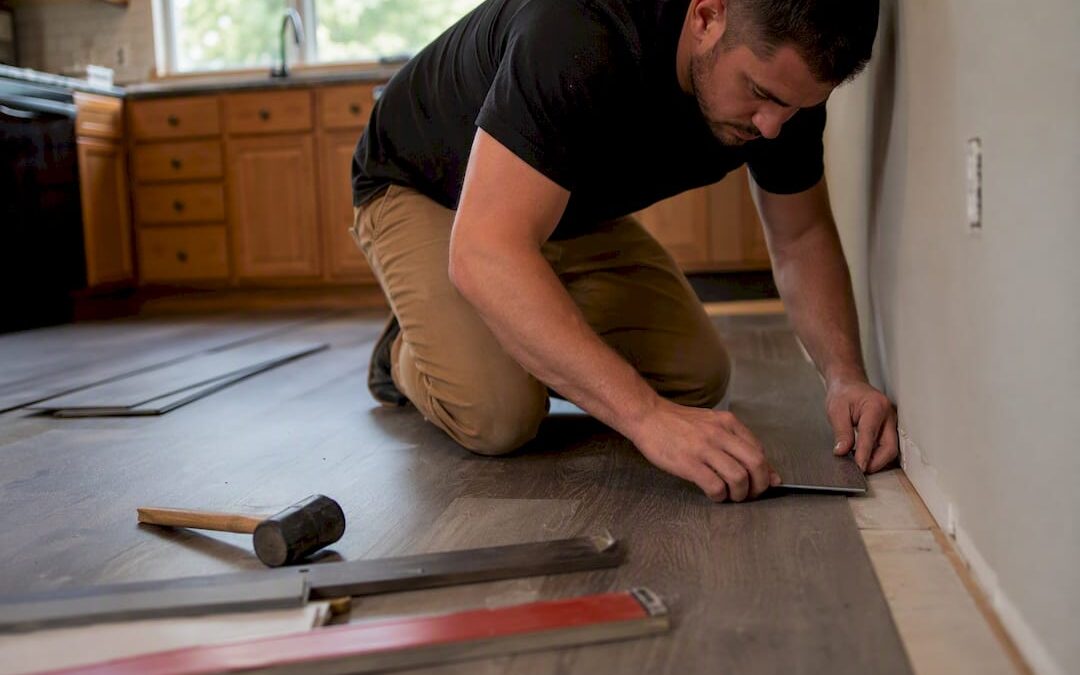
Hire a professional for any flooring project over a few hundred square feet, for kitchens and bathrooms where moisture is a factor, and for any job with tricky transitions or stairs. Most flooring services run $4 to $15 per square foot installed, so a 1,000 sq ft job typically lands between $4,000 and $15,000 depending on material. Before you sign anything, confirm three things on the contractor’s site or estimate:
- Licensed, bonded, and insured status, listed clearly
- A track record of reviews and real project photos
- A written warranty covering both materials and labor
Key Takeaways
Hiring a licensed flooring contractor with a written estimate and warranty protects you from the scope surprises and material regrets that drive most flooring complaints.
| Point | Details |
|---|---|
| Check the cost range | Budget $4 to $15 per square foot installed, or $4,000 to $15,000 for a 1,000 sq ft room. |
| Get a full written scope | Confirm subfloor prep, trim, disposal, and warranty terms before signing anything. |
| Ask three vetting questions | Ask about timeline, moisture testing, and who’s actually on site each day. |
| Apply the Rule of 3 | Limit your home to one hard surface, one wet-zone surface, and one soft surface. |
| Avoid trend-driven regrets | Choose durable materials for how a room functions, not what’s popular right now. |
| Work with a proven local team | Leonardosflooringcorp offers licensed, insured installation across hardwood, tile, vinyl, and epoxy with 125+ five-star reviews. |
Table of Contents
- What Do Flooring Services Actually Include?
- How Much Do Flooring Services Cost per Square Foot?
- How Do You Choose a Flooring Contractor?
- What Is the Rule of 3 in Flooring Design?
- What Flooring Choices Do Homeowners Regret Most?
- How Long Does a Flooring Installation Take?
- Get a Free Estimate From Leonardo’s Flooring Corp
- Frequently Asked Questions
- Sources
What Do Flooring Services Actually Include?
A full flooring project is more than laying planks or tile. It starts with a site measure and material selection, moves through subfloor prep (leveling, patching, sometimes moisture mitigation), then installation, finish work, and cleanup. Full-service flooring companies also handle the details that tie a room together: transition strips between rooms, stair treads and risers, and baseboard or quarter-round trim.
A surface-only install skips most of that. You get the flooring laid, and that’s it: no subfloor correction, no trim, no haul-away of the old material. That’s fine if your subfloor is already flat and you’re not changing material types. It’s a problem if you’re going from carpet to tile and the contractor never mentions leveling compound.
Pro Tip: Scan any estimate for line items like “moisture mitigation,” “self-leveling underlayment,” or “waste allowance.” These are legitimate costs, but some contractors bury them as surprise add-ons mid-project instead of quoting them upfront. Ask for them in writing before work starts.
How Much Do Flooring Services Cost per Square Foot?
Material choice drives price more than almost anything else. HomeGuide’s cost data puts materials alone at roughly $1 to $50 per square foot, with labor adding another $2 to $8 per square foot on top, which is how you land in that $4 to $15 installed range for most jobs.
| Material | Installed Cost per Sq Ft |
|---|---|
| Laminate | $3 to $8 |
| Vinyl / LVP | $3 to $10 |
| Tile | $5 to $15 |
| Hardwood | $6 to $15 |
| Epoxy coating | $4 to $15 |
For a 1,000 sq ft space, that translates to real numbers you can plan around:
- Budget scenario (laminate or vinyl): roughly $4,000 to $6,000 total
- Mid-range scenario (mid-grade tile or engineered hardwood): roughly $7,000 to $10,000 total
- High-end scenario (solid hardwood with extensive subfloor prep): $12,000 to $15,000 or more
The jump from low to high isn’t just the material markup. It’s subfloor condition, whether old flooring needs removal and disposal, and how much trim and transition work the job requires. Costs also swing by metro. RemodelerIQ’s city-level data shows identical scopes pricing very differently depending on local labor wages and delivery costs, so always check your bid against your own market, not just a national number.
A complete quote should list: material cost per square foot, underlayment or subfloor prep, transition and trim work, removal and disposal of old flooring, estimated labor hours, and the warranty terms. If any of those five are missing, ask why.
How Do You Choose a Flooring Contractor?
Start with credentials, not price. A contractor should be licensed, bonded, and insured, and should be able to show you local reviews and a portfolio of finished work, ideally with before-and-after photos. A workmanship warranty separate from the manufacturer’s material warranty is a good sign the company stands behind its own labor.
During the estimate, ask these questions directly:
- What’s the realistic timeline from signed contract to finished project?
- Will you test for subfloor moisture before installing, and what happens if levels are too high?
- Who is actually on site each day, your crew or a subcontractor?
- What’s the process if we need to change something mid-project?
- Is the quote itemized, or is it one lump number?
Watch for red flags: a verbal-only quote with nothing in writing, pressure to sign the same day, a bid that’s dramatically lower than every other one you got, or a contractor who can’t produce proof of insurance when asked.
Pro Tip: If a bid comes in far below the others, ask specifically what’s excluded. Cheap bids usually cut subfloor prep or disposal, not the visible flooring itself, and that gap shows up later as a change order.
What Is the Rule of 3 in Flooring Design?
Designers commonly apply a three-material rule to keep a home from feeling visually chopped up: one dominant hard surface, one resilient surface for wet or high-traffic zones, and one softer surface for comfort. Limiting the palette underfoot this way is what makes an open floor plan read as one continuous space instead of a patchwork.
In practice, that usually breaks down like this, with advice on choosing durable tile flooring for wet or high-traffic zones:
- Hardwood or wood-look, as the dominant surface, in main living areas and bedrooms
- Tile or stone, for kitchens, bathrooms, mudrooms, and anywhere moisture or heavy traffic is a factor
- Carpet or area rugs, for bedrooms or spaces where comfort matters more than durability
Pro Tip: Match undertones across materials, not just colors. A warm honey-toned hardwood next to a cool gray-blue tile will fight visually even if both are “neutral.” When you do break the three-material rule intentionally, a well-placed transition strip does more to make the change look deliberate than any amount of matching.
What Flooring Choices Do Homeowners Regret Most?
The regrets are surprisingly consistent. Real Simple’s reporting on homeowner flooring choices flags bamboo in high-moisture rooms, heavily textured tile that traps dirt in the grout lines, and DIY click-lock flooring installed straight over an uneven subfloor without fixing the underlying problem first.
The installation mistakes behind a lot of these regrets are preventable: skipping moisture testing before laying flooring over concrete, not letting hardwood or laminate acclimate to the room’s humidity before installation, and planning transitions between rooms as an afterthought instead of part of the design.
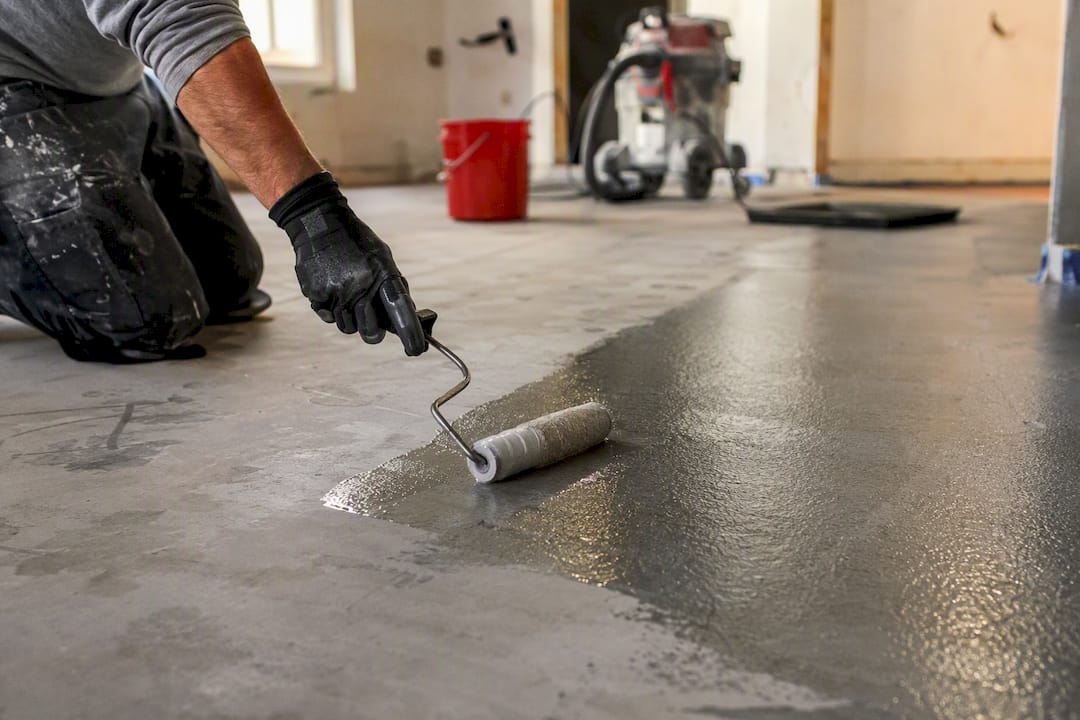
Interestingly, the regret data cuts both ways. An Erie Insurance homeowner survey found more people wished they’d installed hardwood than regretted having it, which suggests homeowners often undervalue durable, classic materials in favor of whatever’s trending.
Pro Tip: Pick flooring for how the room gets used in five years, not for what’s popular this year. Trend-driven choices are the ones that show up most often on regret lists.
How Long Does a Flooring Installation Take?
Every flooring job moves through the same basic phases: measure and material order, demo of the old floor, subfloor prep, installation, finish and trim work, then cleanup.
| Job Type | Typical Timeline |
|---|---|
| Single room (100 to 400 sq ft) | 1 to 3 days |
| Whole floor (1,000 sq ft) | 3 to 7 days |
| Full hardwood refinish | 3 to 5 days, plus cure time |
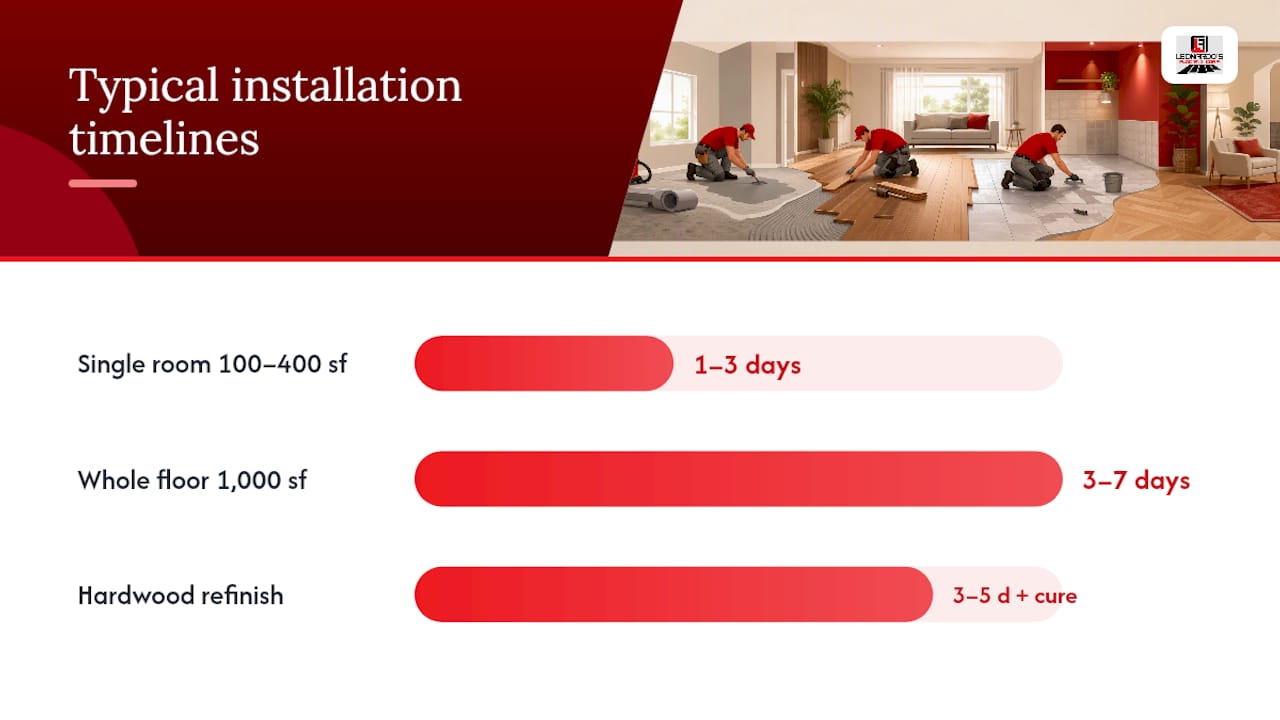
Subfloor issues, moisture mitigation, and custom trim work all push timelines longer. Before your crew arrives, clear the space, secure pets away from work areas, keep HVAC running for material acclimation, and plan an alternate route through the house if the work zone blocks normal access.
When to Hire a Pro vs. When DIY Makes Sense
Hire a professional for anything involving moisture testing, commercial square footage, or more than one material transition. The margin for error is too costly to learn on the job. DIY can work for a small, simple floating-floor project in a low-traffic room, but an honest DIY checklist means acclimating the material, checking subfloor flatness, and accepting you’ll redo it if it goes wrong. I’ve seen enough regret surveys to know most flooring mistakes trace back to skipping a step that felt optional at the time.
Get a Free Estimate From Leonardo’s Flooring Corp
If you’re weighing bids from multiple contractors, the fastest way to cut through the guesswork is working with a crew that’s already done the math on materials, subfloor conditions, and Denver-area labor costs. Leonardosflooringcorp has spent over a decade handling hardwood floor installation, vinyl flooring, tile, epoxy coatings, subfloor prep, refinishing, stair treads, and finish carpentry for homes and businesses across the Denver metro.

That range matters because it means one contractor plans your whole project instead of juggling separate crews for demo, install, and trim. Leonardosflooringcorp backs its work with a workmanship warranty and has earned more than 125 five-star reviews from local homeowners and business owners, and every project is fully licensed and insured before a single plank gets cut. Every estimate is tailored to your specific space and budget, not pulled from a generic price sheet. If you’re ready to see real numbers for your project, request a free measure and estimate through Leonardo’s flooring services page and get a written scope before you commit to anything.
Frequently Asked Questions
What do flooring services typically include?
Most full-service flooring companies handle measuring, material sourcing, subfloor prep, installation, trim and transition work, and cleanup. Surface-only installs skip prep and finishing details, so confirm scope before comparing bids.
How much do flooring services cost for 1,000 square feet?
Expect somewhere between $4,000 and $15,000 depending on material, with laminate and vinyl on the low end and hardwood or premium tile on the high end.
How do I know if a flooring contractor is trustworthy?
Confirm they’re licensed, bonded, and insured, check their reviews and portfolio, and make sure they offer a written workmanship warranty separate from the material warranty.
What is the Rule of 3 in flooring?
It’s a design guideline limiting a home to three flooring materials, typically a dominant hard surface, a resilient surface for wet zones, and a softer surface for comfort areas, to keep the whole home feeling cohesive.
How long does a typical flooring installation take?
A single room usually takes 1 to 3 days. A full 1,000 sq ft installation runs 3 to 7 days, and a hardwood refinish takes 3 to 5 days plus cure time.
Sources
- Average floor installation cost and per-material price ranges — HomeGuide
- Flooring installation cost by city — RemodelerIQ
- Designers swear by the ‘three-material rule’ — House Beautiful
- Flooring choices homeowners regret — Real Simple
- Homeowner survey on renovation regrets and wishes — Erie Insurance