
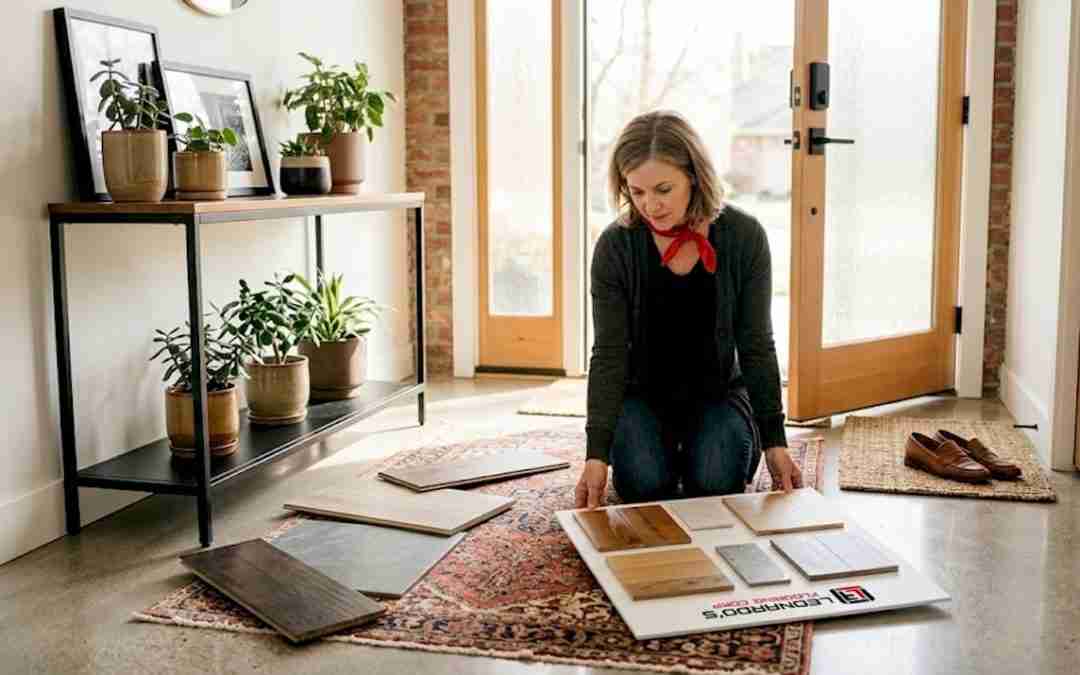
When you start planning a home renovation, understanding what is residential flooring and how it differs from other flooring categories is the foundation of every good decision. Residential flooring covers any floor surface installed in a home, from the hardwood in your living room to the vinyl in your kitchen. The material you choose affects how your home feels underfoot, how well it holds up to daily life, and yes, how much your home is worth when you eventually sell. This guide covers every major flooring type, what each one costs you in the long run, and how to pick the right one for each room.
Table of Contents
- Key takeaways
- What residential flooring is and how it differs from commercial
- Types of residential flooring: what each material offers
- Choosing the best flooring for each room
- Installation costs and what drives the total price
- My honest take on what most homeowners get wrong
- Ready to put the right floor in your home?
- FAQ
Key takeaways
| Point | Details |
|---|---|
| Residential and commercial flooring differ significantly | Residential flooring prioritizes comfort and aesthetics; commercial flooring focuses on heavy durability and slip resistance. |
| Material lifespans vary widely | Carpet lasts about 10 years, while natural stone can exceed a century with proper care. |
| Hardwood has the best resale return | Solid hardwood can recover up to 147% of its project cost at resale, outperforming all other flooring upgrades. |
| Total cost exceeds material cost | Subfloor prep, moisture barriers, and underlayment often add significantly to your total installed price. |
| Room conditions should drive material choice | Moisture levels, foot traffic, and room function determine which flooring type will actually last. |
What residential flooring is and how it differs from commercial
Residential flooring refers to any flooring material designed and installed for use inside a home, whether that is a single-family house, condo, apartment, or rental property. The materials in this category are engineered to perform in private living spaces where the priorities are warmth, comfort, style, and moderate durability.
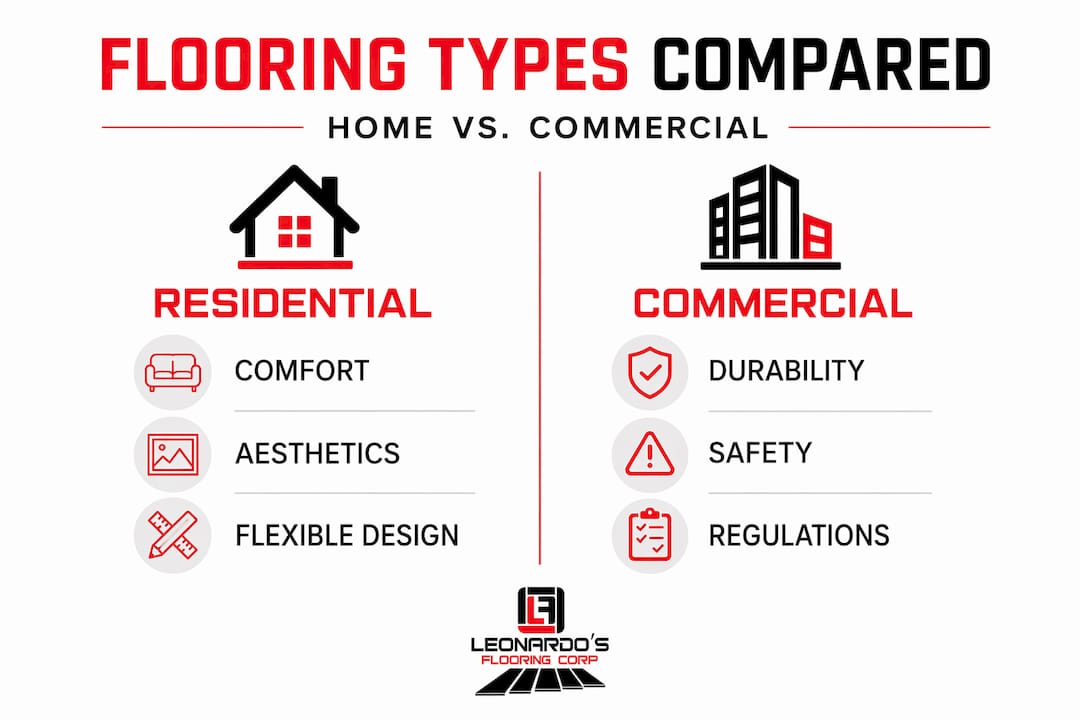
The distinction matters because residential flooring prioritizes comfort and aesthetics in ways that commercial flooring simply does not. Commercial flooring, by contrast, is built to handle heavy foot traffic, equipment loads, spill resistance, and strict safety codes. If you have ever noticed how a hospital hallway or retail store floor looks and feels compared to a hardwood living room, you have experienced that difference firsthand.
Here is how the two categories compare side by side:
| Feature | Residential flooring | Commercial flooring |
|---|---|---|
| Primary purpose | Comfort, aesthetics, home value | Durability, safety, high traffic |
| Typical materials | Hardwood, carpet, LVP, laminate, tile | VCT, rubber, commercial carpet tile, polished concrete |
| Installation focus | Visual appeal, underlayment for comfort | Adhesion strength, load capacity |
| Slip resistance standards | General household safety | Regulated by ADA and building codes |
| Lifespan expectation | Varies by material and maintenance | Engineered for heavy wear cycles |
A common misconception is that commercial-grade flooring is automatically “better” for homes. It is not. Commercial materials are optimized for completely different conditions. Thick rubber flooring made for a gym corridor brings none of the acoustic comfort or visual warmth you want in a bedroom. If you want to dig deeper into how these categories play out in real projects, the Denver property manager guide from Leonardosflooringcorp covers the contrast well.
Types of residential flooring: what each material offers
Knowing the options is half the battle. Here is a breakdown of every major residential flooring material, what it does well, and where it falls short.
| Material | Avg. lifespan | Water resistance | Best rooms | Relative cost |
|---|---|---|---|---|
| Solid hardwood | 50+ years | Low | Living room, bedroom | High |
| Engineered hardwood | 25-30 years | Moderate | Main floor, basement (above grade) | Medium-high |
| Laminate | 15-25 years | Low-moderate | Bedroom, living room | Low-medium |
| Luxury vinyl plank (LVP) | 20-25 years | Full | Kitchen, bath, basement | Low-medium |
| Carpet | ~10 years | Very low | Bedroom, low-traffic areas | Low |
| Ceramic/porcelain tile | 50+ years | Excellent | Kitchen, bath, entryway | Medium |
| Natural stone | 100+ years | Moderate | Kitchen, entryway, living room | High |
| Concrete | 50+ years | High (sealed) | Basement, garage, modern interiors | Low-medium |
Solid hardwood remains the gold standard for resale value. Hardwood can recover 147% of its initial project cost when you sell. That is not a rounding error. No other flooring type comes close to that figure. The tradeoff is that solid hardwood is vulnerable to moisture and should not be installed in bathrooms, below-grade basements, or directly over concrete without proper moisture systems.
Luxury vinyl plank has become the top-selling residential floor in the country for good reason. LVP is fully waterproof and works in rooms where wood cannot go. It handles pet accidents, spills, and humidity swings without warping or staining. You get a convincing wood look at a fraction of the cost.
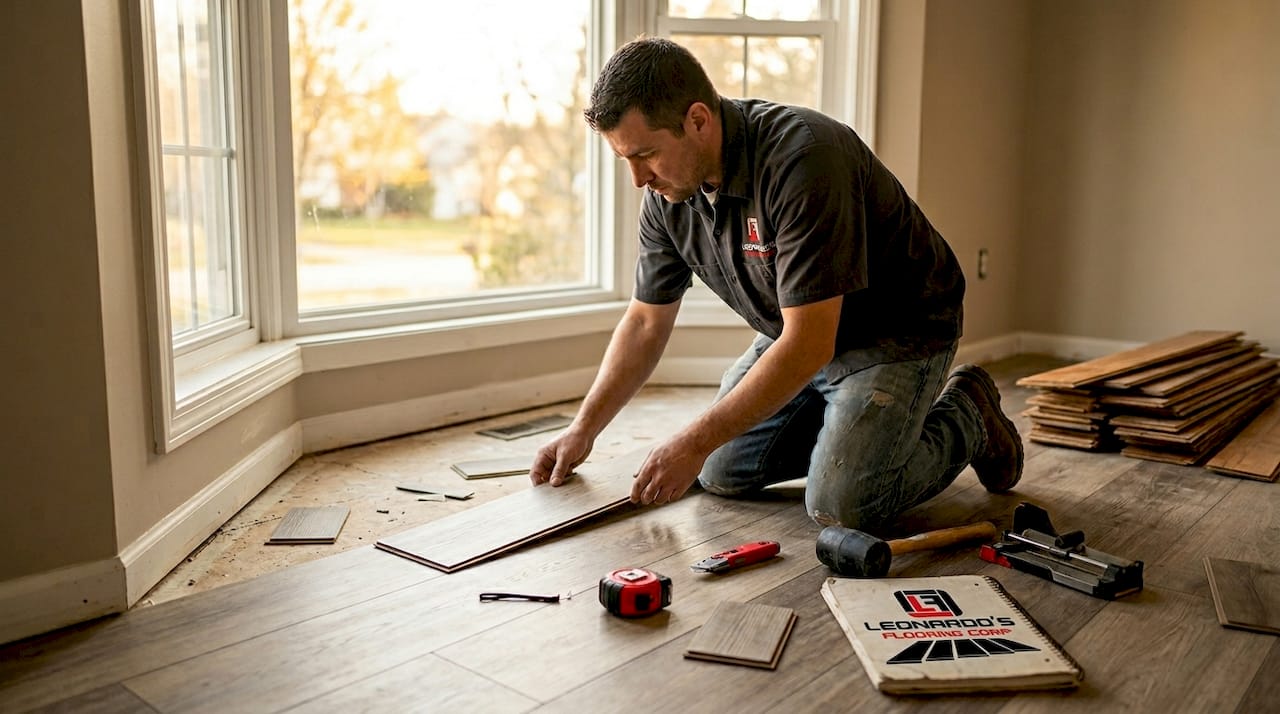
Laminate is the budget-friendly sibling to hardwood. It photographs well and feels solid underfoot, but it does not tolerate standing water and cannot be refinished once the top layer wears down. Great for bedrooms and low-moisture living rooms, not kitchens or bathrooms.
Carpet delivers warmth and sound absorption that no hard surface can match in a bedroom. The tradeoff is lifespan. Carpet lasts roughly 10 years compared to the century-plus you can get from natural stone with proper maintenance. If you have kids or pets, budget for replacement.
Concrete is no longer just an industrial choice. Concrete floors can exceed 50 years in lifespan and, because of their high thermal mass, actually help reduce energy bills by retaining heat in winter and staying cool in summer. For modern design aesthetics and below-grade applications, polished or epoxy-coated concrete is hard to beat.
For a deeper look at how these materials compare in real renovation contexts, the flooring materials explainer from Leonardosflooringcorp is worth bookmarking.
Pro Tip: When choosing between materials, always account for subfloor height changes. If you are replacing tile with LVP, the height difference can affect door clearances and transitions to adjacent rooms. Measure before you buy.
Choosing the best flooring for each room
Room selection is where most homeowners make expensive mistakes. Picking a flooring material based on looks alone, without accounting for moisture, traffic, and function, is how you end up replacing floors in five years instead of twenty-five.
Here is a practical decision-making process to work through for any room:
- Measure the moisture. Is the room below grade, at grade, or above grade? Does the room see regular water or humidity? Basements and bathrooms demand water-resistant materials like LVP or tile. Above-grade, dry rooms open up options like hardwood and laminate.
- Assess the foot traffic. Entryways, hallways, and kitchens take a beating. Choose a material rated for high traffic. Bedrooms and offices are low-traffic zones where softer, more comfortable materials make sense.
- Match the room’s function. A home gym needs durability and cushion. A home office benefits from quiet, low-maintenance surfaces. A formal dining room benefits from the visual impact of hardwood or stone.
- Think about your household. Pets, young children, and people with allergies all influence which material holds up and stays healthy long-term. Hard surfaces are easier to keep allergen-free. Waterproof materials survive pet accidents better.
- Consider resale impact. If you plan to sell within ten years, hardwood in the main living areas and tile in wet zones are the most universally appealing combinations to buyers.
For kitchens and bathrooms, LVP and porcelain tile are the two strongest choices in most situations. Both handle moisture without complaint. For basements, go with LVP or sealed concrete unless you have a dedicated moisture barrier system in place. For bedrooms, carpet is still the comfort leader, though engineered hardwood is a great alternative if you want something that lasts longer and photographs better.
Pro Tip: Do not skip the 2026 flooring selection guide before you finalize your room choices. Matching material to room conditions prevents the most common and costly renovation regrets.
Installation costs and what drives the total price
The number homeowners are most likely to underestimate is the total installed cost, not just the material price per square foot. Material cost is only part of what you will spend.
The total installed cost includes subfloor preparation, moisture barriers, underlayment, transitions, adhesives, and labor. On a project that looks affordable at the material level, these additions can easily double the final bill. Here is what drives that number up:
- Subfloor condition. If the subfloor is uneven, damaged, or soft, it must be repaired before any new flooring goes down. Skipping this creates squeaks, gaps, and premature wear.
- Moisture barriers. In basements and over concrete slabs, a proper moisture barrier is not optional. Missing this step allows moisture to migrate up through the floor, warping wood and growing mold under vinyl.
- Underlayment. Most floating floors require underlayment for sound dampening and thermal insulation. The quality of underlayment affects how the finished floor feels and sounds.
- Transitions and trim. Where floors meet doorways, stairs, or different materials, transition strips and trim pieces add to the material list and the labor time.
- Removal and disposal. Ripping out the old floor, hauling it away, and disposing of it properly adds real cost that many estimates leave out until you are already committed.
Working with a company that handles the full process from measurement to installation eliminates the coordination gaps that drive costs up. Single-point-of-contact services consistently produce higher satisfaction rates because the installer already knows what the salesperson promised, and there is no passing the buck when something goes sideways.
Pro Tip: Always get a written line-item estimate that separates material cost, subfloor prep, labor, and disposal. If an estimate only gives you a total number, ask for the breakdown before signing anything.
My honest take on what most homeowners get wrong
I have seen hundreds of flooring projects across the Denver metro, and the same mistake shows up more often than any other. Homeowners fall in love with a material they saw on a design website and then try to force it into a room where it does not belong. A stunning white oak floor looks incredible in a magazine kitchen. In a real kitchen with a dog, two kids, and no mud room? It becomes a maintenance nightmare within a year.
The best floor for your home is not the one that looks best in photos. It is the one that holds up to how you actually live, stays manageable on a real maintenance schedule, and works with your home’s specific conditions, especially moisture and subfloor situation. I have watched homeowners spend more money correcting a beautiful but wrong choice than they would have spent just doing it right the first time.
My other consistent observation is this: people underestimate how much the installation quality matters. The same material installed by an experienced team versus a low-bid crew will look and perform completely differently ten years from now. If you are going to invest in good material, match it with quality installation. Those two things rise and fall together. You can also extend your floor’s life dramatically with the right habits. The hardwood maintenance tips that Leonardosflooringcorp publishes for Denver homeowners apply across most hard-surface floors, not just hardwood.
Choose for your life. Not for the listing photos.
— Jim
Ready to put the right floor in your home?
Leonardosflooringcorp has been serving homeowners across the greater Denver metro for over 10 years as trusted flooring experts and Home Depot Contractors. Whether you need hardwood floor installation, laminate flooring, vinyl floor options, tile, epoxy coatings, or subfloor prep, the team handles every step in-house with a single point of contact from the first measurement to the final walkthrough.

With 125+ five-star reviews and zero cookie-cutter approaches, Leonardosflooringcorp tailors every project to your budget, timeline, and home conditions. Contact the team today for a free estimate and honest advice on the best flooring installation solution for your specific project.
FAQ
What is residential flooring, exactly?
Residential flooring refers to any floor covering material installed in a home or private living space, including hardwood, laminate, vinyl, tile, carpet, and natural stone. It is designed with comfort, aesthetics, and moderate durability in mind rather than the heavy-load performance requirements of commercial flooring.
What is the difference between residential and commercial flooring?
Residential flooring focuses on comfort and style, while commercial flooring is built for high foot traffic, regulated slip resistance, and heavy-duty durability. Using commercial flooring in a home is not necessarily better since it is optimized for conditions that do not exist in a typical household.
What is the best flooring for a home with pets and kids?
Luxury vinyl plank is widely considered the best flooring for active households because it is fully waterproof, scratch-resistant, and easy to clean. Porcelain tile is another strong option in kitchens and bathrooms where moisture and spills are constant.
How long does residential flooring last?
Lifespan depends heavily on the material. Carpet typically lasts around 10 years, while hardwood and tile can last 50 years or more with proper care. Natural stone can exceed 100 years when maintained correctly, making it one of the longest-lasting residential flooring options available.
Does flooring type affect home resale value?
Yes, significantly. Solid hardwood consistently delivers the strongest return, with some projects recovering up to 147% of the initial cost at resale. Buyers respond well to hardwood in living areas and tile in wet zones, making those the safest choices for resale-focused renovations.