
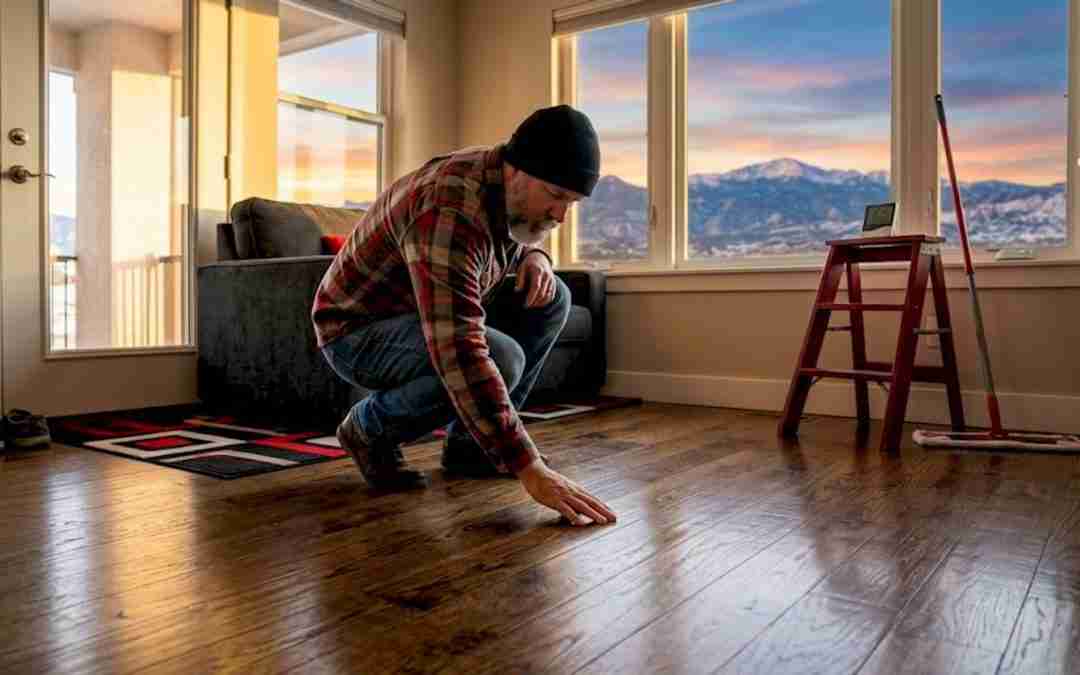
Colorado’s dry climate and rapid weather swings put hardwood floors under stress that most generic maintenance guides completely ignore. Denver averages around 300 sunny days per year, which sounds lovely until you realize that sunshine and low humidity are two of the biggest enemies of wood flooring. Indoor humidity can nosedive in winter, causing boards to shrink, gap, and crack while summer monsoons can push moisture levels up enough to cause cupping. If you’re relying on one-size-fits-all advice from a national home improvement blog, you’re likely missing the specific strategies that actually protect your floor here in the Denver metro.
Table of Contents
- Understand your floor’s unique needs in the Denver climate
- The daily and weekly routine: Dust, clean, and protect
- What to use (and avoid) when cleaning hardwood floors
- Dealing with everyday messes: Spills, stains, and seasonal challenges
- When to refresh: Polishing, recoating, and professional help
- A local expert’s take: The truth about hardwood maintenance in Denver
- Upgrade and protect your floors with local expertise
- Frequently asked questions
Key Takeaways
| Point | Details |
|---|---|
| Control indoor humidity | Maintain 35–55% humidity to prevent gapping and floor movement. |
| Clean safely | Use only pH-neutral, hardwood-specific cleaners and keep moisture to a minimum. |
| Adopt daily routines | Daily dusting and weekly mopping prevent grit and grit–caused scratches. |
| Immediate spill response | Blot spills right away to avoid stains and finish damage. |
| Recoat before deep damage | Schedule a professional recoat when the finish starts to dull for maximum floor life. |
Understand your floor’s unique needs in the Denver climate
Denver sits at roughly 5,280 feet above sea level, and that altitude plays a real role in how wood behaves in your home. The air is thinner and naturally drier up here, which means your hardwood floors are in a near-constant battle against moisture loss. Most of the country deals with humidity swings of maybe 20 percentage points between seasons. In Denver, you can swing from extremely dry winter air to relatively humid summer conditions in a matter of weeks, and your floors feel every bit of that change.
The wood species and finish in your home matter too, but no floor is immune to the physics of expansion and contraction. When humidity drops below around 35%, wood fibers lose moisture and the boards shrink. When it climbs above 55%, those same boards absorb moisture and swell. Both extremes cause visible problems over time, from unsightly gaps to boards that lift at the edges, a problem known as cupping.
Here is what Denver homeowners need to watch for year-round:
- Seasonal gapping: Small gaps between boards in winter are often normal, but wide or persistent gaps are a warning sign.
- Cupping: Edges of boards are higher than the center, usually a sign of too much moisture from below or above.
- Surface cracking: Finish splits and cracks when wood dries out too fast and too deeply.
- Squeaking: Boards rubbing against each other due to movement caused by humidity shifts.
- Finish dullness: Rapid humidity cycling breaks down protective coatings faster than in more stable climates.
Key takeaway: Actively manage indoor humidity to a target range of 35–55% RH. This single habit prevents the majority of gapping, movement, and structural issues you’ll face as a Denver homeowner.
Before you even think about cleaning products or polishing schedules, understanding your local climate is step one. A solid installation guide for Denver hardwood floors will explain why proper acclimation before installation is equally critical, but maintenance picks up where installation leaves off.
Now that you know climate is a key player, let’s get into daily and weekly routines that actually work in Denver.
The daily and weekly routine: Dust, clean, and protect
Consistency beats intensity every single time when it comes to hardwood floor care. A homeowner who does a little bit right every day will have a far better-looking floor in ten years than someone who occasionally does a deep clean with the wrong products. The goal is to keep abrasive grit off the surface before it has a chance to grind into your finish.
Here is the routine that works best for Denver homes, based on expert wood floor care guidance:
- Daily dry dusting or sweeping: Use a microfiber dust mop or a soft-bristle broom to pick up sand, dirt, and grit. Denver’s outdoors means people track in a surprising amount of fine particulate from trails and landscaping.
- Weekly vacuuming along edges and corners: These spots collect debris that a dust mop misses. Always disable the beater bar on your vacuum, as it can scratch your finish.
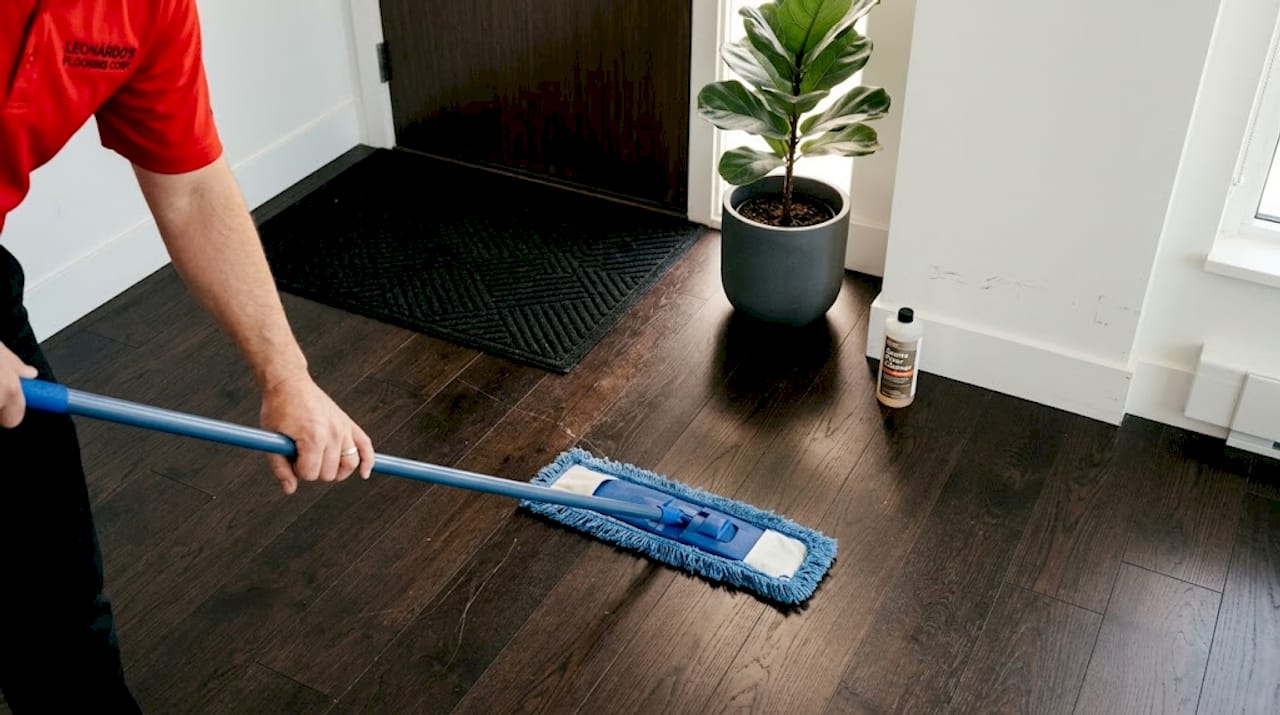
- Damp microfiber mopping: Use just enough moisture to clean. The mop should feel barely damp, not wet. Pair it with a pH-neutral hardwood floor cleaner.
- Immediate spill response: Blot spills right away using a soft cloth. More on this in a later section.
- Humidity monitoring: Check your hygrometer weekly, especially in winter when your heating system can drop indoor humidity fast.
- Felt pads and entry mats: Place felt pads under all furniture legs and use quality entry mats at every door to trap grit before it reaches the wood.
Pro Tip: A microfiber dust mop is genuinely one of the best investments you can make for hardwood floors. Unlike a broom, it traps rather than redistributes fine particles, which is exactly what you want in dusty Denver air.
Dirt and sand are essentially sandpaper for your finish. Studies from flooring industry groups confirm that abrasive grit is responsible for a significant percentage of premature finish wear. Staying consistent with flooring tips for Denver homes keeps that wear rate slow and your floors looking newer for longer.
With daily and weekly basics covered, it’s time to discuss how to clean without causing hidden damage.
What to use (and avoid) when cleaning hardwood floors
The cleaning product aisle can be overwhelming, and a lot of popular options will actually hurt your floors. The rule is simple: if it wasn’t specifically made for hardwood floors and isn’t pH-neutral, skip it.
Here is a quick comparison to help you decide:
| Cleaner type | Safe for hardwood? | Why |
|---|---|---|
| pH-neutral hardwood cleaner | Yes | Cleans without stripping or dulling the finish |
| Damp water with microfiber | Yes (minimal moisture) | Safe if the mop is barely damp |
| White vinegar solution | No | Acidic; dulls and damages finish over time |
| Ammonia-based cleaners | No | Strips protective coating and can discolor wood |
| Bleach or chlorine cleaners | No | Bleaches wood, destroys finish integrity |
| Steam mops | No | Forces moisture and heat into wood grain |
| Generic floor cleaners | No | Often contain waxes or chemicals not suited for hardwood |
| Murphy’s Oil Soap (frequent use) | Use sparingly | Leaves residue that builds up and dulls finish |
Vinegar is one of the biggest myths in DIY floor cleaning. It feels like a natural, safe option, but its acidity slowly breaks down the polyurethane or aluminum oxide finish on your floors. You won’t notice it immediately, but over months of regular use, your floor will look increasingly dull and lose its protective layer much faster than it should.
Key products to use:
- Bona Hardwood Floor Cleaner or similar hardwood-specific brands
- Diluted manufacturer-recommended cleaners that match your floor’s finish type
- Plain water on a barely damp mop for light cleaning between deeper sessions
Pro Tip: Read the label on your floor’s finish type before buying any cleaner. Oil-finished floors need different care than polyurethane-finished ones, and using the wrong product on either can cause serious damage.
For those considering updates or dealing with worn-out surfaces, a Denver flooring renovation guide can help you understand your options across materials and finishes.
Armed with the right cleaners, handling common messes and spills correctly becomes your next defense.
Dealing with everyday messes: Spills, stains, and seasonal challenges
Denver winters bring a specific set of floor challenges that warmer-climate homeowners never face. Rock salt, de-icing chemicals, sand, and slush all get tracked inside, and each one can damage your floors in different ways if not handled quickly.
Follow these steps when messes happen:
- Blot spills immediately. Use a clean, dry, soft cloth. Press firmly and lift straight up rather than wiping, which spreads the liquid. Immediate blotting limits moisture penetration and prevents staining.
- For winter salt and sand: Sweep or vacuum first to remove solid particles before any damp cleaning. Salt left sitting on wood can draw moisture and etch the finish.
- For muddy footprints: Let the mud dry completely, then sweep up the dry residue before using a barely damp cloth for any remaining marks. Trying to wipe wet mud spreads it deeper.
- For pet accidents: Act fast. Blot up liquid immediately, then clean with a hardwood-safe enzymatic cleaner. Do not use ammonia-based pet cleaners since the scent can also encourage pets to return to the same spot.
- For scuff marks: A small amount of hardwood floor cleaner on a microfiber cloth, rubbed gently in a circular motion, removes most scuffs without harming the finish.
If you notice boards that are cupping or gapping beyond what resolves after seasonal humidity stabilizes, that is not normal wear. Persistent structural issues signal a deeper humidity or moisture problem that warrants a professional assessment.
Pro Tip: Keep a small cleaning kit in a convenient cabinet near your main entry point. A microfiber cloth, a spray bottle of pH-neutral cleaner, and a small soft brush take up almost no space but make immediate spill response far more likely to happen.
When you need Denver flooring service options for more serious damage, do not wait. The sooner a professional looks at a problem floor, the more options you have.
Handling day-to-day messes is vital, but eventually every floor shows wear. Next, how to refresh and protect your investment.
When to refresh: Polishing, recoating, and professional help
Even well-maintained hardwood floors show wear over time. Knowing when to take action and what level of intervention your floor actually needs saves you significant money and preserves more of your original wood.
| Condition | Recommended action | Approximate frequency |
|---|---|---|
| Light dullness, minor surface scratches | Hardwood polish or buffing | Every 3–6 months for high-traffic areas |
| Noticeable wear, fading, or loss of sheen | Professional screen-and-recoat | Every 3–5 years depending on traffic |
| Deep scratches, gouges, or bare wood | Full sand-and-refinish | Every 10–20 years max (depends on wood thickness) |
| Cupping, warping, or persistent gaps | Professional inspection first | As needed |
A screen-and-recoat is the most underused maintenance tool in a homeowner’s toolkit. It involves lightly scuffing the existing finish and applying a fresh coat of protective topcoat, which extends the life of your floors by years without the cost and disruption of a full refinish. Most homeowners wait until floors look genuinely bad before calling a professional, but catching dullness early makes the recoat process faster, cheaper, and more effective.
Some flooring professionals recommend periodic polishing every few months to maintain a protective surface layer in high-traffic zones like entryways and kitchens. Others focus on cleaning alone and recoating based on visible dulling. Both approaches have merit. The right one for your home depends on your floor’s finish type, the amount of foot traffic, and whether you have kids or pets.
Key signs your floor needs more than a polish:
- Water no longer beads on the surface and soaks in instead
- Finish feels rough or gritty even right after mopping
- Color looks noticeably lighter in heavy-traffic paths
- Scratches reach through the finish to the raw wood below
For expert assessment or new installation, the Denver hardwood floor installation experts at Leonardo’s Flooring Corp can walk you through your options without any pressure.
With maintenance and restoration covered, let’s step back for a local expert’s perspective on what truly matters for Denver’s hardwood longevity.
A local expert’s take: The truth about hardwood maintenance in Denver
After more than a decade installing and servicing hardwood floors across the Denver metro, we’ve seen a clear pattern. The homeowners whose floors last longest aren’t necessarily the most thorough cleaners. They’re the ones who take humidity seriously.
Humidity neglect is the number one cause of premature hardwood floor failure in Denver. Not scratches. Not dirty mops. Not even the wrong cleaner, though that’s a close second. People spend a lot of energy on visible cleaning while completely ignoring the invisible, slow destruction that comes from letting indoor humidity drop to 20% all winter. That kind of dryness will force gaps between boards and cause surface cracking even on floors that are swept daily.
A quality hygrometer, the device that measures relative humidity, costs less than $20 at most hardware stores. Pair one with a humidifier in winter and a dehumidifier during Denver’s more humid summer months, and you’ve just done more for your floor’s longevity than any cleaning product ever could.
We also want to bust two persistent myths. First, steam mops. They feel powerful and hygienic, but the heat and moisture they force into wood grain cause permanent swelling and finish damage. Second, vinegar. It’s not a gentle, natural option for wood floors. It’s an acid that slowly strips your finish and leaves floors looking chalky and dull over time. Neither belongs anywhere near your hardwood.
When it comes to knowing whether you need professional help, the threshold is simpler than most people think. If you have persistent gapping or cupping that doesn’t resolve within a few weeks after you stabilize indoor humidity, that’s a red flag. It may point to a subfloor moisture issue, an installation problem, or a plumbing leak. Don’t wait on those situations.
One more thing worth knowing: not every home in Denver is equally well-suited to traditional solid hardwood. If your home has significant humidity swings or sits on a slab foundation, engineered wood for Denver conditions might be a smarter choice and perform far better over time. It’s a conversation worth having before you invest in a new floor.
Upgrade and protect your floors with local expertise
Taking care of your hardwood floors with the right daily habits, smart cleaning products, and humidity awareness will keep them looking beautiful for decades. But there are times when professional help makes all the difference, whether that’s a screen-and-recoat to refresh a tired finish, a repair after water damage, or a full new installation done right from the start.

At Leonardo’s Flooring Corp, we’ve been helping Denver homeowners protect and improve their floors for over 10 years. We know this climate, we know hardwood, and we listen to what you actually need before recommending anything. Our hardwood floor installation experts are ready to help you make decisions that fit your home, your budget, and your lifestyle. You can also explore our complete installation guide to learn what a professional installation involves and what questions to ask. Reach out today for a consultation with zero pressure and real answers.
Frequently asked questions
How often should I clean my hardwood floors in Denver’s climate?
Daily dusting and weekly vacuuming or damp mopping keeps Denver floors looking their best and stops grit from grinding down your finish over time.
What humidity level should I maintain in my Denver home?
Aim for 35–55% relative humidity year-round to prevent gaps, cupping, and the board movement that’s so common in Denver’s dry climate.
Are steam mops or vinegar safe for hardwood floors?
No. Both cause real harm. Avoid vinegar and harsh products and stick with a barely damp microfiber mop paired with a pH-neutral hardwood cleaner.
What should I do if I notice gaps or warping that don’t resolve seasonally?
Persistent gapping or warping beyond a normal seasonal cycle points to a possible moisture or installation issue. Call a local flooring professional to assess it before it gets worse.
How often should I recoat or refinish my hardwood floors?
Don’t wait until your floors look terrible. A screen-and-recoat when dullness first appears prevents deeper damage and is far less costly than a full refinish later.