
From first estimate to final walk-through, expect several weeks for most hardwood projects, though the number varies significantly depending on what you’re installing. Acclimation and subfloor prep usually decide how the calendar plays out, not the actual nailing or gluing. Site-finished solid hardwood always runs longer than prefinished engineered product because sanding and finish cure eat extra days at the end.
TL;DR:
- Acclimation times vary significantly, with engineered hardwood stabilizing in 2 to 3 days and solid hardwood needing 3 to 10 days or more, depending on thickness.
- Special-order materials can extend project timelines by several weeks, while in-stock prefinished floors usually complete in under two weeks.
- Moisture testing and proper acclimation are non-negotiable steps that ensure long-term stability and prevent costly callbacks.
- Installation speed heavily depends on the chosen flooring type, with prefinished products eliminating onsite finishing and reducing total duration.
- A single contractor managing all phases, including subfloor prep and moisture control, helps prevent delays caused by coordinating multiple vendors.
Table of Contents
- How Long Does Each Phase of Hardwood Installation Take?
- What Factors Speed Up or Slow Down the Schedule?
- What Happens During Each Phase, Step by Step?
- How Can You Avoid Delays During Installation?
- Why Do Moisture Testing and Acclimation Rules Matter So Much?
- What Separates a Rushed Job From a Right One?
- How Leonardo’s Flooring Corp Keeps Your Timeline on Track
- Where These Timeline Standards Come From
- Sources
- FAQ
How Long Does Each Phase of Hardwood Installation Take?
The consultation and estimate typically wraps in 1 to 3 days, especially if you already know your square footage and species preference. Material ordering is where a lot of homeowners get surprised: in-stock product ships in days, but a special-order species or a custom stain match can take several weeks to arrive.
Acclimation is the phase almost nobody budgets enough time for. Engineered hardwood often reaches a stable moisture level in 48 to 72 hours, while solid hardwood commonly needs 3 to 10 days, and wide-plank boards over 5 inches wide may need even longer monitoring because they’re more sensitive to moisture differences. The right way to end acclimation isn’t a calendar date. It’s when moisture readings between the flooring and subfloor stabilize and stop shifting by more than 2 to 4%.
Removal of existing flooring and subfloor prep generally takes a few days, depending on condition. A clean subfloor with no adhesive residue moves fast; old tile glue or an uneven slab that needs a leveling compound adds real time, sometimes an extra 24 to 72 hours for the compound to cure before installers can walk on it.
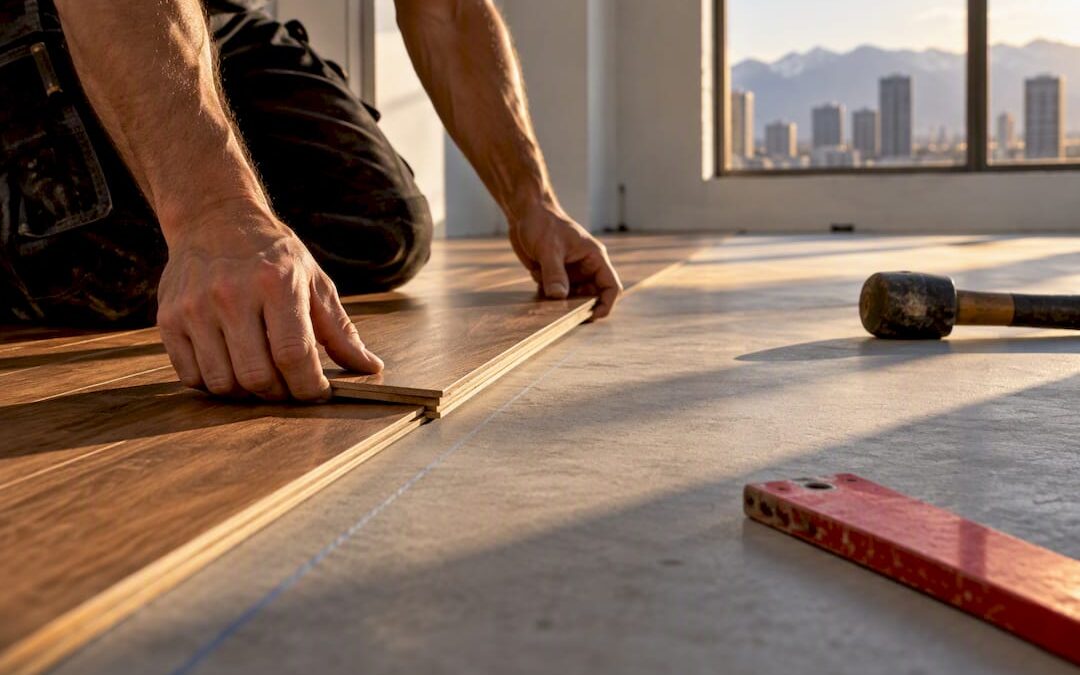
Active installation days vary by scope, typically ranging from a day or two for a single room, several days for a main floor, to up to about a week for a whole-house job with a full crew.
Sanding and finishing for site-finished floors adds several days, since each coat needs drying time before the next goes on, and the floor needs a longer cure before furniture returns.
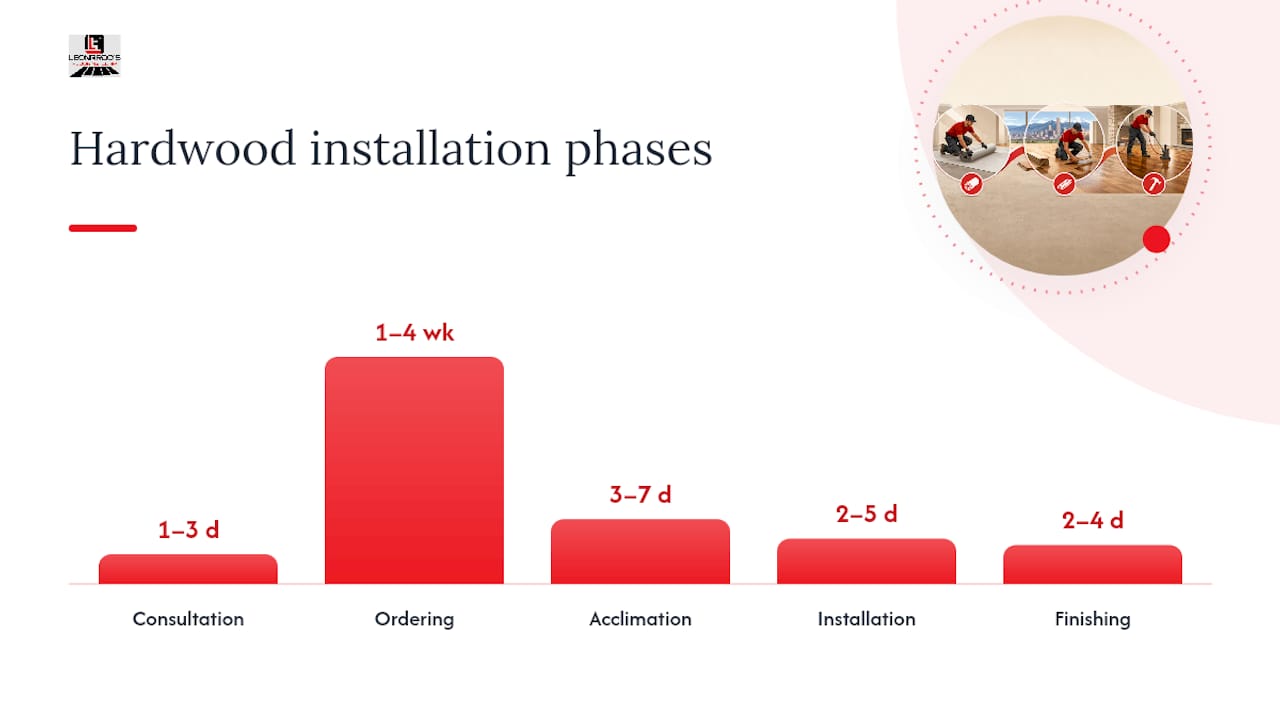
Put together, a practical example timeline looks like this: consultation 1 to 3 days, ordering 1 to 4 weeks, acclimation 3 to 7 days, installation 2 to 5 days, and finishing 2 to 4 days. A single room with in-stock prefinished product might close out in under two weeks. A whole-house project with special-order solid hardwood and site finishing can stretch toward the six-week mark or beyond.
What Factors Speed Up or Slow Down the Schedule?
Material choice is the biggest lever you control. Prefinished engineered flooring removes onsite sanding and multiple finish cures from the critical path entirely, which is why it consistently finishes faster than unfinished solid wood. Exotic species can also need longer acclimation, sometimes up to two weeks, because of how dense and moisture-reactive they are.
Crew productivity swings the timeline more than most people expect. Daily installation rates range from roughly 100 to 800 square feet per day, depending on method and how complicated the layout is. A simple rectangular room with a nail-down install moves fast. A house full of transitions, stair nosing, and tight closets slows the crew down considerably, even with the same square footage.
Subfloor condition is the other major variable:
- Excess moisture in concrete or plywood forces a delay until levels drop.
- Old adhesive or uneven spots require leveling compound and added cure time.
- Rooms with radiant heat need a gradual temperature ramp-up before flooring goes down.
Regionally, humidity matters more than people think. In consistently damp climates, local weather and indoor humidity patterns can stretch acclimation and drying times well past the standard range, which is why running HVAC or a dehumidifier before delivery isn’t optional in those areas. If you’re weighing whether radiant heat changes your schedule, this breakdown of hardwood over radiant heat covers what to expect.
Tenant access windows and scheduling constraints matter just as much for commercial properties. A retail space that can only allow work after hours will need more calendar days to complete the same square footage a residential crew could finish in one continuous stretch.
What Happens During Each Phase, Step by Step?
1. Acclimation. Store flooring boxes in the installation space, stacked loosely to allow airflow, with the room held at normal living conditions, roughly 70°F and 37 to 50% relative humidity. Run a hygrometer and moisture meter daily. Acclimation is done when readings stay steady within 2 to 4% of the subfloor, not on a fixed schedule.
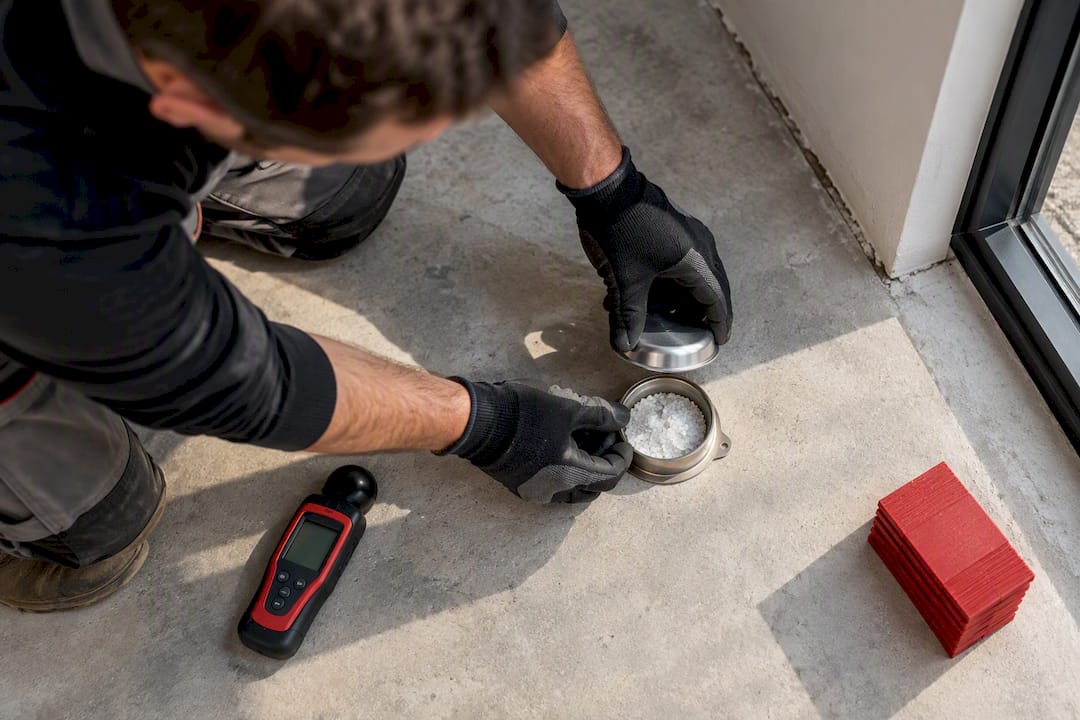
2. Subfloor testing and prep. Concrete subfloors need a calcium chloride test showing moisture content under 3%, or an in-situ relative humidity test under 75%, before flooring goes down. Plywood and OSB subfloors should read close to the flooring’s own moisture content. Installation should only start once the building is enclosed and HVAC is running, whether that’s the permanent system or a temporary unit on new construction. If your subfloor needs leveling first, proper subfloor prep is worth understanding before you lock in a start date.
3. Installation. Crews snap a starting line and work outward, using nail-down, glue-down, or floating methods depending on the product and subfloor type. Expect a ¾ inch expansion gap along the perimeter as standard practice. Daily coverage depends on layout complexity, and it’s normal for installers to make small on-site adjustments around vents, thresholds, and out-of-square walls.
4. Sanding and finishing. Site-finished floors typically get two to three coats, with several hours to overnight between coats depending on whether the finish is oil-based or water-based. Light foot traffic is usually fine within 24 hours of the final coat; full furniture return waits longer, often 3 to 7 days, since oil-based finishes cure slower than water-based ones.
5. Final walkthrough. Check trim and transition strips, listen for squeaks near high-traffic areas, confirm finish coverage is even, and get warranty documentation before signing off.
Pro Tip: Skipping or shortening acclimation is one of the most common causes of gapping, cupping, and buckling months later. It’s almost always cheaper to add a few extra days upfront than to fix a floor after it’s moved.
How Can You Avoid Delays During Installation?
Order material as soon as your design is locked, and build in a buffer week for anything special-order. In-stock prefinished product removes most ordering risk; a custom species or finish match does not.
Before installers arrive:
- Clear furniture and rugs from the work area in advance.
- Run your HVAC system for 5 to 7 days before delivery so the space holds normal temperature and humidity.
- Store flooring boxes flat in the room where they’ll be installed, not in a garage or basement with different conditions.
Ask your contractor directly what your moisture test results showed, who’s responsible for any leveling or patching, and what daily access windows they need. For commercial spaces, confirm tenant notice requirements and dust containment expectations before a single box gets delivered. Where speed matters most, prioritizing prefinished materials or staging high-traffic rooms first can shave real days off the total project window.
Why Do Moisture Testing and Acclimation Rules Matter So Much?
Every credible timeline traces back to the same acceptance criteria: enclosed jobsite, HVAC running, and moisture readings within tolerance before the first board goes down. That standard has been applied widely across Denver metro homes and commercial properties for many years, with positive reviews reflecting customer satisfaction. A 1,000 sq ft prefinished engineered job following these steps typically closes in roughly two to three weeks.
What Separates a Rushed Job From a Right One?
The corners people cut are always the same: acclimation and moisture testing. Skip either, and you’re not saving a week, you’re borrowing against a callback six months out. Leonardo’s approach treats those two steps as fixed, not negotiable, which is exactly why the rest of the schedule holds.
— Jim
How Leonardo’s Flooring Corp Keeps Your Timeline on Track
A single flooring contractor can handle every phase this article walks through, including material sourcing, moisture testing, subfloor prep, installation, and site finishing, under one crew instead of multiple separate vendors.

That matters most on the phase readers underestimate: subfloor prep. When moisture testing turns up a problem mid-project, a single contractor can pivot immediately instead of waiting on a callback from a separate subfloor company. Denver’s dry climate and seasonal swings also mean acclimation timing isn’t one-size-fits-all; experienced local crews familiar with this process can help reduce surprises once your floor is down. Whether you’re installing one room or replacing flooring across a whole commercial property, the hardwood floor installation team can walk you through moisture testing results and realistic dates before you commit to anything. Browse the full service list and request an estimate to get a schedule built around your actual space, not a generic average.
Where These Timeline Standards Come From
The acclimation and moisture acceptance criteria in this guide draw from the NWFA installation guidelines, Preverco’s acclimatization technical bulletin, and practical installation steps from This Old House.
FAQ
How Long Does It Take to Install 1,000 Square Feet of Hardwood Flooring?
Active installation for 1,000 sq ft typically runs 2 to 4 days with a professional crew, depending on layout complexity and installation method. Including acclimation, subfloor prep, and finishing if the product is site-finished, the full project usually lands in the 2 to 4 week range.
How Soon Can You Walk on Hardwood Floors After Installation?
Prefinished floors are generally safe for light foot traffic within a day of installation once nails or adhesive have set. Site-finished floors need each finish coat to dry, so light traffic usually waits about 24 hours after the final coat cures.
How Long Does It Take to Install Flooring in a New 3,000 Square Foot House?
A whole-house project of that size commonly takes 3 to 5 active installation days for a full crew, but the entire process from ordering through final finish often stretches to 4 to 6 weeks. Ordering lead time and whether the wood is site-finished are the two biggest swing factors.
How Long Before You Can Put Furniture on New Hardwood Floors?
Prefinished floors can usually take furniture back within a day or two once fasteners or adhesive have set. Site-finished floors need longer, often 3 to 7 days, since oil-based finishes cure slower than water-based ones and full weight too soon can dent a still-curing finish.
Does Choosing Leonardo’s Flooring Corp Affect the Timeline?
Leonardo’s Flooring Corp handles material sourcing, subfloor prep, installation, and finishing under one team, which removes the scheduling gaps that happen when separate vendors handle each phase. Current project timelines and estimates are available through the services page.