
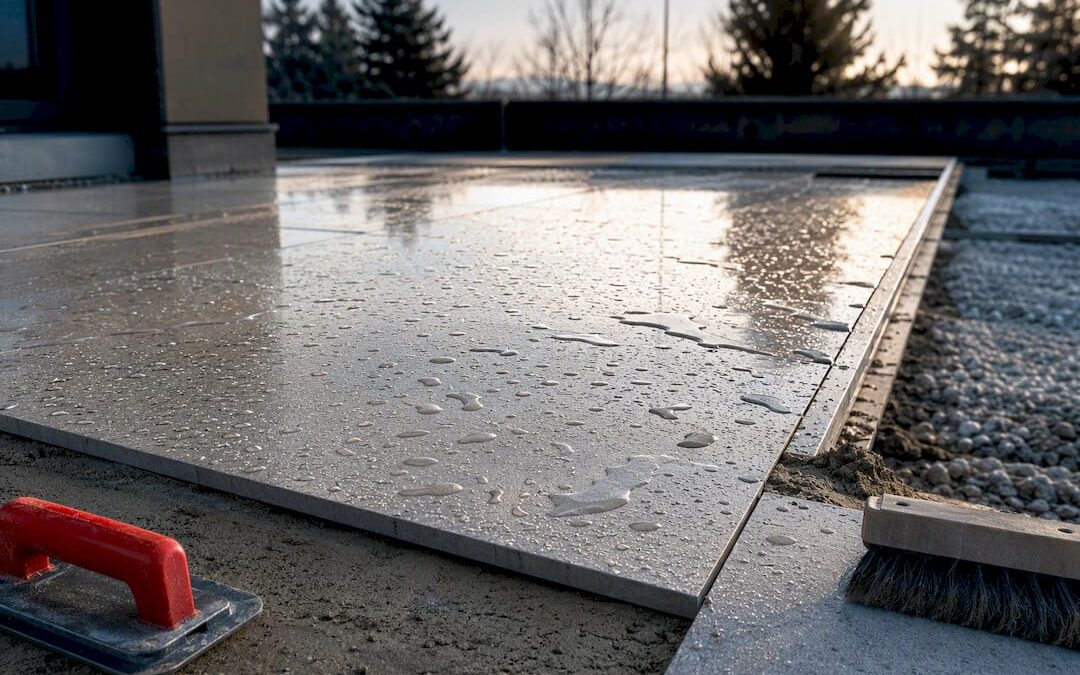
The most durable choice for Denver exterior tile is low-absorption porcelain, rated at 0.5% water absorption or less, installed over a properly prepared and waterproofed substrate. Three things matter more than the tile itself: an exterior-rated setting bed with full mortar contact, continuous drainage or waterproofing where water can pool, and expansion joints sized for Denver’s wide temperature swings. Skip any of those three, and even the best porcelain will crack, spall, or delaminate within a few winters. Larger projects, especially plaza decks or waterproofed assemblies, often need a Denver building permit and a professional installer who knows the local inspection process.
TL;DR:
- Porcelain tiles with water absorption rates at or below 0.5% are essential for long-term freeze-thaw resistance in Denver’s outdoor climate.
- Proper installation requires a waterproofed substrate, exterior-rated mortar, and expansion joints spaced according to local thermal cycling patterns.
- Most freeze-thaw damage is caused by water infiltration; therefore, drainage and sealing details are as critical as tile choice.
- Larger projects like plaza decks often need permits, inspections, and the involvement of professional installers knowledgeable about Denver’s building codes.
- Regular maintenance, such as resealing grout and removing debris before winter, helps extend the life of outdoor tile surfaces.
Table of Contents
- Which Tiles Actually Survive Freeze-Thaw Outdoor Conditions in Denver?
- Installation and Substrate Best Practices for Denver’s Climate
- Denver Permits and Code Considerations for Exterior Tile Work
- Maintenance and Winter Prep That Actually Extends Tile Life
- What Denver Installers Check Before Setting a Single Tile
- Jim’s Take: Porcelain, Prep, and Knowing When to Call a Pro
- Get a Real Assessment Before You Commit to Outdoor Tile
- Sources
- FAQ
Which Tiles Actually Survive Freeze-Thaw Outdoor Conditions in Denver?
Water is the enemy, not cold. A tile body that barely absorbs water simply has less to freeze. That’s why the industry standard for exterior applications centers on porcelain and other fully vitrified bodies, tested against benchmarks like ASTM C1026 for resistance to repeated freezing and thawing.
Read a tile spec sheet the way a contractor does, and the water absorption percentage is the first number that matters. Anything at or below 0.5% falls into the “impervious” category under ANSI classifications, which is what most freeze-thaw-rated porcelain and quarry tile hit. Standard ceramic wall tile, by contrast, is often engineered for dry interior use and can absorb several times that amount, which is exactly why it fails outdoors in Denver within a season or two.
Natural stone is trickier. Dense granites can perform acceptably in freeze-thaw zones, but porous materials like many limestones and sandstones absorb water readily and often fail faster than budget porcelain. Never assume a stone is exterior-rated just because a showroom displays it outside. Ask the seller directly:
- What is the documented water absorption percentage, and is there a manufacturer freeze-thaw rating?
- Is this tile recommended for pavers, steps, or vertical facades, or only for covered patios?
- What warranty terms apply specifically to freeze-thaw exposure, not general wear?
- Has the tile passed ASTM C1026 testing, and can the supplier provide that documentation?
If a seller can’t answer those questions with paperwork, treat the product as unrated for Denver’s climate, regardless of how the marketing copy reads.
Installation and Substrate Best Practices for Denver’s Climate
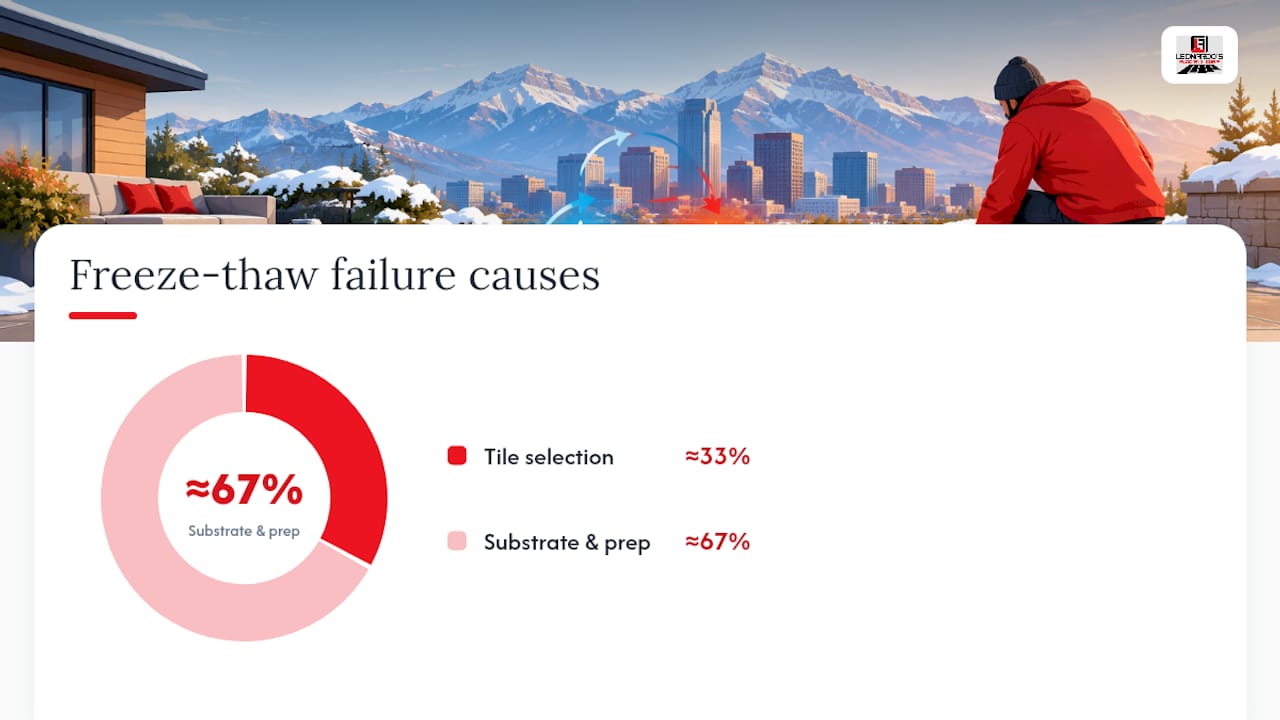
Tile selection solves maybe a third of the freeze-thaw problem. The rest comes down to what’s underneath it and how it was set. Denver’s building design criteria classify local weathering exposure as “Severe,” a category that raises the bar for concrete mix design, drainage, and vapor control in any exterior slab supporting tile, according to regional building design criteria. That classification isn’t a formality. It reflects a climate where the ground freezes deep and thaws often within the same week.
Here’s the installation sequence that prevents most freeze-thaw failures:
- Confirm substrate design first. The slab needs the correct concrete mix, positive drainage slope, and vapor control before tile ever gets specified.
- Use exterior-rated, polymer-modified mortar. Standard interior thinset breaks down outdoors. Full-bed setting methods are strongly preferred for patios and steps, with mortar contact in the 80% to 95% range depending on exposure severity.
- Waterproof continuously where water can collect. Plaza decks, balconies over living space, and anywhere near floor drains need a continuous membrane, not a patchwork of sealant. Membrane details are frequently what trigger a closer code review.
- Plan expansion joints before you set a single tile. TCNA EJ171 guidance on movement joint spacing exists because Denver’s daily temperature swing between sunny afternoons and cold nights creates real thermal cycling in tile assemblies, a pattern documented in USGS research on urban temperature swings across semi-arid, high-elevation cities like Denver.
- Protect fresh concrete from freezing. If substrate work happens anywhere near freezing temperatures, ACI cold-weather concreting guidance calls for insulating blankets or heated enclosures until the concrete reaches roughly 500 psi of early strength.
Pro Tip: Ask your installer what mortar coverage percentage they’re targeting before work starts. If they can’t give you a number, they’re probably not planning to check it with a trowel inspection once tiles come up during a test pull.
Denver Permits and Code Considerations for Exterior Tile Work
Not every tile project needs a permit, but more Denver projects trigger one than homeowners expect. According to Denver’s Community Planning and Development office, significant exterior re-tiling projects, plaza decks, and waterproofed assemblies commonly require both a permit and inspection.
Small residential repairs sometimes fall under an exemption, but the line depends on scope, not square footage alone. A cracked step tile replaced in place is different from re-tiling an entire patio over a waterproofed deck assembly tied to structural framing. When in doubt, call before you start rather than after an inspector flags an open project.
Expect an inspector to ask for:
- Material datasheets showing absorption ratings and freeze-thaw performance
- Waterproofing membrane details and termination points at drains and walls
- Contractor licensing and permit documentation on file with the city
Maintenance and Winter Prep That Actually Extends Tile Life
Freeze-thaw damage rarely shows up as one dramatic failure. It’s cumulative, worsening a little more with every cycle where water gets in and has nowhere to go. A basic seasonal routine catches problems before they compound.
Walk your patio or exterior tile area after the first hard freeze-thaw cycle each winter and look for:
- Grout joints that have started to crumble or pull away from tile edges
- Standing water anywhere on the surface, which signals a drainage slope problem
- Tenting, where tile edges lift slightly, a classic sign of moisture trapped underneath
- Hairline cracks radiating from corners, often the first visible clue of substrate movement
Reseal grout and porous stone surfaces before winter sets in, keep drains and slopes clear of leaves and debris, and go easy on deicing salts near tile edges, since chloride-based products can accelerate the same freeze-thaw chemistry you’re trying to avoid. Repeated freeze-thaw cycling combined with wetting and drying can accelerate deterioration faster than either factor alone, which is one reason research on concrete durability under combined stress points to moisture management, not just material strength, as the real long-term defense.
Pro Tip: If you spot damage right after winter, resist the urge to caulk over it as a quick fix. Sealing the surface without addressing the drainage path underneath just traps moisture where it can do more damage next season.
What Denver Installers Check Before Setting a Single Tile
Many local flooring contractors have installed tile, hardwood, laminate, vinyl, epoxy coatings, and subfloor preparation for Denver homeowners and property managers, with varying reviews and partnerships.
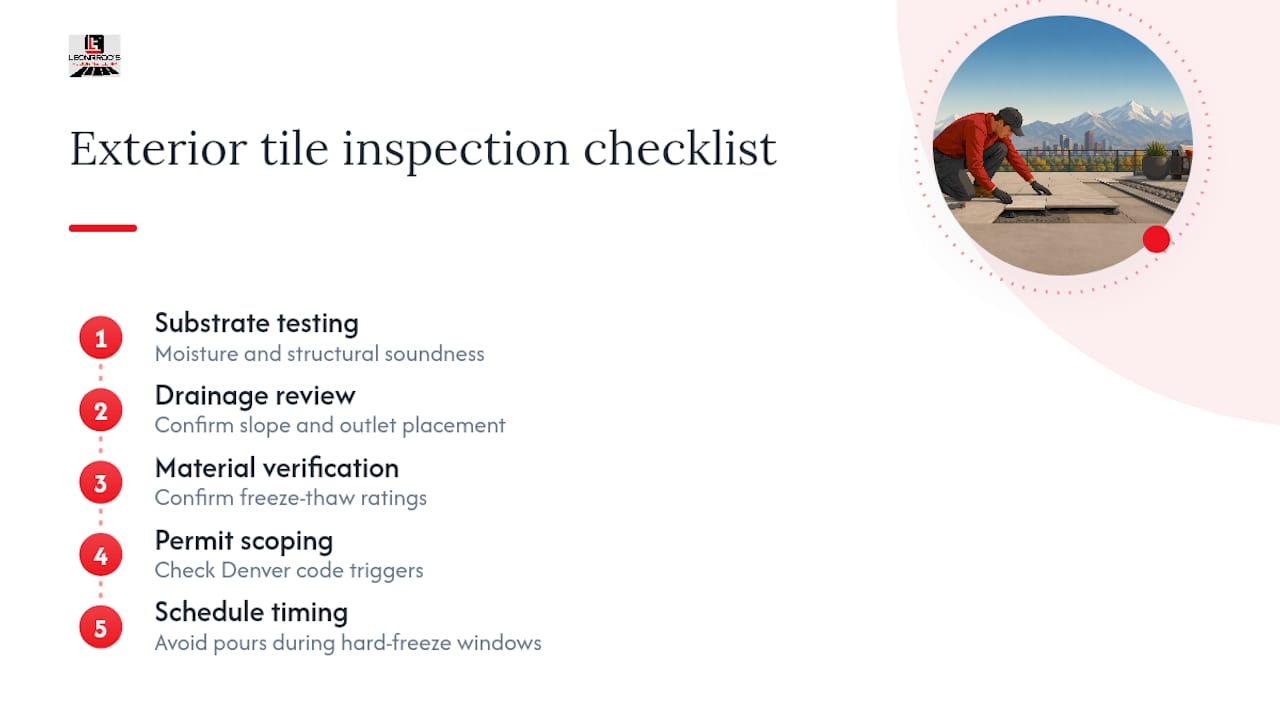
A proper exterior tile assessment covers substrate testing for moisture and structural soundness, a drainage review to confirm slope and outlet placement, verification that specified materials actually carry freeze-thaw ratings, permit scoping against Denver code triggers, and scheduling that avoids pouring or setting during hard freeze windows. Local microclimate knowledge, from heat-island effects downtown to faster freeze cycling in shaded yards, changes which materials and timelines make sense on any given property.
Jim’s Take: Porcelain, Prep, and Knowing When to Call a Pro
Here’s where I land after looking at how freeze-thaw actually destroys tile in this climate: the tile matters less than what’s underneath it. Homeowners fixate on choosing the prettiest porcelain, then skip the substrate prep that determines whether that tile survives five winters or fifteen. If you’re doing a small, well-drained, decorative project, like a modest walkway with good drainage, careful DIY work can hold up fine. The moment you’re dealing with a plaza deck, a waterproofed assembly, or anything tied structurally to the house, bring in a professional. That’s not a sales pitch, it’s just where the failure modes get expensive fast. Do the substrate right, seal and inspect it every fall, and porcelain set correctly will outlast most other exterior investments you’ll make on the property.
— Jim
Get a Real Assessment Before You Commit to Outdoor Tile
Leonardo’s Flooring Corp is the local alternative to guessing at freeze-thaw specs from a showroom brochure. We handle tile floor installation, subfloor and substrate preparation, waterproofing coordination, and permit navigation with Denver’s building department, all under one contractor rather than juggling separate trades yourself.

An assessment starts with a substrate check, moves into drainage recommendations, and ends with straight material guidance plus a written estimate and realistic timeline. No inflated scope, no pressure to upgrade beyond what your project actually needs. If you’re planning a patio, entryway, or plaza-style deck for next season, get ahead of the freeze-thaw cycle now. Request an estimate through our tile installation service page and find out what your project actually requires before winter makes that decision harder.
Sources
For permit questions, start with Denver’s Community Planning and Development office. For cold-weather substrate work, ACI 306R cold-weather concreting guidance covers curing and protection. TCNA and ANSI installation methods remain the baseline reference for tile setting and freeze-thaw performance industry-wide.
FAQ
What water absorption rate should outdoor tile have in Denver?
Look for tile rated at 0.5% water absorption or lower, which falls into the impervious category most freeze-thaw-rated porcelain meets. Higher-absorption tiles hold more water in their pores, and that water expands when it freezes, cracking the tile from the inside.
Do I need a permit for a new patio tile installation in Denver?
It depends on scope. Denver’s permitting office notes that plaza decks and waterproofed assemblies commonly require permits and inspection, while some small residential repairs may be exempt.
Can natural stone handle Denver’s freeze-thaw cycles?
Dense stones like certain granites can perform well, but porous stones such as many limestones and sandstones often fail faster than rated porcelain. Always request a manufacturer freeze-thaw rating before choosing stone for an exterior installation.
How often should I reseal grout on outdoor tile?
Reseal grout before winter each year, since porous grout absorbs water that then freezes and expands inside the joint. Pair resealing with a check of drainage paths to catch standing water before the first hard freeze.
Does Leonardo’s Flooring Corp handle exterior tile permits in Denver?
Leonardo’s Flooring Corp coordinates permit scoping as part of its tile installation services for projects that trigger Denver’s review process. Pricing depends on project scope and is available directly through a project assessment.