
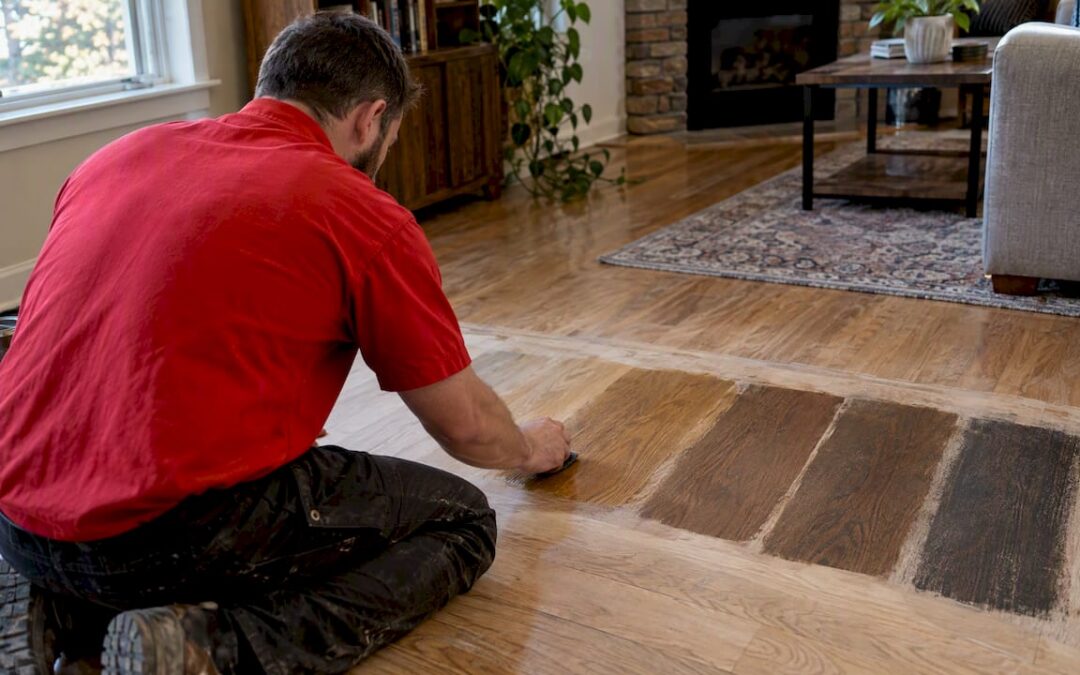
Yes, you can change the color of hardwood floors, but only one method does it properly: sand the floor down to bare wood, apply a new stain, and seal it with a compatible finish. The National Wood Flooring Association (NWFA) describes a full sand-and-refinish as the route for a complete color change, while a maintenance coat refreshes a finish but does not change the color. Below we cover how each option works, what limits your result, and how Denver’s sun and dry air affect the outcome.
TL;DR
- A real color change means sanding off the old finish, staining the bare wood, and sealing it. Recoating or cleaning will not change the color.
- If your floors are only dull or lightly scratched, a screen and recoat can be enough and is far less invasive.
- The finish matters as much as the stain: oil-based finishes amber over time, while water-based finishes stay clear.
- Colorado’s strong sun and low humidity change wood color over time, so plan for UV protection and steady indoor humidity.
- Engineered floors and thin, much-sanded boards may not be good candidates. A professional assessment should come first.
Table of Contents
- Why you can’t just paint over the old color
- The three ways to change how your floor looks
- Going darker is easy. Going lighter is limited
- The finish decides how the color ages
- What a professional color change involves
- Why Denver floors change color faster
- Our perspective: look at the floor before choosing the color
- Getting your floor ready for a color change
- Want a new color? Talk to us first
- FAQ
- Sources
Why you can’t just paint over the old color
The color you see on a finished hardwood floor is a system with three layers: the wood itself, the stain (or the wood’s natural tone), and the clear protective coating on top. Color lives in the first two layers. The coating sits above them and keeps new color from reaching the wood.
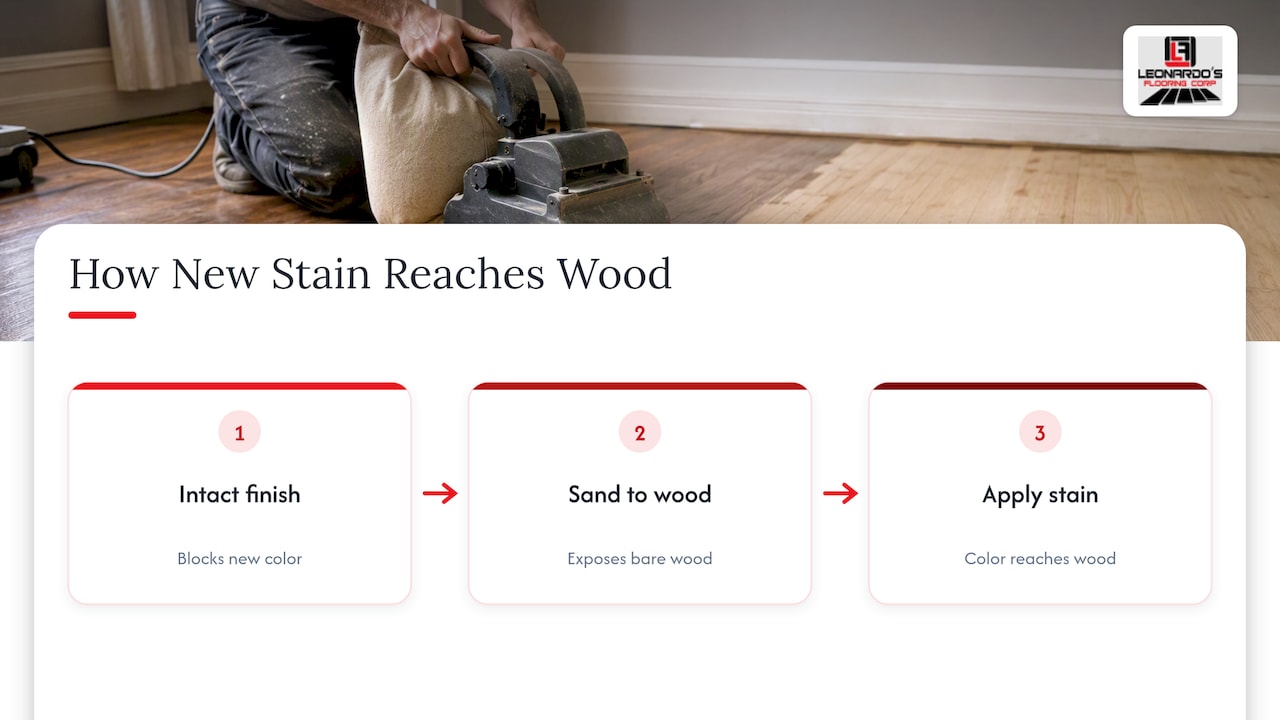
That is why shortcuts disappoint. Any new stain applied over an intact finish has nothing to bond to. NWFA’s guidance on finishes stresses that stain and topcoat must be compatible, and that applying color over a finish that has not been properly prepared is a leading cause of peeling and failure.
So the question is never “which stain do I pick?” first. It is “can this floor be taken back to bare wood, and is it worth doing?”
The three ways to change how your floor looks
Not every color problem needs the same fix. Here is how the options compare.
| Option | What it does | Changes the color? | Disruption |
|---|---|---|---|
| Deep clean and buff | Removes film and residue, restores sheen | No | Low |
| Screen and recoat (maintenance coat) | Lightly abrades the finish and adds a fresh coat | No, apart from a slight change in sheen | Moderate |
| Full sand and refinish | Removes finish and a thin layer of wood, then stains and seals | Yes | High |
NWFA notes that a full sand-and-refinish is recommended for deep damage or when you want a complete color change, while maintenance coats involve cleaning, light sanding, and a fresh finish.
When a screen and recoat is the better call
Many homeowners who think they want a new color really want the floor to look alive again. If the boards are dull, a little hazy in traffic areas, or marked with minor surface scratches, a maintenance coat can make a real difference. NWFA points out that a full resand when it isn’t needed removes more of the wear layer and shortens the floor’s total lifespan.
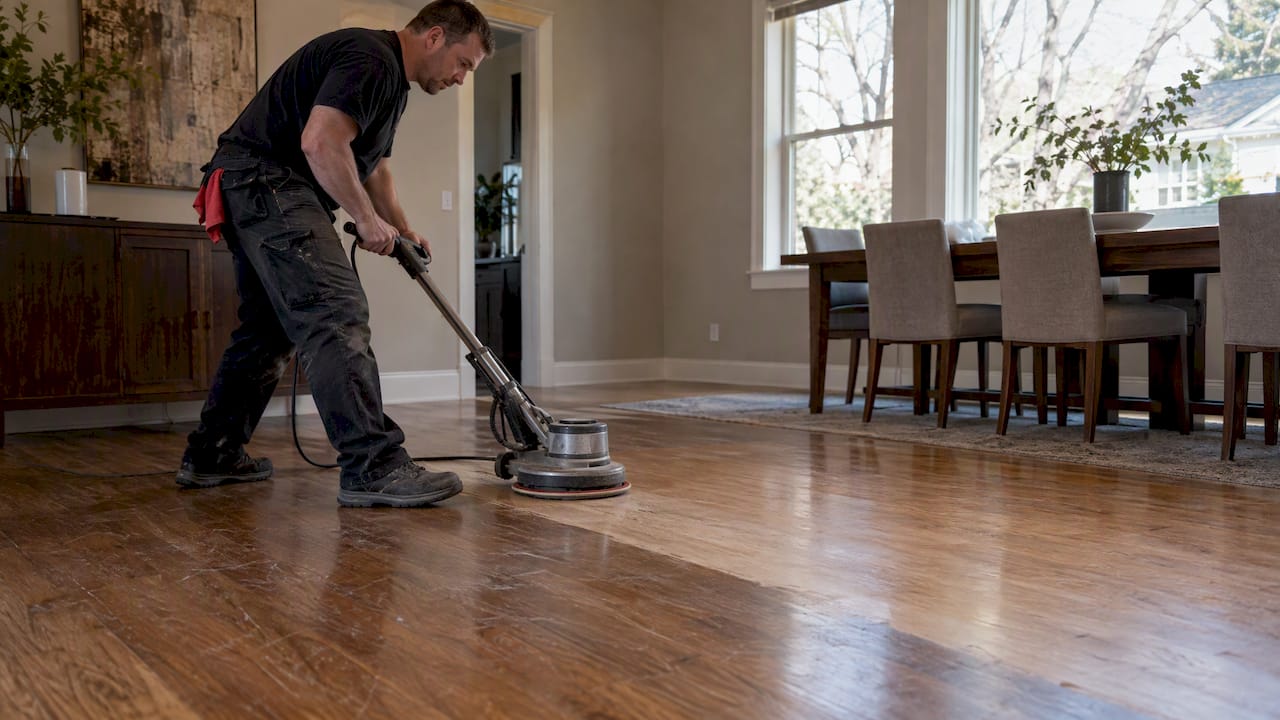
If that sounds like your floor, our guide to screening and coating hardwood floors walks through the process.
When only a full refinish will do
Choose a sand and restain when:
- You want a noticeably darker or lighter tone than you have now.
- The existing stain is blotchy, orange-toned, or dated and you want it gone.
- The finish has failed, with peeling, deep wear paths or widespread damage.
- You have mixed tones, for example an addition matched to old oak, and want one consistent color.
Going darker is easy. Going lighter is limited
Sanding takes a floor back to raw wood, and from there it can accept a new stain. How far you can move depends on the wood.
Darker is the forgiving direction. A deeper stain covers the old tone once the old color has been sanded out. Lighter is harder: you can only go as light as the species’ natural color allows. Red oak has a warm, pinkish undertone that doesn’t disappear under a light stain, so very cool, pale or gray looks on red oak often need a specific stain and finish combination, and a sample board, to avoid an orange cast.
Different boards can also take stain differently, even in the same room. That is why we sand a test area and apply sample stains before the whole floor is committed. A color chip in a showroom tells you little, because the same stain looks different on oak, maple, or ash, and different again under daylight and lamps.
The trend is moving toward natural
If you’re deciding between dark and light, it’s worth knowing where the market is heading. NWFA’s industry coverage points to growing demand for lighter, more natural visuals as homeowners favor warmth and the wood’s own character over formal dark staining. A natural or “raw” look, where the floor appears freshly sanded with little added color, is a common request. It is achieved through light or no-stain tones and a finish chosen not to add yellow.
Trends change, though. Pick a color you will enjoy for 10 or 15 years, and look at it next to your cabinets, trim, and furniture before committing.
The finish decides how the color ages
Two floors stained the same color can look different after a few years purely because of the topcoat.
- Oil-based (solvent-based) polyurethane tends to amber over time, adding a yellowish warmth. That can be lovely on a rich brown floor and unwelcome on a light or gray one.
- Water-based polyurethane generally stays clear, which lets the stain color persist. Benjamin Moore, for instance, describes its water-based acrylic polyurethane as non-yellowing, with quick drying and recoat times.
If you want a pale, natural, or cool-toned result, a non-yellowing water-based finish is usually the safer choice. If you want warmth and depth, an oil-based product may suit you. The right pick depends on your wood, your stain, and how you use the room, and we’d rather talk it through with a sample in front of you than guess.
What a professional color change involves
Here is the sequence for a full refinish. Timing varies with the product system and the size of the job, so ask your contractor for a schedule in writing.
- Assessment. We check species, thickness, existing finish, gaps, cupping, and any damage. Engineered flooring with a thin wear layer, or old solid boards that have already been sanded many times, may not survive another sanding.
- Preparation. Furniture is removed, trim is protected, and repairs such as replacing damaged boards or filling gaps are made before sanding.
- Sanding. The floor is sanded to bare wood in stages, using progressively finer abrasives so the stain absorbs evenly.
- Sample and approve. Stain samples go on the actual wood so you can see the color in your own light.
- Staining. The chosen color is applied and left to dry as the product requires.
- Sealing. Compatible coats of finish go on, with a light abrasion between coats where the system calls for it.
- Cure. The floor needs time to harden before it takes furniture and rugs. Follow the dry and cure times on the product you’re using, and ask your installer for specifics.
Mixing products from different systems is where things go wrong. A stain and a finish are designed to work together, and it’s one reason we don’t recommend DIY “color change” kits that promise to skip the sanding.
Why Denver floors change color faster
Color change isn’t only something you do on purpose. Wood changes on its own, and Colorado speeds it up.
The state sits at high elevation, averaging about 6,800 feet, with intense sunlight and low humidity. Both are hard on wood. UV light fades and shifts hardwood color even under a protective coat; NWFA lists it as a leading cause of color change, and suggests blinds or window treatments during peak sun hours to limit it.
If you have south- or west-facing windows, you may have noticed a lighter or graying strip where a rug or furniture blocked the sun. Before a refinish, think about how you’ll protect the new color:
- Close blinds or use UV-filtering window tint during the brightest hours.
- Move rugs and furniture around from time to time so the floor ages evenly.
- Choose a color that hides mild fading better. Mid-tones tend to show it less than very dark or very light ones.
Humidity matters, too
Dry air doesn’t change color, but it does open gaps and stress a fresh finish. CSU Extension suggests keeping indoor humidity moderate, around 45%, to limit gaps and protect wood. If your home is dry in winter, a plumbing and HVAC contractor’s guide on measuring first and adding moisture safely is a practical place to start. We also cover target ranges in our indoor humidity checklist for hardwood floors and our piece on winter hardwood gaps.
It is a good idea to get humidity under control before you refinish, not after. Otherwise, new gaps can open in the fresh finish during the first dry winter.
Our perspective: look at the floor before choosing the color
We’ve been working on floors across the Denver metro for over 10 years, and the most common mistake we see is starting with the color. People bring a photo of a gray or ultra-light floor and ask whether we can match it. Sometimes we can. Sometimes the honest answer is that their red oak will fight them, or that their floor only needs a good screen and recoat.
We tailor each project to your needs, budget and timeline, and that includes telling you when the smaller job is the right job. Sanding is a one-way street: every full sand takes a little of the wood’s usable life. We would rather recommend a maintenance coat that keeps your floor in good shape than sell you a full refinish you don’t need.
When a color change is the right call, we want you to see the color on your own wood, in your own light, before a single board is stained. No surprises on the day it dries.
— Jim
Getting your floor ready for a color change
A few things you can do before the estimate:
- Know what you have. Is it solid or engineered? Do you know its approximate age and species? If you don’t, we can identify it on site.
- Gather your inspiration. Photos help, but keep in mind that a photo shows a different wood, light and finish.
- Check for problems. Cupping, large gaps, pet stains, or water marks should be dealt with first. Our hardwood maintenance tips for Denver homes can help you spot early signs.
- Think about the whole space. Stairs, baseboards, and transitions all show the new color. It’s often worth planning them together, and they’re part of what we do.
- Decide on your timeline. Rooms are out of use while the floor cures, so plan around it.
For design ideas that suit the region’s light and architecture, see our Denver flooring style guide.
Want a new color? Talk to us first
Leonardo’s Flooring Corp handles hardwood floor refinishing and hardwood floor installation for homes and businesses across the Denver area, including Aurora, Lakewood, Centennial, Boulder, and Castle Rock. We’ll look at your floor, tell you whether you need a recoat or a full sand and restain, and put the plan in writing. Browse our hardwood floor installation service or see all our services to start the conversation.
FAQ
Can you change hardwood floor color without sanding?
Not in a way that lasts. A maintenance coat, cleaning, or buffing can improve sheen but won’t change the color, since the finish blocks new stain from reaching the wood. Products that promise a color change without sanding risk peeling and uneven results.
Can you make hardwood floors lighter?
Sometimes. After sanding to bare wood you can go lighter, but only as far as the species’ natural color allows. Red oak carries warm undertones, so a very pale or gray look may need sample testing and a non-yellowing water-based finish.
How do I make hardwood floors look better without refinishing?
Start with a professional deep clean, and consider a screen and recoat if the finish is dull or lightly scratched. NWFA says these maintenance steps are often enough and less invasive than a full refinish. Avoid wet or steam mops, which can damage the finish.
Are dark hardwood floors back in style?
The current trend leans lighter and more natural, according to NWFA’s industry news, though dark floors remain a classic. Choose the tone that works with your light, your furniture, and the way you live, rather than the trend of the year.
Sources
- Give Your Floors a Refresh, NWFA
- Finishes, NWFA
- In The News, NWFA
- School’s Out: Protect Your Investment, NWFA
- Colorado Gardening: Challenge to Newcomers, CSU Extension
- Stays Clear Acrylic Polyurethane, Benjamin Moore