
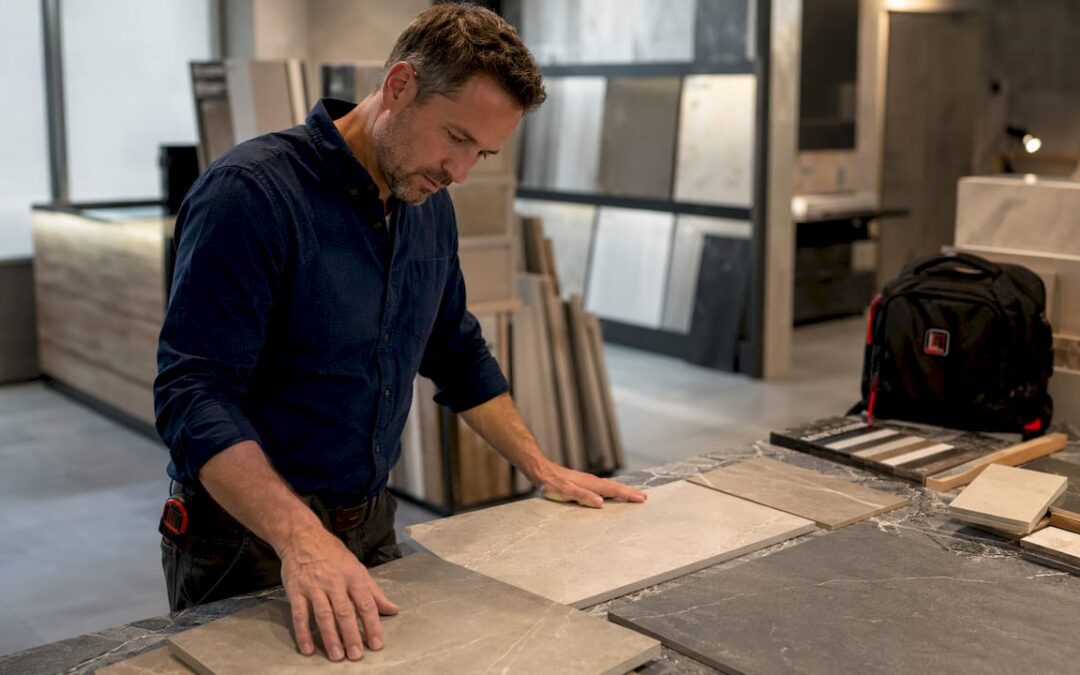
For flood-prone rooms, the top flood-resistant flooring materials are porcelain tile (mortar-set), epoxy-coated concrete, SPC rigid-core vinyl plank, and vulcanized rubber tiles. Here is why each earns its spot:
- Porcelain tile (mortar-set): Non-porous, can be submerged, dried, and sanitized with no structural damage. FEMA TB-2 classifies mortar-set ceramic and porcelain tile as acceptable below the Base Flood Elevation (BFE).
- Epoxy-coated concrete: Seamless, 100% waterproof surface bonded to the slab. No joints for water to penetrate. Also acceptable below BFE under FEMA TB-2.
- SPC rigid-core vinyl plank: Waterproof core, floating installation allows plank-by-plank removal to dry the subfloor after a flood event.
- High-quality LVP (luxury vinyl plank): Waterproof at the plank level, but real-world performance depends heavily on installation method and underlayment choice.
- Interlocking rubber tiles: Fully impervious, easy to lift and clean, best for utility and gym spaces.
One caveat applies across all of them: marketing labels like “waterproof” do not equal FEMA TB-2 compliance. For any installation below the BFE in a Special Flood Hazard Area (SFHA), only Class 4 and Class 5 materials are acceptable, and the subfloor system matters as much as the surface you choose.
Table of Contents
- 1. Porcelain and ceramic tile hold up better than anything else after submersion
- 2. Epoxy-coated concrete gives you a seamless, flood-tolerant surface
- 3. SPC rigid-core vinyl plank is the most practical all-around choice for flood recovery
- 4. LVP can be waterproof at the plank level, but installation decides real flood performance
- 5. Rubber and utility flooring is the right call for gyms, garages, and workshops
- 6. Why the subfloor and installation system matter more than the surface material
- 7. FEMA TB-2 tells you exactly which materials are acceptable below the BFE
- 8. How to pick the right flood-resistant floor for your specific situation
- 9. Immediate steps after a flood to salvage flooring and limit mold
- 10. Not all floodwater is the same — material compatibility matters
- Key Takeaways
- What installers actually see — and what most guides miss
- Leonardosflooringcorp handles flood-aware flooring from subfloor to finish
- Authoritative sources and further reading
1. Porcelain and ceramic tile hold up better than anything else after submersion
Porcelain tile is fired at extremely high temperatures, producing a surface so dense that water cannot penetrate it. After a flood, a properly installed porcelain floor can be dried, disinfected, and returned to service without any structural repair. That is not true of most other residential flooring options.
| Feature | Porcelain Tile | Ceramic Tile |
|---|---|---|
| Water absorption | Near zero | Low (slightly higher than porcelain) |
| FEMA TB-2 status (mortar-set) | Class 4/5 — Acceptable below BFE | Class 4/5 — Acceptable below BFE |
| Typical cost per sq ft | Typically higher installed cost | Lower than porcelain |
| Lifespan | 50+ years with proper grout maintenance | — |
| Mold/mildew risk | Very low (grout is the vulnerability) | Low to moderate |
| Best use-cases | Basements, mudrooms, laundry rooms | Bathrooms, lower-traffic areas |
Large-format tiles reduce grout line count, which cuts the number of potential water-entry points. Pair them with epoxy grout or a waterproof grout product, and use a waterproof membrane under the mortar bed in any below-grade installation. Perimeter detailing matters too: caulk the transition between the tile field and the wall rather than grouting it, so the floor can move without cracking.
Tile is not the right call everywhere. It is cold underfoot, hard on joints during long standing, and expensive to install correctly. In a finished living room where flooding is a low-probability event, the cost and comfort tradeoffs may not pencil out. But for basements, ground-floor mudrooms, and utility rooms that could see standing water, nothing recovers more cleanly.
Pro Tip: Ask your installer about in-floor radiant heating compatibility before setting tile in a basement. Mortar-set porcelain works well over hydronic systems and adds comfort without sacrificing flood resilience.
2. Epoxy-coated concrete gives you a seamless, flood-tolerant surface
Epoxy and sealed concrete create a surface with no joints, no seams, and no grout lines. Water has nowhere to migrate. When the coating is properly applied to a prepared slab, the result is 100% waterproof and easy to disinfect after contaminated water exposure.
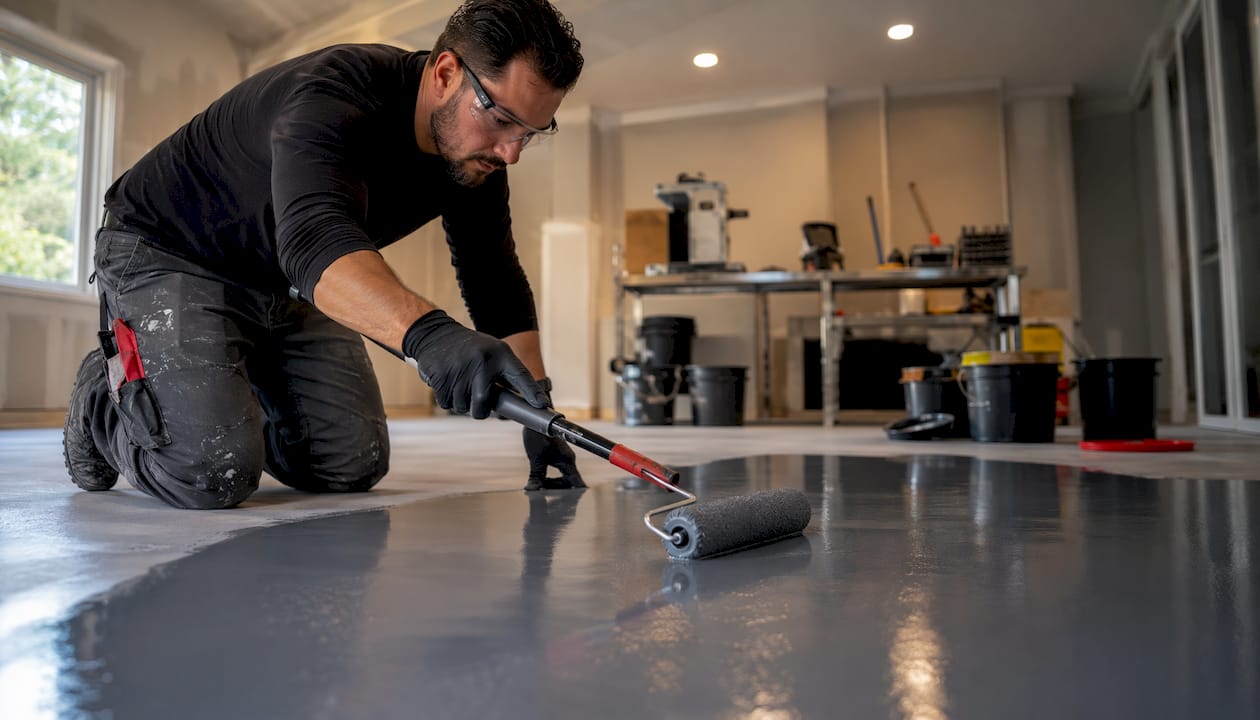
The catch is surface preparation. Inadequate prep is the primary reason epoxy coatings fail during repeated wet/dry cycles. The slab must be shot-blasted or diamond-ground to an appropriate surface profile, tested for moisture vapor emission, and free of contaminants before any coating goes down. Skip those steps and the coating will delaminate, usually at the worst possible moment.
Key considerations for epoxy and sealed concrete:
- Use cases: Garages, utility basements, converted workshop spaces, commercial floors. Works well in any room where aesthetics are secondary to performance.
- Slip resistance: Standard epoxy can be slick when wet. Specify a broadcast aggregate or anti-slip additive for any floor that will see water regularly.
- UV sensitivity: Solvent-based epoxies yellow under UV exposure. For spaces with natural light, use a polyaspartic or polyurethane topcoat.
- Cost range: Varies widely depending on surface prep and finish type; heavily damaged slabs may require more costly remediation.
- Maintenance after flooding: Rinse, disinfect, and inspect the coating for chips or delamination. Spot repairs are straightforward if the coating is intact.
- FEMA TB-2 status: Epoxy formed-in-place is listed as acceptable for floor use below the BFE.
For a detailed breakdown of coating types and what Denver-area slabs typically need, the epoxy floor coating guide from Leonardosflooringcorp covers prep requirements and finish options specific to Colorado conditions.
3. SPC rigid-core vinyl plank is the most practical all-around choice for flood recovery
Floating SPC is the preferred installation in flood-risk rooms because individual planks can be removed after an event to dry the subfloor, then reinstalled if undamaged. That recoverability is the core advantage over tile and epoxy, both of which require professional remediation if the subfloor underneath gets saturated.
Here is what to confirm before buying SPC for a flood-prone room:
- Waterproof core: SPC (stone polymer composite) cores contain no organic material and will not swell or delaminate when submerged. WPC (wood polymer composite) cores contain organic filler and are less reliable in wet basements.
- Manufacturer submersion specs: Request the actual test data, not just “waterproof” on the box. Confirm the rated submersion duration and recovery protocol.
- Underlayment compatibility: Many SPC products come with a pre-attached underlayment. In flood-risk installations, verify that the underlayment is closed-cell and non-porous. Porous foam underlayments trap moisture and become a mold substrate within 24–48 hours of submersion.
- Floating vs. glue-down: Choose floating click-lock for any room where flooding is possible. Glue-down SPC is harder to remove and increases replacement cost after a flood event.
- Edge sealing: Seal perimeter gaps with a flexible waterproof caulk. Expansion gaps are a primary water-entry point in floating systems.
Pro Tip: Before installing SPC in a basement, check the floor underlayment options that pair with floating systems in wet environments. The wrong underlayment can void both the floor warranty and your flood remediation options.
SPC costs roughly $5.50–$11.00 per sq ft installed, which puts it below porcelain tile for most projects. It is warmer underfoot than tile, quieter, and faster to install. The tradeoff is seam vulnerability: water that sits long enough will eventually migrate under the planks, which is why removal speed after a flood matters.
4. LVP can be waterproof at the plank level, but installation decides real flood performance
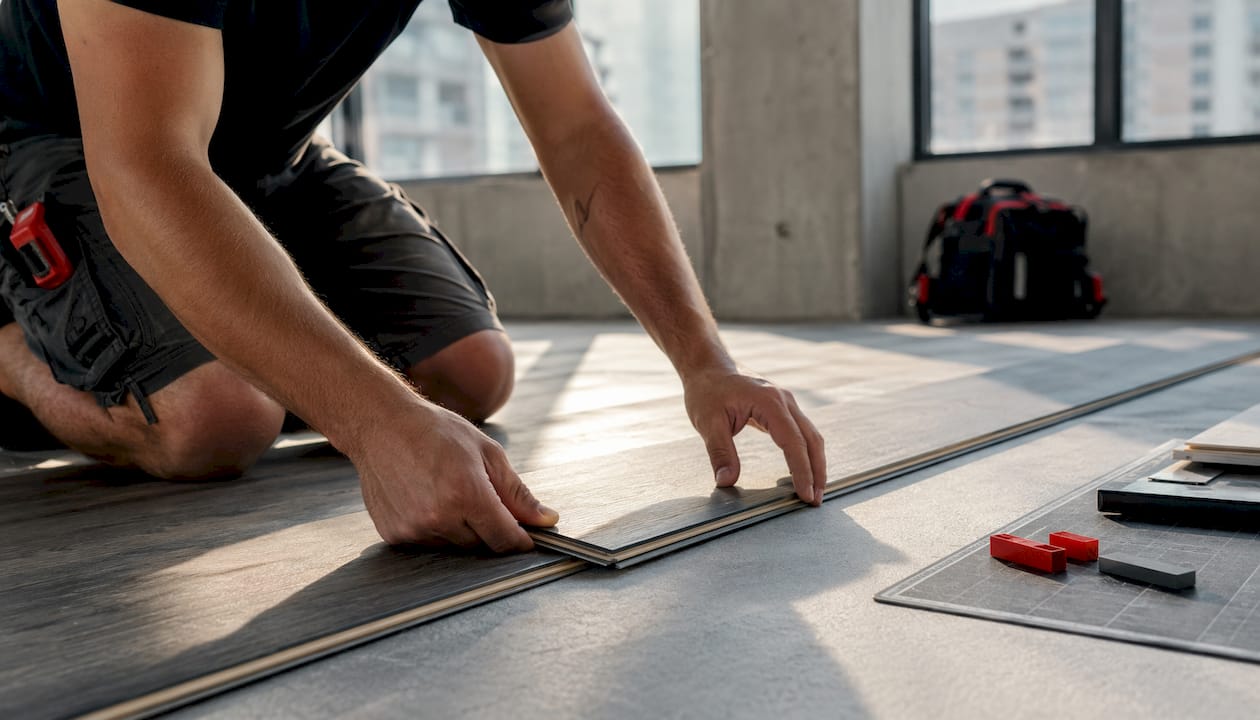
The “waterproof” label on luxury vinyl plank refers to the plank itself. It says nothing about what happens at the seams, the perimeter, or the underlayment layer below. That distinction is where most flood failures happen.
Real-world LVP performance in a flood depends on:
- Core construction: Look for a true SPC or rigid-core product. Flexible LVP with a foam or HDF core will absorb water and swell.
- Wear layer thickness: A thicker wear layer (12 mil or above) resists surface damage during cleanup, but does not affect water migration at seams.
- Vapor barrier: In below-grade installations, a 6-mil polyethylene vapor barrier under the floor is a minimum. Some installers use a 15-mil barrier for added protection.
- Edge sealing: Perimeter caulking at walls, transitions, and thresholds is the single most effective installation detail for limiting water intrusion from above.
- Glue-down vs. floating: Glue-down LVP resists water migration better at seams but is destructive to remove after submersion. Floating LVP is easier to recover but more vulnerable to water traveling under the field.
- Warranty limits: Read the fine print. Most LVP warranties exclude damage from flooding, standing water, or subfloor moisture, even on products marketed as “waterproof.”
For a full comparison of LVP options and what the warranty language actually covers, the LVP buyer’s guide from Leonardosflooringcorp walks through core types, wear layers, and what to ask before you buy.
5. Rubber and utility flooring is the right call for gyms, garages, and workshops
Vulcanized rubber tiles and roll goods are fully impervious to water, resistant to most cleaning chemicals, and simple to remove and rinse after water exposure. In spaces where performance matters more than aesthetics, rubber is hard to beat.
- Best use-cases: Home gyms, garages, workshops, basement utility areas, and any commercial space that sees heavy foot traffic and occasional water.
- Why rubber is rare in living rooms: The smell of new rubber can linger for weeks. Color and pattern options are limited compared to tile or vinyl. It is not a finished-look product.
- Interlocking tiles: The most practical format for flood-prone rooms. Individual tiles can be lifted, dried, and replaced without disturbing the whole floor.
- Comfort and noise: Rubber provides genuine shock absorption and noise dampening, which matters in gym and workshop settings.
- Chemical resistance: Commercial-grade rubber handles bleach, disinfectants, and most floor cleaners without degrading, which is useful after contaminated water events.
- FEMA TB-2 status: Rubber sheets or tiles installed with chemical-set adhesives are listed as acceptable for floor use below the BFE. Other installation methods are listed as unacceptable.
- Cost range: Typically lower than porcelain tile, with interlocking tiles available across a wide price range depending on thickness and density.
6. Why the subfloor and installation system matter more than the surface material
No surface material compensates for a wet, porous subfloor. The most common and costly flood-related flooring failures happen at the system level: porous underlayments, unsealed expansion gaps, inadequate vapor barriers, and subfloor materials that absorb water and never fully dry.
Installation checklist for flood-zone rooms:
- Moisture test the slab: Use a calcium chloride test or an in-situ relative humidity probe before installing any flooring. A wet slab will destroy adhesion and promote mold under any surface.
- Vapor barrier: Install a minimum 6-mil polyethylene sheet under floating floors. For below-grade slabs with known moisture issues, use a thicker barrier or a dimple mat that allows vapor to dissipate.
- Subfloor material: OSB and particle board are unacceptable below the BFE per FEMA TB-2. If damaged OSB is present, cut it out and replace with cement backer board or a concrete-based underlayment panel.
- Mortar and adhesive selection: Use polymer-modified thinset for tile in wet areas. For glue-down vinyl, specify a waterproof pressure-sensitive adhesive rated for below-grade use.
- Edge sealing and transitions: Seal all perimeter gaps, transitions, and thresholds with a flexible waterproof caulk. These details are where water enters.
- Coved base or raised thresholds: In utility rooms and basements, a coved rubber or tile base eliminates the floor-to-wall joint entirely, removing a major water-entry point.
Subfloor remediation before installation: Cut out any water-damaged OSB or particle board, treat the framing with a mold-inhibiting primer, allow full drying (verified by moisture meter), and install cement backer board or a concrete underlayment panel before any finish floor goes down.
Pro Tip: Require your contractor to provide documented moisture readings before and after subfloor prep, and ask for the manufacturer’s written installation method for the specific product being installed. If a contractor cannot produce either, that is a red flag.
The waterproof flooring guide from Leonardosflooringcorp covers vapor barrier types, underlayment options, and installation methods across all major floor categories.
7. FEMA TB-2 tells you exactly which materials are acceptable below the BFE
FEMA Technical Bulletin 2 (TB-2) is the primary compliance reference for flooring in Special Flood Hazard Areas. It classifies materials on a five-class scale and specifies that only Class 4 and Class 5 materials are acceptable below the BFE. A “waterproof” marketing label does not satisfy this requirement.
Key FEMA definition: A flood-damage–resistant material must withstand direct and prolonged contact with floodwater (at least 72 hours) without requiring more than cosmetic repair — cleaning, sanitizing, and resurfacing. Anything requiring structural repair or replacement fails the standard.
| Material | Installation Method | FEMA TB-2 Floor Status |
|---|---|---|
| Ceramic and porcelain tile | Mortar-set | Acceptable (Class 4/5) |
| Ceramic and porcelain tile | Organic adhesives | Unacceptable |
| Epoxy flooring | Formed-in-place | Acceptable |
| Rubber sheets or tiles | Chemical-set adhesives | Acceptable |
| Rubber sheets or tiles | Other applications | Unacceptable |
| Vinyl sheets or tiles (homogeneous) | Chemical-set adhesives | Acceptable |
| Vinyl sheets or tiles (homogeneous) | Other applications | Unacceptable |
| Carpet | Any | Unacceptable |
| Wood floor coverings (solid or engineered) | Any | Unacceptable |
| Plastic laminate flooring | Any | Unacceptable |
| OSB subfloor panels | Any | Unacceptable |
For materials not listed in TB-2, FEMA’s NFIP guidance states that manufacturers’ specifications and test reports should be evaluated by the local floodplain administrator. There is currently no standardized manufacturer test protocol for flood-damage resistance, so acceptance is case-by-case.
Practical steps for homeowners and property managers in SFHAs:
- Confirm your flood zone designation on your community’s Flood Insurance Rate Map (FIRM).
- Document the manufacturer’s submersion and recovery specifications for every material installed below the BFE.
- Keep installation records, including product data sheets and contractor invoices, for insurance and permit purposes.
- Contact your local floodplain administrator before starting any renovation below the BFE. State and community requirements can exceed NFIP minimums.
8. How to pick the right flood-resistant floor for your specific situation
Choose a material only after you have qualified four things: flood risk level, subfloor condition, room use, and budget. Then pick an installation strategy that supports post-flood drying and recovery.
Decision checklist:
- Assess flood risk: Is the room in a mapped SFHA? Has it flooded before? Is the risk from groundwater, stormwater, or a plumbing failure? Each scenario has different implications for material choice and installation depth.
- Test and repair the subfloor: Moisture-test before anything else. Replace damaged or non-compliant subfloor materials. No surface material performs well over a wet or structurally compromised base.
- Match material to use-case: Tile and epoxy for utility rooms, basements, and garages. SPC or LVP for living areas where comfort and aesthetics matter. Rubber for gyms and workshops.
- Require installation documentation: Ask for the manufacturer’s written installation method, the product data sheet, and the contractor’s moisture-testing protocol in writing before signing a contract.
- Verify warranty limits: Confirm what the warranty covers and excludes. Most flood-related damage is excluded even on “waterproof” products. Understand what your remediation plan looks like before you need it.
Questions to ask a contractor before hiring:
- Are you licensed and insured in this state?
- Have you installed flooring in flood-zone or below-grade applications before?
- What moisture-testing method do you use, and will you provide written results?
- Which installation method do you recommend for this room, and why?
- What underlayment are you specifying, and is it appropriate for a wet environment?
- What does the manufacturer warranty cover for this product in a flood scenario?
Red flags that mean fix the water problem first:
- Active efflorescence or visible moisture on the slab
- Prior mold remediation that was not verified complete
- No functional drainage or sump system in a below-grade space
- Subfloor moisture readings above the manufacturer’s stated maximum
For a realistic cost picture, renovation ROI data for wet-area flooring projects can help you weigh material and installation costs against long-term value, especially in investment properties.
9. Immediate steps after a flood to salvage flooring and limit mold
Act within the first 24–48 hours. Mold can establish on wet organic materials within that window, and the difference between a salvageable floor and a full replacement often comes down to how fast water is removed and drying begins.
Emergency checklist:
- Safety first: Turn off power to affected areas before entering. Wear rubber boots, gloves, and an N95 respirator. Do not enter if structural damage is visible.
- Document everything: Photograph and video the damage before moving anything. Your insurance claim depends on it.
- Remove standing water: Use a wet/dry vacuum or a submersible pump. Get water out as fast as possible.
- Ventilate and dehumidify: Open windows if outdoor humidity is lower than indoor. Run commercial dehumidifiers and fans continuously. Target indoor relative humidity below 50%.
- Remove porous underlayments immediately: Foam underlayments, carpet padding, and any porous material under the floor must come out. They hold moisture and become mold substrates even when the surface looks dry.
- Call a remediation professional for contaminated water: Floodwater from rivers, storm drains, or sewage backups is Category 3 (black water) under IICRC S500 standards. It requires professional remediation, not just drying.
When to replace vs. attempt salvage:
- Porcelain tile and epoxy: Usually recoverable if the subfloor is dried completely and the surface is disinfected. Inspect grout and coating integrity before reinstalling.
- SPC floating vinyl: Often recoverable if removed quickly and the subfloor is dried. Inspect each plank for warping or delamination before reinstalling.
- LVP with porous underlayment: The underlayment almost always needs replacement. The planks may be salvageable if removed and dried within 24 hours.
- Solid or engineered hardwood, laminate: Plan for replacement after any significant submersion. These materials absorb water and do not recover dimensionally.
10. Not all floodwater is the same — material compatibility matters
The type of water that floods a space changes what you can salvage and what you must replace. Clean water from a burst pipe is a very different remediation scenario than river water or storm drain backup.
Freshwater flooding (rain, groundwater, clean pipe failure): All of the top flood-resistant materials handle freshwater well. Porcelain, epoxy, SPC, and rubber can be cleaned and disinfected with standard products. The subfloor is the primary concern.
Saltwater flooding (coastal storm surge): Salt accelerates corrosion and leaves crystalline deposits in porous materials. Epoxy coatings and porcelain tile clean up well, but grout joints and any metal fasteners or transitions need careful inspection. SPC vinyl is salt-tolerant at the plank level, but salt deposits in seams and under the floor can cause long-term issues if not fully flushed and dried. Rubber is highly resistant to salt.
Contaminated water (sewage backup, storm drain overflow): This is the scenario where material choice matters most for health, not just durability. Category 3 water per IICRC S500 contains pathogens that require professional remediation regardless of the surface material. Porcelain and epoxy can be disinfected and returned to service after professional cleaning. Porous materials, including most underlayments and any organic-core products, must be discarded. Rubber tiles can typically be disinfected and reused if they were not glued down.
Chemical contamination (industrial areas, garages with fuel spills): Epoxy coatings with a chemical-resistant topcoat are the best choice here. Standard LVP and SPC are not rated for prolonged chemical exposure. Rubber varies by compound — specify chemical-resistant grades for any space with fuel or solvent exposure.
The practical takeaway: specify your most likely flood type when selecting materials and installation methods. A coastal property facing storm surge has different requirements than a Denver basement managing stormwater intrusion.
Key Takeaways
Porcelain tile (mortar-set) and epoxy-coated concrete are the only residential flooring options that consistently meet FEMA TB-2’s Class 4/5 standard for below-BFE use and recover from submersion without structural repair.
| Point | Details |
|---|---|
| Top materials for flood zones | Mortar-set porcelain tile, epoxy-coated concrete, SPC rigid-core vinyl plank, and vulcanized rubber tiles are the strongest options. |
| FEMA TB-2 compliance is non-negotiable below BFE | Only Class 4 and Class 5 materials are acceptable below the Base Flood Elevation in SFHAs — “waterproof” labels do not satisfy this standard. |
| Subfloor and installation decide real performance | Porous underlayments, unsealed expansion gaps, and wet subfloors cause most flood failures — fix the subfloor system before installing any surface. |
| Act within 24–48 hours after flooding | Remove water, pull porous underlayments, and begin drying immediately to stay ahead of mold establishment. |
| Leonardosflooringcorp for flood-aware installation | Leonardosflooringcorp handles moisture testing, subfloor prep, tile, epoxy, and SPC/LVP installation for Denver-area homes and commercial properties. |
What installers actually see — and what most guides miss
The articles that rank for flood-resistant flooring all say roughly the same thing: pick tile or SPC, avoid carpet, seal your perimeter. That advice is correct. What most of those guides skip is the part that actually determines whether a floor survives a flood: the decisions made before the first plank or tile goes down.
The single most common mistake in flood-prone installations is treating the floor as a product rather than a system. A homeowner picks a great SPC product, pays for professional installation, and still ends up with a mold problem six months later because the installer used a standard foam underlayment that absorbed water and never fully dried. The plank was fine. The system failed.
The second most common mistake is skipping the moisture test. Slabs that look dry are not always dry. A slab with elevated moisture vapor emission will eventually push moisture up through any adhesive or vapor barrier that was not specified for that condition. The fix costs a fraction of what remediation costs later.
There is also a regional dimension that generic guides ignore. In Denver, the flood risk profile is different from coastal Florida or the Mississippi River basin. Here, the more common scenarios are stormwater intrusion in below-grade spaces, snowmelt, and the occasional plumbing failure in older homes. The materials that perform best in those scenarios, and the installation details that matter most, are not identical to what a coastal contractor would specify. Local knowledge of soil conditions, drainage patterns, and typical subfloor construction is part of what a contractor brings to a flood-zone project.
Leonardosflooringcorp handles flood-aware flooring from subfloor to finish
When the flooring choice matters because the room has flooded before or sits below grade, the installation details are not optional extras. Leonardosflooringcorp has spent over 10 years installing flood-aware floors across the Denver metro, handling the full scope: moisture testing, subfloor repair and replacement, waterproof membrane installation, mortar-set tile, epoxy floor coatings, and SPC and LVP installation with the right underlayments and edge sealing for below-grade conditions.

Every project starts with an honest assessment of what the subfloor and drainage situation actually require, not a sales pitch for the most expensive material. With 125+ five-star reviews and a track record as Home Depot Contractors, the work speaks for itself. Request an on-site assessment and get a written scope before any material is ordered.
Get a flooring assessment from Leonardosflooringcorp
Authoritative sources and further reading
- FEMA Technical Bulletin 2: Flood Damage-Resistant Materials Requirements — The primary NFIP compliance reference. Table 2 lists every common building material with its flood-damage resistance class and below-BFE acceptability status.
- FEMA NFIP FAQ: Materials Compliant with NFIP Regulations — Explains how to evaluate unlisted materials and when local floodplain administrator approval is required.
- FEMA National Flood Insurance Technical Bulletins — Full index of NFIP technical bulletins, including TB-2 and related construction guidance for A and V flood zones.
- Best Waterproof Basement Flooring: Options, Costs & ROI — Industry cost ranges and material comparisons for basement and flood-prone installations.
- Vinyl Plank Flooring and Basement Flooding — Practical guidance on floating vs. glue-down SPC and why installation method determines recoverability.
- Flood-Resistant Flooring That Survives Standing Water — Overview of rubber, tile, and vinyl options with use-case guidance for flood-prone spaces.