
Yes, standard epoxy floor coatings yellow under UV exposure, and there’s no way around the chemistry that causes it. The fix is specifying a UV-stable aliphatic topcoat, such as polyaspartic or aliphatic polyurethane, over the epoxy base, or skipping epoxy entirely for a polyaspartic-only system in sun-heavy areas. Early yellowing is mostly cosmetic. Darker colors hide it far longer than white or pastel finishes.
TL;DR:
- UV-stable aliphatic topcoats like polyaspartic or aliphatic polyurethane effectively prevent epoxy yellowing in sun-exposed areas.
- Darker colors and textured finishes hide early yellowing better than white or pastel shades.
- Applying epoxy with an aromatic resin base in areas with direct sunlight increases the risk of rapid yellowing within months.
- Proper substrate preparation and scheduling application during cooler, shaded times reduce the likelihood of coating discoloration.
- Repairing yellowed epoxy involves cleaning, lightly sanding, and recoating with UV-stable topcoats, which is more cost-effective than replacement.
Table of Contents
- What Causes Epoxy Yellowing UV Damage, and How Fast Does It Happen?
- Which Epoxy Formulations Resist UV Yellowing Best?
- Do UV-Resistant Topcoats Actually Stop Yellowing?
- Which Floor Colors Hide Yellowing and Which Show It Fastest?
- How Should Installation Timing Prevent Yellowing Problems?
- What Are Your Options for Fixing Yellowed Epoxy?
- What Installers Actually Specify for UV-Exposed Floors
- Get an Epoxy System Built for Denver Sun, Not Against It
- Sources
- FAQ
What Causes Epoxy Yellowing UV Damage, and How Fast Does It Happen?
Epoxy yellows because of two overlapping chemical reactions, and knowing the difference tells you how urgent your protection plan needs to be.
The first is thermal oxidation, a slow ambering that happens even indoors, away from windows, as the resin ages. The second, faster process is UV photo-oxidation. Standard clear epoxies are built on bisphenol-A or bisphenol-F resins, both of which contain aromatic rings that absorb ultraviolet energy and convert into light-absorbing chromophores as they break down. That reaction is the molecular root of yellowing, and no additive fully cancels it out. Aromatic amine hardeners add to the discoloration on top of the resin itself.
Timelines vary a lot depending on exposure:
- Direct sun through a garage door, patio slider, or skylight: visible yellowing in a matter of months.
- Indirect interior light with curtains or blinds most of the day: change may take years to notice.
- High-intensity indoor lighting (halogen work lamps, certain LED fixtures) can accelerate ambering even without a single UV ray from outdoors.
- Heat compounds both pathways, since warmer resin oxidizes faster than cool resin.
Yellowing usually starts as a cosmetic shift, but the High Performance Coatings whitepaper notes that prolonged exposure can progress to chalking and gloss loss, and eventually to real polymer breakdown that affects how the coating performs.
Which Epoxy Formulations Resist UV Yellowing Best?
Not all epoxy is chemically equal, and the difference matters more than most sales sheets let on.
Aromatic epoxies (the bisphenol-A/DGEBA and bisphenol-F/DGEBF types most contractors use for cost and durability) are the ones that yellow. Aliphatic and cycloaliphatic epoxies swap out those UV-absorbing ring structures, so they resist discoloration far better, though they typically cost more and can trade off some hardness or chemical resistance depending on the formula.
A few formulation-level tools worth knowing:
- Low-color hardeners reduce the initial amber tint some aromatic-amine systems carry straight out of the mixing bucket.
- UV absorbers and HALS (hindered amine light stabilizers) slow the photo-oxidation reaction but don’t stop it permanently.
- DURALTEX UV, an aliphatic epoxy binder, shows a reduced tendency to yellow compared to standard aromatic systems, though the manufacturer still recommends an aliphatic urethane topcoat for full protection.
The honest takeaway: additives buy you time, they don’t buy you immunity. For floors that see constant outdoor sun, many installers skip epoxy’s aromatic limitation altogether and specify a polyaspartic-only system instead. If you’re comparing finish types before you commit, our epoxy finishes overview breaks down where each chemistry fits.
Do UV-Resistant Topcoats Actually Stop Yellowing?
Polyaspartic and aliphatic polyurethane topcoats are the closest thing to a real answer for epoxy resin discoloration, and here’s why they work: aliphatic and cycloaliphatic isocyanate chemistries (HDI and IPDI types) lack the aromatic rings at their reactive group, so they stay lightfast under UV exposure instead of ambering. Applied over an aromatic epoxy base, the topcoat absorbs the UV hit so the epoxy underneath never sees direct light.
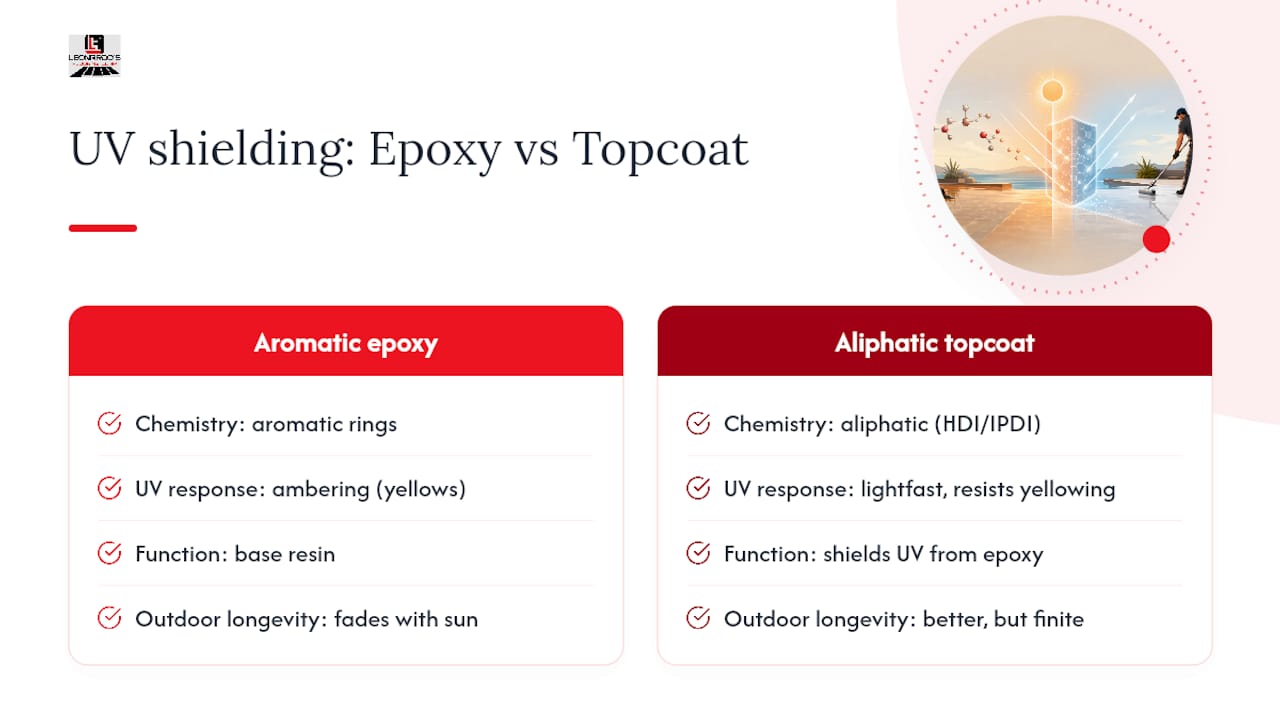
That protection isn’t infinite; for outdoor terraces exposed to sun and weather, following a detailed guía práctica y materiales can ensure your coating lasts longer. Indoors, a properly built topcoat can delay visible change by years. Outdoors, in constant sun, even a good aliphatic film will show wear over time, and film thickness plus maintenance schedule determine how long it holds up.
Pro Tip: If your floor gets full, unfiltered sun for most of the day, ask your installer about a polyaspartic-only system rather than an epoxy base with a topcoat. It removes the aromatic layer from the equation entirely instead of just shielding it.
Which Floor Colors Hide Yellowing and Which Show It Fastest?
Color choice is the cheapest insurance policy you’ll get on this whole project.
- White, light gray, and pastel finishes show even minor ambering fast, since yellow is the first shift most eyes catch against a pale base.
- Dark charcoal, navy, and deep brown finishes mask early color drift for a long time, sometimes long enough that homeowners never notice it at all.
- Flake and broadcast systems add visual texture that camouflages subtle tone shifts better than a flat solid color can.
If you want a bright, light-filled floor in a sunroom or patio-adjacent space, understand you’re taking on more risk. A darker or patterned finish paired with a UV-stable topcoat is the safer combination for sunlit rooms.
How Should Installation Timing Prevent Yellowing Problems?
Jobsite decisions during application matter just as much as the product you pick. Manufacturer datasheets are specific about this for good reason:
- Avoid coating in direct high sun or on hot substrate. Product datasheets warn that high substrate temperatures can cause blistering and outgassing defects that show up as surface flaws later, not just discoloration.
- Schedule evening or shaded application windows when the slab has cooled, especially in summer months or south-facing rooms.
- Double-prime porous or previously sealed concrete where the manufacturer calls for it, and respect the stated recoat window between layers.
- Add window film or blinds in interior spaces that get heavy afternoon sun, which reduces both UV load and heat buildup on the cured floor.
- Get the system spec and warranty in writing before work starts, including which topcoat is being used and what UV protection it’s rated for.
Substrate issues caused by poor prep can also snowball into bigger problems than color. Our breakdown of why epoxy floors peel covers how outgassing and moisture interact with heat during cure.
What Are Your Options for Fixing Yellowed Epoxy?
First step: figure out what you’re actually looking at. Cosmetic ambering is just a color shift with the coating still intact. Chalking, a dusty or faded surface texture, or any loss of adhesion signals actual coating breakdown, not just yellowing.
For fixing yellowed epoxy that’s still structurally sound, the standard repair path is:
- Clean the floor thoroughly to remove oils, waxes, and grit that would interfere with bonding.
- Abrade or lightly sand the surface to give the new coat something to grip.
- Apply a fresh UV-stable aliphatic topcoat, or a full system recoat if the damage is more than surface-deep.
This kind of recoat runs well under the cost of ripping out and replacing the whole floor, and it resets your UV clock. Routine cleaning and a recoat on schedule, rather than waiting until yellowing is obvious, is the cheapest way to keep the film intact. Our guide on epoxy floor maintenance covers cleaning schedules that extend topcoat life.
What Installers Actually Specify for UV-Exposed Floors
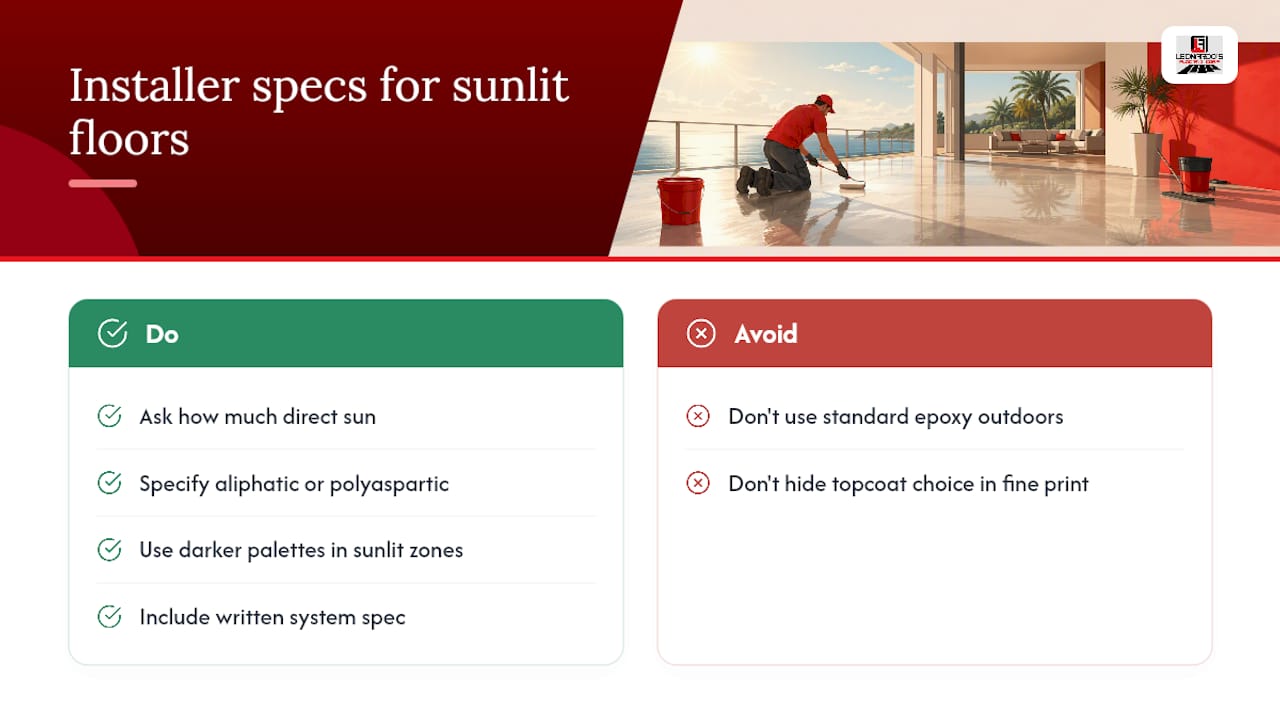
Every epoxy bid that crosses my desk for a sunroom, garage with a glass door, or south-facing commercial entryway gets the same question from me first: how much direct sun does this floor actually see? If the answer is “a lot,” an aliphatic topcoat or a polyaspartic option isn’t negotiable. That’s not upselling. It’s the difference between a floor that looks the same in five years and one that needs an early recoat.
In practice, that means darker palettes for sunlit zones, polyaspartic for anything outdoor or fully exposed, and a written system spec so nobody’s guessing later what went down. A well-established local flooring contractor has managed epoxy and full flooring installations in the Denver metro for over a decade, backed by numerous positive reviews and partnerships. None of that replaces asking the right questions on your own bid, but it’s why we lead with the topcoat conversation instead of burying it in fine print.
— Jim
Get an Epoxy System Built for Denver Sun, Not Against It
Leonardo’s Flooring Corp handles the parts of this that actually determine whether your floor yellows: picking the right resin chemistry, specifying a UV-stable topcoat or polyaspartic system for sun-exposed areas, and prepping the substrate so the coating bonds and cures the way it’s supposed to.

A site visit lets us check your room’s actual sun exposure, current substrate condition, and color goals before we recommend a system, rather than quoting a generic package over the phone. That’s where the aromatic-versus-aliphatic decision gets made for your specific space, not in a showroom brochure. If you’re weighing epoxy against other flooring for a renovation, our commercial epoxy flooring guide is a useful next read for property managers specifically.
Ready to get a spec written for your floor? Request an estimate through our epoxy floor coating services page and we’ll schedule a site visit to walk you through system options and cost before any work begins.
Sources
- DURALTEX UV technical datasheet (Euclid Chemical)
- Why epoxy yellows — RawSource explainer
- Overcoming UV degradation in epoxy coating systems (High Performance Coatings whitepaper)
- Does epoxy floor yellow? (Artepoxy Designs)
FAQ
Does All Clear Epoxy Eventually Yellow?
Standard aromatic epoxy resins will yellow with enough UV or heat exposure over time, since the phenyl rings in their chemical backbone absorb ultraviolet light. A UV-stable aliphatic topcoat or a polyaspartic system significantly slows or prevents visible change.
How Long Before Epoxy Shows Yellowing Outdoors?
Direct, unfiltered sun through glass or on an outdoor slab can produce visible yellowing in a matter of months without UV protection, while indirect interior light may take years to show a noticeable shift.
Is Yellowed Epoxy a Sign of a Failed Floor?
Not usually. Early yellowing is cosmetic ambering, not structural failure, though the High Performance Coatings whitepaper notes that prolonged, unprotected exposure can eventually lead to chalking and gloss loss.
Can You Fix Epoxy That Has Already Yellowed?
Yes. Cleaning, light abrasion, and a fresh UV-stable aliphatic topcoat or full recoat restores appearance in most cases, and it costs far less than replacing the floor.
What’s the Best Topcoat for Sunny Rooms?
Polyaspartic and aliphatic polyurethane topcoats are the standard choice, since both lack the aromatic ring structure that causes yellowing. For floors in constant direct sun, a polyaspartic-only system without an epoxy base is often the more reliable long-term option.