
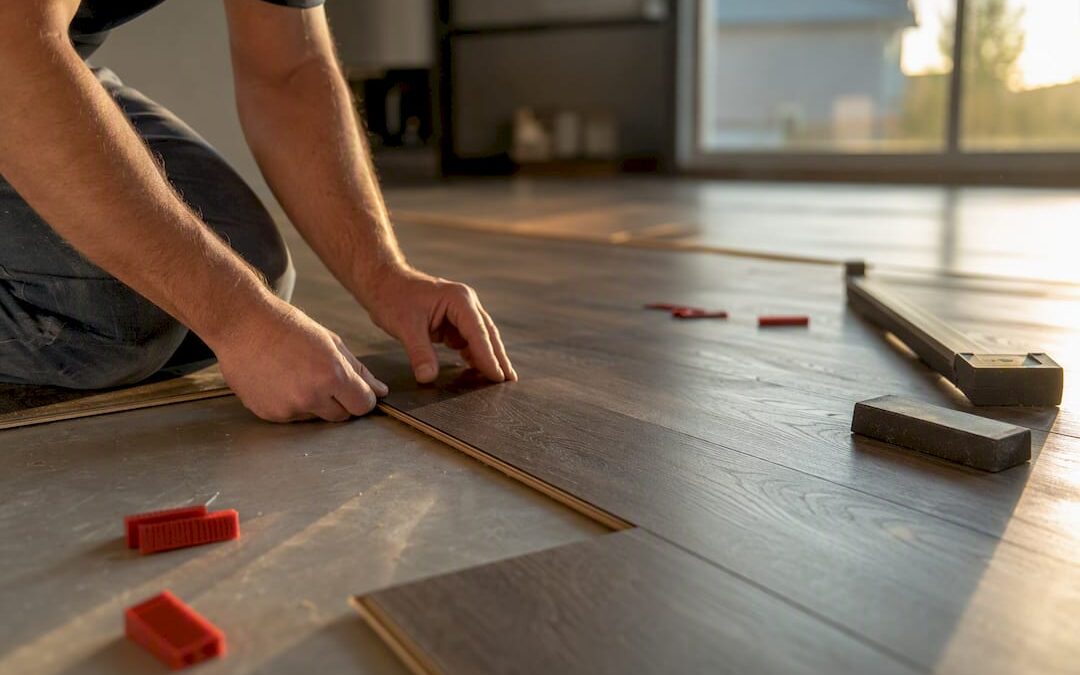
Home Depot’s installed flooring prices generally run in specific per-square-foot ranges for carpet, luxury vinyl (LVT/LVP), laminate, hardwood, and tile, based on USA TODAY’s review of Home Depot flooring. Those figures cover materials and standard labor, but they’re starting points, not the number you’ll actually sign for.
Here’s the catch almost nobody mentions upfront: Home Depot won’t give you a final price without sending someone to measure your space first, and that measuring visit typically carries a non-refundable fee. Your real quote depends on what that measurer finds.
- Carpet: a range per square foot installed
- LVP/LVT: a range per square foot installed
- Laminate: a range per square foot installed
- Hardwood: a range per square foot installed
- Tile: a range per square foot installed
If you’re planning a project this year, book a measurement or line up a comparison estimate before you fall in love with a specific product. The gap between the sticker price and the itemized quote is where budgets get blown.
Key Takeaways
Accurate flooring budgets depend on getting an itemized, measured quote rather than relying on a per-square-foot range alone.
| Point | Details |
|---|---|
| Know your material range | Carpet runs $2 to $4.50/sq ft, LVP $2 to $6, laminate $3.80 to $4.80, hardwood $6 to $7, and tile $9 to $10 installed. |
| Budget for the measuring fee | Home Depot’s measuring visit is typically non-refundable and required before a final quote. |
| Watch for subfloor surprises | Leveling, moisture barriers, and removal ($1 to $4/sq ft) commonly push totals above the base range. |
| Compare installer models | Home Depot subcontracts local installers; a direct local company like Leonardo’s Flooring Corp keeps you in contact with the same crew throughout. |
| Get local bids for complex jobs | Older subfloors, moisture concerns, or hardwood matching usually favor a local contractor’s itemized estimate. |
Table of Contents
- Home Depot Flooring Installation Cost by Material
- What a Home Depot Flooring Quote Usually Includes (and Skips)
- Add-Ons and Fees That Change Your Final Number
- How the Installation Process and Timeline Work
- Home Depot vs. a Local Independent Contractor
- Getting an Accurate, Comparable Quote
- Ways to Lower Your Installed Cost
- What Leonardo’s Flooring Corp Sees During Estimates
- Which Option Actually Makes Sense for Your Project
- Get a Transparent Estimate From a Local Denver Installer
- Sources
Home Depot Flooring Installation Cost by Material
The per-square-foot range you’ll see in-store is really a bundle of variables: material grade, installation method, and what’s underneath your existing floor. A basic builder-grade laminate installed over a flat, clean subfloor lands near the bottom of its range. The same laminate installed over a subfloor that needs leveling, moisture barrier, or old adhesive scraped off climbs fast.
Installation method matters too. Glue-down LVT costs more in labor than click-lock floating floors. Nail-down hardwood costs more than engineered hardwood installed as a floating system. Tile sits at the top of the pricing spectrum because it demands more skilled labor per square foot than anything else on this list, plus mortar, grout, and often backer board.
Here’s how the ranges translate into real numbers for two common project sizes:
- 200 sq ft room (bedroom or small living room): Carpet costs roughly in the lower hundreds, LVP somewhat more, laminate more than that, hardwood higher, and tile the highest among these options.
- 1,000 sq ft (open-concept main floor): Carpet costs in the low thousands, LVP ranges higher, laminate is more expensive, hardwood higher yet, and tile commands the highest installed cost.
Those numbers assume a straightforward installation. Add stairs, an oddly shaped room, or a subfloor that needs work, and you’re paying above the range before you’ve picked a single sample.
What a Home Depot Flooring Quote Usually Includes (and Skips)
A standard Home Depot flooring installation quote covers the measuring visit, delivery of materials, standard installation labor, and basic cleanup once the crew wraps up. According to Home Depot’s own installation guidance, the process runs through measurement, a specialist reviewing your options, scheduling, then installation and cleanup, though specifics shift depending on the product and package you choose.
What usually isn’t in that base number:
- Major subfloor repair (rot, sagging joists, uneven concrete)
- Moisture mitigation or vapor barrier installation
- Removal of old flooring beyond a basic allowance
- Custom stair treads, risers, or specialty transition pieces
- Furniture moving beyond light items
The measuring fee exists because your final price genuinely can’t be locked in from a phone estimate. A measurer needs to see your doorways, closets, transitions, and subfloor condition before anyone can commit to a number in writing.
Pro Tip: Ask for the itemized quote in writing before you approve anything, and specifically request a line for “unforeseen subfloor conditions.” If that line doesn’t exist, ask what happens if the crew finds a problem on install day.
Add-Ons and Fees That Change Your Final Number
Removal of your existing floor typically adds $1 to $4 per square foot, depending on the material coming out. Pulling up carpet and pad is cheap. Ripping out old tile with thick-set mortar is not.

Subfloor problems are where quotes swing the hardest. Minor leveling compound might add a few hundred dollars to a mid-size room. A full plywood subfloor replacement or moisture barrier installation for a below-grade space can add thousands, especially if the crew discovers water damage once the old floor comes up.
Other line items to watch for:
- Stair installation, often priced per step rather than per square foot
- Transition strips between rooms with different flooring types
- Heavy furniture moving if you haven’t cleared the space yourself
- Change orders if you swap materials or add square footage mid-project
None of these are hidden in a sinister sense. They’re just easy to overlook when you’re focused on the headline per-square-foot price.
How the Installation Process and Timeline Work
Getting from “I want new floors” to walking on them takes a predictable sequence, even though the calendar time varies by market and season.
- Measurement visit. A technician measures every room, checks subfloor condition, counts doorways and transitions, and notes anything unusual. This step is required before Home Depot will issue a final quote.
- Quote review. A flooring specialist walks you through the itemized quote, material options, and installation timeline.
- Scheduling. Installation is handled by a local subcontractor assigned to your job, not a Home Depot employee, which means communication and workmanship can vary between crews.
- Install day and sign-off. The crew installs, cleans up, and you inspect the work before signing off. If something’s wrong, you’ll need to schedule a callback, which can add days or weeks depending on the subcontractor’s availability.
Most straightforward projects move from measurement to completed install in two to four weeks, longer during peak spring and fall renovation seasons.
Home Depot vs. a Local Independent Contractor
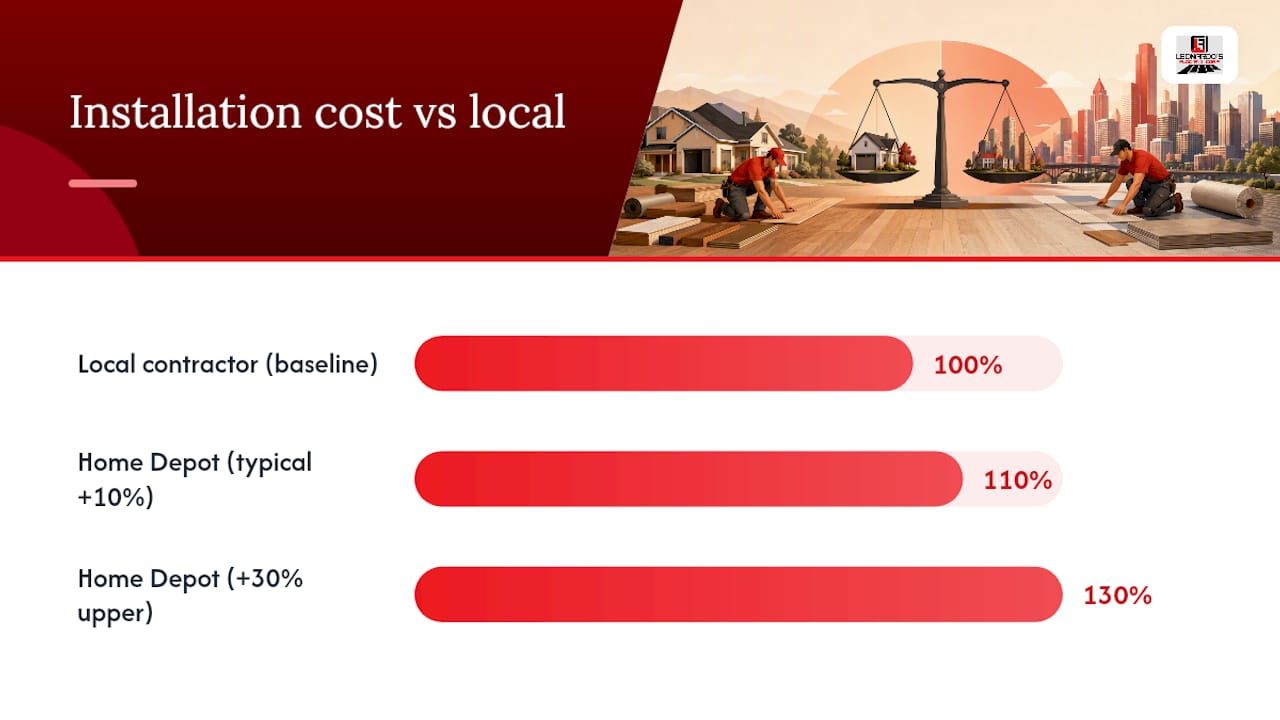
Home Depot’s biggest selling point is convenience: one phone call, one measuring visit, financing options, and a name-brand company standing behind the job. That convenience typically comes at a premium. Industry cost comparisons suggest Home Depot’s packaged pricing often runs 10% to 30% higher than a comparable local contractor bid, largely because retail overhead and subcontractor markups get baked into the number.
A local contractor usually wins out when your project has complications: an older home with an uneven subfloor, a room that needs to match existing hardwood exactly, moisture issues in a basement, or a renovation you want phased over several months instead of scheduled as one big-box job.
Warranty coverage differs too. Home Depot backs the installation with a corporate guarantee, but callbacks route through a call center before reaching the subcontractor who actually did the work. A local company like Leonardo’s Flooring Corp puts you in direct contact with the same crew and owner who installed your floor, which tends to shorten the time between “something’s wrong” and “someone’s fixing it.”
Pro Tip: If your project involves matching existing wood floors, get a local contractor’s opinion first. Subcontracted big-box installers see a huge volume of jobs and may not specialize in the color and grain matching that older hardwood repairs demand.
Quick decision checklist:
- Simple room, standard material, tight timeline: Home Depot often works fine.
- Complex subfloor, moisture concerns, or phased renovation: get local bids.
- Want financing bundled with the purchase: Home Depot has the infrastructure for that.
- Want direct accountability with one crew from quote to completion: go local.
Getting an Accurate, Comparable Quote
Before your measuring appointment, gather the basics: rough square footage of each room, photos of any visible subfloor damage, a stair count if applicable, and notes on furniture that needs moving. This prep speeds up the visit and gives you a sanity check against the final numbers.
During the appointment, ask these questions directly:
- What’s included in the base installation price, specifically?
- What happens if you find subfloor damage once the old floor is removed?
- Is furniture moving included, and up to what point?
- What’s the cost per step for stairs, if applicable?
- How long is the warranty, and who handles callbacks?
Once you have the itemized quote in hand, compare it line by line against a local contractor’s bid, not just the bottom-line total. A contractor pricing comparison guide can help you understand where trade pricing and retail markups typically diverge.
- Keep a folder with photos, the measurement report, and every written quote.
- Note verbal promises in an email follow-up so there’s a paper trail.
- Ask for the subcontractor’s name and license number before scheduling.
Ways to Lower Your Installed Cost
Home Depot periodically runs promotions, particularly carpet bundle deals that combine material and labor at a discount. These can meaningfully reduce your total when the timing lines up with your project scope, so it’s worth asking a specialist what’s currently running before you schedule your measurement.
Material choice matters more than most homeowners realize. LVP costs less upfront than hardwood and holds up better in kitchens and basements, though hardwood tends to add more resale value in living areas. Think in terms of cost per year of expected life, not just the sticker price.
- Handle furniture moving yourself to avoid that line item.
- Limit demo scope by keeping baseboards in place where possible instead of full removal.
- Phase larger renovations room by room instead of committing to a whole-house job at once.
- If financing, calculate the total cost including interest before comparing it to a cash price from a local contractor.
Pro Tip: Ask whether removing your own old carpet or vinyl before the crew arrives reduces the removal fee. Many crews will knock it off the quote if the subfloor is already exposed.
What Leonardo’s Flooring Corp Sees During Estimates
Leonardo’s Flooring Corp has installed and refinished floors across the greater Denver metro for more than 10 years, backed by 125+ five-star reviews from homeowners and property managers. That volume of estimates surfaces the same hidden-cost triggers over and over.
- Uneven concrete slabs in older Denver homes that need leveling before LVP or laminate goes down
- Moisture readings in basements that require a vapor barrier nobody budgeted for
- Existing hardwood that can’t be color-matched without a full refinish of adjoining rooms
When a big-box measurer flags subfloor damage, the homeowner often finds out the added cost the same week install is scheduled. A local estimate walks through those conditions upfront, before you’re committed to a timeline.
Leonardo’s generally points straightforward, single-room jobs toward whichever option fits the homeowner’s schedule, but recommends a local pro whenever a subfloor or matching issue is likely to surface mid-project.
Which Option Actually Makes Sense for Your Project
Simple rooms with clean subfloors favor Home Depot’s convenience. Anything with age, moisture, or matching complexity is worth getting a local bid before you commit, since that’s where packaged retail pricing tends to underestimate the real work involved.
— Jim
Get a Transparent Estimate From a Local Denver Installer
Big-box measuring fees and subcontractor handoffs are the standard path, but Denver homeowners have another route: working directly with the crew that will actually install the floor. Leonardo’s Flooring Corp handles hardwood, laminate, vinyl, tile, and subfloor prep in-house, so the person who measures your space is connected to the person swinging the hammer, not a call center in between.

An estimate from Leonardo’s spells out subfloor conditions, removal costs, and transitions before you sign anything, so there’s no mid-project surprise once the old floor comes up. That transparency matters most on the jobs where big-box quotes tend to fall short: uneven Denver slabs, basement moisture, and hardwood that needs to match what’s already in the house.
If you’re weighing hardwood for your next project, start with the hardwood floor installation page to request a measurement and see how a locally scoped quote compares to what you’d get at the big-box counter.
Sources
- From products to installation: The Home Depot flooring review (USA TODAY)
- What to expect during your hard surface flooring installation (The Home Depot)