
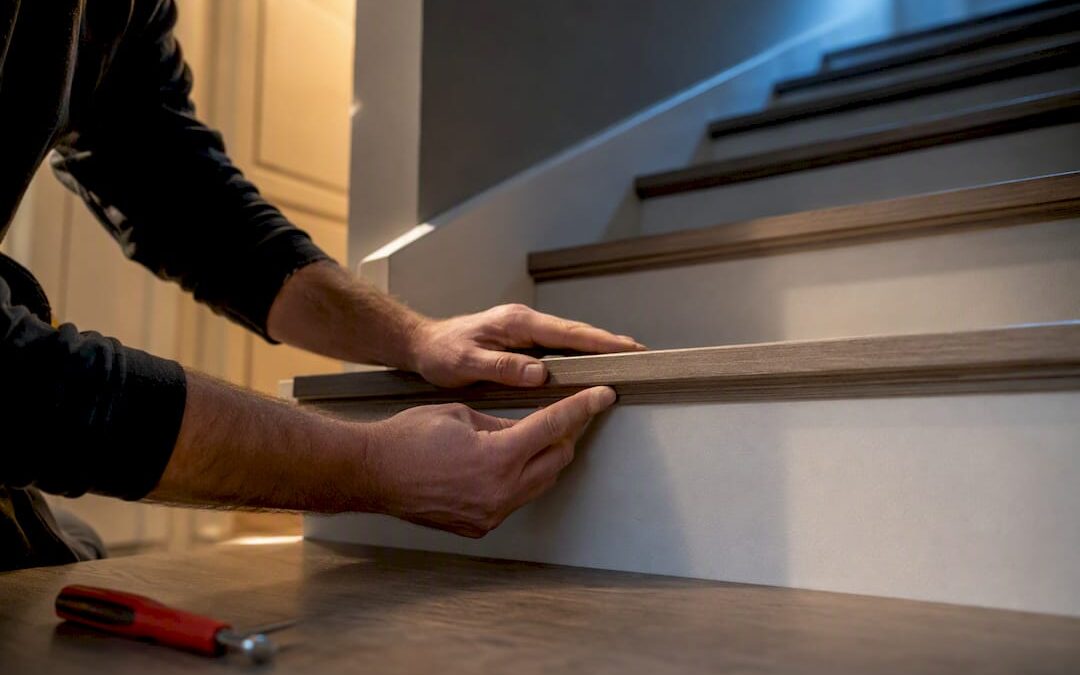
Yes, retrofit stair treads are a practical, lower-cost way to upgrade stairs when the existing structure is sound. Measure and prepare first. Success comes down to three checks: substrate condition, how much the new thickness raises your riser height, and whether your adhesive matches your surface. Skip any one of those, and you’re looking at squeaky steps or a failed install within a year.
TL;DR:
- Retrofit stair treads are most suitable when the underlying staircase is sturdy, with consistent riser heights and no structural damage.
- Material choices like vinyl or engineered wood suit medium-traffic stairs, while rubber or high-grade vinyl are better for high-traffic or commercial use.
- Proper surface preparation, including removing paint, sealing concrete, and confirming room temperature, is crucial to ensure adhesive bonds effectively.
- Accurate measurement at three points per tread and keeping riser variation within 3/16 inch prevent safety hazards and uneven steps.
- When in doubt, professional assessment can save money by confirming whether installation is feasible or full replacement is necessary.
Table of Contents
- What Are Retrofit Stair Treads and When Do They Make Sense?
- Which Material Should You Choose for Retrofit Treads?
- How Do You Prepare the Surface Before Installing Retrofit Treads?
- How Do You Measure and Cut Retrofit Treads Without Creating a Tripping Hazard?
- What’s the Best Way to Install Retrofit Stair Treads Yourself?
- What Do Professional Installers Check Before Starting a Retrofit Job?
- When Does a Retrofit Make Sense, and When Does It Just Delay a Bigger Fix?
- Get a Professional Assessment for Your Stair Renovation
- Sources
- FAQ
What Are Retrofit Stair Treads and When Do They Make Sense?
Retrofit stair treads are overlay pieces, made from wood, vinyl, rubber, or composite material, that install directly on top of your existing stair treads instead of tearing them out. Think of them as a cap that hides wear, damage, or an outdated look without touching the stringers underneath.
This approach works best when the underlying structure is solid. If your stairs feel firm, don’t bounce, and the risers are roughly consistent, a retrofit saves both time and money by skipping demolition entirely. Full replacement becomes necessary when stringers are cracked, treads are rotted through, or riser heights vary so much that no overlay can fix the unevenness safely.
- Retrofit works when: substructure is stable, risers are consistent, and you want a faster, lower-mess upgrade
- Full replacement is needed when: stringers are damaged, treads flex or creak badly, or riser heights are wildly inconsistent
- Typical scope: most retrofit projects run one to two days for an average staircase, versus a week or more for full teardown and rebuild
Which Material Should You Choose for Retrofit Treads?
Material choice drives how your stairs feel underfoot and how long they last. Rubber treads handle heavy foot traffic and hold up well in wet or high-use entries, but they have a distinct industrial look that isn’t for every home. Vinyl overlays mimic wood grain convincingly at a lower price and resist moisture, making them a solid pick for basements or homes with pets. Carpet-wrapped treads feel warmer and quiet down noise, though they trap dirt and wear faster on high-traffic staircases. Solid or engineered wood treads deliver the most refined look and the longest lifespan, but they cost more and need periodic refinishing.
- Low traffic (secondary staircase): wood or wool-blend carpet overlays for comfort and appearance
- Medium traffic (main household stairs): engineered wood or thicker vinyl for a balance of looks and wear resistance
- High traffic (rentals, commercial, or multi-family entries): rubber or commercial-grade vinyl for durability
Slip resistance matters more than style. Most retrofit products reference ASTM and ANSI standards for coefficient of friction (COF), with a benchmark of 0.5 or higher considered acceptable for dry conditions and 0.6 or higher for wet areas. Check the product spec sheet before you buy, especially for entries near a mudroom or exterior door. Our breakdown of stair tread materials covers the durability trade-offs in more detail if you’re still deciding.
How Do You Prepare the Surface Before Installing Retrofit Treads?
Adhesive failure is the most common reason retrofit installs go wrong, and it almost always traces back to skipped prep work. Painted or sealed wood needs to be sanded down to bare wood; adhesive won’t bond reliably to a painted surface no matter how good the product is. Concrete stairs need an alkaline primer applied before any adhesive goes down, since raw concrete dust and moisture interfere with bonding.
- Inspect each tread for loose boards or squeaks, and drive in wood screws to secure the substrate before covering it.
- Sand painted or sealed wood surfaces down to bare wood across the full contact area.
- Apply an alkaline primer to concrete substrates and let it cure per the label.
- Confirm room temperature is above 50°F (10°C). Most adhesives lose significant bonding strength below that threshold, according to installer guidance from Eagle Mat.
- Choose urethane adhesive for wood substrates. Manufacturer instructions for products like RETROTREAD specifically warn against water-based adhesives.
Pro Tip: Test your adhesive on a scrap piece of the actual substrate first, especially on older concrete. A quick bond test beats finding out three treads in that the surface won’t hold.
How Do You Measure and Cut Retrofit Treads Without Creating a Tripping Hazard?
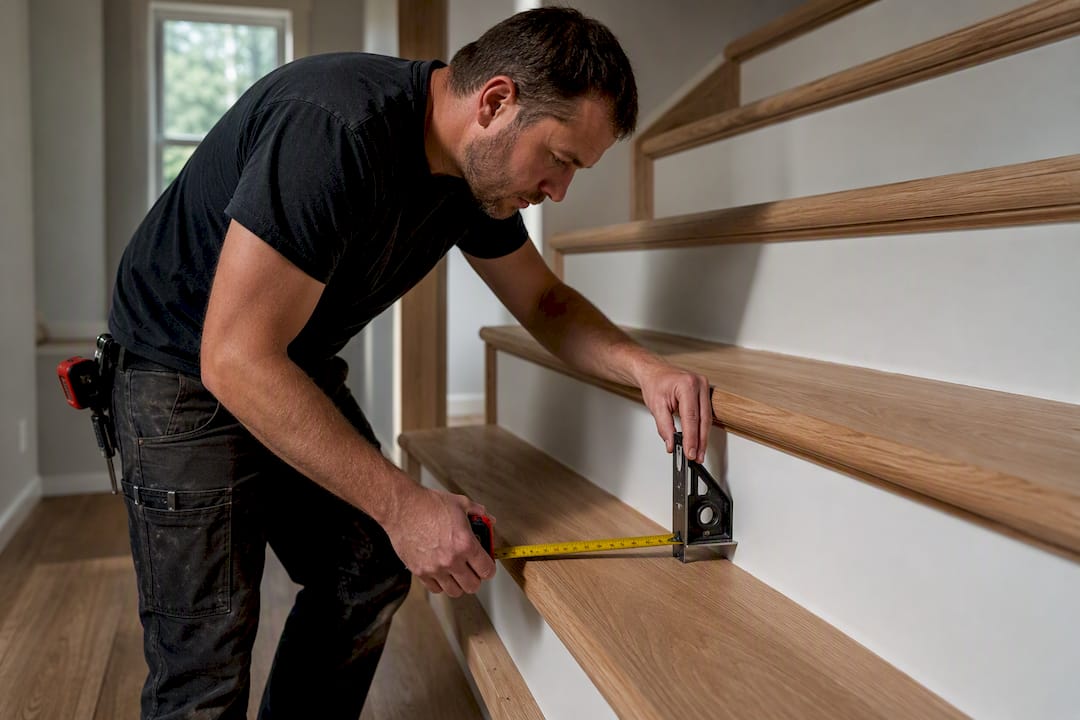
Every tread should be measured at three points, left, center, and right, since older staircases are rarely perfectly square. Use the smallest width measurement across all three points to guide your cut, which prevents overhang problems that lead to uneven or noisy steps.
The bigger issue is riser height. Adding a new tread on top of an existing one raises the step height, and building codes generally allow no more than 3/16 inch of variation between any two risers in a flight. That limit comes up repeatedly in retrofit stair tread guidance, and it’s not a suggestion. A staircase where the top or bottom step suddenly rises higher than the rest is a fall risk waiting to happen.
- Measure each tread at three points and cut to the smallest width
- Check riser variance before buying materials. If it exceeds 3/16 inch, you may need to adjust the first or last riser separately
- Keep nosing overhang to roughly 1 inch or less, and consider a reversible or returned nosing where a tread meets an open side
- When variance is too large, shimming the riser or trimming the tread thickness is usually cheaper than a full rebuild
What’s the Best Way to Install Retrofit Stair Treads Yourself?
Installation method depends on the product, the substrate, and how much wear the stairs see. Before starting any method, remove old flooring or carpet, trim the existing tread slightly if needed, and confirm every fastener underneath is tight.
- Peel-and-stick: Clean and prime the surface, then apply the tread starting from one edge to avoid trapped air bubbles. This method suits low-traffic stairs and typically lasts a few years before edges start lifting.
- Glue-down: Spread construction or urethane adhesive with a notched trowel, respect the manufacturer’s tack time before setting the tread, and weight or clamp it during the cure window, often 24 hours or more.
- Mechanical fastening: Countersink finish nails or screws through the tread into solid substrate, then fill holes or hide them with cove molding. Manufacturer install pages list basic tools like a skill saw, hammer, chisel, and finish nails, with about 10 to 15 minutes per tread for straightforward installs.
Call a professional when you find soft or spongy substrate, stringers that flex, or riser variance you can’t correct with shimming. Complex returns, curved stairs, or open-sided landings also get harder to execute cleanly without experience. Homeowners tackling a vinyl overlay might also find our guide on installing vinyl plank on stairs useful for glue-down technique specifics.
What Do Professional Installers Check Before Starting a Retrofit Job?
Contractors run a short mental checklist before they ever open an adhesive tube. They tap every tread for hollow spots, check substrate flatness with a straightedge, and confirm room temperature and humidity are within adhesive tolerance. They verify that the adhesive chemistry is suitable for the substrate rather than using unsuitable adhesives.
- Fastener security: no movement, no squeaks, no soft spots underfoot
- Substrate flatness: gaps or humps get shimmed or sanded before anything sticks
- Moisture and temperature: concrete moisture readings and room temperature both get checked, not assumed
- Common mistakes seen in the field: skipping primer on concrete, gluing over painted wood, and using the wrong adhesive for the substrate
Ask any contractor for a written quote that names the exact adhesive product, substrate prep steps, and expected cure time. That level of detail on paper tells you they’ve actually inspected your stairs rather than quoting from memory.
When Does a Retrofit Make Sense, and When Does It Just Delay a Bigger Fix?
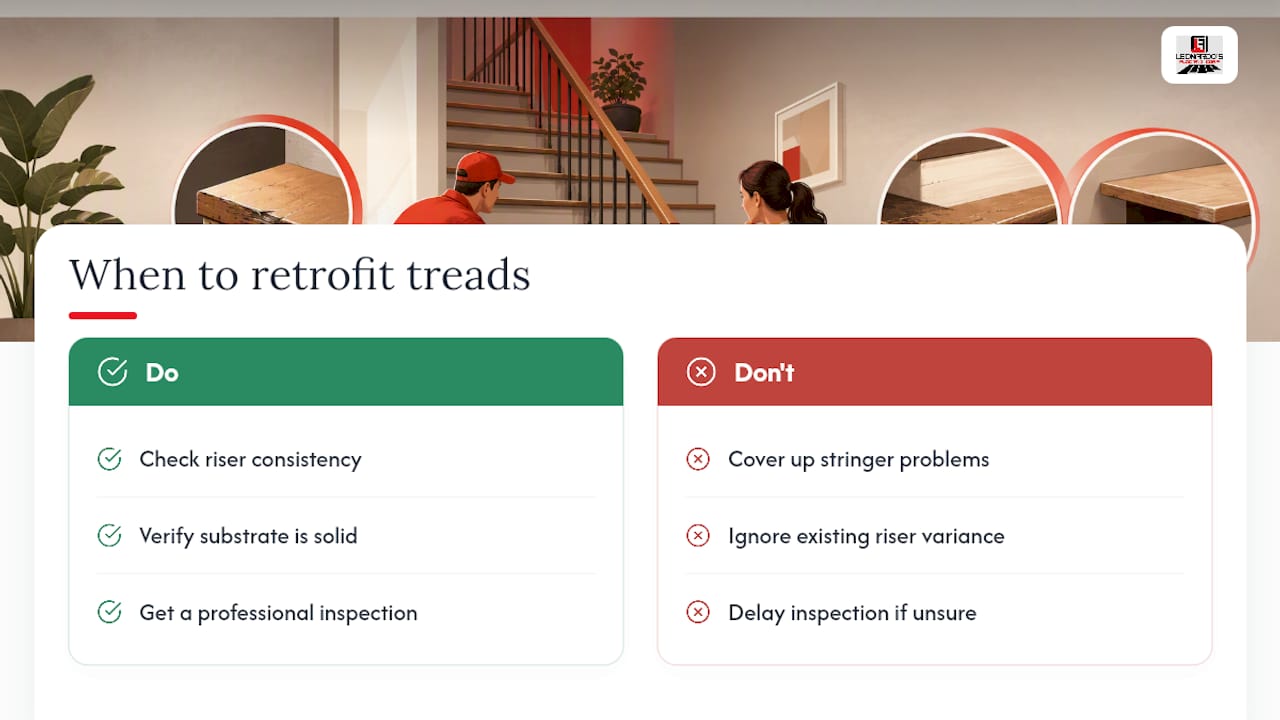
Retrofit treads win on speed and cost when the structure underneath is sound. That’s not a small caveat. They lose their value fast if you’re covering up a stringer problem or ignoring riser variance that’s already a safety issue.
Before you buy, ask yourself: are the risers consistent, is the substrate solid, and would a professional inspection change your answer? If any of those feel shaky, a quick assessment now costs far less than fixing a covered-up problem in two years.
— Jim
Why Get a Professional Assessment for Your Stair Renovation?
If you’d rather not spend a Saturday sanding painted risers and testing adhesive on scrap wood, consider hiring a professional contractor who handles such jobs for homeowners. We evaluate whether your staircase is a good retrofit candidate or needs full replacement, before you spend a dollar on materials.

Our process covers on-site assessment of substrate and riser condition, adhesive selection matched to your surface, and clean installation with proper finishing, whether that’s overlay treads, hardwood floor installation, or a full staircase rebuild. If your stairs have uneven risers, suspect stringers, or a landing that complicates measurement, that’s precisely when a second set of trained eyes saves you from a costly redo. A reputable flooring contractor builds its reputation on tailoring each project to the homeowner’s actual stairs rather than a one-size-fits-all install. Request a free consultation through our flooring services page and get a written assessment before you commit to materials.
Sources
Before buying, check the manufacturer’s installation PDF and adhesive recommendations for your specific product, along with the RETROTREAD installation instructions as a reference example. Confirm the COF rating on the spec sheet against ASTM and ANSI slip-resistance benchmarks before you install anything on stairs.
- Installation Guide — Eagle Mat
- RETROTREAD™ Installation Instructions
- Retrofit stair treads: A complete guide for 2026 — The Decor Advisor
- Stair-treads
FAQ
What Is a Retrofit Stair Tread?
A retrofit stair tread is an overlay piece, made from wood, vinyl, rubber, or composite material, that installs directly over an existing stair tread instead of requiring full removal. It’s designed to refresh worn or outdated stairs without demolition, provided the structure underneath is sound.
Can I Install New Stair Treads Over Existing Ones?
Yes, as long as the existing stairs are structurally sound and riser height variation stays within the standard 3/16 inch limit noted in retrofit guidance. Damaged stringers, soft substrate, or severe riser inconsistency mean you need full replacement instead.
How Can I Retrofit Stair Treads Myself?
Start by securing loose fasteners, sanding painted wood to bare surface, and priming concrete with an alkaline primer. Choose peel-and-stick for light-traffic stairs or glue-down with urethane adhesive for a longer-lasting bond, and confirm room temperature is above 50°F before starting, per installation guidance from Eagle Mat.
What Are Some Modern Ideas for Stair Treads?
Wide-plank engineered wood overlays and low-profile vinyl in wood-look finishes are popular for a clean, updated appearance without a bulky nosing. Wool-blend carpet runners on wood treads also give a warmer, softer look on staircases in living spaces. For guidance on matching material to your home’s style, see our stair tread materials guide.
Does Leonardo’s Flooring Corp Install Retrofit Stair Treads?
Yes, Leonardo’s Flooring Corp handles staircase tread and riser installation as part of its full flooring services for Denver-area homeowners. Pricing depends on the scope of your project and is available after an on-site assessment through the services page.