
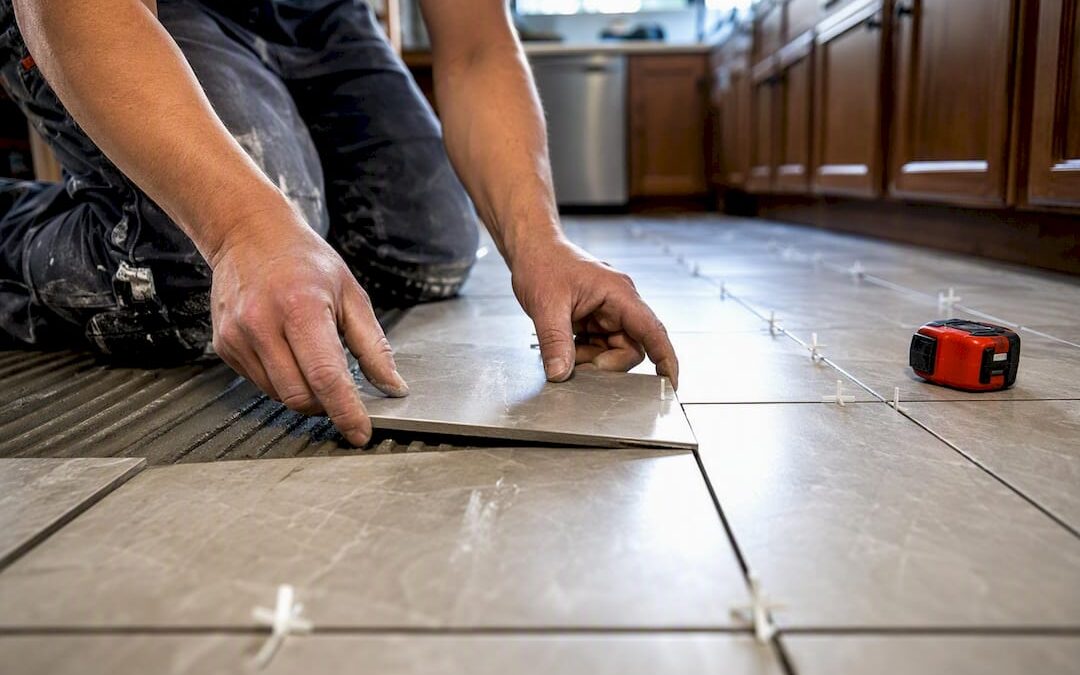
Expect $8 to $60 per sq ft installed for most residential tile projects, with typical ceramic and porcelain jobs landing at $10 to $25 per sq ft. That figure should include labor, thinset or mortar, grout, and basic prep. Anything beyond a bare floor, like demolition or waterproofing, gets added on top, so get itemized quotes before you compare bids.
TL;DR:
- Tile installation costs vary greatly depending on tile type, with natural stone and large-format porcelain often exceeding $30 per square foot, including labor and materials.
- Labor costs constitute roughly 35% to 50% of the total project, with typical rates ranging from $3 to $22 per square foot, influenced by job complexity.
- Site conditions such as subfloor quality, demolition needs, and waterproofing or heating systems can add $2 to $20 per square foot to the overall cost.
- Small projects under 50 square feet usually have higher per-square-foot prices due to minimum fee requirements, potentially doubling the cost compared to larger rooms.
- Itemized, comprehensive quotes that specify prep, waterproofing, and warranty are essential to avoid unexpected expenses and ensure project scope clarity.
Table of Contents
- Tile Installation Cost Per Square Foot: National Benchmarks
- Labor Vs. Materials: Breaking Down the Per-Sq-Ft Price
- Cost By Tile Type: What Drives the Price Per Square Foot
- Site Conditions That Push Per-Sq-Ft Costs Higher
- Worked Examples: Estimating Your Tile Project’s Total Cost
- Pricing Tips and Red Flags When Comparing Quotes
- Why Hire a Professional: What a Real Estimate Includes
- How Long Does a Tile Installation Project Actually Take?
- What the Numbers Actually Tell You
- Get an Itemized Tile Estimate From Leonardo’s Flooring Corp
- Sources
Tile Installation Cost Per Square Foot: National Benchmarks
Budget in three tiers. The low end, roughly $8 to $12 per sq ft, covers basic ceramic tile on a sound subfloor with minimal prep. Typical projects run $10 to $25 per sq ft, which is where most porcelain and mid-grade ceramic jobs land once you factor in normal labor and materials. Premium jobs, using natural stone, large-format porcelain, or intricate layouts, can push past $30 to $60 per sq ft once labor complexity and specialty materials stack up.
Run the math on real rooms and the spread gets obvious fast:
- A 50 sq ft bathroom: $400 to $600 low end, $500 to $1,250 typical, $1,500 to $3,000 premium.
- A 200 sq ft kitchen: $1,600 to $2,400 low end, $2,000 to $5,000 typical, $6,000 to $12,000 premium.
Homewyse’s national data puts the average installed cost within a moderate range per square foot, which lines up with the typical band above. Regional labor rates shift these numbers, and small jobs almost always cost more per square foot because contractors have minimum fees to cover truck rolls and setup time regardless of room size.
Labor Vs. Materials: Breaking Down the Per-Sq-Ft Price
Labor typically eats up 35% to 50% of a tile project’s total cost, with labor-only rates running roughly $3 to $22 per sq ft depending on the tile and how complicated the layout gets. Installers usually price by the square foot for standard floor and wall jobs, but they’ll switch to hourly billing for oddball work like custom niches, repairs, or small patch jobs where per-sq-ft math doesn’t make sense.
On the materials side, your quote should list out:
- Thinset or mortar (the adhesive layer under the tile)
- Grout and grout sealer
- Backer board or cement board underlayment
- Waterproofing membrane, if it’s a wet area
Flip that ratio for natural stone or intricate patterns, where cutting time and handling care push labor costs well past half the bill. If a quote doesn’t separate these line items, ask for a breakdown before you sign anything.
Cost By Tile Type: What Drives the Price Per Square Foot
Material choice swings your installed price more than almost any other variable. Cutting difficulty, weight, and sealing requirements all add labor hours, and labor hours are what actually drive the per-sq-ft number up.
| Tile type | Installed cost per sq ft |
|---|---|
| Ceramic (standard) | $8 to $15 |
| Porcelain (standard) | $10 to $20 |
| Porcelain (large-format) | $15 to $30 |
| Natural stone (travertine, slate) | $15 to $35 |
| Natural stone (marble, granite) | $20 to $50 |
| Glass tile | $20 to $40 |
| Mosaic tile | $18 to $35 |
| Pebble sheets | $15 to $30 |
A few things push certain tiles toward the top of their range:
- Large-format porcelain requires precise leveling and specialized adhesives, which increases labor time compared to standard-size porcelain.
- Natural stone often needs sealing before and after grouting, adding a full extra step to the job.
- Glass and mosaic sheets take longer to align and grout, since the small pieces multiply the number of joints.
Site Conditions That Push Per-Sq-Ft Costs Higher
Your subfloor’s condition matters as much as the tile you pick. Old tile has to come out before new tile goes in, and demolition typically adds a moderate cost per square foot for removal and disposal, plus whatever hidden damage shows up underneath once the old tile is gone.
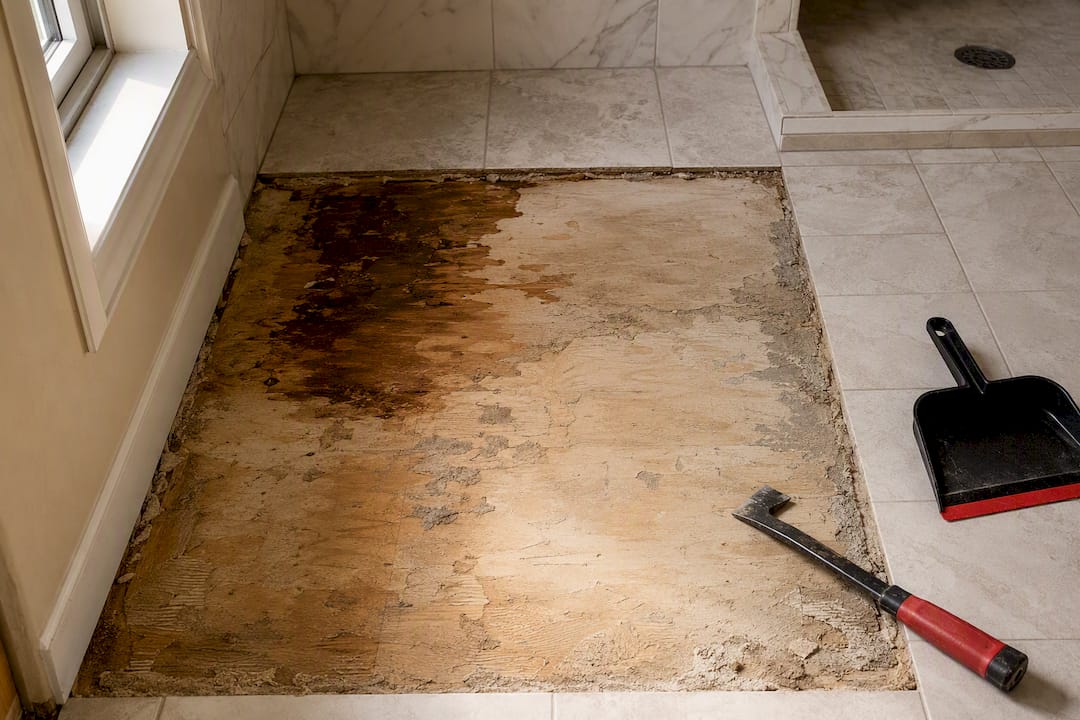
Subfloor prep is the other wildcard. If the floor varies more than 1/8 inch over a 10 foot span, it needs self-leveling compound before tile can go down safely, and that step alone adds roughly $2 to $5 per sq ft. Skipping it risks lippage on large tiles and can void manufacturer warranties down the line.
Other common add-ons:
- Waterproofing membrane for showers and wet areas: often $2 to $6 per sq ft
- Crack-isolation membrane over concrete slabs: similar range
- Heated floor systems (radiant heat under tile): can add $8 to $20 per sq ft depending on the system, and pairs naturally with a radiant heating installation planned alongside your tile project
Worked Examples: Estimating Your Tile Project’s Total Cost
Four steps get you a workable number:
- Measure the room and add 5% to 10% for waste, since cut tiles and breakage always eat into your material order.
- Pick your installed per-sq-ft band based on tile type and finish quality.
- Add any fixed costs, like demolition, subfloor repair, or a small-job minimum fee.
- Build in a 10% contingency for surprises the contractor finds once the old flooring comes up.
Bathroom example (50 sq ft, new tile over sound subfloor):
Low band: 52.5 sq ft x $10 = $525. Typical band: 52.5 sq ft x $18 = $945. Premium band: 52.5 sq ft x $40 = $2,100.
Kitchen remodel example (200 sq ft, removing old tile, self-leveling required):
Base tile cost at typical band: 210 sq ft x $18 = $3,780. Add demolition: 200 sq ft x $3 = $600. Add self-leveling: 200 sq ft x $3.50 = $700. Total before contingency: roughly $5,080, landing near $25 per sq ft once you divide the full project cost back across the original 200 sq ft.
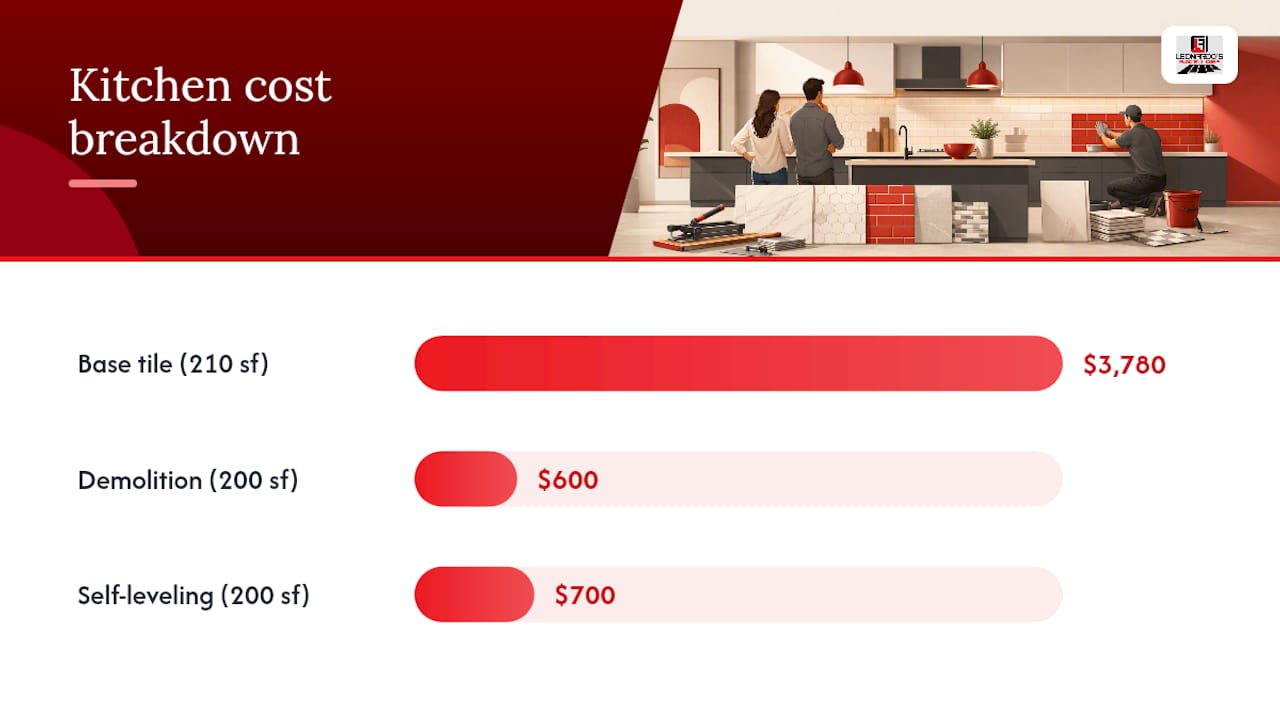
That kitchen example shows exactly why “per square foot” prices from a quick online search rarely match your actual bill. Prep and removal change the math every time.
Pricing Tips and Red Flags When Comparing Quotes
Always ask for an itemized quote that separates labor, materials, prep, and waterproofing into their own lines. A single lump-sum number tells you nothing about what’s actually included.
Watch for these red flags:
- No mention of subfloor prep or substrate condition anywhere in the quote
- Vague or missing warranty language on workmanship
- A bid dramatically lower than others paired with a large upfront deposit request
A homeowner’s checklist for comparing contractor bids can help you spot missing scope items before you sign. To save money without sacrificing quality, stick with standard tile sizes over custom cuts, keep the layout simple instead of herringbone or diagonal patterns (which add roughly 15% to 25% to labor costs), and ask about scheduling during slower winter months when installers have more flexibility on price.
Pro Tip: Request a line-item quote that separately lists subfloor prep, waterproofing, and disposal fees. If a contractor won’t break these out, that’s usually a sign they haven’t accounted for them at all.
Why Hire a Professional: What a Real Estimate Includes
Leonardo’s Flooring Corp has installed tile across the Denver metro for over 10 years as a Home Depot Contractor, backed by 125+ five-star reviews. A proper estimate includes itemized scope, correct substrate prep, the right materials for your specific tile, and a workmanship warranty, the details cheap bids tend to skip entirely.
How Long Does a Tile Installation Project Actually Take?
A standard bathroom floor, roughly 50 to 100 sq ft on a sound subfloor, usually takes one to two days from start to finish. That includes layout, setting the tile, and letting thinset cure before grouting begins the next day.
Larger kitchen or living area projects, in the 150 to 300 sq ft range, typically run three to five days once you account for demolition of old flooring, subfloor repair, tile setting, grout curing, and sealing. Add a day or two if the project includes waterproofing membrane in a wet area, since that layer needs to cure before tile goes down over it.
Complex layouts stretch the timeline further. Herringbone patterns, large-format porcelain requiring extra leveling, or natural stone that needs sealing before and after grouting can add two to three extra days compared to a straightforward grid layout. Heated floor systems add another day for installing and testing the radiant elements before tile covers them permanently.
Weather and material availability matter too, especially for natural stone that’s often special-ordered rather than stocked. A realistic full-project timeline, from initial measurement and quote to final walkthrough, runs anywhere from a few days for a small bathroom to two to three weeks for a full kitchen remodel with substrate repairs and custom tile orders. Anyone promising a same-day full remodel is skipping a step somewhere, usually cure time.
What the Numbers Actually Tell You
The conventional advice on tile pricing treats “per square foot” like a fixed number you can shop around for, and that’s where most homeowners get burned. The real number is a function of your specific subfloor, your tile choice, and how much demolition is hiding under your current floor. Two identical 100 sq ft bathrooms can land $1,000 apart once you know what’s underneath.
What gets underrated in most cost guides is the small-job minimum. If your project is under roughly 50 sq ft, the fixed costs of a contractor’s time and travel outweigh the material cost entirely, and your effective per-sq-ft price can double compared to a larger room using the exact same tile.
My advice: stop shopping for the lowest per-sq-ft number and start shopping for the most complete quote. A bid that’s $2 higher per square foot but includes waterproofing and subfloor leveling is cheaper than a bid that adds those costs later as “unexpected” line items. Ask every contractor the same three questions about prep, materials, and warranty, and compare those answers before you compare the dollar figure at the bottom of the page.
— Jim
Get an Itemized Tile Estimate From Leonardo’s Flooring Corp
Leonardo’s Flooring Corp has spent over 10 years installing tile floors throughout the Denver metro as a trusted Home Depot Contractor, and every estimate we provide breaks down labor, materials, and prep work so you know exactly what you’re paying for before work starts.

When you request a quote, expect an itemized scope covering subfloor condition, tile and grout selection, any waterproofing or self-leveling your space needs, a realistic timeline, and a workmanship warranty. No lump-sum guesswork, no surprise line items halfway through the job. Our 125+ five-star reviews come from homeowners who wanted the job done right the first time rather than re-done a year later.
If you’re ready to see real numbers for your own space, visit our tile floor installation page and request a free estimate. We’ll walk your space, measure accurately, and give you a quote you can actually compare against anyone else’s bid.
Sources
- Rubi: Average cost to install tile floors — 2026
- Homewyse: Cost to install tile floor — May 2026
- TileHub: Tile installation cost (2026)
- Angi: Cost to tile a shower — 2026