
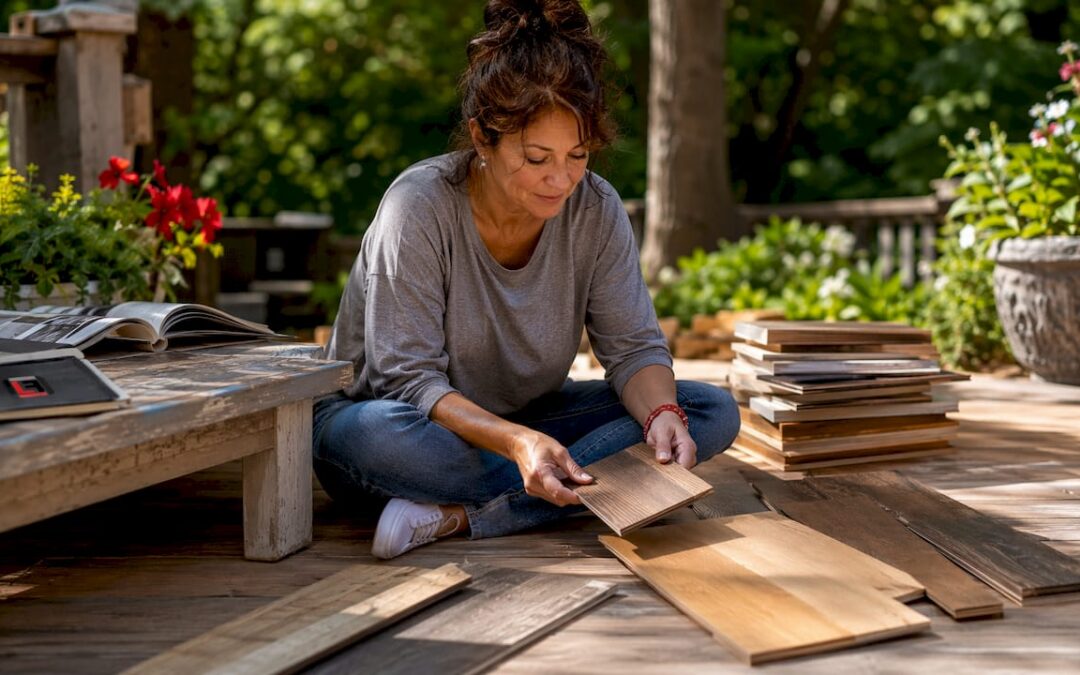
Rustic hardwood flooring is a grading and appearance category that intentionally showcases knots, sapwood/heartwood color contrast, mineral streaks, and natural marks rather than hiding them. The word “rustic” describes how a board looks, not how strong it is. A rustic-grade plank is just as structurally sound as a select-grade plank cut from the same species. If you want a floor with warmth, character, and a lived-in feel, this category is worth a close look. Farmhouse kitchens, cabin great rooms, and high-traffic family spaces are natural fits.
Visual hallmarks you’ll see across rustic floors:
- Knots (small to large, tight or filled)
- Sapwood/heartwood contrast (lighter streaks running through darker boards)
- Mineral streaks (gray, brown, or greenish tonal shifts)
- Filled checks or small worm holes
- Variable board lengths and widths
The National Wood Flooring Association (NWFA) uses “Rustic Grade” as an official industry designation. That same appearance can also be produced through manufactured surface treatments like hand-scraping and wire-brushing applied to higher-grade boards.
Pro Tip: If you’re planning a rustic hardwood project in Denver, contact Leonardosflooringcorp early. Getting an installer’s eye on your subfloor and lighting conditions before you order samples saves time and money.
Table of Contents
- What does “rustic grade” actually mean in hardwood flooring?
- Species, construction, and finish options for rustic floors
- Why homeowners choose rustic hardwood, and the myths worth ignoring
- Cost factors, timeline, and installation considerations
- How do you choose the right rustic hardwood for your space?
- How to care for rustic hardwood so it ages well
- Key Takeaways
- Why experience matters when installing rustic hardwood
- Leonardosflooringcorp brings rustic hardwood expertise to Denver
- Useful sources and further reading
What does “rustic grade” actually mean in hardwood flooring?
The NWFA grading system classifies boards by appearance, not by structural quality. Rustic Grade, also called No. 2 Common, tavern grade, or cabin grade, sits below Select and Character grades on the appearance scale. It accepts a broader range of natural features: medium to large knots, missing tongues, sander burns, short pieces, and color variation that would disqualify a board from higher grades.
Typical visual features in rustic-grade boards:
- Large and small knots (tight and open)
- Strong sapwood/heartwood contrast
- Mineral streaks and color shifts
- Checks (small surface cracks), often filled at the mill
- Rounded saw marks and variable board lengths
One useful benchmark: rustic-grade boards frequently contain roughly 50% clear-face cuttings, compared to the near-uniform face of select grades. That means about half the board surface shows character marks. In a full room, that reads as lively and organic, not chaotic.
Grading terms are not perfectly standardized across manufacturers, so always review actual samples rather than relying on grade names alone.
Pro Tip: Ask your supplier whether open knots are filled at the mill with epoxy or wood filler, or left open. Filled knots are stable and sandable. Open knots require stabilization before finishing and can affect the final surface texture.
Species, construction, and finish options for rustic floors
Species commonly used for rustic floors
Species choice drives both character and durability. White Oak is the most popular choice right now: it has open grain that takes wire-brushing beautifully, a Janka hardness of 1,290, and a wide range of finish options. Red Oak shows more dramatic grain movement and a warmer pink undertone. Walnut delivers a darker, more refined rustic mood with natural color variation. Reclaimed heart pine brings genuine age marks and tight grain that no new-cut board can replicate.
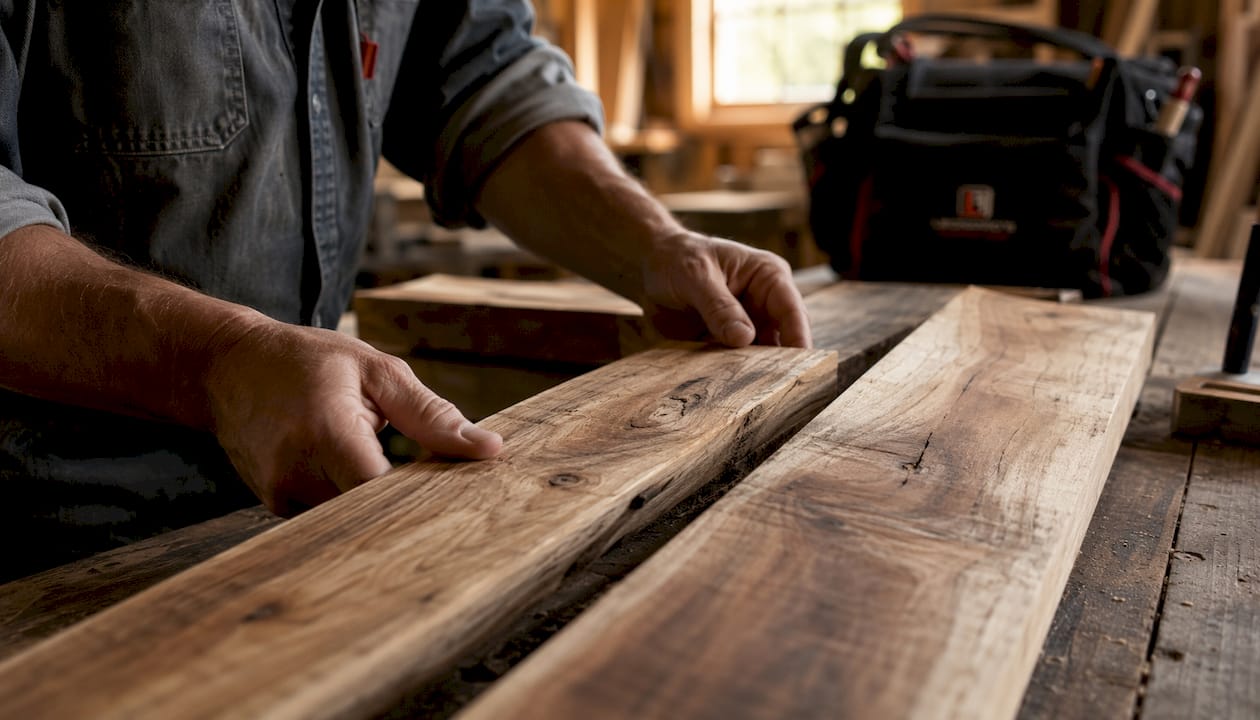
For high-traffic homes or commercial spaces, avoid very soft species like pine in solid form, unless you want the dents to become part of the story.
Solid vs. engineered rustic planks
Engineered rustic planks with a 4mm or thicker wear layer are a practical choice for concrete subfloors and radiant heat systems. The cross-ply core resists the seasonal movement that can stress knots in solid planks. Solid rustic hardwood remains the right call when you want multiple refinishes over decades and your subfloor is wood-framed with controlled humidity.
Surface textures that create a rustic look
- Wire-brushed: removes soft grain fibers, leaving a subtle texture that hides fine scratches
- Hand-scraped: each board shows tool marks; no two planks look identical
- Saw-textured: circular or skip-saw marks add an aged-mill character
- Distressed: machine-applied dents, scrapes, and worn edges
- Live-sawn wide plank: the full log width produces dramatic grain and natural figure
Finish choices and how they change the look
Matte and satin finishes are the standard pairing for rustic floors. They reduce glare, make everyday scratches less obvious, and let the wood’s natural texture read clearly. High-gloss finishes fight the rustic aesthetic and highlight every surface irregularity. Oil finishes (penetrating oils, hardwax oils) give a natural, low-sheen look and allow spot repairs without full refinishing. UV-cured polyurethane is more durable and easier to maintain but harder to spot-repair.
Pro Tip: Engineered oak with a matte UV finish is the practical workhorse: stable, durable, and easy to maintain. Reclaimed pine with a penetrating oil finish is more demanding but produces a look nothing else matches. Choose based on your maintenance tolerance, not just aesthetics.
Pairing rustic floors with the right interior details matters too. Farmhouse-style interior doors with panel profiles or barn-door hardware reinforce the character without competing with the floor.
Why homeowners choose rustic hardwood, and the myths worth ignoring
Benefits of rustic flooring:
- Unique character: no two floors look alike
- Hides minor scratches and everyday wear better than select-grade floors
- Character-grade floors are suitable for high-traffic spaces with the right finish
- Cost savings versus select grade (more of the log is usable)
- Eco advantage: rustic grade preserves more of the log, reducing waste during milling — a point worth considering alongside other sustainable flooring options
- Works across farmhouse, cabin, rustic-modern, and relaxed family interiors
Common myths:
- “Rustic means low quality.” Grading describes appearance, not structural integrity. A rustic-grade White Oak plank is just as dense and hard as a select-grade one.
- “Rustic floors don’t need maintenance.” They still need regular cleaning. The advantage is that wear becomes part of the patina rather than a visible defect.
- “All knots are the same.” Tight knots are stable. Larger or loose knots may need filling or stabilization, which affects finishing.
Pro Tip: Match the intensity of rustic character to your room’s scale and lighting. A small, dark room with heavy knots and strong sapwood contrast can feel cluttered. In a large open plan with natural light, that same floor looks stunning.
Cost factors, timeline, and installation considerations
Cost factors to budget for:
- Species (White Oak vs. Walnut vs. reclaimed)
- Plank width (wider costs more)
- Construction: engineered vs. solid
- Surface treatment: wire-brushed and hand-scraped add cost
- Finish type: factory-finished vs. on-site finishing
- Subfloor prep and moisture remediation
- Regional labor rates (Denver labor rates reflect a competitive market)
Retail price ranges vary significantly by product type. Typical retail material costs range from $5–$12/sq ft for wire-brushed oak to $14–$30/sq ft for reclaimed barnwood; hand-scraped options fall in the $6–$12/sq ft range, and live-sawn wide plank options range from $9–$18/sq ft. Labor and subfloor prep are additional.
Typical project timeline:
- Sample selection and ordering: 1–2 weeks
- Material delivery and acclimation on-site: 3–7 days minimum
- Subfloor preparation: 1–2 days
- Installation: 1–3 days depending on square footage
- On-site finishing (if applicable): 2–3 days including dry time
- Curing before full furniture load: 5–7 days
Installation checklist:
- Moisture test subfloor (target below 4% for wood subfloors)
- Confirm subfloor flatness (3/16" over 10 feet is the standard tolerance)
- Acclimate boards in the installation space at living temperature and humidity
- Choose fastening method: nail/staple for solid over wood subfloor; adhesive or floating for engineered over concrete
- Leave expansion gaps at all walls and fixed objects
- Confirm knot-filling approach before sanding and finishing
- Verify radiant heat compatibility if applicable
Proper moisture testing and subfloor preparation are the dominant factors in long-term performance. Avoiding common hardwood installation mistakes starts with these two steps.
Pro Tip: Engineered rustic planks with a 4mm+ wear layer hit the practical sweet spot for most Denver homes: they handle the region’s humidity swings better than solid, and they can still be refinished at least once. Wide-plank solid reclaimed makes sense when the aesthetic is the priority and the subfloor is wood-framed with stable conditions.
How do you choose the right rustic hardwood for your space?
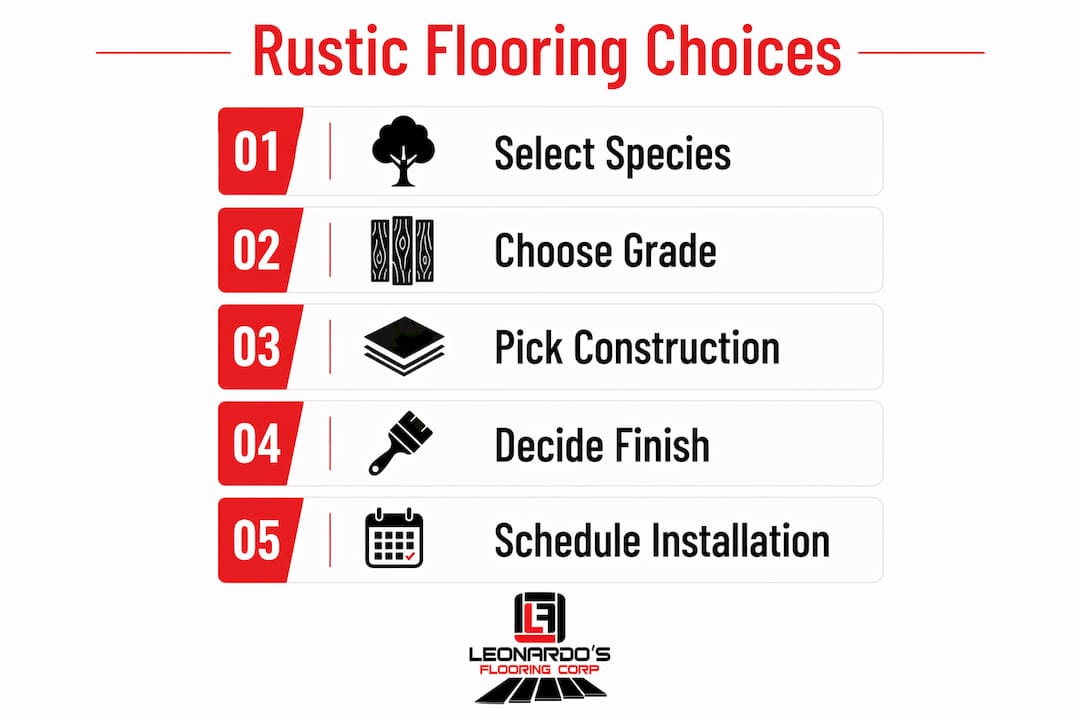
Step-by-step selection process:
- Define your style target: farmhouse, cabin, rustic-modern, or relaxed family space
- Assess traffic level and whether pets are a factor
- Choose species based on hardness, color range, and grain character
- Decide plank width relative to room scale (wide planks for open plans, narrower for smaller rooms)
- Select construction based on subfloor type and environment
- Choose finish based on maintenance tolerance and aesthetic goal
- Order large samples and view them in the actual room at different times of day
- Confirm knot-filling approach and ask for a cut-list sample if possible
Questions to ask your supplier and installer:
- What is the acclimation requirement for this product?
- Are knots filled at the mill, and with what material?
- How many finish coats are applied, and what is the warranty?
- Can I see installed project photos in a similar space?
- What subfloor prep is required for this specific product?
For a broader flooring selection framework, reviewing a decision checklist before you visit a showroom saves considerable time. Coordinating your floor choice with other finishes, including interior door styles, helps the whole room read cohesively.
How to care for rustic hardwood so it ages well
Daily and weekly maintenance:
- Sweep or dust-mop daily in high-traffic areas
- Vacuum weekly using a bare-floor setting (no beater bar)
- Damp-mop with a well-wrung mop and a pH-neutral hardwood cleaner; avoid steam mops and excessive water
- Wipe spills immediately
Protective measures:
- Place entry mats at all exterior doors to trap grit before it reaches the floor
- Use felt pads under all furniture legs
- Area rugs in high-wear zones (under dining tables, in front of sofas)
Refinishing:
Solid rustic hardwood can typically be refinished multiple times depending on wear-layer thickness. Engineered planks with a 4mm+ wear layer can usually be refinished at least once. When knots show wear or open up over time, spot stabilization or filling before refinishing keeps the surface consistent.
Pro Tip: A rustic floor’s patina is the intended outcome, not a maintenance failure. Focus your energy on preventing moisture damage and abrasive grit, which are the two things that actually shorten a floor’s life. Every scratch that blends into the character is one less thing to worry about. For Denver-specific hardwood maintenance routines, the dry climate means humidity control matters as much as cleaning.
Key Takeaways
Rustic hardwood flooring is an appearance grade, not a quality grade, and choosing it correctly comes down to matching species, construction, finish, and character intensity to the specific room and lifestyle.
| Point | Details |
|---|---|
| Grading describes appearance | Rustic Grade (No. 2 Common) covers knots, sapwood contrast, and mineral streaks — not structural weakness. |
| Engineered for flexibility | A 4mm+ wear layer engineered plank handles concrete subfloors and radiant heat better than solid. |
| Price varies widely | Retail material costs range from $5–$12/sq ft for wire-brushed oak, $6–$12/sq ft for hand-scraped planks, $9–$18/sq ft for live-sawn wide plank, and $14–$30/sq ft for reclaimed barnwood. |
| Maintenance is still required | Rustic floors hide wear visually, but grit and moisture still damage the finish and wood. |
| Leonardosflooringcorp | Denver’s Leonardosflooringcorp handles site evaluation, subfloor prep, and full rustic hardwood installation with 10+ years of local experience. |
Why experience matters when installing rustic hardwood
Most installation problems with rustic hardwood don’t start with the wood. They start with what’s underneath it. Subfloor irregularities, hidden moisture sources, and rushed acclimation are the three issues an experienced crew catches before the first board goes down. An inexperienced installer may not recognize that a concrete slab in a Denver basement reads differently in January than in July, or that a knot cluster near a board end needs to be placed away from a high-stress zone.
Before any rustic hardwood installation, a seasoned crew runs through a specific set of on-site checks: moisture readings at multiple points across the subfloor, a flatness assessment with a straightedge, and a dry layout of the first few rows to preview how the character marks will distribute across the room. That last step, the mock layout, is where mixing plank widths and blending boards from different bundles happens. It’s an installer skill that directly affects the final aesthetic and reduces the chance of a callback.
Leonardosflooringcorp has been doing exactly this work in the Denver metro for over 10 years, with 125+ five-star reviews that reflect consistent attention to these pre-installation details. See the full scope of hardwood installation services to understand what a professional site evaluation covers.
Leonardosflooringcorp brings rustic hardwood expertise to Denver
Denver homes present specific challenges for hardwood installation: altitude-driven humidity swings, concrete-slab basements, and radiant heat systems are all common. Leonardosflooringcorp handles every stage of a rustic hardwood project, from site evaluation and subfloor preparation through installation and on-site finishing, with the kind of attention that comes from 10+ years as a trusted local contractor and Home Depot partner.

With 125+ five-star reviews and a track record across both residential and commercial properties in the Denver metro, Leonardosflooringcorp tailors every project to your specific subfloor, budget, and timeline. No generic approaches. If you’re ready to move forward, schedule a hardwood installation consultation and get a written estimate with a clear scope of work.
Useful sources and further reading
Industry association guidance:
- National Wood Flooring Association (NWFA) — grading guidance: the primary U.S. industry source for hardwood flooring grades and installation standards
Supplier and specification resources:
- Understanding Rustic Grade Hardwood — Hardwoods4Less: covers engineered vs. solid options, knot treatment, and finish implications
- The Ultimate Guide to Embracing Rustic Grade Hardwood Flooring — Capital Hardwood Flooring: visual features, sustainability argument, and species overview
- Rustic Wooden Flooring: Pros, Cons, and Buying Guide — D and G Flooring: retail price ranges and installation considerations
- 5 Reasons to Add a Rustic Hardwood Floor to Your Home — Keystone Floor Works: benefits and suitability for high-traffic spaces