
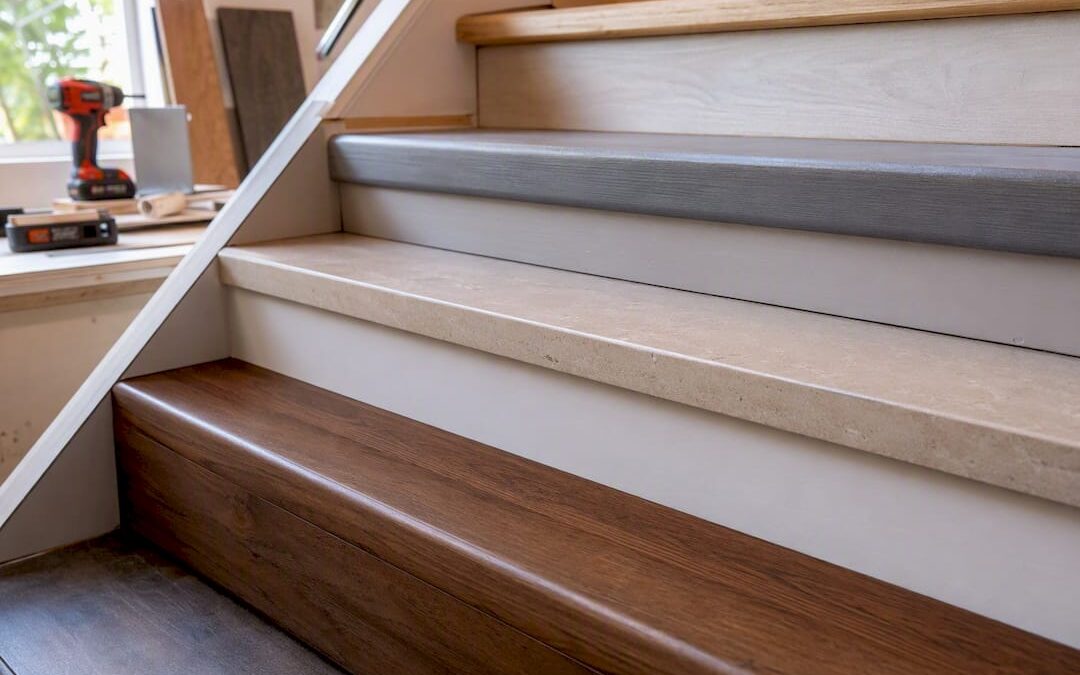
For most homes, white oak is the best all-around stair tread material, and it’s what we specify most often at Leonardosflooringcorp. It balances hardness (Janka rating around 1,360), stain flexibility, and cost better than almost anything else on the market. If you need something tougher underfoot, hard maple edges it out on hardness. If you want a showpiece staircase, black walnut, engineered quartz, or laminated glass with a SentryGlas interlayer deliver the drama, at a real premium in cost and lead time.
Here’s the quick mapping:
- Best for high-traffic family stairs: white oak or hard maple, both solid or engineered.
- Best for a showpiece or low-traffic statement staircase: black walnut, engineered quartz, or laminated glass.
- Best for outdoor or exposed stairs: composite or vinyl treads, or steel plate with an anti-slip coating.
Key Takeaways
White oak remains the most balanced stair tread material for typical residential projects, while stone, glass, and quartz require structural engineering and longer lead times.
| Point | Details |
|---|---|
| White oak is the default | Janka hardness ~1,360 and 40-60 mm thickness make it durable and easy to match to existing floors. |
| Engineer heavy materials early | Stone, quartz, and glass treads need structural review before fabrication, not after. |
| Match thickness to design | Standard treads run 1-1.25 inches; open-riser or floating stairs need 1.5-2 inches for rigidity. |
| Composite and vinyl win outdoors | Lower maintenance and better moisture resistance make them the practical choice for exterior stairs. |
| Leonardosflooringcorp specifies for fit | The company chooses species, thickness, and finish based on structural limits and existing floor matching, not a one-size template. |
Table of Contents
- What are the main stair tread materials to choose from?
- Wood treads: solid species and engineered hardwood options
- Composite, vinyl and other resilient treads
- Tile and stone treads: porcelain, granite and engineered quartz
- Glass treads: structure, safety and the visual payoff
- Metal (steel plate) and concrete treads
- How to choose the right tread material and what to ask your installer
- Frequently asked questions
- Sources
What are the main stair tread materials to choose from?
Seven material categories cover almost every stair project we see: solid wood, engineered hardwood, composite/vinyl, tile or porcelain, natural stone or engineered quartz, glass, and metal or concrete. Each solves a different problem, and none of them is universally “best” once you factor in traffic, budget, and structural limits.
Cost and lead time track closely with material choice. Steel pan treads sit at the low end, engineered hardwood and solid hardwood cost more and take longer to source, and stone or glass land at the premium end with the longest fabrication windows. Here’s how the main categories stack up on the factors that actually change your decision.
| Material | Durability/hardness | Maintenance | Cost band | Slip resistance | Weight impact | Install complexity | Typical thickness |
|---|---|---|---|---|---|---|---|
| Solid wood (oak, maple, walnut) | High (Janka 1,010-1,450) | Refinish every 10 years or more | Mid | Moderate; improves with finish | Light | Moderate | 40-60 mm |
| Engineered hardwood | High, more stable | Low; limited refinishing | Mid to high | Moderate | Light to moderate | Moderate to high (steel subframe) | 50-75 mm |
| Composite/vinyl | Moderate; wear-layer dependent | Very low | Low | Good with textured finish | Very light | Low | 40 mm or less |
| Tile/porcelain/stone | Very high | Low; occasional sealing | Mid to premium | Poor unless honed/textured | Heavy | High | 40 mm or less |
| Glass (laminated) | High if engineered correctly | Moderate; scratch-visible | Premium | Requires slip coating | Moderate | Very high (engineer required) | 40 mm or less |
| Metal/steel | Very high | Low; watch corrosion | Low to mid | Poor without treatment | Heavy | Moderate | 6-12 mm plate |
| Concrete (precast/cast) | Very high | Low | Mid | Poor unless finished | Very heavy | High | 40-60 mm |
Wood treads: solid species and engineered hardwood options
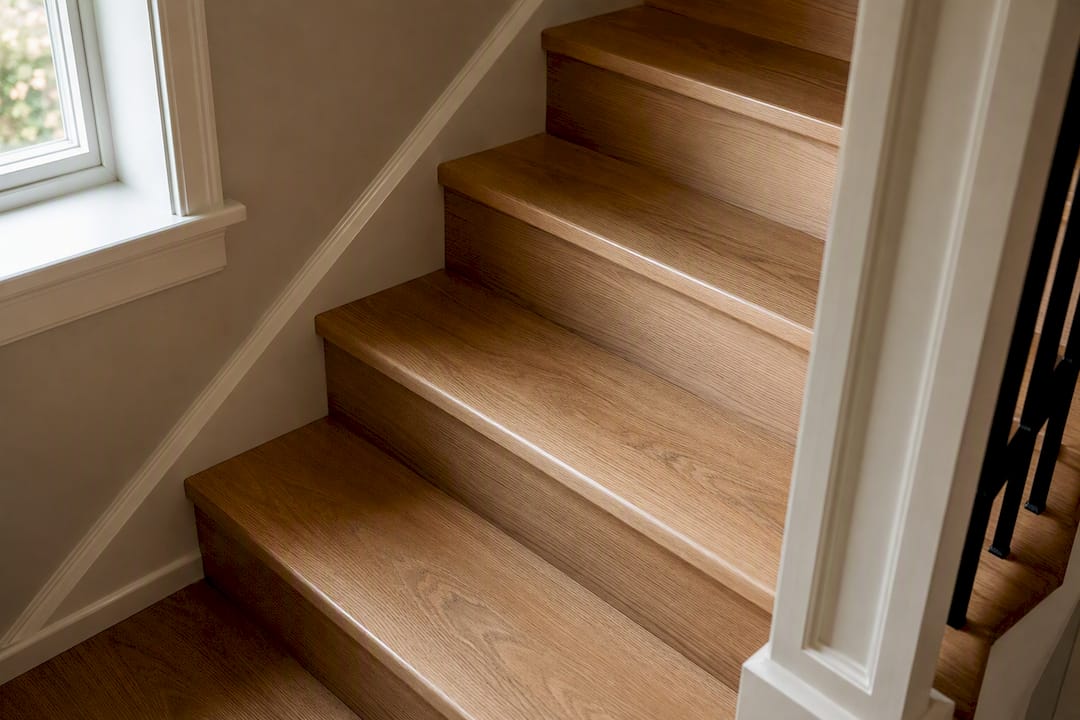
White oak is the material we come back to most often, and for good reason. It takes stain evenly, it’s widely available and dependable to source, and its Janka hardness of roughly 1,360 holds up to decades of foot traffic in a typical family home. Solid white oak treads are usually specified at 40 to 60 mm thick, which gives enough mass for a solid feel without adding unnecessary weight to the stringers.
If you’re weighing species against each other, here’s how the common options compare:
- White oak (Janka ~1,360): the default choice, balanced hardness, straightforward staining, moderate cost.
- Hard maple (Janka ~1,450): harder and more scratch-resistant, but it takes stain unevenly and can look blotchy without a conditioner.
- Black walnut (Janka ~1,010): softer than oak, but prized for its deep, rich color and grain, which makes it a favorite for low-traffic showpiece stairs.
Thickness is where a lot of homeowners get surprised. Standard residential interior treads perform best around 1 to 1.25 inches finished, while open-riser or floating stair designs often call for 1.5 to 2 inches to keep the tread rigid without a riser underneath for support. For very thick, heavy-profile treads (think oversized mono-stringer stairs), we’ll laminate an engineered hardwood wear layer over a steel subframe rather than trying to source solid lumber that thick, which tends to crack and cup as it moves with humidity.
Finish choice matters almost as much as species. A hardwax oil finish gives a warmer, low-sheen look and is easier to spot-repair, but it needs periodic reapplication. Polyurethane holds up longer between refinishes and resists water better, which makes it the more practical pick for a busy entry stair. Either way, solid wood treads can be sanded and refinished multiple times over their life, something composite and laminate options simply can’t do.
Pro Tip: Coordinate your stair tread species and stain with your main floor early, before fabrication starts. Matching an existing white oak floor with a walnut staircase, mid-project, is a much harder and more expensive fix than getting it right up front. If you’re deciding between oak’s neutrality and something with more character, our guide to white oak floors walks through the styling trade-offs in more depth.
Composite, vinyl and other resilient treads
If low maintenance is your top priority, especially outdoors or on a rental property, composite and vinyl treads are the practical answer. They shrug off moisture, temperature swings, and heavy foot traffic without the seasonal movement that plagues solid wood, and that’s exactly why engineered and composite options are the safer call for exterior and high-moisture stairs.
The trade-off is refinishing, or the lack of it. Once the wear layer on a vinyl or composite tread is scratched through, you’re replacing the tread, not sanding it down. Appearance has improved a lot in recent years with realistic wood-grain textures, but up close, it still doesn’t fool anyone standing next to real oak.
Wear-layer thickness is the number to ask about before you buy. Thicker wear layers generally correlate with longer warranty periods, so ask your supplier for the specific wear-layer spec and the warranty term in writing rather than trusting marketing copy alone.
Common places these materials show up:
- Porch and exterior entry stairs exposed to rain and sun.
- Deck stairs where solid wood would need constant sealing.
- Rental properties where low upkeep matters more than showroom looks.
Pro Tip: Check nosing compatibility before you order. Not every composite plank system has a matching pre-formed stair nosing, and a mismatched nosing profile is one of the most common install headaches on vinyl stair jobs. Our step-by-step guide to installing vinyl plank on stairs covers the mounting details in full.
Tile and stone treads: porcelain, granite and engineered quartz
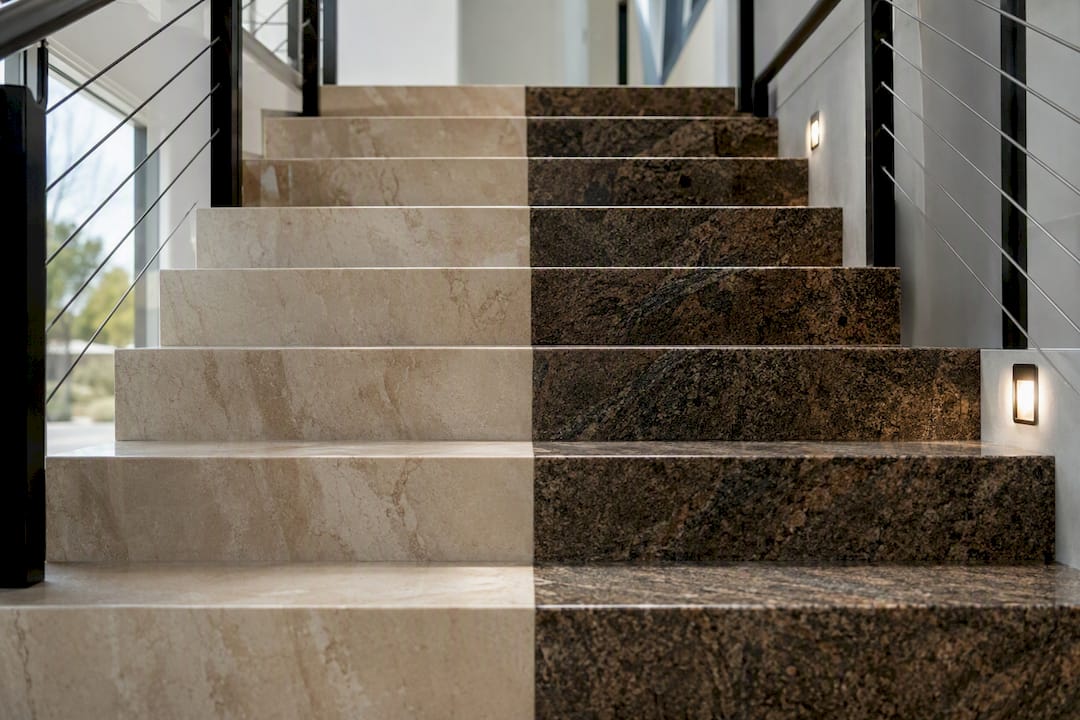
Porcelain and engineered quartz can give you a seamless, monolithic stair, but they demand real engineering for weight before you fall in love with the look. Stone is heavy, and that weight has to go somewhere: heavier stringers, closer bracket spacing, or reinforced framing.
The numbers make the point clearly. A solid granite tread at 50 mm thick, sized around 300 mm by 1,100 mm, can weigh roughly 50 kilograms. Multiply that across a full flight and you understand why stone treads are typically specified thinner, commonly around 40 mm, to keep total load manageable.
Engineered quartz has an edge over natural granite in one respect: it’s manufactured for dimensional stability, so it resists the micro-cracking and color variation that natural stone can develop over time. Porcelain, meanwhile, is lighter and often the fastest of the three to source in standard sizes, though large-format slabs still need careful edge detailing to avoid chipping.
Pro Tip: Bring a structural engineer into the conversation before you finalize any stone or large-format porcelain spec, not after the order is placed. Stringer sizing, bracket type, and even the subfloor below the bottom tread often need adjustment to carry the added load safely.
Pro Tip: Ask for a physical sample tread, not just a slab swatch. Slip resistance and color read very differently under stair lighting than they do on a showroom counter.
Glass treads: structure, safety and the visual payoff
Glass stair treads deliver a visual effect nothing else on this list can match, floating steps that let light pass straight through a staircase, but they require serious engineering and a serious budget to pull off safely. Every glass tread needs to be a laminated, multi-ply safety assembly, never a single sheet of tempered glass alone.
Building codes require treads to withstand a concentrated live load, 1.5 kN at any point on the tread under the BC Building Code, and glass assemblies are typically sized with a structural interlayer like SentryGlas to meet that requirement even if one ply cracks. That sizing calculation is not a DIY exercise; it belongs with a qualified glazing engineer.
Before you commit to glass, confirm three things in writing: an engineer has specified the laminate buildup and interlayer, the top surface has a slip-resistant treatment or applied film, and you have a clear plan (and budget) for replacing a panel if it’s ever damaged.
Metal (steel plate) and concrete treads
Steel plate treads are the honest, cost-effective choice for industrial-style or mono-stringer staircases, while concrete gives you a heavier, more brutalist look at a real weight penalty. Neither pretends to be anything other than what it is, and that’s part of their appeal in modern and loft-style builds.
Plate thickness typically starts around 10 mm for standard residential spans and steps up to 12 mm or more on longer, unsupported runs. Slip resistance has to be engineered in, since bare steel and bare concrete are both dangerously slick when wet:
- Diamond plate or checker plate steel adds mechanical grip.
- Epoxy coatings with grit additives work on both steel and concrete surfaces.
- Welded grating inserts are common on exterior or industrial steel stairs.
Concrete treads come precast or cast in place. Precast is faster to install and more predictable in finish; cast-in-place allows custom shapes but takes longer to cure and inspect. Microcement finishes look striking but are prone to hairline cracking if the substrate moves at all, so they’re a better fit for stable, indoor applications.
Pro Tip: Never leave bare metal or bare concrete untreated on a stair tread. Beyond the slip risk, both materials get noticeably cold underfoot in unheated stairwells, something homeowners rarely think about until the first winter. An epoxy coating solves both problems at once; our epoxy finishes overview breaks down which formulations hold up best on stairs specifically.
How to choose the right tread material and what to ask your installer
For a typical family home with kids, pets, and daily traffic, white oak or hard maple, solid or engineered, is almost always the right call. For an exterior stair, composite or vinyl wins on maintenance. For a showpiece entry stair that people will actually stop and look at, walnut, quartz, or glass earns its higher price tag.
Before you settle on a material, run through this checklist:
- Traffic level: daily family use versus an occasional-use showpiece stair.
- Budget band: low (steel pan, vinyl), mid (solid or engineered wood), or premium (stone, glass).
- Structural constraints: does your existing stringer design support added weight, or does it need reinforcement?
- Finish preference: matte and natural, or high-gloss and formal?
- Refinishing needs: do you want the option to sand and restain in ten years?
- Slip-resistance needs: entry stairs, exterior stairs, and homes with young kids or older adults need this prioritized.
- Lead time: can your project timeline absorb a multi-week wait for stone or glass fabrication?
When you’re talking to an installer, ask these questions directly:
- Has a structural engineer reviewed this design for the material and weight I’ve chosen?
- What exact thickness and material spec are you quoting, and why?
- How will the tread be anchored, and what happens if it needs to come up later for repair?
- What finish do you recommend, and what’s the realistic maintenance schedule?
- What warranty applies to materials and labor, separately?
- Can I see a physical sample or mock-up before you order the full run?
Watch for these red flags before you sign anything:
- No mention of structural engineering for stone, quartz, or glass treads.
- Vague answers about tread thickness or nosing profile.
- An installer who won’t provide a sample tread or reference project photos.
On timeline and cost tiers: expect steel pan and vinyl projects to move fastest and cheapest, solid and engineered wood to sit in the middle with a few weeks of lead time, and stone or glass to add two to four extra weeks for fabrication and engineering sign-off. Our breakdown of common hardwood installation mistakes covers several of these red flags in more detail if wood is your leading candidate.
Installer perspective: why Leonardo’s Flooring Corp often specifies white oak
For most residential stair projects, Leonardosflooringcorp specifies white oak because it consistently hits the right balance of durability, availability, and color matching against existing hardwood floors. It’s rarely the flashiest option on a bid sheet, but it’s the one that ages well and matches almost anything.
In practice, that means:
- Solid treads at 40 to 60 mm thickness for standard runs, engineered-over-steel at 50 to 75 mm for larger mono-stringer designs.
- A preference for hardwax oil on lower-traffic showpiece stairs and polyurethane on high-traffic entries.
- Letting lumber acclimate on-site before installation, then setting treads with construction adhesive plus mechanical fasteners to prevent the squeaks that show up a year or two after a rushed install.
Pro Tip: Lock in your stain and finish choice before fabrication begins, not after the treads arrive on site. Adjusting color after the fact means re-sanding material that’s already been cut and fitted.
A practical note before you hire anyone
Every material on this list can work beautifully or fail badly, and the difference almost always comes down to decisions made before installation day, not during it. Species selection, thickness, structural review, and finish schedule all need to be locked in early, while changes are still cheap.
Get the structural and slip-safety details in writing before work begins. A verbal assurance about engineering or anchoring means nothing once the treads are cut and the crew has left the site.
Quick help choosing and installing stair treads
If you’ve narrowed your options down to a shortlist but still need eyes on your specific stairwell, structural limits, and finish goals, that’s exactly the conversation we have with homeowners every week.

Leonardosflooringcorp handles the parts most DIY research can’t: confirming your stringers can carry the material you want, sourcing matched samples before you commit, and installing it right the first time. We offer:
- Stair tread fabrication and installation for solid and engineered wood species
- Engineered-over-steel solutions for thick, heavy-profile treads
- Finish coordination with your existing hardwood floors
- Structural coordination with engineers when stone, quartz, or glass is on the table
If you’re ready to move from research to a real quote, start with our hardwood floor installation services page and tell us about your staircase. We’ll walk the site, talk through your shortlist, and give you a straight answer on what fits your budget and timeline.
Frequently asked questions
What is the most durable stair tread material?
Hard maple edges out white oak on raw Janka hardness (roughly 1,450 versus 1,360), but engineered quartz and porcelain outperform both woods on wear resistance and are less prone to scratching over time.
Is wood or carpet better for stair treads?
Wood holds up longer and can be refinished multiple times, while carpet needs full replacement every several years and traps more dirt and allergens. Carpet does offer better slip resistance and a softer feel underfoot, which matters in homes with young children or older adults.
What is the best non-slip option for stair treads?
Textured composite or vinyl treads, honed stone finishes, or steel with a diamond-plate or epoxy coating all provide reliable grip. For wood treads, a low-sheen finish with an anti-slip additive works better than high-gloss polyurethane.
How thick should a stair tread be?
Standard residential interior treads perform best around 1 to 1.25 inches finished. Open-riser or floating stair designs typically need 1.5 to 2 inches for adequate rigidity without a supporting riser underneath.
Do stone or glass stair treads need an engineer?
Yes. Both materials carry significant weight or safety implications, and a structural or glazing engineer should size the tread, interlayer, and support framing before fabrication begins.
Sources
- Mono Stringer Stair Tread Materials: Oak, Walnut, Steel & Stone Compared | Jeff and Simon Ironworks
- Stair Tread Materials Guide, Vancouver 2026 | Vancouver Stairs
- Theplywood
- Plywood Stair Treads – Fine Homebuilding (forum discussion)