
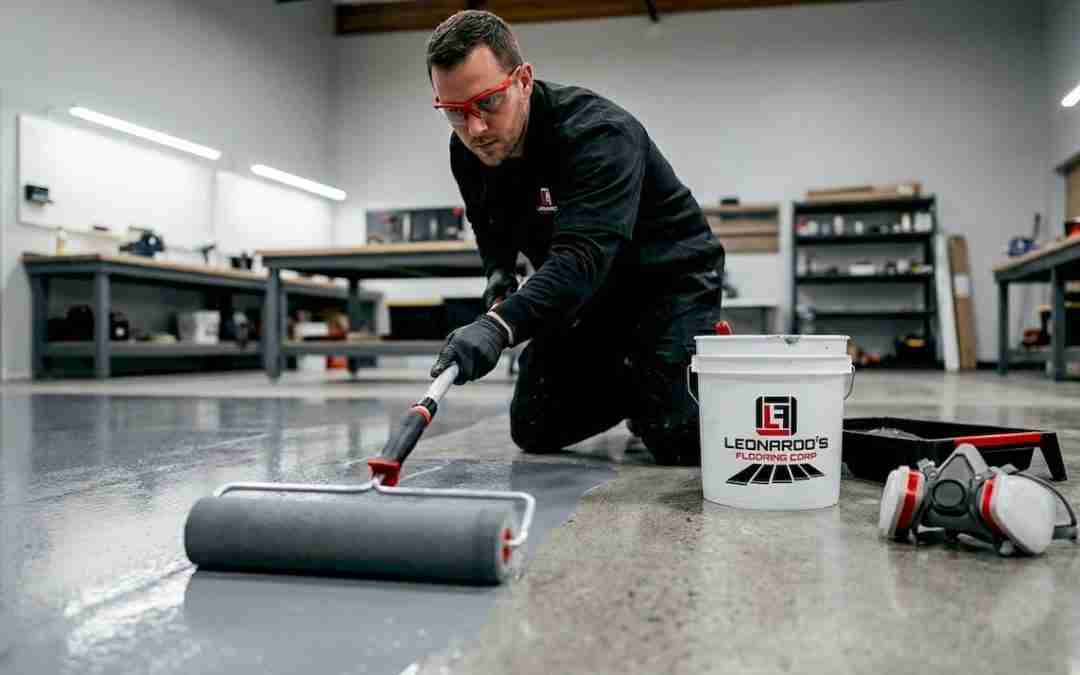
Epoxy finishes are specialized two-part resin coatings applied directly to concrete floors to create a hard, chemically resistant, and visually customizable surface. The industry term is “epoxy floor coating system,” and it covers everything from basic garage sealers to premium metallic decorative floors in commercial showrooms. Epoxy flooring systems commonly last 10 to 20 years or longer depending on resin type, system thickness, and traffic volume. That lifespan makes epoxy one of the most cost-effective flooring investments available for both homeowners and businesses in Denver and beyond.
1. What an epoxy finishes overview actually covers
An epoxy finishes overview starts with one fact: not all epoxy products are the same. The term covers a wide spectrum of coating systems, from thin paint-like sealers to thick, multi-layer broadcast systems with decorative chips and polyaspartic topcoats. Understanding the differences between these systems is what separates a floor that lasts five years from one that lasts twenty. The sections below break down each finish type, its performance profile, and where it fits best.
2. Types of epoxy finishes and their key characteristics
Choosing the right finish type is the single most important decision in any epoxy flooring project. Each system has a distinct performance profile, application complexity, and price point.
-
100% solids epoxy. This is the thickest and most durable option available. 100% solids epoxy coatings provide excellent abrasion resistance, chemical resistance, and adhesion, with film builds ranging from 10 to 60 mils. It is the go-to choice for industrial floors, commercial kitchens, and any space with heavy equipment or chemical exposure.
-
Self-leveling epoxy. This system flows across the slab and settles into a glassy, smooth surface. It works well in warehouses, retail showrooms, and basements where a clean, uniform look matters. Application requires careful mixing and a flat substrate.
-
Metallic epoxy. Metallic pigments suspended in the resin create swirling, three-dimensional effects that mimic marble or lava. The results are visually striking, but the technique requires a skilled installer. Metallic epoxy is popular in restaurants, boutiques, and upscale residential spaces.
-
Flake or chip epoxy. Colored vinyl flakes are broadcast into a wet base coat, then sealed with a topcoat. Decorative finishes like flake systems improve slip resistance and hide surface imperfections. Residential garages are the most common application.
-
Quartz-filled epoxy. Quartz aggregate is blended into the resin or broadcast on top, creating a textured, high-traction surface. This system handles heavy foot traffic and moisture exposure well, making it the standard choice for commercial restrooms, locker rooms, and food processing areas.
-
Terrazzo epoxy. Marble or glass chips are embedded in a colored epoxy base and then ground and polished to a smooth finish. Terrazzo epoxy is a premium decorative option with a lifespan that can exceed 20 years with proper maintenance.
Pro Tip: When comparing finish types, always ask for the total dry film thickness of the full system, not just the base coat. A thick decorative layer on a thin primer adds up to a thin system overall.
3. How epoxy finishes compare in durability, maintenance, and cost
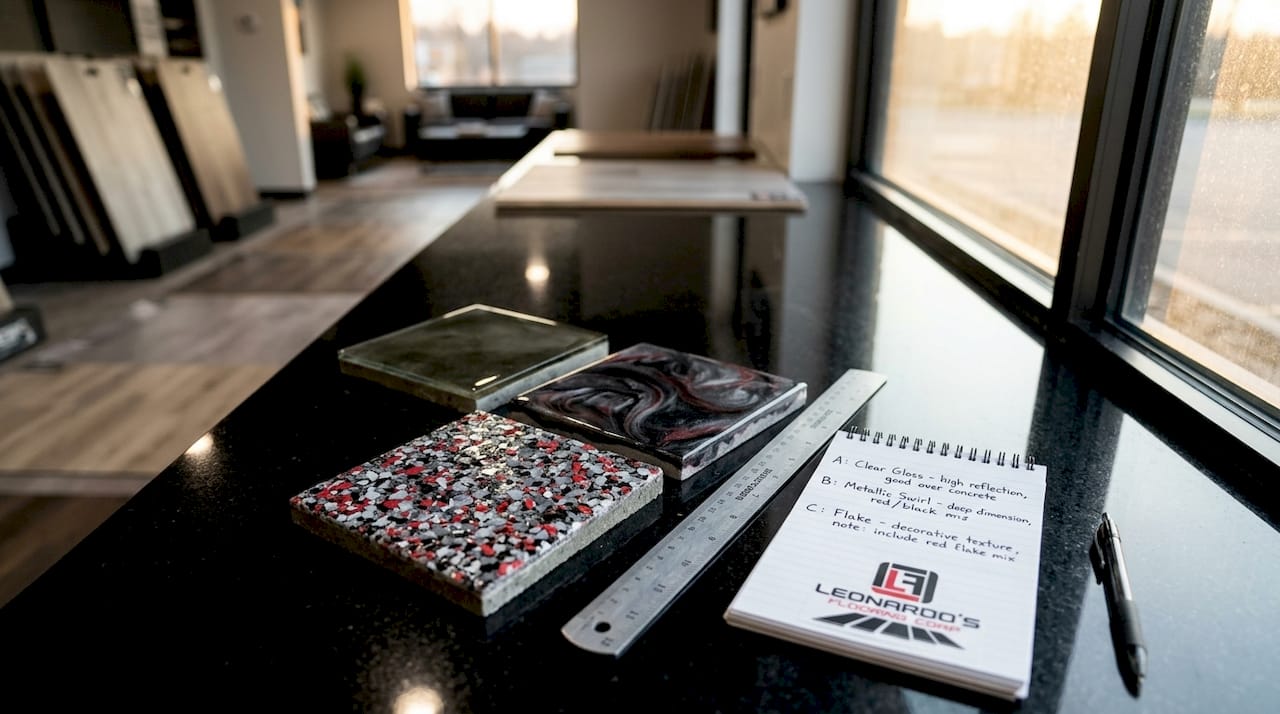
Thickness and topcoat chemistry determine wear life more than pigment or decorative options. A metallic floor with a thin topcoat will wear faster than a plain flake floor with a polyaspartic topcoat. That is the single most misunderstood fact in epoxy flooring.
| Finish type | Typical lifespan | Relative cost | Maintenance frequency | Best use |
|---|---|---|---|---|
| 100% solids epoxy | 15 to 20+ years | High | Every 6 to 12 months | Industrial, commercial kitchens |
| Self-leveling epoxy | 10 to 15 years | Moderate | Every 3 to 6 months | Warehouses, showrooms |
| Metallic epoxy | 10 to 15 years | High | Every 3 to 6 months | Retail, residential accent floors |
| Flake/chip epoxy | 10 to 20 years | Moderate | Every 2 to 6 months | Garages, basements |
| Quartz-filled epoxy | 15 to 20+ years | Moderate to high | Monthly in heavy use | Commercial restrooms, food service |
| Terrazzo epoxy | 20+ years | Very high | Every 6 to 12 months | Lobbies, premium retail |
UV exposure is a factor that most buyers overlook. Standard epoxy resins yellow under sunlight, which is why outdoor or sun-exposed floors need a UV-stable topcoat. Polyaspartic topcoats greatly enhance wear life and resistance to yellowing compared to standard epoxy finishes. For any floor near windows or exterior doors, specifying a polyaspartic or aliphatic urethane topcoat is worth the added cost.
Maintenance frequency varies by use intensity: light residential use requires attention every 6 to 12 months, moderate commercial use every 2 to 4 months, and heavy industrial use monthly or more. Skipping maintenance cycles does not just affect appearance. It accelerates wear on the topcoat and shortens the life of the entire system.
4. Common epoxy coating applications and how to choose the right one
Matching the finish type to the actual use of the space is where most homeowners and facility managers go wrong. Choosing a metallic epoxy for a busy warehouse because it looks great is a recipe for early failure.
Residential applications center on garages, basements, and workshops. Flake systems are the most popular choice because they hide tire marks, resist oil and grease, and add traction. Basements with moisture concerns benefit from a vapor barrier primer before any coating is applied. For a deeper look at residential epoxy options, Leonardo’s Flooring Corp covers the specifics for Denver homes in detail.
Commercial and high-traffic applications demand thicker systems. Warehouses and distribution centers typically specify 100% solids epoxy with a quartz broadcast for traction. Commercial kitchens require seamless, chemical-resistant systems that meet health code standards. Showrooms and retail floors often use self-leveling or metallic systems for their visual impact.
Slip resistance is a functional requirement that should drive finish selection in wet or high-traffic areas. Adding aluminum oxide or silica sand to the topcoat increases traction without changing the visual profile significantly.
Pro Tip: Always check concrete moisture levels before selecting a finish system. A slab with high vapor transmission needs a moisture-tolerant primer or a vapor barrier coating as the first layer. Skipping this step is the leading cause of delamination.
For businesses evaluating flooring options across multiple spaces, the commercial flooring guidance from Leonardo’s Flooring Corp addresses how to match finish systems to operational demands.
5. What epoxy floor installation actually involves
Installation is where the gap between a five-year floor and a twenty-year floor is created. The process is more demanding than most people expect, and the preparation phase is where most failures originate.
-
Concrete profiling. The slab must be mechanically ground or shot-blasted to open the surface and create a profile that the epoxy can bond to. Skipping this step and applying epoxy to a smooth or contaminated slab is the leading cause of peeling.
-
Moisture testing. Tape a 2-foot plastic sheet to the slab for 24 hours. Condensation on the underside signals a vapor transmission problem that must be addressed before coating. Ignoring moisture is the second most common cause of delamination.
-
Primer coat. A penetrating epoxy primer seals the slab and improves adhesion for subsequent coats. Some moisture-tolerant primers also act as vapor barriers.
-
Base coat and decorative layer. The base coat carries the color and, in flake or quartz systems, the decorative broadcast material. This layer sets the visual character of the floor.
-
Topcoat. The topcoat determines wear resistance, UV stability, and chemical resistance. Polyaspartic topcoats cure faster and outperform standard urethane in abrasion resistance.
Epoxy floor curing typically spans 7 to 14 days, with active work concentrated in 3 to 4 days. Each coat requires a specific recoat window. Rushing this process by walking on a floor before it reaches full cure is a common DIY mistake that causes surface damage.
Pro Tip: Temperature matters during installation. Epoxy applied below 50°F or above 90°F will not cure correctly. In Denver, schedule installations during moderate weather and avoid early morning applications when slab temperatures are still cold.
6. How to maintain epoxy finishes to maximize lifespan
Even the most durable epoxy system needs consistent care. Maintenance planning is non-negotiable for maximizing lifespan, and the routine is straightforward once it is established.
-
Use pH-neutral cleaners. Epoxy floors require pH-neutral cleaners and prompt spill cleanup to prevent chemical degradation. Acidic or alkaline cleaners strip the topcoat over time. Products like Simple Green diluted in water are a reliable choice.
-
Clean up spills immediately. Chemical spills, especially oils, solvents, and battery acid in garages, accelerate topcoat wear if left to sit. Wipe them up within minutes, not hours.
-
Sweep or dust mop regularly. Abrasive grit tracked in from outside acts like sandpaper on the topcoat. A daily or weekly dry sweep prevents micro-scratching that dulls the finish over time.
-
Address scratches early. Light surface scratches can be buffed out with a fine-grit pad. Deep gouges that reach the base coat need a spot repair with matching epoxy before they expand.
-
Manage UV exposure. If the floor receives direct sunlight, apply window film or UV-blocking shades to slow yellowing. Alternatively, specify a UV-stable polyaspartic topcoat from the start.
-
Schedule recoating. Even a well-maintained floor will need a fresh topcoat every 5 to 10 years depending on traffic. Recoating before the topcoat wears through to the base coat is far less expensive than a full system replacement.
Key takeaways
Epoxy finish durability is determined by system thickness and topcoat chemistry, not by decorative elements, making preparation and product selection the two decisions that matter most.
| Point | Details |
|---|---|
| System thickness drives lifespan | Higher mil thickness and polyaspartic topcoats produce floors that last 15 to 20+ years. |
| Preparation prevents failure | Moisture testing and concrete profiling prevent the majority of delamination failures. |
| Match finish to application | Flake systems suit garages; quartz-filled systems suit commercial kitchens and wet areas. |
| Maintenance extends value | pH-neutral cleaning and scheduled recoating protect the topcoat and delay full replacement. |
| Topcoat chemistry matters | Polyaspartic topcoats outperform standard urethane in UV resistance and abrasion resistance. |
What ten years of epoxy projects taught me about getting it right
Most homeowners come to us focused on the decorative finish. They want the metallic swirl or the flake color blend, and that is completely understandable. The visual results are genuinely impressive. But after a decade of installing epoxy floors across Denver, the floors that fail are almost never the ones with the wrong color. They are the ones where someone skipped the moisture test or rushed the cure window.
The insight that changed how I approach every project is this: the finish system is only as strong as the slab preparation beneath it. A premium metallic epoxy on a poorly prepped slab will peel within two years. A basic flake system on a properly profiled, moisture-tested slab will look great for fifteen. That is not an opinion. It is what the data on epoxy floor failures consistently shows.
My other strong recommendation is to treat the finish and topcoat as a system, not as separate purchases. Buying a base coat from one manufacturer and a topcoat from another introduces compatibility risks that are not worth the small cost savings. Specify the full system from a single source and follow the manufacturer’s recoat windows exactly.
Finally, plan your maintenance before the floor goes down. Know what cleaner you will use, how often you will sweep, and when you will schedule the first recoat. The floors that look great after ten years are not the ones with the most expensive finish. They are the ones with the most consistent maintenance.
— Jim
Get expert epoxy floor coating in Denver
Leonardo’s Flooring Corp has installed epoxy floor coating systems across the Denver metro for over ten years, handling everything from residential garages to commercial warehouses. Every project starts with a proper moisture assessment and concrete profile, because that is what separates a floor that lasts from one that peels. Whether you need a decorative flake system for your basement or a high-build quartz system for a commercial kitchen, the team at Leonardo’s Flooring Corp will match the right system to your space and install it correctly the first time. Explore the full range of epoxy floor coating services or read the detailed Denver homeowner’s guide to get started.
FAQ
How long do epoxy floor coatings last?
Epoxy flooring systems typically last 10 to 20 years or longer, depending on system thickness, topcoat chemistry, and traffic volume. Polyaspartic topcoats and higher mil builds extend lifespan significantly.
What is the difference between epoxy and polyurethane finishes?
Epoxy provides a hard, chemically resistant base layer with strong adhesion to concrete, while polyurethane and polyaspartic topcoats add UV stability and abrasion resistance on top. Most professional systems use both: epoxy as the foundation and a urethane or polyaspartic topcoat as the wear layer.
Can I apply epoxy flooring myself?
DIY epoxy application is possible for basic flake systems, but surface prep failures and moisture issues cause the majority of installation failures. Proper concrete grinding and moisture testing require equipment most homeowners do not own, making professional installation the lower-risk choice for floors expected to last.
How do I maintain an epoxy floor?
Use pH-neutral cleaners, sweep regularly to remove abrasive grit, and clean up chemical spills immediately. Maintenance intervals range from monthly for heavy commercial use to every 6 to 12 months for light residential use.
What type of epoxy finish is best for a garage?
Flake or chip broadcast systems are the most popular choice for residential garages because they hide tire marks, improve traction, and resist oil and grease. Pairing a flake base coat with a polyaspartic topcoat gives the best combination of durability and appearance for typical garage conditions.