

Your floors take more abuse than almost any other part of your building. They carry thousands of footsteps daily, absorb spills, endure equipment loads, and shape the first impression every customer and employee forms the moment they walk in. Getting your flooring wrong means higher maintenance costs, safety liabilities, and a space that fights against your brand instead of supporting it. These flooring tips for businesses cut through the noise and give you a practical framework for making decisions that hold up for years.
Table of Contents
- Key takeaways
- 1. Start with the right flooring tips for businesses framework
- 2. Know your flooring materials before you commit
- 3. Match your flooring to your specific business environment
- 4. Use a comparison table to evaluate your options side by side
- 5. Build a floor maintenance plan before installation day
- 6. Factor in installation quality as part of your flooring investment
- My honest take on commercial flooring decisions
- Ready to put these tips to work in your Denver space?
- FAQ
Key takeaways
| Point | Details |
|---|---|
| Prioritize total cost of ownership | Upfront price rarely tells the full story; factor in maintenance, lifespan, and disruption costs. |
| Match flooring to function | Different zones in your facility need different materials based on traffic, moisture, and noise demands. |
| ADA compliance is non-negotiable | Slip resistance and transition height requirements carry real legal risk if ignored. |
| Acoustics affect productivity | Noise from hard floors can cut office productivity significantly; plan for sound control early. |
| Maintenance planning extends lifespan | A consistent care routine protects your investment and delays costly replacement. |
1. Start with the right flooring tips for businesses framework
Before you look at a single sample or request a quote, you need a decision framework. Most businesses skip this step and end up choosing based on looks alone, which almost always leads to regret.
Start by mapping your space into zones based on three factors: traffic volume, moisture exposure, and noise sensitivity. A reception area, a break room, and a warehouse floor are completely different environments that demand completely different materials. Treating them the same way is one of the most expensive mistakes you can make.
From there, build your evaluation around these criteria:
- Traffic and wear: High-traffic corridors need a wear layer or surface hardness that matches the load. Luxury vinyl tile for heavy commercial use requires a wear layer of 20 to 28 mil to hold up over time.
- Maintenance expectations: Some floors need daily mopping and annual waxing. Others need almost nothing. Frequent waxing and polishing adds thousands to your annual operating budget, so factor that in before you commit.
- Slip resistance and ADA compliance: The Americans with Disabilities Act requires a slip resistance SCOF of at least 0.6 on level floors and 0.8 on ramps. Transitions between flooring types cannot exceed a quarter inch without a ramp. Non-compliance creates real legal exposure.
- Acoustic performance: Noise is a bigger problem than most business owners realize. Excessive noise reduces office productivity by up to 66%, which makes your flooring choice a productivity decision, not just an aesthetic one.
- Budget across the full lifecycle: Compare materials on total cost of ownership, not just the installation quote.
Pro Tip: Ask your flooring contractor to provide a five-year cost projection that includes cleaning supplies, professional maintenance visits, and expected repair frequency. That number will tell you far more than the per-square-foot install price.
2. Know your flooring materials before you commit
This is where most commercial flooring advice gets vague. Here is a clear breakdown of the materials you will actually encounter and where each one makes sense.
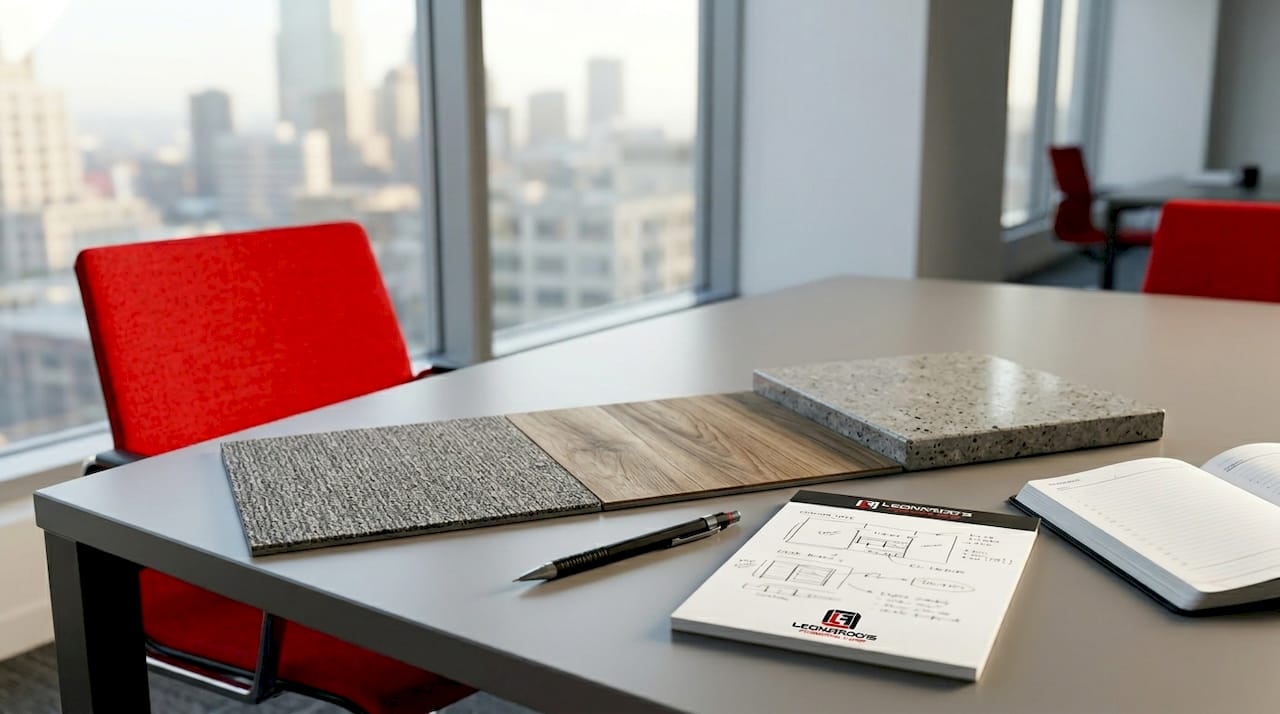
Carpet tile is the go-to choice for open-plan offices. Carpet tile installed at $2 to $6 per square foot with a 10 to 15 year lifespan, and its modular format means you replace only the damaged tiles instead of tearing out an entire floor. Acoustically, carpet tile with cushion backing achieves 13 to 19 dB of sound reduction, which is meaningful in a busy workspace.
Luxury vinyl tile (LVT) has become the dominant choice for commercial spaces that need durability with a polished look. It runs $3 to $12 per square foot installed and lasts 15 to 20 years with the right wear layer. It handles moisture, resists scratching, and cleans easily. You can see specific LVT installation options for commercial environments if you want to compare specs before your next project.
Polished concrete costs $3 to $8 per square foot installed and lasts 25 years or more with minimal ongoing cost. It works beautifully in showrooms, breweries, and modern retail spaces. The tradeoff is comfort and acoustics. It is hard on legs during long shifts and reflects sound rather than absorbing it.
Rubber flooring belongs in gyms, utility corridors, and anywhere impact absorption matters. It is slip-resistant, quiet underfoot, and forgiving on joints.
Porcelain tile handles heavy foot traffic and moisture exceptionally well, making it the right call for lobbies, restrooms, and food service areas. It is durable and easy to sanitize.
Epoxy floor coatings run $5 to $12 per square foot and are the right answer for warehouses, commercial kitchens, and any space where chemical resistance and waterproofing are priorities.
| Flooring type | Installed cost | Lifespan | Best use case |
|---|---|---|---|
| Carpet tile | $2 to $6/sq ft | 10 to 15 years | Open offices, conference rooms |
| Luxury vinyl tile | $3 to $12/sq ft | 15 to 20 years | Offices, retail, healthcare |
| Polished concrete | $3 to $8/sq ft | 25+ years | Showrooms, industrial, retail |
| Epoxy coating | $5 to $12/sq ft | 10 to 20 years | Warehouses, kitchens, garages |
| Porcelain tile | $4 to $10/sq ft | 20+ years | Lobbies, restrooms, food service |
3. Match your flooring to your specific business environment
Choosing flooring for retail is a different conversation than choosing flooring for a law office or a food production facility. The material that earns top marks in one setting can be a liability in another.
Office environments need to balance acoustics, comfort, and professional appearance. A hybrid approach works well here. Combining carpet tile zones with hard flooring like LVT gives you the acoustic control of soft surfaces in collaboration areas while keeping hard, easy-to-clean surfaces in corridors and entry points. This is not just a design trend. It is a practical solution to the noise and maintenance challenge that open-plan offices create.
Retail spaces prioritize appearance and durability in roughly equal measure. Customers notice worn, scuffed, or stained floors immediately. LVT and polished concrete both perform well here because they hold up under cart traffic and foot volume while staying visually sharp. The flooring selection guide for 2026 covers this in more depth if you are working through a retail renovation.
Healthcare and food service environments require slip resistance and seamless surfaces that do not trap bacteria. Epoxy coatings and commercial-grade sheet vinyl are the standard choices. ADA compliance is especially critical in these settings, where both patients and staff are at elevated risk of slip-and-fall incidents.
Industrial and warehouse spaces need floors that can handle equipment loads, chemical spills, and constant movement. Epoxy coatings are the clear leader here. They are waterproof, chemical-resistant, and meet health codes for commercial kitchen environments.
Pro Tip: For spaces with mixed uses, plan your flooring zones before you finalize your layout. It is far cheaper to design transitions into the original installation than to cut and patch them in later.
4. Use a comparison table to evaluate your options side by side
Before you make a final decision, put your top two or three options in a side-by-side comparison across the factors that matter most to your business. Here is a practical framework:
| Factor | Carpet tile | LVT | Polished concrete | Epoxy |
|---|---|---|---|---|
| Noise control | Excellent | Moderate | Poor | Poor |
| Moisture resistance | Low | High | High | Very high |
| Maintenance effort | Low to moderate | Low | Very low | Low |
| Comfort underfoot | High | Moderate | Low | Low |
| ADA slip resistance | Good | Good | Requires sealer | Excellent |
| Upfront cost | Low | Moderate | Low to moderate | Moderate |
This kind of comparison forces you to weigh tradeoffs honestly instead of defaulting to the cheapest option or the one that looks best in the showroom.
5. Build a floor maintenance plan before installation day
The single most overlooked piece of commercial flooring advice is this: your maintenance plan should be finalized before the floor goes in, not after. Different materials require completely different care routines, and using the wrong cleaning products on the wrong floor can void warranties and accelerate wear.
Here is a practical maintenance approach by flooring type:
- Carpet tile: Vacuum daily in high-traffic areas. Address spills immediately with a clean cloth and a pH-neutral cleaner. Schedule professional hot-water extraction every six to twelve months depending on traffic volume.
- LVT: Sweep or dust-mop daily. Damp-mop weekly with a manufacturer-approved cleaner. Avoid steam mops, which can damage adhesive and warp planks over time.
- Polished concrete: Dust-mop daily to prevent grit from scratching the surface. Reapply a penetrating sealer every one to three years based on traffic. Avoid acidic cleaners, which etch the finish.
- Epoxy: Sweep regularly and mop with a mild detergent. Inspect annually for chips or peeling, especially near loading areas. Address damage quickly before moisture gets underneath.
- Porcelain tile: Mop with a neutral pH cleaner. Re-grout damaged or cracked grout lines promptly to prevent water infiltration and bacterial growth.
For any flooring type, professional floor cleaning services can extend the life of your surface and catch early signs of wear before they become expensive repairs. Also review your warranty documentation carefully. Many manufacturers require proof of professional maintenance to honor warranty claims.
6. Factor in installation quality as part of your flooring investment
The best flooring material installed poorly will fail ahead of schedule. Subfloor preparation is where a lot of commercial projects cut corners, and it is almost always a mistake. An uneven or damp subfloor causes LVT to buckle, tile to crack, and epoxy to delaminate. These are not warranty issues. They are installation issues, and they come out of your pocket.
When you are vetting contractors, ask specifically about their subfloor inspection and preparation process. A contractor who skips this step or gives you a vague answer is a contractor who will cost you more in the long run. The role of flooring contractors in project planning covers what to expect from a professional installation team and what questions to ask before you sign anything.
Scheduling matters too. Commercial flooring installation in an occupied building needs to be phased to minimize disruption. A good contractor will work with your operating hours and give you a realistic timeline with milestones, not just a completion date.
My honest take on commercial flooring decisions
I have worked on enough commercial flooring projects to tell you that the biggest regrets I see come from two places. The first is choosing on price alone. A floor that costs 30% less to install but requires three times the maintenance will cost you more within five years. I have seen it happen repeatedly, and the math never lies.
The second regret is ignoring acoustics until it is too late. Business owners focus on durability and appearance, which makes sense. But in open-plan offices especially, the noise problem from hard floors is real and it is expensive to fix after the fact. Adding acoustic underlayment or carpet tile zones during installation costs a fraction of what a retrofit costs later.
What I have found actually works is treating flooring as a systems decision. Think about the floor in combination with your ceiling height, your furniture layout, and your cleaning crew’s capabilities. A beautiful polished concrete floor in a call center is a productivity disaster. A carpet tile office with no hard-surface break rooms becomes a maintenance headache. The materials work best when they are matched to the whole environment, not just the square footage.
If you are working with a contractor who does not ask about your operations before recommending a material, find a different contractor.
— Jim
Ready to put these tips to work in your Denver space?
Leonardosflooringcorp brings over 10 years of commercial and residential flooring experience to every project in the Denver metro area. Whether you are outfitting a new office, refreshing a retail space, or upgrading an industrial facility, the team at Leonardosflooringcorp handles the full scope of work from subfloor preparation through final installation.
From hardwood floor installation to vinyl and LVT options, tile floor installation, and epoxy floor coatings, Leonardosflooringcorp delivers quality workmanship with honest pricing and no surprises. With 125+ five-star reviews and a track record of tailored commercial projects, they are the team Denver business owners call when the floor actually matters. Reach out for a consultation and get a recommendation built around your specific space, budget, and timeline.
FAQ
What flooring works best for high-traffic commercial spaces?
Luxury vinyl tile and polished concrete are the top performers in high-traffic commercial environments. LVT offers durability and easy maintenance at $3 to $12 per square foot installed, while polished concrete lasts 25 years or more with minimal upkeep.
How do I make my commercial floors ADA compliant?
ADA compliance requires a slip resistance SCOF of at least 0.6 on level floors and 0.8 on ramps, with floor transitions no higher than a quarter inch without a ramp. Choose flooring materials with certified slip resistance ratings and confirm compliance with your installer before the project begins.
What is the most affordable flooring solution for offices?
Carpet tile is typically the most affordable option, running $2 to $6 per square foot installed, with the added benefit of easy partial replacement when individual tiles wear out or get damaged.
How often should commercial floors be professionally maintained?
Most commercial floors benefit from professional maintenance every six to twelve months depending on traffic volume and flooring type. Carpet tile needs periodic hot-water extraction, while hard surfaces like LVT and concrete need periodic sealing or refinishing to maintain their protective layer.
Does flooring really affect office productivity?
Yes. Excessive noise from hard floor surfaces can reduce office productivity by up to 66%. Acoustic flooring choices like carpet tile with cushion backing reduce noise by 13 to 19 dB, making flooring selection a direct factor in how well your team performs.