
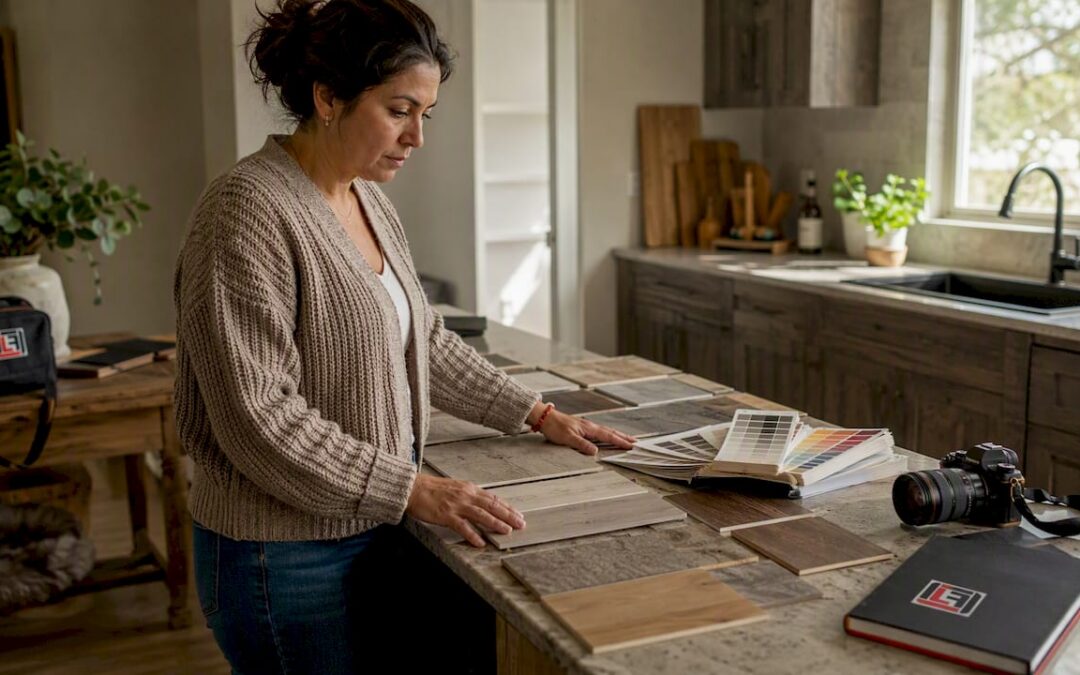
For most Centennial homes, waterproof SPC rigid-core LVP with a 20-mil wear layer is the single best all-around choice, followed by porcelain tile in wet zones, engineered hardwood in formal living areas, and carpet in bedrooms. That shortlist covers roughly 90% of what Centennial families actually need.
Here’s the quick version:
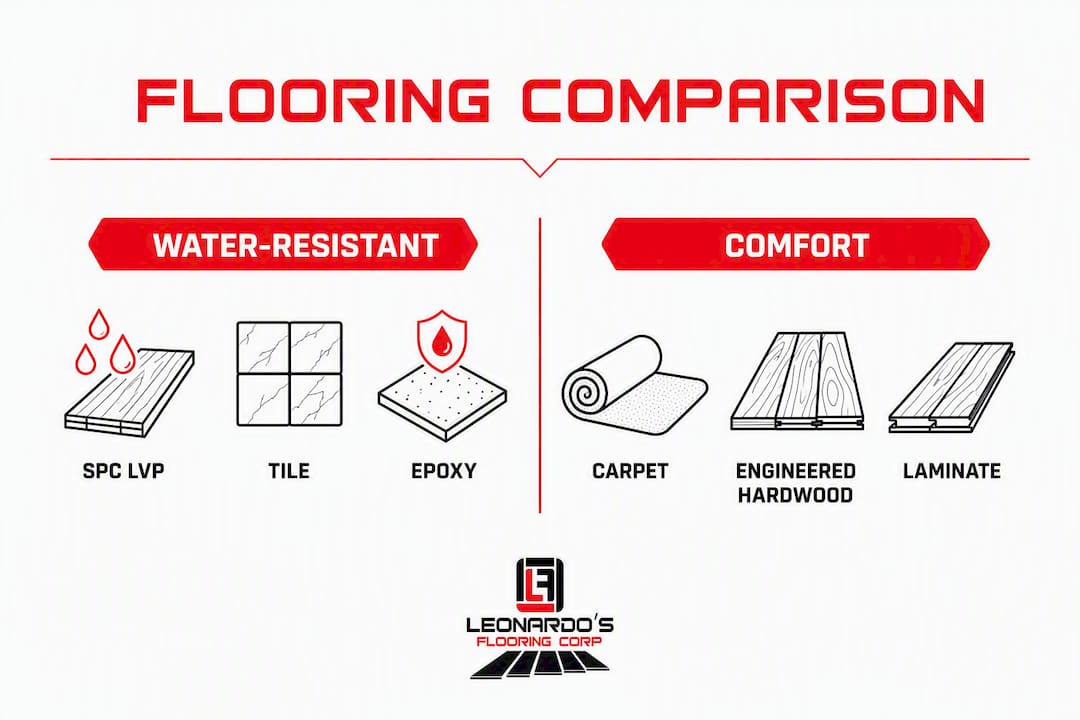
- Waterproof SPC LVP (20-mil wear layer): Living rooms, hallways, kitchens, basements, mudrooms
- Porcelain or ceramic tile: Bathrooms, laundry rooms, entryways with heavy snow traffic
- Engineered hardwood: Formal living rooms, dining rooms, main-floor bedrooms
- Solid hardwood: Upstairs bedrooms and living areas away from moisture risk
- Carpet: Bedrooms, playrooms, finished basement rec rooms
- Epoxy floor coating: Garages and unfinished basements
One professional standard worth knowing before you shop: a 20-mil wear layer is the minimum recommended spec for households with pets and children. Anything thinner shows scratches within a year in active homes. The Rule of 3 design principle, which limits a home to three distinct flooring materials, keeps your selections cohesive and protects resale value. Leonardosflooringcorp helps Centennial homeowners plan both.
Table of Contents
- How does Centennial’s climate change your flooring choices?
- What are the best flooring materials for Centennial homes?
- How do you choose the right flooring for each room?
- What flooring regrets do Centennial homeowners have most often?
- What does a typical flooring installation look like for a 1,000 sq ft project?
- How do you maintain floors through Colorado’s seasons?
- Leonardosflooringcorp: local flooring expertise for Centennial homes
- Key Takeaways
- What Centennial homeowners actually need from their floors
- Useful sources and local references
How does Centennial’s climate change your flooring choices?
Colorado’s Front Range climate is genuinely hard on floors. Centennial sits at roughly 5,900 feet, where winters are dry and cold, summers bring afternoon humidity spikes, and the temperature can swing 40°F in a single day. That range causes wood products to expand and contract more than they would in a stable coastal climate.
Snow and road salt are the other factor. Boots tracked across a hardwood entry in January carry moisture and chloride that will dull finishes and, over time, work into seams. Families with dogs compound this: claws, wet paws, and the occasional accident demand a floor that can take a hit without swelling or staining.
Key local variables to factor into every purchase decision:
- Humidity swings: Colorado winters average 20–30% indoor relative humidity without a humidifier. Wood floors gap; laminate can creak. A whole-home humidifier or a targeted room unit keeps wood stable.
- Snow melt and mud: Entryways and mudrooms need 100% waterproof flooring, full stop. SPC LVP or porcelain tile are the only sensible choices there.
- Open floor plans: Most newer Centennial homes have large connected living, dining, and kitchen spaces. That layout rewards a single primary material across the whole zone rather than awkward transitions every 10 feet.
- Pets and kids: Scratch resistance and waterproofing move from “nice to have” to non-negotiable in active households.
Pro Tip: Install a boot tray or a recessed tile mat at every exterior entry. A 3-foot waterproof zone just inside the door catches 80% of the moisture and grit before it reaches your primary flooring.
What are the best flooring materials for Centennial homes?
Each material below is matched to the rooms and lifestyles where it genuinely performs. Installed cost ranges reflect typical Centennial-area pricing; your exact number depends on subfloor condition, room complexity, and material grade.
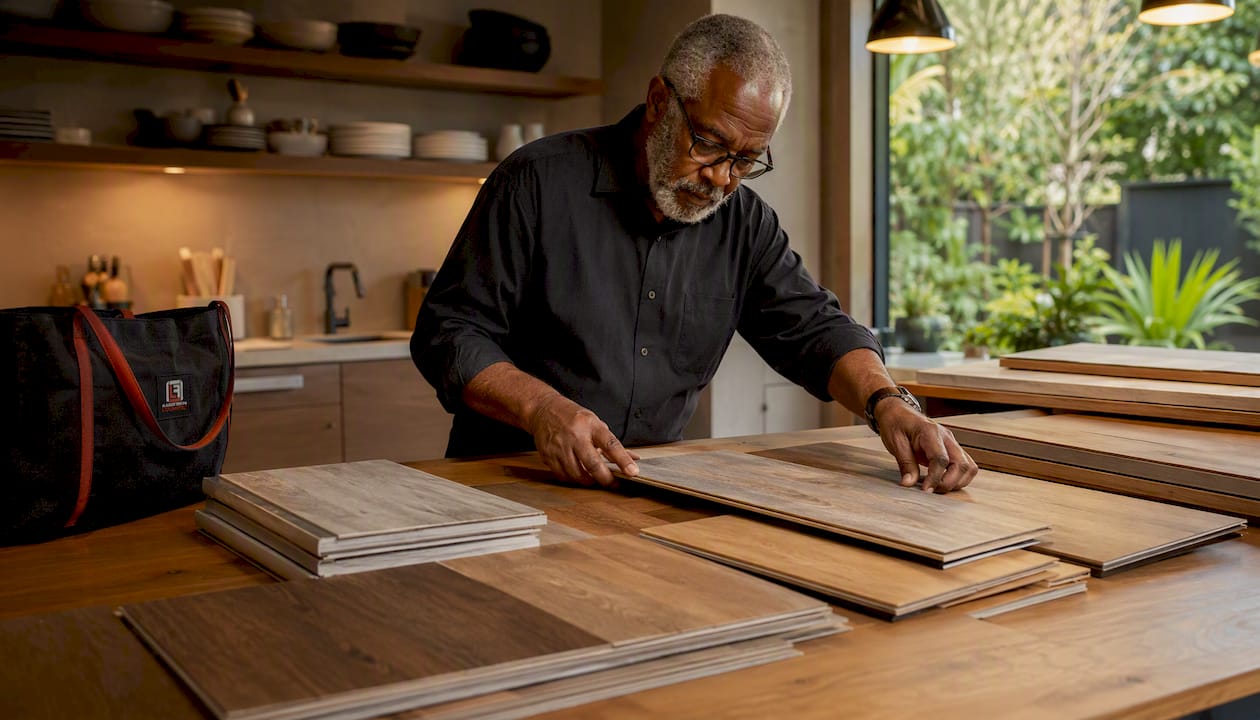
SPC rigid-core LVP (waterproof luxury vinyl plank)
SPC stands for stone plastic composite. The core is dense limestone-based PVC, which makes it dimensionally stable in Colorado’s temperature swings and 100% waterproof at the plank level. A 20-mil wear layer handles pet claws and dropped pots without showing it. Click-lock installation floats over most existing subfloors, which keeps labor costs down.
Installed cost runs roughly $6–$15 per square foot depending on grade. Lifespan is multiple decades with normal care. The main trade-off: SPC feels firm underfoot, closer to tile than hardwood. Adding underlayment softens the feel and improves sound absorption, which matters in two-story homes.
For a deeper look at wear-layer specs and pet-rated options, the LVP buyer’s guide from Leonardosflooringcorp covers the full range.
Laminate flooring
Laminate uses a photographic layer over high-density fiberboard (HDF), topped with a wear layer rated on the AC scale. AC3–AC4 handles residential traffic well; AC4–AC5 is worth the small premium in high-traffic hallways. Premium laminate with a waterproof core now competes directly with LVP in moisture resistance, though traditional laminate still swells when water sits in seams.
Installed cost: roughly $5–$9 per square foot for mid-range products. Laminate cannot be refinished, so when the wear layer is gone, the floor gets replaced. That said, a quality AC4 product can last many years in a well-maintained home. It’s one of the more beginner-friendly DIY flooring options, though professional installation still produces better long-term results.
Engineered hardwood
A real wood veneer over a plywood or composite substrate gives engineered hardwood the look and feel of solid wood with meaningfully better moisture tolerance. The substrate resists seasonal shrinking and swelling, which makes it viable on concrete slabs (with a vapor barrier) and in below-grade spaces where solid hardwood would fail. It can typically be refinished once or twice, depending on veneer thickness.
Installed cost: $9–$22 per square foot. Lifespan of 25–40 years. Resale value is strong because buyers recognize real wood. White oak in a matte or satin finish is the most popular choice in Centennial right now, and for good reason: it reads as contemporary without being trendy.
Solid hardwood
Nothing matches the warmth and long-term refinishability of solid hardwood. A 3/4-inch plank can be sanded and refinished multiple times over a 50–80 year lifespan, which makes it the highest resale-value option in the right rooms. The catch: solid hardwood should not go on concrete slabs or in basements, and it needs careful moisture management in Colorado’s dry winters.
Installed cost: $13–$32 per square foot, depending on species and grade. Professional installation is strongly recommended. Nail-down over plywood is the standard method; glue-down over concrete requires engineered hardwood instead. The Colorado hardwood installation guide covers the local specifics.
Porcelain and ceramic tile
Porcelain tile is the most durable surface in this list. It resists scratches, stains, and moisture completely, and it won’t gap or buckle regardless of humidity. The trade-off is comfort: tile is hard underfoot and cold in winter, which makes it a poor choice for bedrooms or anywhere you stand for long periods without a mat. Grout lines require periodic sealing to prevent staining.
Installed cost: $8–$20 per square foot for porcelain; ceramic runs slightly less. Lifespan is effectively indefinite if the tile doesn’t crack. Best rooms: bathrooms, laundry, mudrooms, and kitchens. Leonardosflooringcorp’s tile installation service covers both residential and commercial projects.
Carpet
Carpet is the comfort choice, and it’s still the right answer for bedrooms and finished basement rec rooms. It absorbs sound, insulates against cold floors in winter, and is the softest surface for kids and pets to play on. The downside is maintenance: carpet holds allergens, pet dander, and odors more than hard surfaces, and it doesn’t belong anywhere moisture is a regular presence.
Installed cost: $3–$8 per square foot for mid-grade residential carpet. Lifespan of 10–15 years with regular vacuuming and professional cleaning every 12–18 months. Solution-dyed nylon is the most durable fiber for pet households.
Epoxy floor coating
Epoxy is the right answer for garages and unfinished basements. A properly applied two-part epoxy system bonds to concrete, seals against oil, chemicals, and moisture, and creates a surface that’s easy to clean and visually sharp. It’s not a flooring material in the traditional sense; it’s a coating applied directly to the concrete slab.
Installed cost varies by system and square footage. The epoxy floor coating overview explains the options for Denver-area homes. For residential garage applications, the team at All Day Power Washing also offers epoxy coating services worth considering.
Quick comparison
| Material | Best rooms | Water resistance | Durability | Installed cost ($/sq ft) | Lifespan | Comfort | Resale impact | Install complexity |
|---|---|---|---|---|---|---|---|---|
| SPC LVP (20-mil) | Living, kitchen, basement, mudroom | Excellent | Excellent | $6–$15 | 20–30 yrs | Firm | Good | Low |
| Laminate (AC4) | Living, bedrooms, hallways | Moderate (waterproof core: good) | Good | $5–$9 | 20–25 yrs | Medium | Moderate | Low |
| Engineered hardwood | Living, dining, main-floor bedrooms | Moderate | Good | $9–$22 | 25–40 yrs | Warm | High | Medium |
| Solid hardwood | Upstairs living, bedrooms | Low | Good (refinishable) | $13–$32 | 50–80 yrs | Warm | Highest | High |
| Porcelain tile | Bath, laundry, mudroom, kitchen | Excellent | Excellent | $8–$20 | Indefinite | Hard/cold | High (wet zones) | High |
| Carpet | Bedrooms, rec rooms | Poor | Moderate | $3–$8 | 10–15 yrs | Highest | Neutral | Low |
| Epoxy coating | Garage, unfinished basement | Excellent | Excellent | Varies | 10–20 yrs | Hard | Positive | Medium |
How do you choose the right flooring for each room?
Start with the Rule of 3
The Rule of 3 limits your home to three distinct flooring materials: a primary material covering 60–70% of the floor area, a secondary material for 20–30%, and an accent for the remaining 10%. More than three materials creates visual noise and hurts resale value because buyers perceive a disjointed home.
For a typical Centennial open-plan home, that mapping looks like this:
- Primary (60–70%): Waterproof SPC LVP across the main living, dining, kitchen, and hallway zones
- Secondary (20–30%): Porcelain tile in all bathrooms, laundry, and the mudroom
- Accent (10%): Carpet in the bedrooms, or engineered hardwood in a formal living or dining room if the budget allows
Room-by-room mapping
- Living room / dining room / kitchen (open plan): SPC LVP or engineered hardwood. Prioritize waterproof if the kitchen is part of the open zone.
- Bathrooms: Porcelain or ceramic tile, no exceptions.
- Mudroom / entryway: Porcelain tile or SPC LVP. This is the highest-abuse zone in a Colorado home.
- Bedrooms: Carpet for comfort, or engineered hardwood if you prefer hard surfaces throughout.
- Basement (finished): SPC LVP or engineered hardwood with a vapor barrier. Never solid hardwood below grade.
- Garage: Epoxy floor coating over the concrete slab.
- Laundry room: Porcelain tile or SPC LVP.
Questions to ask your installer before signing
- What moisture testing do you perform on the subfloor, and what are the acceptable limits?
- What is the acclimation protocol for the material I’ve chosen?
- What wear-layer spec are you recommending, and can you show me the manufacturer documentation?
- How will you handle transitions between different flooring heights?
- What is the realistic timeline, and what does cleanup include?
Red flags to watch for
- No moisture testing before installation on a concrete slab
- Vague or verbal-only warranty language with no written manufacturer documentation
- A contractor who skips or shortens acclimation time to hit a faster schedule
- Promises of a full whole-home install in a single day for large square footage
What flooring regrets do Centennial homeowners have most often?
Choosing based on appearance alone is the most common driver of flooring regret. Here are the specific mistakes that come up repeatedly, and what to do instead.
- Non-waterproof laminate or hardwood in wet areas. Traditional laminate swells within months when water gets into seams. Designers consistently recommend waterproof LVP, rigid-core flooring, or porcelain tile for kitchens, baths, and mudrooms. If you love the look of wood in the kitchen, SPC LVP with a wood-look print is the practical answer.
- Too many flooring materials. Buying different floors for every room because each one looked good in the store is a classic mistake. The Rule of 3 exists precisely to prevent this. More than three materials makes a home feel smaller and harder to sell.
- Trendy finishes that date quickly. Gray-toned wood-look floors and high-gloss dark finishes show every scratch and scuff, and they’ve already peaked as a trend. Warm oak tones with matte or satin finishes age far better and photograph well for resale.
- Skipping subfloor prep. A subfloor that isn’t flat within 3/16" over 10 feet will telegraph every imperfection through the new floor within months. High spots and low spots need to be addressed before any material goes down.
- Skipping acclimation. Wood and laminate need 48–72 hours to adjust to the temperature and humidity of the install environment. Installers who skip this step to save time are the most common cause of post-installation gapping and buckling.
Pro Tip: Before ordering any material, have your installer check the subfloor with a long straightedge or a laser level. A 10-foot straightedge dragged across the floor will reveal high spots and low spots immediately. Remediation costs far less before the material arrives than after.
For more on avoiding hardwood-specific errors, the hardwood installation mistakes guide from Leonardosflooringcorp is worth reading before you commit.
What does a typical flooring installation look like for a 1,000 sq ft project?
The professional installation sequence
- Measurement and ordering. Accurate room measurement, material selection, and ordering with 10% overage for cuts and waste.
- Old floor removal. Demo and disposal of existing flooring and any adhesive residue.
- Subfloor preparation. Leveling, patching, and moisture testing. The subfloor must be flat within 3/16" over 10 feet.
- Moisture testing. Concrete slabs require a calcium chloride or relative humidity probe test before any wood or laminate product goes down.
- Acclimation. Wood and laminate products acclimate for 48–72 hours in the install space. SPC LVP typically requires less acclimation time but should still be brought to room temperature.
- Installation. Layout planning, end-joint staggering (6–12 inch offsets), and installation from the straightest wall.
- Finishing trim and transitions. Baseboards, quarter-round, and transition strips between materials or at doorways.
- Cleanup. Debris removal and final inspection.
Timeline and cost by material (1,000 sq ft)
| Material | Pro install time | DIY time | Typical installed cost range |
|---|---|---|---|
| SPC LVP | 1–2 days | 2–3 days | $6–$15 per square foot |
| Laminate | 1–2 days | 2–3 days | $5–$9 per square foot |
| Engineered hardwood | 2–3 days | 3–5 days | $9–$22 per square foot |
| Solid hardwood | 2–4 days | Not recommended | $13–$32 per square foot |
| Porcelain tile | 3–5 days | Not recommended | $8–$20 per square foot |
| Carpet | 1 day | Not recommended | $3–$8 per square foot |
Click-lock vinyl plank and laminate are the most beginner-friendly materials; tile and solid hardwood require professional tools and expertise. For a 1,000 sq ft project in Centennial, total installed costs typically range from $8,587 to $11,221 across standard material grades, based on local labor rates.
Subfloor flatness tolerance (3/16" over 10’) is the single most important prep standard. Remediation costs, whether grinding high spots or filling low ones with leveling compound, can exceed the savings from buying budget materials if ignored.
How do you maintain floors through Colorado’s seasons?
Colorado’s climate demands a maintenance rhythm that most generic guides don’t address. Here’s what actually matters by season.
Winter:
- Place absorbent mats at every exterior entry and shake or replace them weekly during snow season.
- Wipe up road salt and snow melt immediately; chloride residue dulls finishes and works into seams over time.
- Run a humidifier to keep indoor relative humidity between 35–55%. Below 30%, solid and engineered hardwood will gap noticeably.
- Avoid wet mopping hardwood or laminate; use a barely damp microfiber mop only.
Spring:
- Deep clean all hard surfaces with a pH-neutral cleaner appropriate for the material (avoid vinegar on hardwood or stone tile; it etches finishes over time).
- Inspect wood floors for gaps that opened over winter; most close naturally as humidity rises, but persistent gaps may need professional attention.
- Check grout lines in tile areas and reseal if water no longer beads on the surface.
Summer:
- Monitor indoor humidity; above 60% consistently can cause wood floors to cup or buckle.
- Use blinds or UV-filtering window film to reduce sun exposure on dark floors, which fade faster under direct Colorado sun.
Daily and weekly care by material:
- SPC LVP: Sweep or vacuum (hard-floor setting) daily; damp mop weekly with a vinyl-safe cleaner.
- Hardwood / engineered hardwood: Dry dust mop daily; damp mop sparingly with a hardwood-specific cleaner. Never use steam mops.
- Laminate: Same as hardwood; avoid standing water at seams.
- Tile: Sweep and damp mop freely; reseal grout annually.
- Carpet: Vacuum twice weekly in pet households; professional cleaning every 12–18 months preserves fiber and warranty.
Follow manufacturer cleaning guidelines specifically. Using the wrong cleaner voids most flooring warranties, and that’s a detail worth confirming before you buy a product.
Leonardosflooringcorp: local flooring expertise for Centennial homes
Choosing the right floor is one decision. Getting it installed correctly in Colorado’s climate is another.
Leonardosflooringcorp has been installing floors across the greater Denver area for over 10 years, including hundreds of projects in Centennial and the surrounding communities. The full service list covers everything this article discusses: hardwood floor installation, laminate flooring, vinyl and LVP installation, tile installation, epoxy floor coating, subfloor preparation, hardwood refinishing, and finishing trim. Every project starts with moisture testing and a real conversation about your household, your timeline, and your budget. No cookie-cutter packages. The 125+ five-star reviews reflect that approach consistently.
Ready to stop guessing and get a real number? Schedule a flooring estimate and a Leonardosflooringcorp installer will walk your space, test your subfloor, and give you a written quote with no pressure.
Key Takeaways
For Centennial homes, waterproof SPC LVP with a 20-mil wear layer is the best default choice for family living areas, with porcelain tile in wet zones and carpet in bedrooms rounding out a practical, durable plan.
| Point | Details |
|---|---|
| Default to waterproof SPC LVP | A 20-mil wear layer handles pets, kids, and Colorado moisture in living areas, kitchens, and basements. |
| Use the Rule of 3 | Limit your home to three flooring materials (primary, secondary, accent) to protect visual cohesion and resale value. |
| Test the subfloor first | Subfloor must be flat within 3/16" over 10 feet and moisture-tested before any wood or laminate goes down. |
| Insist on acclimation | Wood and laminate need 48–72 hours to acclimate; skipping this step is the most common cause of post-install gapping. |
| Leonardosflooringcorp | Serves Centennial homeowners with full-service installation, subfloor prep, moisture testing, and 125+ five-star reviews. |
What Centennial homeowners actually need from their floors
Most flooring articles spend too much time on aesthetics and not enough on the practical reality of living in Colorado. The homes I see in Centennial share a few consistent priorities: they need floors that survive a dog, two kids, and a muddy spring without looking destroyed by year three. They need something that won’t gap in January when the furnace runs constantly and the humidity drops. And they need a plan that makes sense as a whole home, not just one beautiful room surrounded by mismatched materials.
The Rule of 3 is the most underused planning tool in residential flooring. Homeowners who plan their material selections before they shop end up with homes that feel intentional and photograph well for resale. Those who pick materials room by room, reacting to whatever looks good in the store, almost always end up with too many transitions and a floor plan that feels choppy.
The other thing worth saying plainly: subfloor prep is where most flooring failures actually start. A beautiful material installed over a wavy or wet subfloor will fail. The material gets blamed, but the subfloor was the problem. Any installer who doesn’t talk about moisture testing and flatness before discussing material options is skipping the most important part of the job.
Useful sources and local references
The following sources informed the recommendations in this article and are worth reading for additional detail:
- Kid- and pet-friendly flooring options — Explains wear-layer specs and why 20-mil SPC LVP is the professional standard for family households with pets and children.
- Rule of 3 in flooring — Covers the primary/secondary/accent framework and how to apply usage percentages to a real floor plan.
- What is the rule of 3 flooring? — Additional context on transition planning and how too many materials reduce perceived home value.
- Acclimating: Why it’s essential to wait 48 hours — Manufacturer-level guidance on why acclimation prevents gapping and buckling in wood and laminate products.
- Discussion on subfloor flatness tolerances — Practitioner-level discussion of the 3/16" over 10’ standard and what happens when it’s ignored.
- Flooring install: The complete guide to getting new floors — Covers DIY vs. professional timelines and which materials require professional tools and expertise.
- What flooring do homeowners regret choosing? — Real homeowner data on the most common regret triggers, including lifestyle mismatch and appearance-first decisions.
- 5 flooring choices designers regret most — Designer perspective on gray-toned and high-gloss finishes that date quickly and hurt resale.
- Flooring Installation Cost in Centennial, CO — Local cost calculator with Centennial-specific labor rates and permit requirements.
- Leonardosflooringcorp flooring installation services — The primary local resource for Centennial homeowners ready to schedule an estimate or discuss a project.