
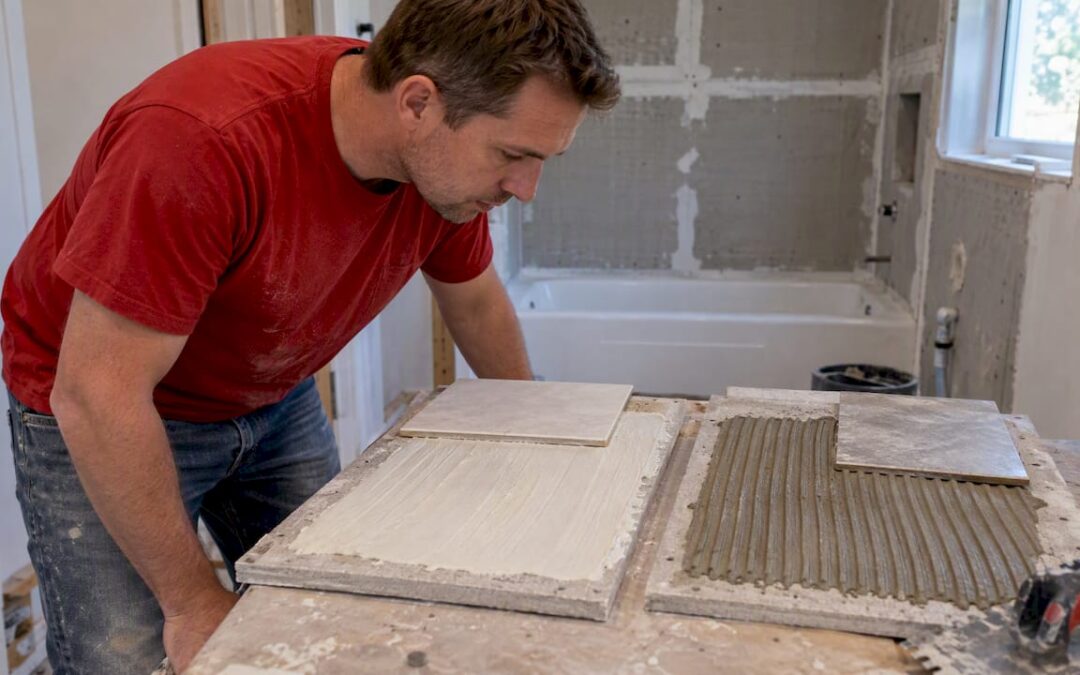
Use thinset for floors, wet areas, and most glass or natural stone tile. Reserve mastic for interior, dry wall applications and small ceramic backsplashes where fast grab matters more than long-term moisture exposure. Exceptions exist around waterproof membranes and glass tile, so check the decision checklist below before you buy a bucket of either.
TL;DR:
- Over Schluter KERDI, use mortar specified by the system, such as Schluter SET or unmodified thinset meeting ANSI A118.1; premixed mastic is not recommended.
- For glass or natural stone, check the tile maker’s instructions; bright white thinset meeting ANSI standards can reduce color changes or staining.
- Modified thinset trapped between impermeable tile and membrane can take longer to cure, so delay grouting beyond the bag’s standard timing.
- Use mastic only for light, small ceramic wall tile on sound, dry interior surfaces; never use it on floors, showers, or standing water.
Table of Contents
- What Thinset Mortar Is and How It Performs
- What Mastic Is and When It’s Appropriate
- Thinset vs Mastic: Side-by-Side Differences That Matter
- Checklist: How to Choose the Right Adhesive for Your Project
- Manufacturer and Industry Guidance Worth Following
- Reliability Over Convenience: An Installer’s Take
- Leonardo’s Flooring Corp: When a Tile Job Calls for a Pro
- FAQ
- Sources
What Thinset Mortar Is and How It Performs
Thinset is a cement-based mortar mixed with sand and additives, sold as a powder you combine with water or a liquid additive. Unmodified thinset meets ANSI A118.1 and is the standard choice for setting tile over waterproofing membranes, since those membranes already prevent moisture passage. Modified thinset includes polymers that boost flexibility and bond strength, which makes it a common pick for floors, showers, and larger or heavier tile. According to Schluter’s waterproofing guidance/Schluter%C2%AE-KERDI/p/KERDI200200), setting tile over the Schluter-KERDI membrane calls for a specified thinset such as Schluter SET, ALL-SET, or FAST-SET, or an unmodified thinset meeting ANSI A118.1.
A few practical habits keep thinset installs on track:
- Mix only what you can place within the product’s working time, since thinset stiffens as it sits.
- Match your trowel notch size to the tile dimensions: smaller notches for mosaics, larger ones for big-format tile.
- Back-butter large or uneven tiles to close coverage gaps that cause hollow spots later.
What Mastic Is and When It’s Appropriate
Mastic is a premixed, polymer-based adhesive that comes ready to use straight from the can. Its main advantage is instant grab, which helps when you’re setting wall tile that would otherwise slide before it sets.
Mastic fits a narrow but useful range of jobs:
- Interior, dry wall tile such as kitchen backsplashes behind a sink or stove.
- Small-format ceramic tile where weight isn’t a concern.
- Quick DIY projects where you want to grout the same day.
The MASTIK 500 technical data sheet describes mastic as intended for interior, structurally sound surfaces that aren’t subject to constant moisture, and it cautions against use on certain tile backs or large floor tiles. Mastic never belongs in a shower, on a floor, or under tile that will see standing water.
Thinset vs Mastic: Side-by-Side Differences That Matter
Once you know the basic split between wet and dry applications, the finer details decide which product actually works for your tile and substrate.
| Criteria | Thinset | Mastic |
|---|---|---|
| Best for | Floors, showers, wet areas, large format tile | Small ceramic backsplashes, dry interior walls |
| Water resistance | High, suitable for wet and submerged areas | Low, interior dry areas only |
| Bond strength / flexibility | Strong, modified versions flex with substrate movement | Adequate for light wall tile, not load-bearing |
| Tile compatibility | Porcelain, stone, large format, ANSI-rated glass thinsets available | Small ceramic, some glass mosaics per manufacturer note |
| Cure / turnaround | Days to weeks depending on product and substrate | Hours, fast grab and faster grout-ready time |
| Ease of use for DIY | Requires mixing and trowel skill | Ready to use, more forgiving for beginners |
Glass tile deserves its own callout. Standard gray thinset can show through translucent glass or react with the tile backing, so manufacturers recommend bright-white, ANSI-compliant thinsets formulated specifically for glass, as noted in Custom Building Products’ glass tile guidance. Natural stone has similar sensitivities: some stones can stain if the mortar bleeds through, which is another reason to check the tile manufacturer’s recommendation before you buy adhesive.
Cure time is where DIYers get tripped up most often. Modified thinset cures partly through polymer coalescing, a drying process that slows dramatically when the mortar is sandwiched between two impermeable layers, like a waterproof membrane under glass tile.
- Identify whether your substrate or tile is impermeable before you start.
- If either side is impermeable, plan for an extended cure window rather than grouting the next day.
- When timing is tight, ask your supplier about an unmodified thinset rated for that specific system.
Pro Tip: When working between two impermeable layers, give the installation extra days before grouting rather than trusting the bag’s standard cure time.
Checklist: How to Choose the Right Adhesive for Your Project
Before you buy a single bag or tub, walk through these questions in order.
- Is the area wet, humid, or exposed to standing water? If yes, thinset is the only safe choice.
- What’s the tile material? Glass and natural stone usually need an ANSI-rated, bright-white thinset.
- What’s the substrate? Drywall can take mastic for light ceramic tile; cement board and uncoupling membranes like Schluter-KERDI call for the mortar specified in the membrane’s own installation guide.
- How much time do you have before grout day? Mastic sets faster; modified thinset over impermeable layers needs more patience.
Before buying, pull the technical data sheet for both the tile and the adhesive, and confirm the pairing meets ANSI/TCNA standards, a practice echoed in TCNA Handbook-based guidance from TileLetter. Selecting the right trowel notch for your tile size matters just as much as the adhesive itself, especially on wood-look plank tile, where uneven ridges cause visible lippage.
Pro Tip: Dry-fit a few tiles and check your substrate for flatness before mixing anything, since fixing a substrate problem after the adhesive goes down costs far more time than catching it first.
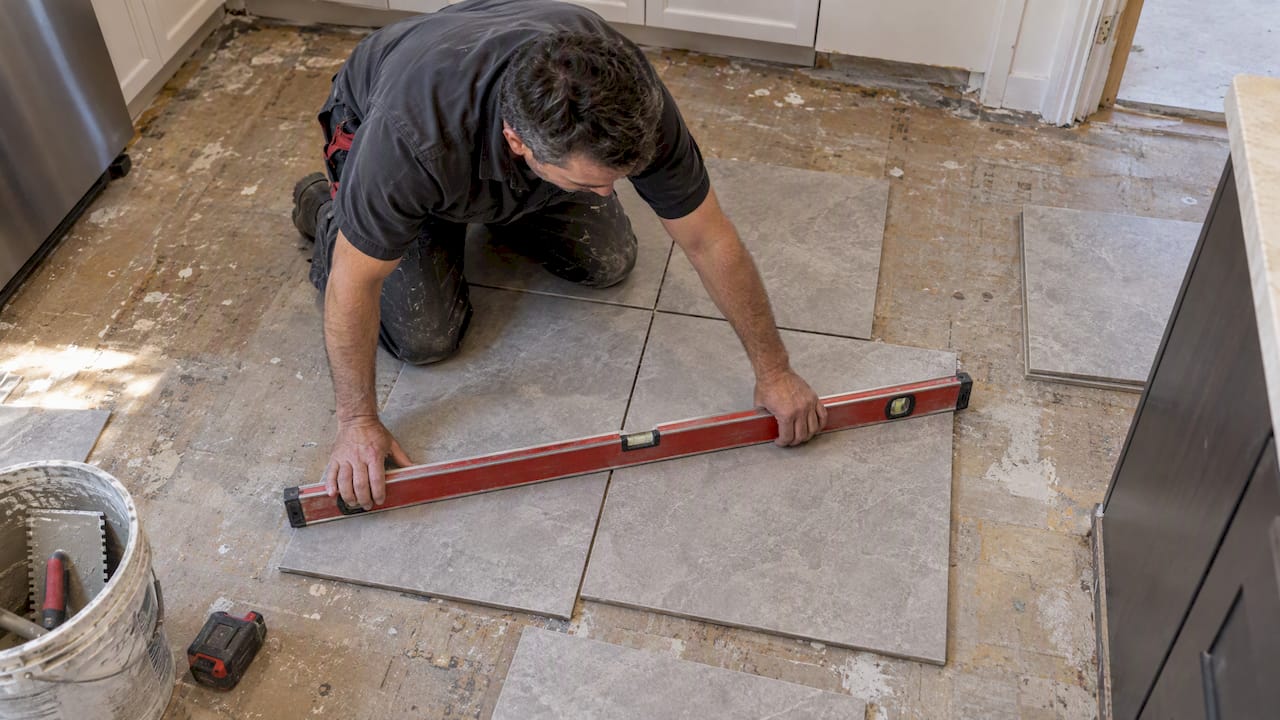
Call a professional when the job involves waterproofing systems, heated floors, large-format tile, glass mosaics, or a substrate you can’t confidently identify. If you’re tiling over a basement slab, moisture timing adds another layer of complexity worth getting right before adhesive selection even comes up.
Manufacturer and Industry Guidance Worth Following
Schluter’s own documentation is direct on this point: premixed mastics are not recommended for KERDI waterproofing installations, and the system calls for a specified thinset instead. Manufacturer TDS sheets for mastic consistently limit its use to interior, dry, structurally sound surfaces and specify maximum tile size and trowel notch for proper coverage.
A few field-tested habits reduce the risk of callbacks:
- Back-butter tile for full coverage, especially on anything larger than a standard wall tile.
- Avoid overly thick bond coats on glass tile, since excess mortar can show through or shift the tile’s color.
- Run a small mock-up panel when you’re using an unfamiliar adhesive or tile combination before committing to the whole wall or floor.
Acceptable lippage and finish tolerances are spelled out in more detail in our lippage standards guide, which is worth a look before you start spreading mortar.
Reliability Over Convenience: An Installer’s Take
Mastic earns its place on quick, small, dry wall jobs. The trouble starts when convenience drives the decision on a floor, a shower, or anything load-bearing. Bond failure and tile lippage rarely show up on day one. They show up months later, after grout has cracked or a tile has shifted underfoot, and by then the fix means tearing out work that looked fine at install. Favor thinset wherever moisture, weight, or substrate movement is a factor, and save mastic for the jobs it was actually built for.
— Jim
Leonardo’s Flooring Corp: When a Tile Job Calls for a Pro
Some tile jobs are straightforward weekend projects. Others, like waterproofed showers, glass mosaics, heated floors, or an uneven subfloor, carry real risk of a failed bond or a costly redo. 
When the stakes are higher, we handle:
- Tile floor installation across kitchens, bathrooms, and living spaces.
- Subfloor preparation so your tile has a flat, stable base to bond to.
- Epoxy coating over tile for added durability in high-traffic areas.
- Waterproofing prep for showers and wet-area installations.
We tailor flooring projects around homeowners’ budgets and timelines, with no cookie-cutter approach and no surprise costs. If your project involves a waterproofing system, large-format or glass tile, or a substrate you’re not sure about, get an estimate through our tile floor installation page and we’ll walk through the right setting materials for your specific job.
FAQ
Is thinset mortar the same as regular mortar?
No. Thinset is a specific cement-based mortar formulated with fine sand and additives for bonding tile in a thin layer, while standard mortar used in masonry is a thicker-bed product meant for different structural purposes. Thinset comes in modified and unmodified versions depending on the tile and substrate.
What tile adhesive do professionals use?
Professionals typically choose thinset mortar for floors, wet areas, and most tile types, following TCNA Handbook guidance to match the mortar to the tile, substrate, and moisture conditions. Mastic appears mainly on small, dry interior wall jobs where fast grab outweighs the need for moisture resistance.
Does mortar stick to drywall?
Thinset mortar is generally not recommended directly on drywall in wet areas, since drywall itself isn’t moisture resistant. In dry interior spaces, mastic or thinset can bond to drywall for light ceramic wall tile, but any area exposed to moisture needs cement board or a waterproofing membrane instead.
Can I use mastic on glass tile?
Manufacturer guidance warns that many mastics are not compatible with glass tile, since the tile’s translucency and backing can react poorly with certain adhesives. Custom Building Products’ TDS recommends a bright-white, ANSI-compliant thinset for glass tile instead, and you should always confirm compatibility with the tile manufacturer first.
Sources
- TileLetter – Ask the experts (March 2018)
- MASTIK 500 Type I mastic – Technical Data Sheet (Custom Building Products)