
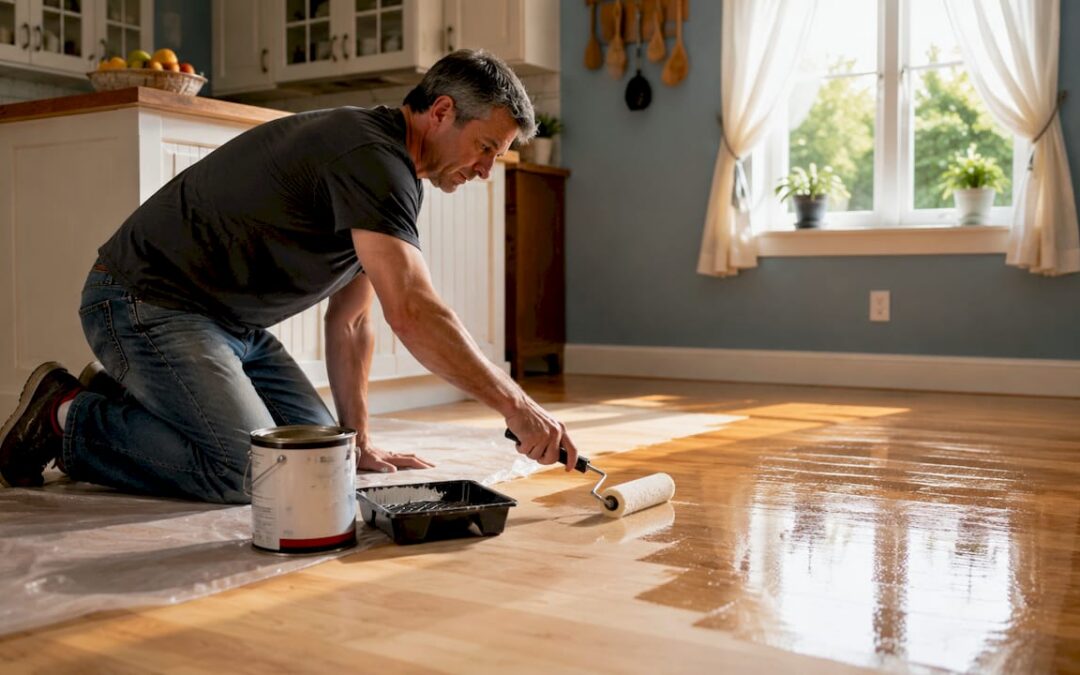
Floor gloss coating is a transparent, hard-wearing topcoat applied over flooring surfaces to protect against abrasion, spills, and foot traffic while adding a reflective, polished finish. Known in the industry as a protective floor finish or gloss topcoat, this coating type works on concrete, hardwood, tile, and vinyl. Gloss levels are measured in gloss units (GU), with high gloss finishes typically registering 75 GU or above. The right coating choice affects not just how your floor looks, but how long it lasts and how much upkeep it demands. Understanding what is floor gloss coating helps you make a smarter investment from the start.
What is floor gloss coating and how does it work?
Floor gloss coating is a clear protective layer bonded to the floor surface to create a hard, reflective shell. It works by filling microscopic surface pores and forming a film that resists moisture, chemicals, and physical wear. The coating sits on top of the floor material rather than soaking into it, which means it can be stripped and reapplied without damaging the substrate underneath. This makes it one of the most flexible protective options across both residential and commercial settings.
The reflective quality of a gloss coating comes from the smoothness of its cured surface. A highly reflective surface over concrete, for example, is distinct from mechanically polished concrete because it gives you more control over color, texture, and sheen level. That control matters when you want a specific look for a showroom, kitchen, or living room. Gloss coatings also protect the visual quality of the floor beneath, keeping colors vivid and grain patterns sharp for years.
What are the main types of floor gloss coatings?
Four coating types dominate the market: epoxy, polyaspartic, polyurethane, and resin. Each has a distinct performance profile suited to different environments and budgets.
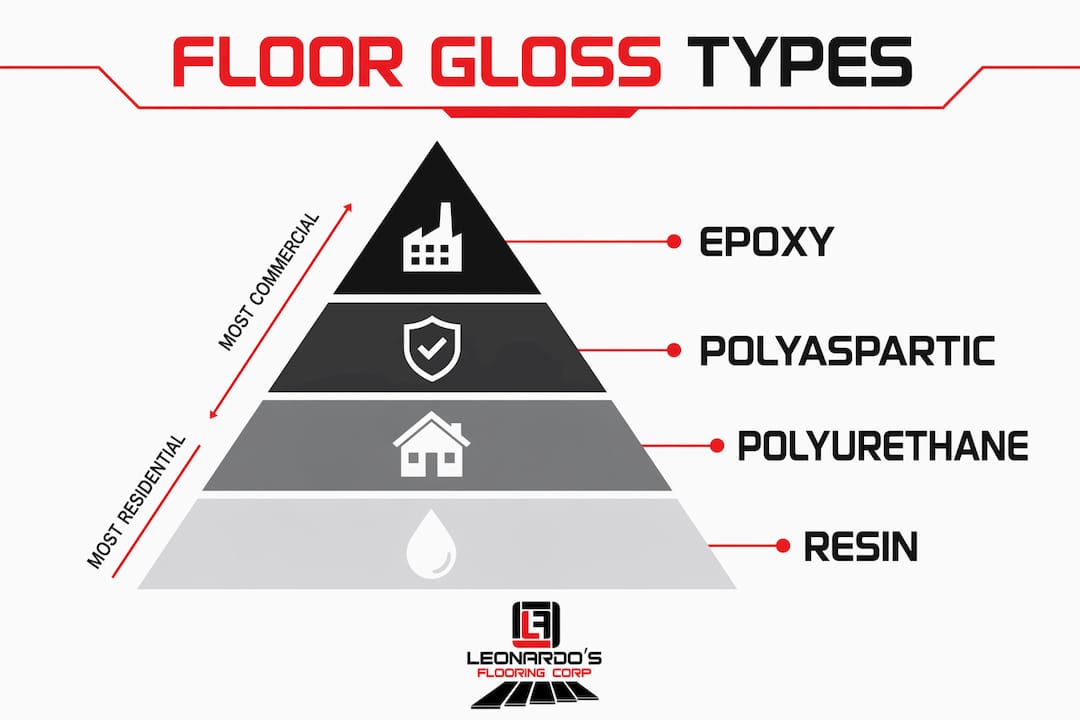
Epoxy is the workhorse of commercial and industrial flooring. It bonds aggressively to concrete, resists heavy chemical exposure, and supports high gloss finishes above 75 GU. Cure times run longer than other options, typically 24–72 hours before full foot traffic. Epoxy is the standard choice for warehouses, garages, and manufacturing floors. You can read a full breakdown of epoxy finish types to compare options before committing.
Polyaspartic coatings have become the modern preference for residential and light commercial floors. Polyaspartic coatings cure faster than epoxy and offer strong UV stability, meaning the finish will not yellow under sunlight exposure. That UV resistance makes polyaspartic the better pick for sunlit spaces like sunrooms, retail floors near windows, or any area with significant natural light.
Polyurethane, particularly aliphatic polyurethane, is the top choice for hardwood floors. It delivers a glass-like high gloss finish, resists scratching better than epoxy alone, and handles temperature fluctuations well. Water-based polyurethane versions dry faster and emit fewer fumes, making them practical for occupied homes.
Resin coatings (including polyurea and hybrid systems) offer the highest decorative potential. They accept pigments, metallic flakes, and custom textures while still delivering a high gloss topcoat. Resin systems are common in showrooms, restaurants, and upscale residential spaces where aesthetics drive the decision.
| Coating type | Best environment | Gloss potential | UV stability | Cure time |
|---|---|---|---|---|
| Epoxy | Commercial, industrial | High (75+ GU) | Low | 24–72 hours |
| Polyaspartic | Residential, light commercial | High (75+ GU) | High | 2–6 hours |
| Polyurethane | Hardwood, residential | High (75+ GU) | Medium | 4–24 hours |
| Resin | Showrooms, decorative | Very high | Medium | 12–48 hours |
- Epoxy: best adhesion and chemical resistance for heavy-duty use
- Polyaspartic: fastest return to service with UV protection
- Polyurethane: ideal for wood substrates and occupied homes
- Resin: highest decorative flexibility for statement floors
What are the benefits and trade-offs of a high gloss finish?
A high gloss finish does two things most other finishes cannot: it amplifies light and saturates color. High gloss finishes can increase ambient light levels by 20–40% in large spaces, which directly reduces artificial lighting needs. For a business manager running a retail floor or showroom, that translates into real energy savings over time. For a homeowner, it means a brighter room without adding a single fixture.
The visual depth of a high gloss surface is also unmatched. Colors appear richer, grain patterns look more defined, and the mirror-like reflection adds a sense of space to smaller rooms. High gloss is the preferred choice for showpiece and formal areas precisely because of this visual impact.
The trade-offs are real, though. High gloss amplifies every imperfection, making footprints, dust, and fine scratches far more visible than they would be on a matte or satin surface. Busy households with kids, pets, or heavy foot traffic will spend more time cleaning a high gloss floor to keep it looking sharp.
Safety is another consideration. A wet, high gloss surface can be slippery. Anti-slip additives like aluminum oxide or polymer grit can be incorporated directly into the coating to maintain traction without sacrificing shine. This is a standard practice in commercial kitchens, healthcare facilities, and any wet-area application.
Pro Tip: If you love the look of high gloss but dread the upkeep, choose a satin finish (30–60 GU) for main living areas and reserve high gloss for low-traffic feature spaces like entryways or formal dining rooms.
How is floor gloss coating applied and maintained effectively?
Proper application starts long before the coating touches the floor. Surface preparation is the single most critical factor in a successful high gloss result. Every micro-imperfection becomes visible under a reflective surface, so the floor must be clean, dry, level, and free of grease, old adhesive, or loose material before any coating goes down.
The standard application process follows these steps:
- Clean and degrease the floor thoroughly. Any residue will prevent proper adhesion.
- Sand or grind the surface to open the pores and create a mechanical bond for the coating.
- Apply a primer or base coat to seal the substrate and improve adhesion for the topcoat.
- Apply multiple thin coats of the gloss coating, allowing each layer to dry fully before the next. Multiple thin coats produce better clarity and smoothness than fewer thick coats, which risk bubbling and uneven curing.
- Protect the area during application using masking films or rosin paper to prevent paint splatters and damage to adjacent surfaces.
- Allow full cure time before returning to normal use. Water-based finishes dry in 2–8 hours, while polyurethane finishes may need 4–24 hours before foot traffic is safe. Full chemical cure takes longer, often 5–7 days.
Maintenance after application is straightforward but consistent. Sweep or dust mop daily to remove grit that can scratch the surface. Use a pH-neutral cleaner for wet mopping. Avoid abrasive pads, ammonia-based products, or steam mops, all of which degrade the coating over time.
For long-term gloss retention, plan for restorative recoating. High gloss resin flooring retains 80–90% of its original gloss after 10–15 years with proper maintenance, with a recoating cycle of every 5–10 years depending on traffic. That is a strong return on investment for both homeowners and business managers.
Pro Tip: Apply gloss coatings in a controlled environment. Dust contamination during application creates visible specks in the cured finish that are nearly impossible to remove without sanding back and recoating.
Which floor gloss coating suits your space?
Matching the coating to the environment prevents costly mistakes. The right choice depends on traffic level, floor material, room function, and how much maintenance you are willing to do.
For residential spaces:
- Living rooms and bedrooms: satin or semi-gloss polyurethane (30–70 GU) for a warm look with manageable upkeep
- Kitchens and entryways: high gloss polyurethane or polyaspartic with anti-slip additives for durability and easy cleaning
- Basements: epoxy or polyaspartic over concrete for moisture resistance and a bright finish
- Homes with kids or pets: satin finishes hide scratches and footprints far better than high gloss. Family-friendly flooring options often prioritize this balance between looks and practicality.
For commercial spaces:
- Retail showrooms: high gloss resin or polyaspartic to maximize light reflection and visual impact
- Restaurants and kitchens: high gloss epoxy with anti-slip additives for hygiene and safety
- Offices and lobbies: semi-gloss polyaspartic for a professional finish that holds up under daily foot traffic
- Warehouses and industrial floors: epoxy with a gloss topcoat for chemical resistance and easy cleaning. Commercial epoxy flooring is the standard solution for these environments.
| Environment | Recommended coating | Gloss level | Key reason |
|---|---|---|---|
| Residential living room | Polyurethane (satin) | 30–60 GU | Hides wear, warm appearance |
| Kitchen or entryway | Polyaspartic (high gloss) | 75+ GU | Durable, easy to clean |
| Basement concrete | Epoxy or polyaspartic | 60–85 GU | Moisture resistance |
| Retail showroom | Resin or polyaspartic | 85+ GU | Maximum light reflection |
| Commercial kitchen | Epoxy with anti-slip | 70–80 GU | Safety and hygiene |
The gloss level chosen also shapes the mood of a room. High gloss reads as formal and vibrant. Matte creates a relaxed, natural atmosphere. That psychological effect is worth factoring into your decision, especially in spaces where you want to set a specific tone for guests or customers.
Key Takeaways
Floor gloss coating is the most effective way to protect a floor surface while controlling its visual impact, and the coating type you choose determines both the durability and the maintenance demands you will face.
| Point | Details |
|---|---|
| Definition matters | Floor gloss coating is a clear protective topcoat measured in gloss units (GU), not just a cosmetic finish. |
| Coating type drives performance | Polyaspartic leads for UV stability and fast cure; epoxy leads for heavy-duty adhesion and chemical resistance. |
| High gloss shows everything | Footprints, dust, and scratches are far more visible on high gloss surfaces, requiring more frequent cleaning. |
| Preparation is non-negotiable | Every surface imperfection shows through a gloss finish, so thorough prep determines the final result. |
| Recoating extends life significantly | With proper maintenance, gloss coatings retain 80–90% of their original shine for 10–15 years before needing a restorative topcoat. |
What I have learned after years of watching gloss floors age
The most common mistake I see is choosing a finish based on how it looks in a showroom photo rather than how it will perform in the actual space. A mirror-like high gloss floor in a showroom looks stunning under controlled lighting. That same floor in a busy family kitchen looks like a crime scene by Thursday afternoon.
My honest recommendation: reserve true high gloss (75+ GU) for spaces with controlled traffic and a dedicated cleaning routine. Entryways, formal dining rooms, and commercial showrooms are natural fits. Main living areas, hallways with pets, and any space where people walk in from outside are better served by satin or semi-gloss. You get 80% of the visual impact with a fraction of the upkeep.
The other thing most people underestimate is the preparation cost. A high gloss finish is brutally honest about what is underneath it. I have seen beautiful coating jobs ruined by a single grease spot the installer missed during prep. Spending the extra time and money on surface preparation is not optional. It is the job.
Professional installation also matters more with gloss coatings than with any other floor finish type. The application environment needs to be dust-free, temperature-controlled, and properly ventilated. Getting that right in a lived-in home or an operating business requires experience and planning that most DIY approaches cannot replicate. The finish will tell you exactly how well the job was done.
— Jim
Leonardosflooringcorp can help you get the finish right
Choosing the right gloss coating is one decision. Getting the application right is another. Leonardosflooringcorp has been handling hardwood floor installation and floor coating projects across the Denver metro for over 10 years, with 125+ five-star reviews that reflect consistent, quality results.

Whether you need a high gloss epoxy for a commercial space or a satin polyurethane finish for a residential hardwood floor, Leonardosflooringcorp tailors every project to your specific traffic levels, floor material, and budget. No guesswork, no generic solutions. Contact Leonardosflooringcorp for a consultation and get a clear recommendation before you commit to a coating type.
FAQ
What is floor gloss coating made of?
Floor gloss coating is typically made from epoxy, polyaspartic, polyurethane, or resin compounds that cure into a hard, transparent film over the floor surface. The specific chemistry determines the gloss level, durability, and cure time.
How long does a high gloss floor coating last?
High gloss resin and polyaspartic coatings retain 80–90% of their original gloss for 10–15 years with proper maintenance, with restorative recoating recommended every 5–10 years depending on traffic levels.
Is high gloss floor coating slippery?
A wet high gloss surface can be slippery, but anti-slip additives like aluminum oxide or polymer grit can be mixed into the coating to maintain traction without reducing the shine.
Can floor gloss coating be applied over any floor type?
Most gloss coatings work over concrete, hardwood, tile, and vinyl, but the coating type must match the substrate. Polyurethane suits hardwood best, while epoxy and polyaspartic are preferred for concrete surfaces.
How do you maintain a high gloss floor coating?
Sweep or dust mop daily to remove abrasive grit, use a pH-neutral cleaner for wet mopping, and avoid steam mops or ammonia-based products that break down the coating over time.