

Hardwood flooring looks simple from the outside. You pick a wood, someone nails it down, and you’re done. But if that were the whole story, Denver homeowners wouldn’t be dealing with gapped boards every winter or buckled planks after a humid spring. Real hardwood flooring is a climate-sensitive system where material choice, moisture management, and installation method all interact. Get any one of those wrong, and even the most beautiful wood won’t hold up. This guide walks you through everything you need to know before making one of the biggest flooring decisions in your home.
Table of Contents
- Defining hardwood flooring: More than just wood planks
- Comparing hardwood to other flooring options in Denver
- Why choose hardwood flooring? Advantages for Denver homes
- Hardwood flooring installation and maintenance essentials
- The real key to successful hardwood floors in Denver: What most guides miss
- Ready for hardwood flooring? Denver’s flooring experts can help
- Frequently asked questions
Key Takeaways
| Point | Details |
|---|---|
| Engineered vs. solid wood | Engineered hardwood offers greater moisture resistance and stability than solid wood, making it ideal for Denver’s climate. |
| Moisture management | Managing moisture—using meters and controlling humidity—ensures hardwood flooring longevity and prevents warping or gaps. |
| Installation essentials | Successful hardwood installation requires careful material selection, subfloor prep, and ongoing maintenance tailored to local conditions. |
| Resale and aesthetics | Hardwood floors consistently boost home value and appeal with their classic looks and durability. |
Defining hardwood flooring: More than just wood planks
Most people think of hardwood flooring as a single product. It isn’t. Hardwood floors are made from solid or engineered layers of natural wood, and the difference between those two categories shapes everything from installation method to long-term performance.
Solid hardwood is exactly what it sounds like: a single plank of wood, typically 3/4 inch thick, milled from species like white oak, red oak, maple, or hickory. You can sand and refinish it multiple times over decades. It’s the most traditional option, and in the right conditions, it lasts a lifetime. The tradeoff is that solid wood moves a lot with humidity changes. In Denver, where indoor humidity can drop to 20% or lower in winter, that movement becomes a real design consideration.
Engineered hardwood uses a real wood veneer on top, bonded to multiple layers of plywood or high-density fiberboard. The layered construction from engineered wood flooring gives it dramatically better dimensional stability compared to solid wood. You get the look and feel of real wood with far less sensitivity to humidity swings.
Understanding the hardwood flooring basics also means knowing how these options differ from alternatives like laminate, vinyl, and tile:
- Hardwood: Real wood grain, warm underfoot, can be refinished, adds resale value
- Laminate: Photographic layer over fiberboard, not refinishable, less expensive but feels hollow
- Luxury vinyl plank (LVP): 100% waterproof, extremely durable, but synthetic feel underfoot
- Tile: Cold, hard, and water-resistant but unforgiving and not ideal for living areas
Visual differences matter, but so does touch. Real hardwood has a texture and warmth that manufactured alternatives can’t fully replicate. Stand barefoot on solid oak for five minutes and then try the same with laminate. You’ll notice the difference immediately.
Comparing hardwood to other flooring options in Denver
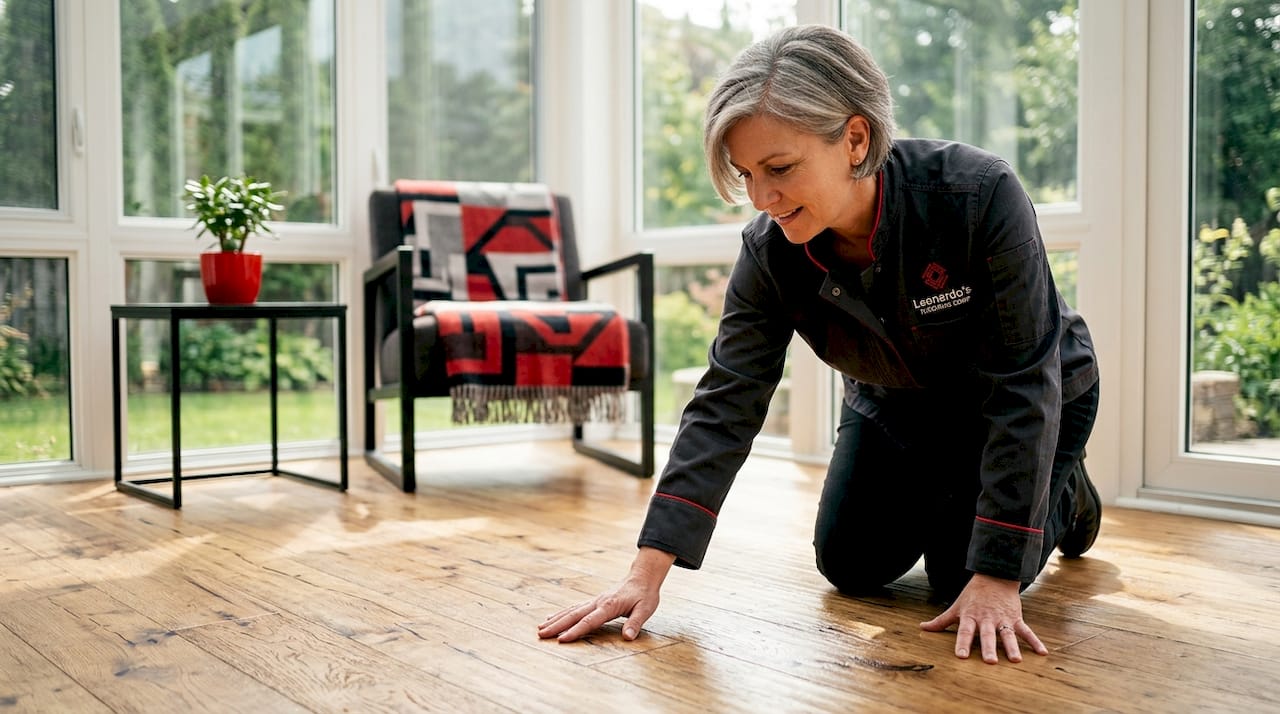
Denver’s climate creates a unique set of challenges for any flooring material. The city sits at a mile above sea level with low humidity in winter, occasional wet springs, and indoor heating systems that dry the air even further. Wood acts as a sponge, especially in fluctuating humidity like Denver’s, requiring moisture equilibrium before and after installation.
Here’s how the main flooring types stack up for Denver homeowners:
| Feature | Solid hardwood | Engineered hardwood | Laminate | Luxury vinyl plank | Tile |
|---|---|---|---|---|---|
| Durability | High (refinishable) | High | Moderate | Very high | Very high |
| Climate suitability | Moderate (needs control) | High | Moderate | Excellent | Excellent |
| Feel underfoot | Warm, solid | Warm, solid | Hollow | Slightly soft | Cold, hard |
| Resale value impact | Highest | High | Moderate | Moderate | Low to moderate |
| Average cost (installed) | $8-$15/sq ft | $6-$12/sq ft | $3-$7/sq ft | $4-$8/sq ft | $5-$12/sq ft |
| Refinishable | Yes (multiple times) | Yes (1-2 times) | No | No | No |
For a deeper look at how flooring types perform across Denver homes, the Denver flooring renovation guide covers real renovation scenarios and practical decision-making.
Pros and cons for Denver specifically:
Solid hardwood in Denver:
- Pro: Highest resale value, authentic look and feel
- Pro: Can be refinished repeatedly for a decades-long lifespan
- Con: Requires tight humidity control year-round
- Con: Not recommended for basements or areas with moisture risk
Engineered hardwood in Denver:
- Pro: Handles Denver’s humidity swings much better than solid
- Pro: Works on multiple floor levels, including basements
- Con: Refinishing options are limited compared to solid wood
Laminate in Denver:
- Pro: Budget-friendly and easy to install
- Con: Can swell if moisture gets underneath, shorter lifespan
- See a full comparison in our laminate vs hardwood breakdown
LVP in Denver:
- Pro: Truly waterproof, great for kitchens and bathrooms
- Con: Doesn’t add the same resale value as hardwood
Why choose hardwood flooring? Advantages for Denver homes
Despite the climate considerations, hardwood remains the most popular premium flooring choice for Denver homeowners. Here’s why it earns that status.
The core benefits of hardwood flooring:
- Aesthetics: Nothing matches the visual richness of real wood grain. Each plank is unique.
- Warmth and comfort: Hardwood is warmer underfoot than tile and more substantial than laminate.
- Resale value: Real estate agents consistently rank hardwood flooring as a top return-on-investment upgrade for Denver homes.
- Repairability: Scratched or dented hardwood can be sanded and refinished. Laminate and vinyl cannot.
- Longevity: Properly installed and maintained hardwood can outlast the home itself.
- Allergen reduction: Unlike carpet, hardwood doesn’t trap dust, pet dander, or allergens.
Denver’s dry climate can actually work in your favor if you plan correctly. Low ambient humidity means mold and moisture intrusion are less of a concern upstairs in most Denver homes. The challenge is preventing the wood from drying out too much, not getting too wet. Proper moisture management is more important than acclimation timelines for hardwood success in Denver, which means controlling your indoor environment matters as much as the installation itself.
“Wood is a sponge. Success depends on equilibrium moisture, not weeks of acclimation sitting in a room.”
Pro Tip: Before installation, use a pin-type or pinless moisture meter to check both the subfloor and the hardwood planks. In Denver, you’re targeting indoor relative humidity between 35% and 55% year-round. A whole-home humidifier on your furnace can make a significant difference during dry winter months, protecting your floors for years.
When you’re ready to move forward, understanding hardwood installation guidance helps set realistic expectations for your project. The professional installation benefits go beyond aesthetics and include avoiding costly moisture-related failures down the road.
Hardwood flooring installation and maintenance essentials
Installing hardwood is a process, not just an event. Denver homeowners who skip steps often pay for it later in gaps, squeaks, or warped boards. Here’s what a proper installation looks like from start to finish:
- Assess your subfloor. The subfloor must be flat (within 3/16 inch over a 10-foot span), structurally sound, and at the right moisture level. Any subfloor moisture solutions must be addressed before wood ever enters the room.
- Test moisture levels. Measure the moisture content of the subfloor and the hardwood using a calibrated moisture meter. In Denver, wood should typically be between 6% and 9% moisture content before installation.
- Acclimate the wood correctly. Stack planks in the installation space with spacers for airflow. Let them reach equilibrium with the room’s actual humidity, not just a generic “wait 72 hours” rule.
- Choose your installation method. Nail-down for solid hardwood over wood subfloors, glue-down for concrete or radiant heat, float for engineered hardwood in certain applications.
- Install with proper expansion gaps. Leave 1/2 to 3/4 inch around the perimeter for seasonal movement. This gap is hidden by baseboards but prevents buckling.
- Finish and inspect. If using unfinished hardwood, sand and apply finish on-site. Pre-finished hardwood skips this step.
- Post-installation care setup. Set up your humidification system before winter, and keep the home within the recommended humidity range.
For a more detailed walkthrough, the complete hardwood install guide covers Colorado-specific considerations that national guides miss. The installation steps overview is another useful resource for planning your project timeline.
Here’s how Denver installation timelines compare to national averages:
| Phase | National average | Denver recommendation |
|---|---|---|
| Moisture testing | Often skipped | Always required |
| Acclimation period | 3-5 days | Until equilibrium moisture is verified |
| Installation (1,000 sq ft) | 2-3 days | 2-3 days |
| Cure time (for finishes) | 24-48 hours | 48-72 hours (lower humidity slows curing) |
| Humidity stabilization | Not monitored | Ongoing with humidifier |
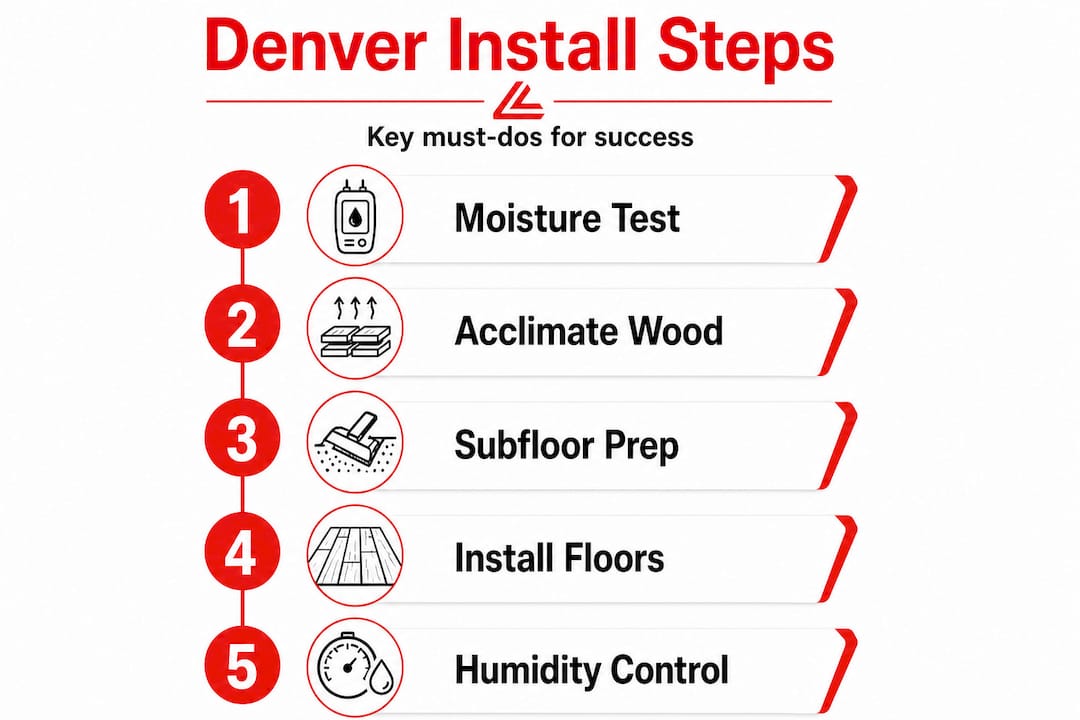
Pro Tip: Moisture meters and maintaining indoor humidity are critical for hardwood installation in Denver. Don’t rely on a visual inspection of the wood. A plank can look perfectly dry and still be at the wrong moisture content for your specific subfloor conditions.
Maintenance essentials for Denver hardwood floors:
- Sweep or vacuum with a soft brush attachment weekly to remove grit that scratches the finish.
- Use a slightly damp mop (not wet) with a hardwood-safe cleaner. Avoid steam mops entirely.
- Run a whole-home humidifier in winter to keep relative humidity between 35% and 55%.
- Place felt pads under all furniture legs and area rugs in high-traffic zones.
- Plan a professional refinishing every 7 to 10 years depending on traffic and wear.
The real key to successful hardwood floors in Denver: What most guides miss
Here’s something most flooring articles won’t tell you directly: the majority of hardwood floor failures we’ve seen in Denver had nothing to do with material quality or even installation technique. They were moisture failures. And almost all of them were preventable.
The standard advice is to “let the wood acclimate for a few days.” That’s not wrong, but it gives homeowners the wrong mental model. Acclimation isn’t a waiting game. It’s a verification process. Verifying equilibrium moisture should shape your flooring decisions far more than a calendar countdown.
Denver’s winters are genuinely brutal on wood. Indoor humidity in an unhumidified Denver home can fall below 20% in January. At that level, wood shrinks. Gaps appear between boards. Planks may crack. This isn’t a defect in the material. It’s physics. The wood is doing exactly what wood does.
The flip side happens every spring. Humidity rises, the wood absorbs moisture, and it expands. If it was installed without adequate expansion gaps, it buckles. Both of these scenarios are 100% avoidable with the right prep for moisture and ongoing humidity management.
What we’ve learned over 10 years of Denver installations is that homeowners who invest in a good whole-home humidifier and keep their home between 35% and 55% relative humidity year-round have floors that look brand new a decade later. Homeowners who don’t, sometimes call us for repairs within the first winter.
The uncomfortable truth is that “bad hardwood” is rarely bad hardwood. It’s an environment problem. And the good news is you can control your environment. That’s the single most empowering thing we can tell any Denver homeowner considering hardwood floors.
Ready for hardwood flooring? Denver’s flooring experts can help
Choosing hardwood flooring is one of the best investments you can make in your Denver home. But getting it right requires local knowledge, proper moisture testing, and installation that accounts for Colorado’s specific climate conditions.

At Leonardo’s Flooring Corp, we’ve been installing hardwood floors across the Denver metro for over 10 years. Every project starts with a real conversation about your space, your goals, and your budget. We don’t do cookie-cutter. Our Denver hardwood installation service covers everything from subfloor prep to final inspection. If you want to go deeper before your first call, our Colorado installation guide walks you through every decision point specific to this region. Reach out for a free quote and find out why 125+ Denver homeowners have left us five-star reviews.
Frequently asked questions
What’s the difference between solid and engineered hardwood flooring?
Solid hardwood is milled from a single piece of wood, while engineered hardwood uses layered construction for improved dimensional stability and moisture resistance, making it particularly well-suited for Denver’s climate swings.
How does Denver’s climate affect hardwood flooring?
Denver’s dry winters and fluctuating seasonal humidity mean moisture management and pre-installation testing are essential. The “wood is a sponge” behavior means humidity conditions directly determine whether your floor gaps in winter or buckles in spring.
Is acclimation still important before installing hardwood floors?
Acclimation helps prepare the wood, but equilibrium moisture verification using a moisture meter is more important than waiting a fixed number of days, especially in Denver homes where humidity levels vary dramatically by season.
How do I maintain hardwood floors in Denver?
Regular sweeping, humidity control between 35% and 55%, and periodic refinishing will protect your investment. Maintaining indoor humidity with a whole-home humidifier is the single most impactful maintenance step for Denver homeowners.