
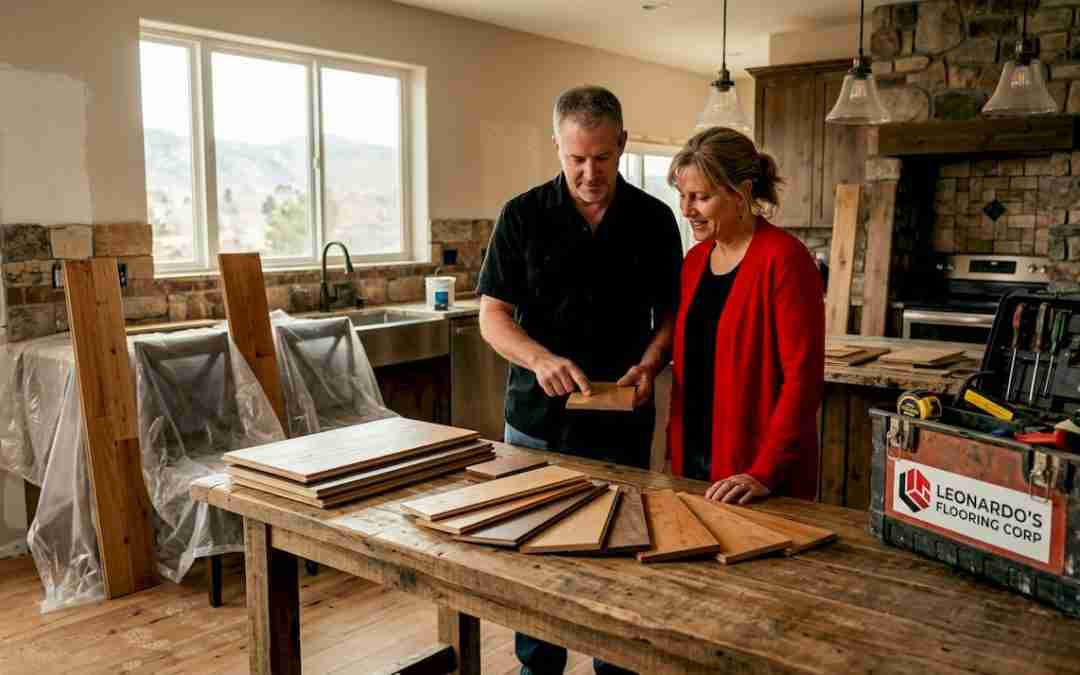
Most homeowners approach a renovation by budgeting for cabinets, countertops, and paint, then figure out flooring at the end. That’s backwards. The role of flooring in home renovations goes far beyond aesthetics. It shapes how rooms feel, how air circulates, how moisture behaves under your feet, and ultimately how much your home is worth when it’s time to sell. Whether you’re redoing a single room in Washington Park or gutting a basement in Highlands Ranch, getting flooring right from the start is the difference between a renovation you love and one you revisit in three years.
Table of Contents
- Why flooring is a cornerstone of successful home renovations
- Comparing flooring types for value and durability in Denver renovations
- Preparing subfloors and controlling moisture for durable flooring
- Applying the ‘three flooring rule’ for cohesive and stylish home design
- The benefits of modern floor refinishing for Denver renovations
- Why flooring should be your renovation’s first and most strategic choice
- Expert flooring installation and solutions for Denver homeowners
- Frequently asked questions
Key Takeaways
| Point | Details |
|---|---|
| Flooring shapes renovation impact | The choice and placement of flooring strongly influence your home’s design flow, comfort, and resale value. |
| Choose flooring early | Selecting flooring at the start of your renovation plan helps create cohesive interiors and avoid costly changes. |
| Test subfloor moisture | Proper moisture testing and mitigation prevent flooring failures common in Denver basements and concrete slabs. |
| Use the three flooring rule | Limiting your home to three types of flooring creates a visually connected, spacious feeling. |
| Refinish to save costs | Refinishing hardwood floors yields high returns, improves air quality, and extends floor life effectively. |
Why flooring is a cornerstone of successful home renovations
Before you choose a paint color or pick a cabinet style, your flooring decision belongs at the top of the list. Why? Because flooring covers the largest visible surface in any room, directly influencing how light bounces, how colors read, and how your furniture sits visually in the space. A pale, wide-plank oak floor opens a room up. Dark tile can make the same square footage feel intimate and grounded. These aren’t small stylistic choices. They’re foundational.
The role of flooring in interior design is also about flow. When a visitor walks through your front door, their eye travels horizontally across surfaces before landing on walls or furniture. Consistent flooring creates a visual path that connects rooms and makes your home feel intentional. Inconsistent flooring, floors that shift tone, scale, and material every few feet, creates subconscious visual noise that makes even well-designed rooms feel restless.
Here’s what flooring choices in renovations actually control:
- Brightness: Light-colored, smooth surfaces reflect natural light; dark or matte floors absorb it
- Perceived scale: Longer planks and consistent graining make rooms read as larger
- Warmth and comfort: Hardwood and carpet retain heat; tile and stone stay cooler, which matters in Denver winters
- Acoustic quality: Hard floors amplify sound; paired with rugs, they can be calibrated for comfort
- Traffic durability: High-traffic zones like entryways and kitchens need materials that can handle daily abuse
Flooring is not the finishing touch of a renovation. It is the stage on which everything else performs.
Planning flooring early also saves real money. If you tile a kitchen before finalizing cabinet placement, you may end up cutting tiles around base cabinets or wasting material on areas that will never be seen. A Denver home flooring renovation guide that sequences decisions correctly keeps your budget intact and your design cohesive.
Comparing flooring types for value and durability in Denver renovations
Not all flooring choices in renovations deliver the same return, and in Denver’s market specifically, that distinction matters. The Front Range real estate market rewards quality. Buyers here are educated, and they notice the difference between real hardwood and a convincing imitation.
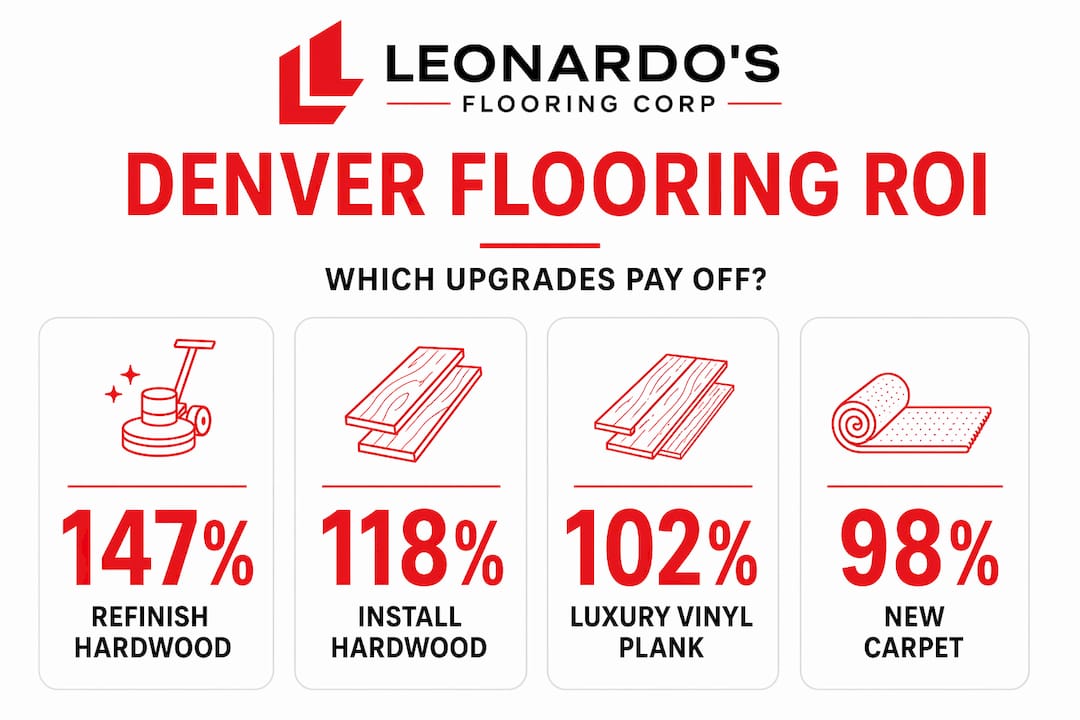
Refinishing hardwood floors yields 147% ROI, new hardwood installation returns 118%, and luxury vinyl plank (LVP) comes in at 40 to 60%. Those numbers tell a clear story: if you already have hardwood under old carpet or worn finish, refinishing it is one of the best investments you can make in a renovation. Period.
Here’s how the most popular options compare for Denver homeowners:
| Flooring type | Upfront cost (per sq ft) | Typical ROI | Best use case | Denver climate fit |
|---|---|---|---|---|
| Hardwood refinish | $3–$6 | ~147% | Existing hardwood, high-value rooms | Good with proper moisture control |
| New hardwood install | $8–$15 | ~118% | Living rooms, bedrooms, main floors | Good above grade |
| Luxury vinyl plank | $4–$9 | 40–60% | Basements, kitchens, bathrooms | Excellent, moisture-resistant |
| Laminate | $3–$7 | 40–55% | Budget renovations, low-moisture rooms | Moderate, avoid high-humidity areas |
| Tile | $5–$12 | 50–80% | Bathrooms, mudrooms, entryways | Excellent in dry zones, cold underfoot |
A few points worth knowing before you decide:
- LVP is not just a budget material anymore. Modern vinyl flooring options have realistic wood and stone visuals and hold up extremely well in Denver’s dry winters followed by humid basement summers
- Laminate should be kept away from any moisture-prone areas; Denver’s temperature swings cause expansion and contraction that can buckle laminate over time
- Hardwood above a concrete slab in a Denver basement is a risk unless moisture is properly managed (more on that in the next section)
Pro Tip: If your Denver home was built before 1980 and has original hardwood floors, have them assessed before assuming replacement. Many vintage homes have thick-cut boards that can be sanded and refinished two to three more times, delivering stunning results at a fraction of replacement cost. Check out the Colorado hardwood flooring guide and laminate flooring options Denver for additional material-specific guidance.
Preparing subfloors and controlling moisture for durable flooring
Here’s where most renovation disasters begin. Denver homeowners invest in beautiful flooring, skip proper subfloor preparation, and end up with buckling planks, adhesive failure, or mold beneath their floors within two years. Moisture is the enemy, and in Colorado, it shows up in ways people don’t always anticipate.
Concrete subfloors are the biggest source of flooring failure. Moisture in concrete must be at or below 75% relative humidity or 3 lbs per 1,000 sq ft per 24 hours to prevent flooring breakdown. Two industry-standard tests measure this: ASTM F2170, which uses in-situ probes to measure relative humidity inside the concrete slab itself, and ASTM F1869, a calcium chloride test that captures evaporative moisture at the surface. Both tests serve different purposes, and in Denver’s climate, using both is not overkill. It’s standard practice.
Before any flooring goes down over concrete, follow this sequence:
- Wait the full cure time: New concrete slabs should cure for at least 60 days before testing
- Run ASTM F2170 testing: Insert probes at the manufacturer-specified depth and wait the required equilibration period
- Confirm with ASTM F1869: Surface calcium chloride tests catch high evaporative rates that probe tests might underread
- Install an appropriate vapor barrier: Depending on results, this ranges from a simple 6-mil poly sheet to a full moisture-control underlayment system
- Address any active leaks or drainage issues first: No barrier compensates for a structural water problem
Denver basements carry an additional concern that directly connects to flooring: radon. Radon testing and mitigation before flooring installation is significantly less disruptive and more effective than retrofitting after finish floors are in place. Colorado ranks among the highest radon-level states in the country, and a sub-slab depressurization system is much easier to install before you’ve laid tile or LVP over the concrete.
Subfloor readiness checklist:
- Moisture testing complete (both RH and calcium chloride for concrete)
- Radon test completed and mitigation system installed if needed
- Subfloor leveled to within 3/16" over a 10-foot span (most flooring manufacturer spec)
- Old adhesive, staples, and debris fully removed
- Vapor barrier selected based on moisture test results
Pro Tip: Schedule your flooring installation in Denver during a period when windows can remain open for acclimation. Hardwood and engineered wood should acclimate to your home’s humidity and temperature for 48 to 72 hours before installation begins. In Denver’s dry winters, this step prevents the gapping that shows up six months later.
Applying the ‘three flooring rule’ for cohesive and stylish home design
Design professionals have quietly used this principle for years. Now it’s getting the wider attention it deserves. Limiting your home to three flooring types creates cohesion, makes spaces feel larger, and produces the kind of seamless flow that photographs well and lives even better.
The concept is simple. Pick one primary flooring material for your main living spaces, one for wet or utility areas, and one for bedrooms or secondary zones. A Denver townhome might use wide-plank white oak throughout the main level, porcelain tile in bathrooms and the mudroom entry, and carpet in the upstairs bedrooms. Three types. Clean, intentional, coherent.
Here’s how to apply it practically:
- Choose your anchor material first: This usually goes in the largest connected space, often the living room, dining room, and kitchen combined
- Match undertones, not exact colors: Your tile doesn’t need to match your hardwood, but warm-toned tile pairs better with warm-toned wood
- Use rugs as the fourth element: A bold area rug adds visual variation without introducing a fourth floor type, keeping the rule intact
- Mind your transitions: Where two flooring types meet, the transition strip or reducer matters. A cheap aluminum strip can undermine an otherwise gorgeous design
Pro Tip: When in doubt about transitions, hire a designer for a single consultation session focused on your flooring plan. A two-hour session that costs $150 to $250 can prevent $3,000 in flooring mistakes. You’ll find additional ideas and real project examples on the flooring tips and advice page.
The benefits of modern floor refinishing for Denver renovations
Refinishing gets overlooked because it doesn’t feel like a renovation. Nothing new is going in. But that’s exactly what makes it worth reconsidering.
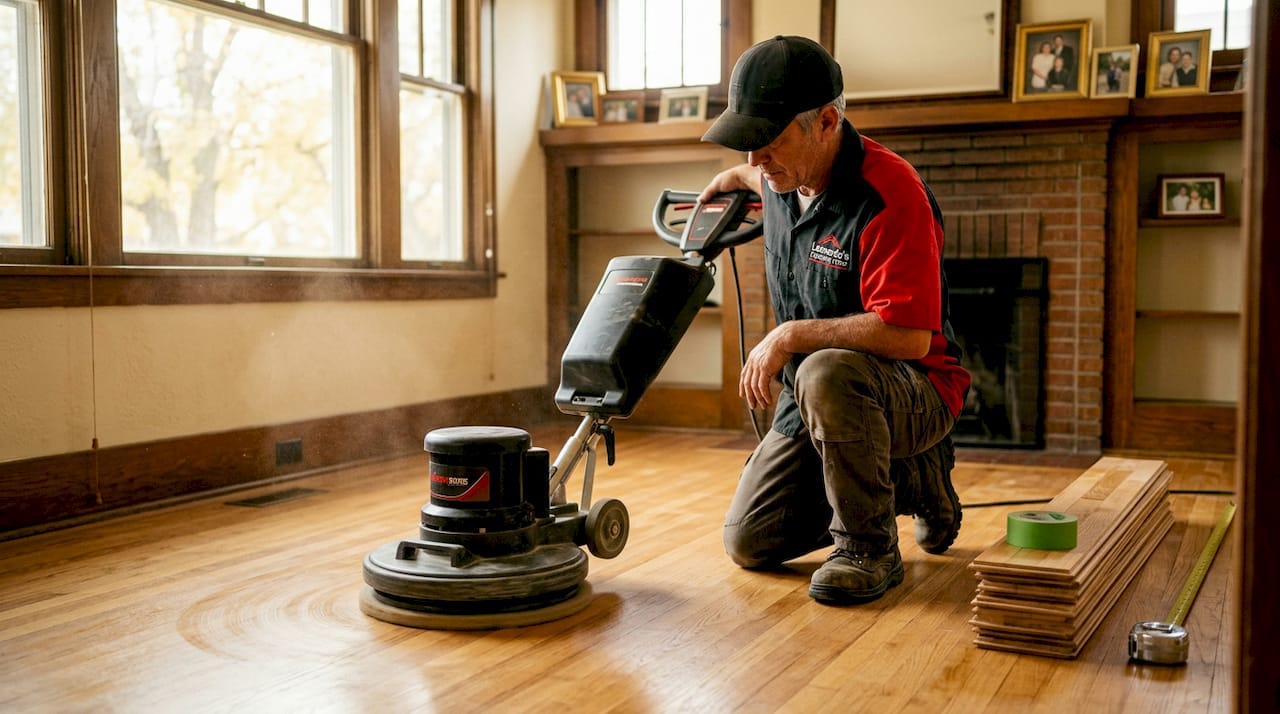
Refinishing hardwood floors refreshes appearance, improves indoor air quality, and delivers high ROI compared to full replacement. Modern dustless sanding systems capture up to 99% of dust at the source, making the process far less disruptive than it was a decade ago. And low-VOC (volatile organic compound) water-based finishes have improved dramatically in durability while cutting the chemical smell and off-gassing that used to mean vacating your home for days.
Key benefits worth knowing:
- Cost: Refinishing typically runs 25 to 40% of the cost of full replacement
- Timeline: Most refinishing projects are complete in two to three days
- Sustainability: No new raw materials, no landfill disposal of old flooring
- Customization: You can change sheen level, add stain color, or shift from a golden oak tone to a more contemporary gray or natural finish
- Health: Removing old, worn finishes that have trapped years of allergens and VOCs genuinely improves air quality
Pro Tip: If you’re planning a full renovation, schedule refinishing after all other dusty trades (drywall, demo, painting) are finished but before furniture moves back in. Freshly refinished floors scuff easily in the first 30 days, so sequencing matters. The hardwood flooring installation guide explains material-specific timing, and professional installation benefits covers why proper sequencing protects your investment.
Why flooring should be your renovation’s first and most strategic choice
After ten-plus years working on Denver homes, here’s the honest truth that most contractors won’t say out loud: flooring mistakes are the most expensive mistakes to fix.
Paint? Cover it. Tile backsplash you regret? Manageable. But flooring touches every room, every transition, every wall. When it’s wrong, the fix means moving furniture, potentially removing installed baseboards, and in the case of a moisture problem, tearing up everything and starting over with a mold remediation company.
Homeowners consistently delay flooring decisions because flooring feels like a finishing detail. It is not. Flooring decisions should drive cabinet heights, baseboard profiles, paint palette selection, and furniture scale. A complete Denver flooring renovation guide puts flooring at step one, not step eight, because every design decision downstream becomes easier once the floor is chosen.
The moisture and radon piece is where Denver homeowners specifically get caught out. Colorado’s geology means elevated radon levels in a significant portion of Front Range homes. Finishing a basement with beautiful LVP over untested concrete that later fails a radon inspection means tearing it all back up. That’s a $10,000 lesson that costs $300 to prevent.
Our view at Leonardo’s Flooring Corp is simple: flooring is not a decorative layer. It’s the structural and environmental foundation of how your home performs. Treat it that way from the first day of your renovation plan.
Expert flooring installation and solutions for Denver homeowners
Planning a renovation in the Denver metro and ready to get flooring right from the start? At Leonardo’s Flooring Corp, we’ve been serving Denver-area homeowners for over ten years as trusted Home Depot Contractors with 125+ five-star reviews to back it up.

We handle everything from moisture testing coordination and subfloor preparation to full hardwood floor installation in Denver, laminate flooring installation, and vinyl flooring installation. No cookie-cutter packages. Every project is matched to your specific rooms, budget, and timeline. Whether you’re refinishing original hardwood in a Capitol Hill bungalow or installing LVP throughout a new Centennial build, we’ll help you make the right call and execute it correctly the first time.
Frequently asked questions
How does flooring impact home renovation value?
Flooring choices significantly affect resale value, and the numbers are concrete: refinished hardwood returns 147% ROI, which makes it one of the highest-returning investments in any home renovation project.
Why is moisture testing important before flooring installation?
Skipping moisture testing is one of the most common and costly renovation mistakes. Concrete subfloors with relative humidity above 75% will cause adhesive failure, warping, and mold beneath wood or vinyl flooring within months of installation.
What is the ‘three flooring rule’ in home design?
The three flooring rule means limiting your home to three flooring types to achieve visual cohesion, reduce clutter, and create connected spaces that feel larger and more intentional throughout your home.
When should radon testing and mitigation be done during renovations?
Complete radon testing and any required mitigation before installing finish flooring. Radon mitigation before basement flooring is less invasive and far less expensive than drilling through finished floors after the fact.
What are the benefits of refinishing existing floors rather than replacing them?
Refinishing costs 25 to 40% of full replacement, generates no waste, and modern dustless refinishing techniques dramatically improve indoor air quality by removing old, allergen-laden finishes without the disruption of a full floor tear-out.