
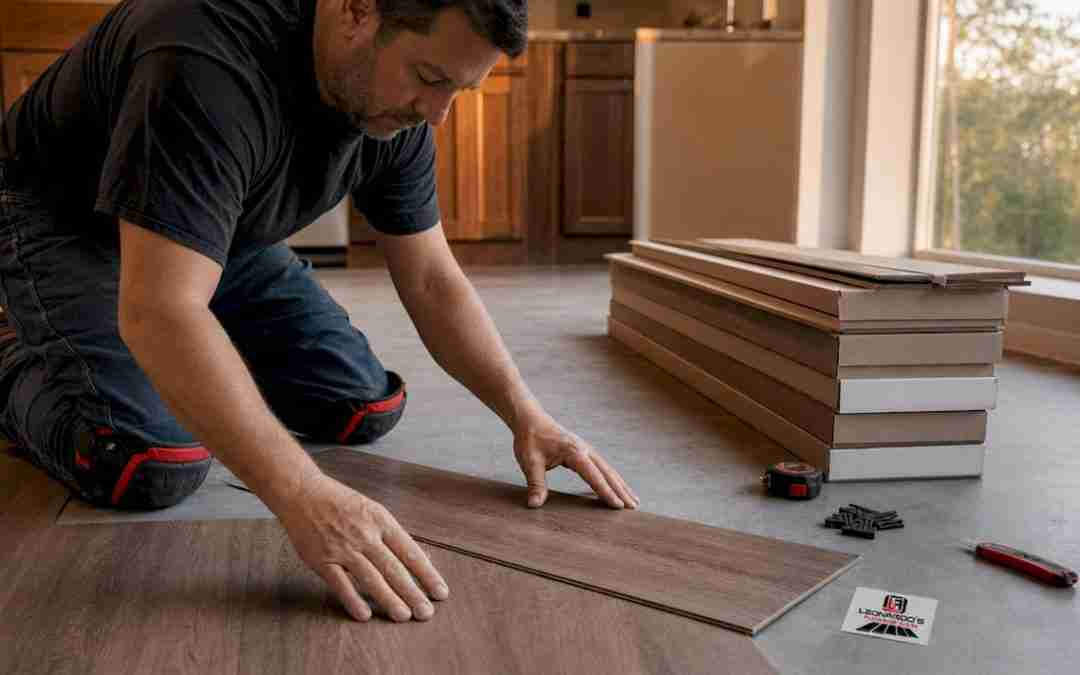
Luxury vinyl flooring is a 100% synthetic PVC product built from multiple bonded layers that replicate the look and texture of hardwood, stone, or tile with waterproof performance no natural material can match. The industry refers to it most precisely as LVP (Luxury Vinyl Plank) or LVT (Luxury Vinyl Tile), depending on format. LVP accounts for roughly 75% of all luxury vinyl sales, making it the dominant choice for homeowners replacing wood or laminate. Thickness runs from 4mm to 8mm, with wear layers ranging from 6 to 28 or more mil. That wear layer number is the single most important spec to understand before you buy.
What is luxury vinyl flooring made of?
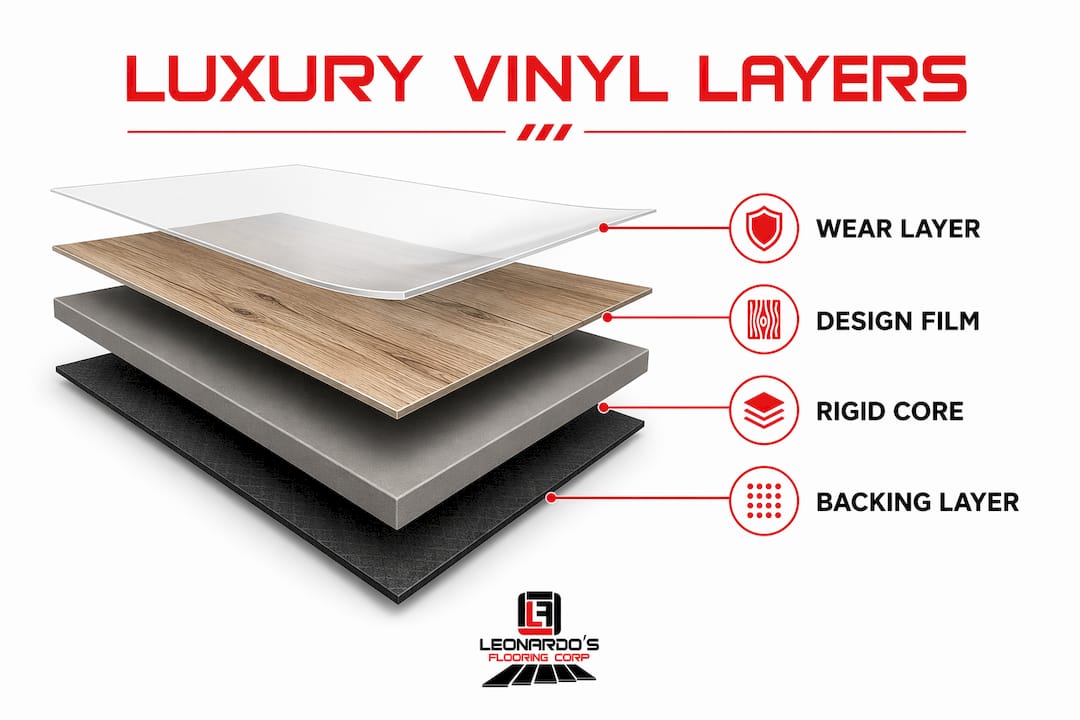
Luxury vinyl flooring is constructed from four distinct layers, and each one does a specific job. Understanding the stack tells you exactly why this product performs the way it does.
The wear layer sits on top and takes all the abuse. Thicker is better: a 6 mil wear layer suits low-traffic areas, while 20 mil or higher handles pets, kids, and commercial foot traffic. Directly beneath it sits the photographic print film, a high-resolution image layer that creates the wood grain or stone pattern. Modern EIR technology (embossed-in-register) aligns the physical texture of the plank with the printed pattern beneath it, producing a surface that is nearly indistinguishable from real wood when you run your hand across it. This is what separates true luxury vinyl from the flat, plasticky vinyl of 20 years ago.
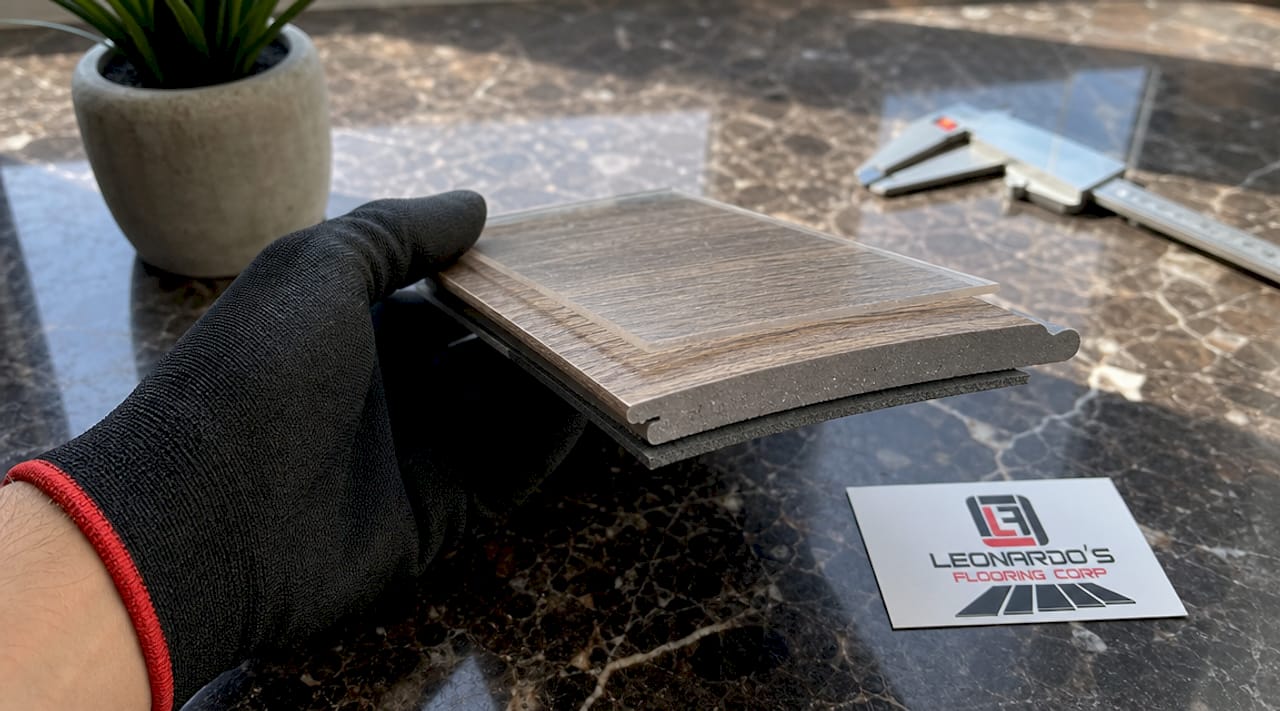
Below the print layer is the rigid core, which comes in two main varieties. SPC (stone polymer composite) uses limestone and PVC for a denser, harder core that resists denting and handles temperature swings well. WPC (wood polymer composite) blends wood fiber with PVC for a slightly softer feel underfoot, which some homeowners prefer in bedrooms or living rooms. The backing layer at the bottom provides cushioning and sound absorption, and in many products it doubles as an attached underlayment.
LVP vs. LVT: which format fits your room?
| Feature | LVP (Luxury Vinyl Plank) | LVT (Luxury Vinyl Tile) |
|---|---|---|
| Shape | Long planks mimicking wood | Square or rectangular tiles mimicking stone or ceramic |
| Best rooms | Living rooms, bedrooms, hallways | Bathrooms, kitchens, mudrooms |
| Install method | Click-lock floating or glue-down | Glue-down most common |
| Visual effect | Wood grain, natural warmth | Stone, slate, concrete looks |
| Market share | ~75% of luxury vinyl sales | ~25% of luxury vinyl sales |
Pro Tip: If you want the look of wood throughout your main floor and into a bathroom, LVP works in both spaces. You do not need to switch to tile just because a room gets wet.
What are the benefits of luxury vinyl over laminate and hardwood?
Luxury vinyl flooring outperforms laminate in wet environments and costs significantly less than hardwood. That two-part advantage explains why it has become the most installed residential floor in the U.S. over the past five years.
Waterproof performance is the defining benefit. LVP’s SPC or WPC core does not swell, warp, or delaminate when exposed to standing water. Laminate, by contrast, uses a wood-fiber core that absorbs moisture and buckles. This makes luxury vinyl the correct choice for bathrooms, kitchens, laundry rooms, and basements where laminate will eventually fail. Hardwood is equally vulnerable to moisture and requires refinishing every 7 to 10 years.
Cost is the second major factor. Material runs $1 to $7 per square foot, with professional installation adding $1 to $5 per square foot. Total installed cost typically lands between $2 and $12 per square foot, well below solid hardwood, which routinely exceeds $15 installed. For a 1,000-square-foot main floor, that difference can reach $5,000 or more.
Durability holds up over time. Luxury vinyl lasts 15 to 25 years with proper care, comparable to laminate but without laminate’s vulnerability to water damage. Laminate does carry an edge in scratch resistance, with AC4 and AC5 abrasion ratings that outperform most vinyl wear layers. If you have large dogs and no wet areas, laminate is worth considering. For most households with a mix of rooms and moisture exposure, luxury vinyl wins on overall value.
| Feature | Luxury Vinyl | Laminate | Solid Hardwood |
|---|---|---|---|
| Waterproof | Yes | No | No |
| Lifespan | 15 to 25 years | 15 to 25 years | 25 to 100+ years |
| Material cost | $1 to $7/sq ft | $1 to $5/sq ft | $5 to $15/sq ft |
| Refinishable | No | No | Yes |
| Scratch resistance | Moderate | High (AC4/AC5) | Moderate |
| DIY friendly | Yes | Yes | No |
Pro Tip: Choose your floor based on the worst room in the plan, not the best. If one bathroom or laundry room is in scope, go with luxury vinyl for the whole floor so you do not have a seam between two different products.
For a deeper look at how luxury vinyl compares to laminate on aesthetics and long-term performance, that guide covers both products side by side.
How to install luxury vinyl flooring
Installing luxury vinyl flooring follows one of two methods: click-lock floating or glue-down. Click-lock is the most common for residential LVP and the most DIY-friendly option available in flooring today.
The subfloor is where most installations succeed or fail. Improper subfloor preparation causes joint failure, cracking, and separation even when the vinyl itself is high quality. The floor must be flat to within 3/16 of an inch over a 10-foot span, clean, dry, and structurally sound before any plank goes down. Skipping this step is the single most common reason a floor fails within the first year.
Here is the standard installation sequence for click-lock LVP:
- Remove existing flooring and inspect the subfloor for damage, high spots, or soft areas.
- Repair and level the subfloor using floor leveling compound where needed.
- Acclimate the planks by leaving them in the room for 24 to 48 hours to adjust to temperature and humidity.
- Plan your layout by measuring the room and calculating the starting row width to avoid narrow cuts at the walls.
- Install the first row along the longest straight wall, leaving a 1/4-inch expansion gap at all walls.
- Mix boards from multiple boxes to distribute color and pattern variation naturally across the floor.
- Click each plank into the previous row at an angle, pressing down to lock the joint.
- Install transitions and trim at doorways, stairs, and wall bases to cover the expansion gap.
Mixing boards from different boxes during installation reduces the artificial, repetitive pattern look that cheaper luxury vinyl products produce in large rooms. This one step costs nothing and makes a visible difference in the finished result.
Professional installation ensures correct subfloor prep, proper locking, and longer floor life. DIY is possible, but errors in subfloor leveling or joint alignment create problems that are expensive to fix after the fact.
Pro Tip: After installation, place felt pads under all furniture legs before moving anything onto the new floor. Dragging furniture across a fresh vinyl floor without protection causes permanent scuff marks that no cleaning will remove.
Maintenance for luxury vinyl flooring: what actually works
Luxury vinyl flooring is low maintenance, but it is not zero maintenance. The right habits extend its life significantly; the wrong ones cause damage that cannot be undone.
Cleaning is straightforward. Sweep or vacuum daily in high-traffic areas to remove grit, which acts like sandpaper on the wear layer over time. Damp mop with a pH-neutral cleaner weekly. Avoid steam mops entirely. The heat and pressure from steam can loosen the adhesive in glue-down installations and warp the planks in floating floors. Avoid wax-based cleaners and oil soaps, which leave a residue that dulls the finish and attracts dirt.
Here is a practical do and don’t list for daily care:
Do:
- Sweep or vacuum regularly with a soft-bristle attachment
- Use a damp mop with a vinyl-safe, pH-neutral cleaner
- Place doormats at all exterior entries to trap grit before it reaches the floor
- Use felt pads under furniture legs at all times
Don’t:
- Use a steam mop on any luxury vinyl product
- Drag furniture without protection
- Use abrasive scrubbers or harsh chemical cleaners
- Expose the floor to prolonged direct sunlight without UV-blocking window treatments
Luxury vinyl is not scratch-proof. The wear layer resists light scratches well, but heavy furniture without felt pads causes permanent marks. A 20 mil or higher wear layer handles pets and active households better than a 6 mil product, which is why wear layer thickness matters more than overall plank thickness when you are comparing products.
One misunderstanding worth clearing up: waterproof does not mean indestructible. The core will not absorb water, but standing water left at the edges of a room can seep under the floor and damage the subfloor beneath it. Wipe up spills at the perimeter and keep grout lines or seams sealed in wet rooms.
Pro Tip: If pattern repetition bothers you after installation, area rugs placed strategically in the middle of large rooms break up the visual field and make the repetition invisible without replacing the floor.
Key takeaways
Luxury vinyl flooring is the best all-around choice for homeowners who need waterproof performance, realistic aesthetics, and a 15 to 25-year lifespan at a fraction of hardwood’s cost.
| Point | Details |
|---|---|
| Four-layer construction | Wear layer, print film, rigid core, and backing each serve a distinct performance function. |
| Waterproof advantage | LVP’s SPC or WPC core does not swell or warp, making it the right choice for kitchens, bathrooms, and basements. |
| Cost efficiency | Total installed cost runs $2 to $12 per square foot, well below solid hardwood. |
| Subfloor prep is critical | A flat, stable subfloor is the single most important factor for a lasting click-lock installation. |
| Wear layer determines durability | Choose 20 mil or higher for pets, kids, or heavy foot traffic to protect the floor long-term. |
What I’ve learned after years of installing luxury vinyl floors
I have installed luxury vinyl in hundreds of Denver homes, and the pattern I see most often is this: homeowners spend time comparing brands and colors, then underestimate the subfloor. The floor fails at the joints within 18 months, and they blame the product. The product is almost never the problem.
The second thing I see is buyers choosing wear layer thickness based on price rather than lifestyle. A 6 mil wear layer in a house with two large dogs is a mistake you will notice within a year. Spend the extra dollar per square foot on a 20 mil product and you will not think about that floor again for 20 years.
On the LVP versus laminate question, I lean toward luxury vinyl for most Denver households. Basements here get moisture. Kitchens get spills. Laminate handles those situations poorly. The scratch resistance advantage laminate holds is real, but it matters less than waterproofing in the rooms where flooring takes the most abuse. If you have a dry, low-traffic study or bedroom, laminate is a fine choice. For everything else, luxury vinyl is the more forgiving product.
One thing I tell every customer: do not confuse luxury vinyl with the sheet vinyl or peel-and-stick tile from 30 years ago. Modern luxury vinyl is a completely different product. The core construction, the EIR texture printing, and the wear layer technology have nothing in common with old vinyl. Buyers who dismiss it based on that association are leaving a genuinely good floor off their list.
— Jim
Get your luxury vinyl floor installed right in Denver
If you are ready to move from research to installation, Leonardosflooringcorp handles every step of the process for homeowners across the Denver metro.
From subfloor preparation to final trim, the team at Leonardosflooringcorp brings 10 years of local experience and 125+ five-star reviews to every project. Whether you are installing LVP throughout a main floor or updating a single bathroom with LVT, the work is done right the first time. Explore the full range of vinyl flooring options or go straight to the vinyl installation service page to request an estimate. No cookie-cutter quotes. No surprises on the bill.
FAQ
What is luxury vinyl tile (LVT)?
Luxury vinyl tile is the square or rectangular format of luxury vinyl flooring, designed to mimic stone, ceramic, or concrete. It shares the same four-layer PVC construction as LVP but is installed most often in kitchens and bathrooms using a glue-down method.
Is luxury vinyl flooring waterproof?
Yes. The SPC or WPC rigid core in luxury vinyl does not absorb water or swell, making it fully waterproof. This is its primary advantage over laminate, which uses a wood-fiber core that buckles when exposed to moisture.
How long does luxury vinyl flooring last?
Luxury vinyl flooring lasts 15 to 25 years with proper care. Lifespan depends heavily on wear layer thickness and maintenance habits, particularly keeping grit off the surface and using felt pads under furniture.
Can I install luxury vinyl flooring myself?
Click-lock LVP is one of the most DIY-friendly floors available. The critical requirement is a flat, stable subfloor. Uneven subfloors cause joint cracking and separation regardless of installation skill, so leveling the subfloor before you start is not optional.
Why choose luxury vinyl over laminate?
Luxury vinyl outperforms laminate in any room with moisture exposure because its core is fully waterproof. Laminate offers better scratch resistance but fails in kitchens, bathrooms, and basements where water contact is likely.