

Tile flooring is defined as a hard surface covering made from ceramic, porcelain, or natural stone, and it delivers durability, water resistance, and design flexibility that few other materials can match. The benefits of tile flooring are especially relevant in Denver, where high-altitude UV exposure, dry winters, and active households put floors under real stress. Brands like Daltile and standards like ANSI A137.1 set the quality benchmarks that separate long-lasting tile from short-term solutions. Well-installed tile can last 20 years or more, with some installations surviving a century. That kind of lifespan makes tile one of the strongest long-term flooring investments available to Denver property owners.
What are the real benefits of tile flooring for durability?
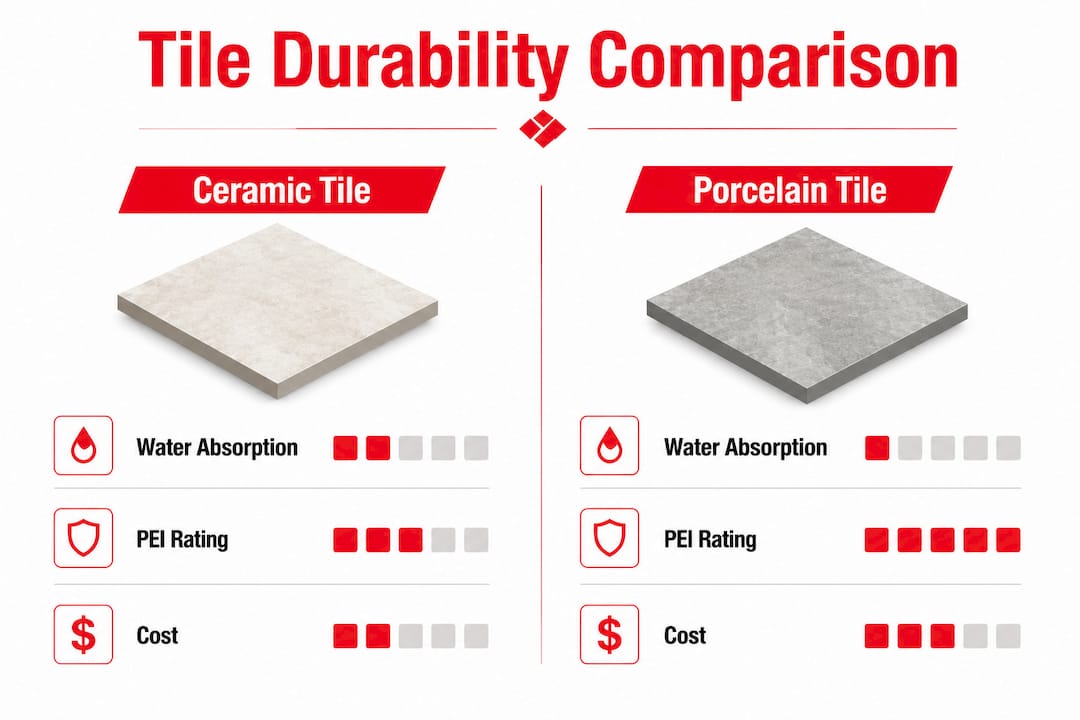
Tile’s durability comes from its composition, not just its surface hardness. Ceramic and porcelain tiles differ significantly in how they handle moisture. Ceramic tile absorbs between 0.5% and 7% water by weight, while porcelain absorbs less than 0.5%. That difference matters in Denver bathrooms, mudrooms, and commercial kitchens where moisture exposure is constant.
The Porcelain Enamel Institute (PEI) wear rating system grades tiles from 1 to 5. A PEI 1 tile belongs on a wall. A PEI 4 or 5 tile handles heavy residential and commercial foot traffic without showing wear. Through-body porcelain, where the color and texture run all the way through the tile, resists chips and scratches far better than glazed-only surfaces. That matters in a Denver retail space or restaurant where dropped items and heavy carts are daily realities.
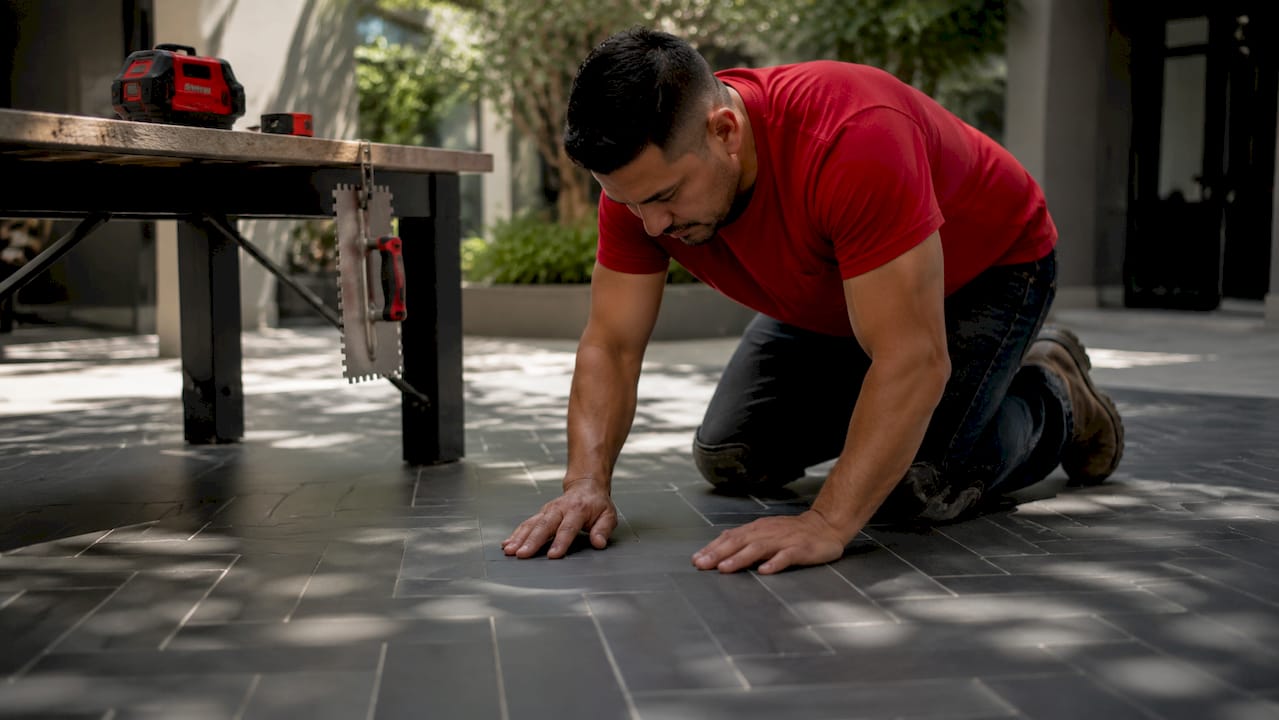
Subfloor preparation, grout selection, and tile choice matched to moisture and traffic profiles are critical to how long a floor actually lasts. A tile installed over a poorly prepared subfloor will crack within years, no matter how high its PEI rating. Proper installation locks in the durability that tile’s chemistry promises.
Pro Tip: When shopping for tile in Denver, ask your supplier for the tile’s water absorption classification and PEI rating before you buy. These two numbers tell you more about real-world performance than any marketing description.
The table below shows how ceramic and porcelain compare across the factors that matter most for Denver properties.
| Feature | Ceramic Tile | Porcelain Tile |
|---|---|---|
| Water Absorption | 0.5%–7% | Less than 0.5% |
| PEI Wear Rating Range | 1–4 | 3–5 |
| Best Use | Dry to low-moisture areas | Wet rooms, high-traffic spaces |
| Typical Lifespan | 20+ years with care | 50+ years with care |
| Cost Range | Lower upfront cost | Higher upfront, lower long-term |
The long-term cost math favors tile strongly. Hardwood floors require refinishing every 7–10 years. Laminate typically needs full replacement within 15–25 years. Tile, maintained correctly, simply does not wear out at the same rate. For Denver business owners calculating total cost of ownership, that replacement gap is significant. You can learn more about what drives flooring durability in different room conditions.
How do you keep tile floors looking their best?
Tile is low maintenance, but “low” does not mean “no.” The right routine protects both the tile surface and the grout, which is the component most likely to fail first. Grout absorbs moisture more readily than tile and requires consistent care to stay clean and structurally sound.
Here is a practical maintenance schedule that works for Denver homes and businesses:
- Sweep or vacuum daily in high-traffic areas. Grit and sand act like sandpaper on grout and glazed tile surfaces over time.
- Mop weekly using a pH-neutral cleaner. Cleaners outside the pH 6–9 range break down grout chemistry and cause premature cracking and discoloration.
- Seal grout annually. Unsealed grout in a Denver bathroom or kitchen absorbs water, soap residue, and bacteria. One afternoon of sealing work per year prevents years of remediation costs.
- Replace caulk at tile joints every 1–2 years, especially around tubs, showers, and sinks where movement and moisture are highest.
- Run exhaust fans for at least 15 minutes after every shower. Extended ventilation keeps grout moisture low and cuts mold risk significantly.
The most common mistake Denver homeowners make is using all-purpose household cleaners on tile. Products like bleach-based sprays or acidic bathroom cleaners feel effective because they remove visible grime. What they also do is strip grout sealer and etch the grout surface, creating microscopic channels where moisture and mold take hold. The damage is invisible at first and catastrophic over time.
Pro Tip: After mopping, leave a window cracked or run a fan for 20 minutes. Tile dries fast, but grout joints hold moisture longer than the surface suggests. That extra drying time makes a real difference in mold prevention.
Slip resistance also requires ongoing maintenance, not just initial tile selection. Cleaning residues, soap film, and contaminants reduce traction over time. Rinsing floors thoroughly after mopping restores the surface friction that keeps tile safe in wet areas.
How does tile compare to hardwood, laminate, and vinyl?
Tile holds clear advantages in specific categories, and honest trade-offs in others. Denver property owners deserve a straight comparison rather than a sales pitch.
Moisture and stain resistance
Tile wins outright. Hardwood warps and stains with water exposure. Laminate delaminates when moisture penetrates its core. Vinyl handles moisture well but cannot match porcelain’s near-zero absorption rate. For Denver basements, bathrooms, mudrooms, and commercial kitchens, tile is the only material that performs without compromise.
Slip resistance and safety
The ANSI standard requires a minimum DCOF of 0.42 for safe wet walking surfaces. Tile meeting this threshold is as safe as any other flooring option in wet conditions. The key is selecting tile with a published DCOF rating, not just a textured surface. Texture is not a safety specification. A published number is.
Design versatility
Tile offers more design options than hardwood, laminate, or vinyl in terms of raw variety. Tile comes in a wide range of colors, sizes, patterns, and textures, including wood-look and natural stone finishes that replicate premium materials at lower cost. Hardwood offers warmth and grain variation. Laminate mimics wood but lacks depth. Vinyl has improved dramatically but still reads as synthetic to most buyers.
Comfort and acoustics
This is where tile requires honest acknowledgment. Tile is hard and cold underfoot. In Denver winters, an unheated tile floor in a bathroom or kitchen feels noticeably colder than hardwood or carpet. Radiant floor heating solves this completely and pairs naturally with tile’s thermal mass. Without it, area rugs and anti-fatigue mats are practical solutions for kitchens and workspaces.
The comparison below summarizes the key trade-offs:
| Category | Tile | Hardwood | Laminate | Vinyl |
|---|---|---|---|---|
| Moisture Resistance | Excellent | Poor | Fair | Good |
| Lifespan | 20–100 years | 25–100 years (with refinishing) | 15–25 years | 10–20 years |
| Maintenance Effort | Low | Medium | Low | Low |
| Slip Safety (wet) | High (with DCOF rating) | Medium | Low | Medium |
| Comfort Underfoot | Hard, cold | Warm | Medium | Soft |
| Design Variety | Very high | Medium | Medium | High |
For Denver business owners comparing tile flooring performance in high-traffic areas, the durability and maintenance advantages typically outweigh the comfort trade-off in commercial settings.
What aesthetic advantages does tile offer denver interiors?
Tile’s design range is genuinely broad. The options available today go far beyond the white bathroom squares most people picture. Denver homeowners and business owners can access tile in formats that serve nearly any design goal.
Current tile design options worth knowing:
- Large-format tiles (24×24 inches and larger) create a clean, open look that makes rooms feel bigger. They work well in open-plan Denver lofts and commercial lobbies.
- Wood-look porcelain delivers the warmth of hardwood with tile’s moisture resistance. This is the top choice for Denver basements and mudrooms where real wood would fail.
- Patterned encaustic-style tiles add visual interest to entryways, kitchen backsplashes, and accent floors without requiring complex installation.
- Textured stone-look tiles suit Denver’s mountain-modern aesthetic and pair well with exposed brick, concrete, and natural wood elements.
- Mosaic tiles in glass or ceramic create focal points in showers, feature walls, and commercial bar areas.
Tile size and layout direction also shape how a room feels. Running large tiles on a diagonal makes a narrow room feel wider. Staggered subway tile in a herringbone pattern adds movement to a plain wall. These are design decisions that cost nothing extra in materials but significantly change the finished result. You can explore tile design ideas for every room to see how layout choices translate in real spaces.
For Denver businesses, tile offers something no other flooring material does as cleanly: the ability to incorporate brand colors and patterns directly into the floor. A restaurant, retail store, or medical office can use custom tile layouts to reinforce identity without wall graphics or signage.
Key takeaways
Tile flooring delivers lasting value when you match the right tile type, installation quality, and maintenance routine to your specific space.
| Point | Details |
|---|---|
| Porcelain outperforms ceramic in wet areas | Choose porcelain with less than 0.5% water absorption for bathrooms, kitchens, and mudrooms. |
| Grout is the maintenance priority | Seal grout annually and use only pH-neutral cleaners to prevent cracking and mold. |
| DCOF ratings define slip safety | Select tile with a published DCOF rating above 0.42 for any wet or high-traffic surface. |
| Installation quality determines lifespan | Proper subfloor prep and grout selection extend tile life well beyond 20 years. |
| Design versatility serves both homes and businesses | Wood-look, stone-look, and patterned tiles suit Denver’s residential and commercial interiors equally well. |
What i’ve learned after years of tile installations in denver
After working on hundreds of tile projects across Denver, the pattern I see most often is this: homeowners choose the right tile and then underinvest in installation and maintenance. The tile gets all the attention. The grout and subfloor get treated as afterthoughts. That is exactly backwards.
Denver’s climate adds a layer of complexity that out-of-state guides miss. The dry air here means tile adhesives and grout cure differently than they do in humid climates. Temperature swings between seasons create more expansion and contraction stress on floor systems than most people expect. These are not reasons to avoid tile. They are reasons to install it correctly the first time.
Slip resistance is another area where I see buyers make avoidable mistakes. Choosing a tile because it looks textured is not the same as choosing a tile with a verified DCOF rating. I always ask suppliers for the published DCOF number before recommending any tile for a bathroom, entryway, or commercial kitchen. That one question has saved clients from real liability and real injuries.
The design side of tile is where I see the most untapped potential. Denver has a strong mountain-modern aesthetic right now, and large-format wood-look porcelain fits it perfectly. Clients who commit to a layout direction and a grout color that complements the tile end up with floors that look intentional and expensive. Clients who treat grout color as an afterthought end up with floors that look unfinished regardless of tile quality.
My honest recommendation: spend 80% of your decision-making energy on installation quality and grout selection. The tile itself is the easy part.
— Jim
Ready to install tile flooring in your denver property?
Leonardosflooringcorp has been installing tile floors across the Denver metro for over 10 years, handling everything from subfloor preparation to final grout sealing for both residential and commercial properties.
Every tile project Leonardosflooringcorp takes on starts with a real conversation about your space, your usage, and your budget. No cookie-cutter quotes. No surprises on installation day. With 125+ five-star reviews and Home Depot Contractor status, the team brings the technical knowledge and local experience your floor deserves. Explore professional tile installation in Denver to see what a properly planned and installed tile floor looks like from start to finish. If you are also weighing other options, the Denver tile installation guide covers everything you need to know before committing.
FAQ
How long does tile flooring last in a denver home?
Well-installed and maintained tile floors last 20 years or more, with some lasting up to a century. Porcelain tile in low-moisture areas with proper grout sealing consistently reaches the upper end of that range.
What is the best tile type for denver bathrooms?
Porcelain tile with a water absorption rate below 0.5% is the best choice for Denver bathrooms. Pair it with a DCOF rating above 0.42 for safe wet-surface performance.
How often should i seal tile grout?
Grout requires annual sealing in most residential applications, and more frequently in high-moisture areas like showers. Skipping this step is the leading cause of grout cracking and mold growth behind tiles.
Can tile flooring work in a denver commercial space?
Tile is one of the strongest choices for commercial spaces because it resists heavy foot traffic, moisture, stains, and cleaning chemicals. Select PEI 4 or 5 rated tile for any area with consistent commercial use.
Is tile flooring cold underfoot in denver winters?
Tile does conduct cold more than hardwood or carpet. Radiant floor heating eliminates this issue entirely and pairs naturally with tile’s thermal properties. Area rugs and anti-fatigue mats are practical alternatives for kitchens and workspaces.