

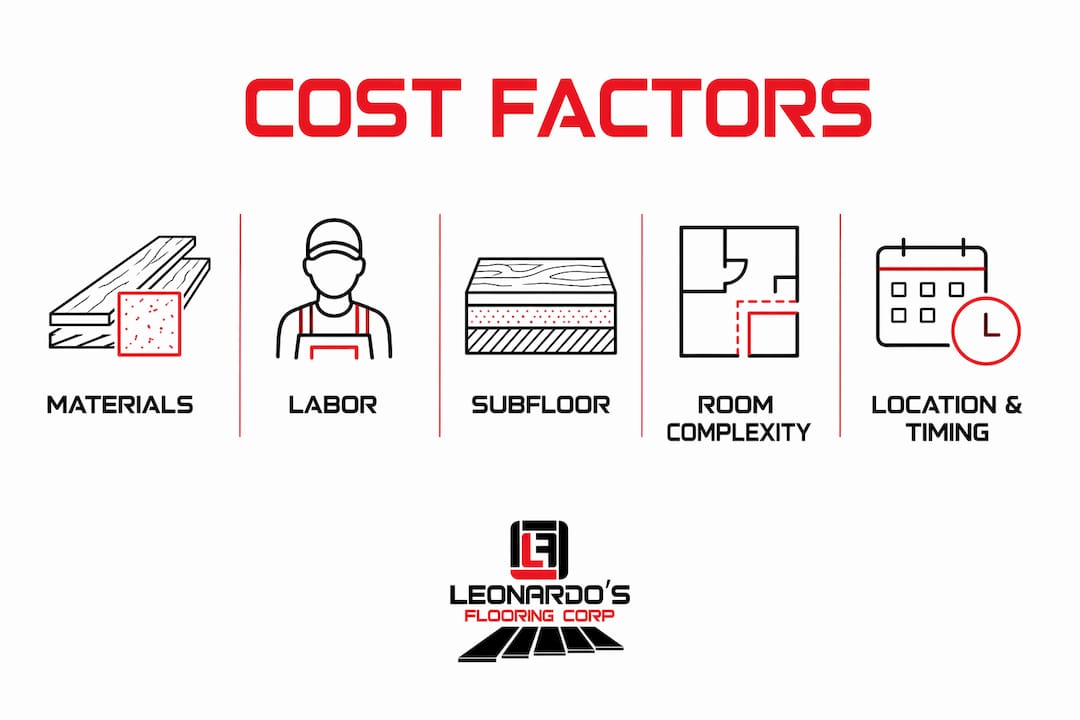
Floor installation cost factors are the specific variables that determine how much you pay per square foot when new flooring goes into your home or business. Professional installation runs $3–$25 per square foot, with total project costs typically landing between $1,500 and $12,500. That wide range exists because five core drivers shape every quote: material type, labor complexity, subfloor condition, room layout, and your location in Denver. Understanding each one puts you in control of your budget before a single board gets laid.
What is floor installation cost factors and how do they break down?
The floor installation cost breakdown splits into two main buckets: labor at roughly 60% and materials at roughly 40% of the total project budget. That ratio surprises most homeowners who assume the floor itself is the biggest expense. Installer rates run between $60 and $120 per hour, and the skill level of your crew directly affects both the final price and the quality of the result. Specialized installers command premium rates because their precision reduces waste and callbacks.
The material you choose sets the floor for everything else. Hardwood and tile require more skill and time to install, which pushes labor costs higher even before you factor in the material price itself. Vinyl and laminate are faster to install, which keeps labor lower. Knowing this relationship helps you make smarter tradeoffs when you build your budget.

How do different flooring materials affect total installation costs?
Material choice is the single biggest variable in your flooring installation expense analysis. Hardwood installs at $8–$20 per square foot fully installed, while carpet lands at $3–$9 per square foot. That gap reflects both the raw material cost and the labor intensity required to install each type correctly.
| Flooring Type | Typical Material Cost | Typical Labor Cost | Installed Range (per sq ft) |
|---|---|---|---|
| Hardwood | $4–$12 | $4–$8 | $8–$20 |
| Tile | $2–$10 | $4–$8 | $6–$18 |
| Laminate | $1–$5 | $2–$4 | $3–$9 |
| Luxury Vinyl Plank | $2–$7 | $2–$4 | $4–$11 |
| Carpet | $1–$5 | $2–$4 | $3–$9 |
Hardwood requires acclimation before installation, and tile needs moisture barriers to prevent failure over time. Both steps add prep time and cost that cheaper materials skip. Tile also demands precise cuts and grout work, which is why tile labor rates match or exceed hardwood in most Denver projects.
Matching your material to the room’s actual conditions is the smarter move. A flooring selection guide built around moisture profile and traffic patterns will save you money on repairs down the road. Luxury vinyl plank, for example, handles Denver’s dry winters and occasional humidity swings better than solid hardwood in below-grade spaces like basements.
Pro Tip: Get quotes for two or three material options at the same time. The labor cost difference between laminate and hardwood in the same room often surprises homeowners and can shift the final decision.
What role does subfloor condition and preparation play in installation costs?
Subfloor preparation is the most common source of budget surprises in any flooring project. Leveling compounds and moisture barriers add $1–$5 per square foot depending on how severe the problem is. On a 500-square-foot project, that is an extra $500–$2,500 that most homeowners do not budget for upfront.
Subfloor problems that drive up costs include:
- Unevenness: Floors more than 3/16 of an inch out of level over a 10-foot span require grinding or self-leveling compound before any flooring goes down.
- Moisture intrusion: Concrete slabs in Denver basements and ground-floor spaces frequently test high for moisture. A vapor barrier or epoxy moisture mitigation coat adds cost but prevents floor failure.
- Rot or soft spots: Wood subfloors with water damage need partial or full replacement before installation can begin.
- Old adhesive residue: Glued-down tile or sheet vinyl leaves behind adhesive that must be ground off or encapsulated, adding labor hours.
Subfloor moisture and unevenness are the two problems most likely to go undetected until demo day. By then, your installer has already mobilized and the clock is running. Catching these issues early changes the cost conversation from reactive to planned.
Pro Tip: Ask your installer to walk the subfloor before signing a contract. A 15-minute inspection with a moisture meter and a long straightedge can reveal thousands of dollars in hidden prep work.
How do room size, layout complexity, and existing flooring removal affect cost?
Room size and shape directly control how much labor time your project requires. Larger, unobstructed spaces cost less per square foot because installers work faster with fewer cuts and obstacles. Small rooms often trigger minimum charge policies, which push the effective rate well above the standard per-square-foot price.
Here is how layout and demolition factors stack up in order of cost impact:
- Simple rectangular room: Lowest labor cost. Minimal cuts, fast layout, no pattern matching required.
- Room with multiple doorways: Each threshold requires a transition strip and a precise cut. Adds time and material cost.
- Kitchen with an island: Installers must cut around the island perimeter, increasing precision cuts and waste.
- Diagonal or herringbone pattern: Complex patterns raise labor time by nearly 40% compared to straight-lay installations. More cuts, more waste, more time.
- Irregular or L-shaped room: Requires careful layout planning to avoid awkward cuts at visible walls.
Demolition adds a separate line item to every project. Tile removal runs $2–$4 per square foot because it requires chiseling and generates heavy debris. Carpet removal is the cheapest option at $0.50–$1.00 per square foot. Disposal fees for the hauled material add to the total regardless of flooring type.
Room layout complexity increases labor by 20–40% over a simple rectangular space. That means a 400-square-foot kitchen with an island and diagonal tile could cost as much as a 560-square-foot plain bedroom in straight-lay laminate. The shape of the room matters as much as the size.
In what ways do geographic location and timing influence flooring installation costs?
Denver’s labor market sets a specific baseline for what you will pay. Urban areas with higher living costs run labor rates 20–50% above rural locales. Denver sits firmly in the higher-cost category, and that premium reflects both the cost of living and the demand for skilled tradespeople in a growing metro.
Factors that shape your Denver-specific pricing include:
- Local labor demand: Denver’s construction and renovation market stays active year-round, which keeps installer availability tight and rates competitive.
- Seasonal timing: Scheduling your project in late fall or winter typically opens up more installer availability. Demand drops after the summer renovation rush, and some contractors offer better pricing to fill their calendars.
- Project scope and access: High-rise condos and commercial spaces in downtown Denver add complexity. Elevator logistics, parking restrictions, and building access rules all add time to the job.
- Material lead times: Supply chain conditions affect when materials arrive. Delays push your project start date and can affect pricing if material costs shift between quote and delivery.
Denver’s seasonal pricing patterns reward homeowners who plan ahead. Booking a project in october or november rather than may or june can translate to real savings without sacrificing quality. The floor does not know what month it was installed.
Key takeaways
Floor installation costs are controlled by five factors: material type, labor rates, subfloor condition, room complexity, and location. Ignoring any one of them leads to budget surprises.
| Point | Details |
|---|---|
| Labor dominates the budget | Labor accounts for roughly 60% of total cost, so installer skill and efficiency matter as much as material price. |
| Subfloor prep is unpredictable | Moisture and unevenness can add $1–$5 per square foot in prep costs that most homeowners do not budget for. |
| Room shape drives labor time | Complex layouts and patterns increase labor time by up to 40% compared to simple rectangular rooms. |
| Denver location adds a premium | Urban labor rates in Denver run 20–50% above rural areas, making local market awareness critical for budgeting. |
| Detailed quotes prevent surprises | Itemized bids covering materials, labor, subfloor prep, and disposal let you compare quotes accurately. |
What I have learned after 10 years of Denver flooring projects
The homeowners who get the most value from a flooring project are the ones who treat the quote process like a job interview. They ask for itemized bids, not just a price per square foot. A headline number without line items for subfloor prep, disposal, transitions, and trim is not a real quote. It is a starting point that will grow.
The second thing I have seen consistently: people underestimate how much the subfloor matters. I have walked into projects where the homeowner picked a beautiful hardwood, budgeted carefully, and then discovered the concrete slab had a moisture problem that added $1,500 to the job. That is not the installer’s fault. It is a discovery issue. A proper site visit before signing anything catches these problems when they are still just line items on a revised estimate rather than mid-project arguments.
The third pattern is material selection driven by price alone. Vinyl plank at $4 per square foot installed sounds great until it goes into a high-traffic commercial space and shows wear in 18 months. Matching the material to the actual use case, foot traffic, moisture exposure, and maintenance expectations, is where long-term value lives. The ROI of quality flooring shows up in resale value and in not replacing the floor again in three years.
My honest advice: get three bids, ask each contractor to walk the space before quoting, and compare the line items rather than the totals. The cheapest bid with the fewest line items is almost always the most expensive project by the time it is done.
— Jim
Leonardosflooringcorp: your Denver flooring cost partner
Planning a flooring project in Denver means navigating material costs, subfloor conditions, and labor rates that vary by neighborhood and season. Leonardosflooringcorp has handled this work across the Denver metro for over 10 years, covering hardwood floor installation, laminate, vinyl, tile, and epoxy for both residential and commercial properties.

Every estimate from Leonardosflooringcorp includes a site visit and an itemized breakdown covering materials, labor, subfloor prep, and disposal. No headline numbers, no hidden line items. With 125+ five-star reviews and Home Depot Contractor status, the team brings the experience to price your project accurately from day one. Request a free estimate and get a clear picture of your full installation costs before any work begins.
FAQ
What is the average cost to install flooring per square foot?
Professional flooring installation costs $3–$25 per square foot depending on material type, labor complexity, and location. Most residential projects in Denver fall between $1,500 and $12,500 total.
Why does subfloor preparation add so much to the final price?
Subfloor leveling and moisture barriers add $1–$5 per square foot, and these costs are often unknown until the existing floor is removed. Scheduling a pre-installation inspection reduces the chance of mid-project surprises.
Does room shape really change what I pay for flooring installation?
Yes. Complex room layouts increase labor by 20–40% over a simple rectangular space. Diagonal patterns, islands, and multiple doorways all add precision cuts and time to the job.
Is it cheaper to install flooring in winter in Denver?
Scheduling in late fall or winter typically improves installer availability and can lower pricing. Denver’s renovation demand peaks in spring and summer, so off-peak timing gives you more options and negotiating room.
What should a flooring installation quote include?
A complete quote covers materials, labor, subfloor preparation, disposal fees, transition strips, and trim. Transparent itemized bids let you compare contractors accurately beyond the headline price per square foot.