
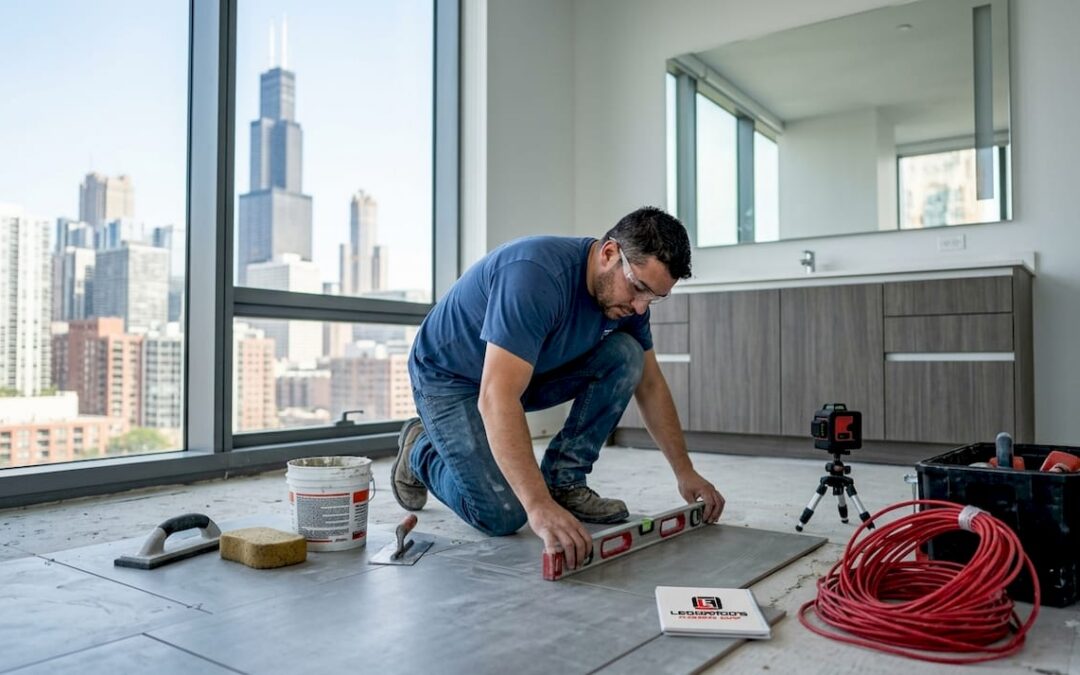
Tile installation in Chicago is a licensed trade process that combines substrate preparation, waterproofing, and precision setting to produce floors and walls built to last. Chicago’s urban labor market, strict building codes, and condo HOA requirements make local tile projects meaningfully different from a standard residential job anywhere else in the country. Whether you’re planning a kitchen tile installation in Chicago or a full bathroom overhaul, understanding local pricing, permit rules, and material standards before you hire saves you money and avoids costly delays. This guide covers everything you need to make informed decisions.
What does tile installation cost in Chicago?
Professional tile installation in Chicago costs between $12 and $58 per square foot. That wide range reflects the difference between a simple ceramic floor replacement and a large-format porcelain shower with custom waterproofing.
Labor alone accounts for a significant portion of that figure. Skilled tile labor runs $10–$18 per square foot in Chicago, with union scale and high-rise complexity pushing Chicago labor rates 25–40% above national averages. That premium is real, and it shows up in every bid you receive.
Several factors push your project toward the higher end of the range:
- Tile size and format. Large-format tiles (24×48 inches and larger) require leveling clips, tile carts, and two-person crews, adding 30–50% to labor costs.
- Subfloor condition. Older Chicago buildings often need leveling compounds or full subfloor replacement before tile can go down.
- Material origin. Domestic porcelain costs less than imported Italian or Spanish tile. Tariffs on imported ceramic materials have pushed some material costs higher in 2026.
- Project location. High-rise condo work adds freight, elevator scheduling, and HOA compliance costs that single-family jobs do not carry.
Pro Tip: Get three itemized bids that separate material costs from labor. A single lump-sum number makes it impossible to compare contractors fairly.
What permits and regulations affect tile projects in Chicago?
Most cosmetic tile replacements in Chicago do not require a permit. However, permits are mandatory for structural subfloor modifications, radiant floor installation, or any plumbing relocation. Heated floor systems require an express electrical sub-permit, which the city typically processes in 3–5 business days.
The permit process is only half the picture for condo owners. Chicago condo HOAs often impose requirements that go beyond city code. You may need to submit waterproofing specifications, material data sheets, and acoustic underlayment documentation before your HOA approves the project.
Here is the order of operations that keeps projects on track:
- Confirm with your HOA whether a pre-approval application is required before any work begins.
- Determine with your contractor whether the scope triggers a city building permit.
- Submit HOA documentation first, since HOA review can take longer than city permit processing.
- Pull the city permit once HOA approval is in hand.
- Schedule inspections at the required stages, particularly after subfloor work and before tile is set.
Working with a contractor who has pulled permits in Chicago buildings before is not optional. A contractor unfamiliar with local HOA timelines will cost you weeks of delays and potential fines.
Homeowners often overlook the gap between city permit rules and stricter condo HOA requirements, which creates project delays and compliance problems. Knowing both sets of rules before you sign a contract is the single best way to protect your timeline.
Which tile types work best in Chicago homes and businesses?
Tile selection in Chicago is not purely aesthetic. Building type, HOA rules, and climate all narrow your options before you ever visit a showroom.
| Tile Type | Best Use | Key Consideration |
|---|---|---|
| Large-format porcelain | Wet areas, condos, high-traffic floors | ≤0.5% water absorption; HOA compliant |
| Standard ceramic | Dry accent areas, backsplashes | Not accepted in wet areas by most HOA rules |
| Glazed porcelain | Bathroom walls, kitchen backsplash | Durable, wide design range |
| Natural stone | Luxury residential, commercial lobbies | Requires sealing; higher maintenance |
| Mosaic tile | Shower floors, decorative accents | Grout-intensive; requires skilled labor |
Chicago condo associations require porcelain tile with ≤0.5% water absorption in shower and wet areas. Standard ceramic tile does not meet that threshold and will be rejected during HOA review. This requirement affects your material sourcing before a single tile is ordered.
Chicago high-rise condos also mandate STC 50+ and IIC 50+ soundproofing ratings for hard flooring. That means acoustic underlayment is not optional. It must be documented and submitted to your HOA before installation begins.
Lead times matter too. Domestic porcelain ships in 2–4 weeks, while specialty imported tile such as Italian zellige can take 8–12 weeks. A delayed tile order stalls your entire project. Order your full quantity from the same dye lot at the start to avoid color variation across the floor.
Pro Tip: Choose your tile before finalizing your contractor’s start date. Material lead time, not labor availability, is usually what delays Chicago tile projects.
The benefits of tile flooring go beyond durability. Porcelain and ceramic resist moisture, allergens, and heavy foot traffic in ways that carpet and wood cannot match in Chicago’s climate.
How is tile installation properly executed in Chicago?
Proper tile installation follows a defined sequence. Skipping or rushing any stage creates defects that are expensive to fix after the fact.
Stage 1: Substrate assessment and preparation. The installer evaluates the subfloor for levelness, structural integrity, and moisture. Chicago buildings constructed before 1980 may contain asbestos-containing floor adhesives. Testing is required before any mechanical removal begins.
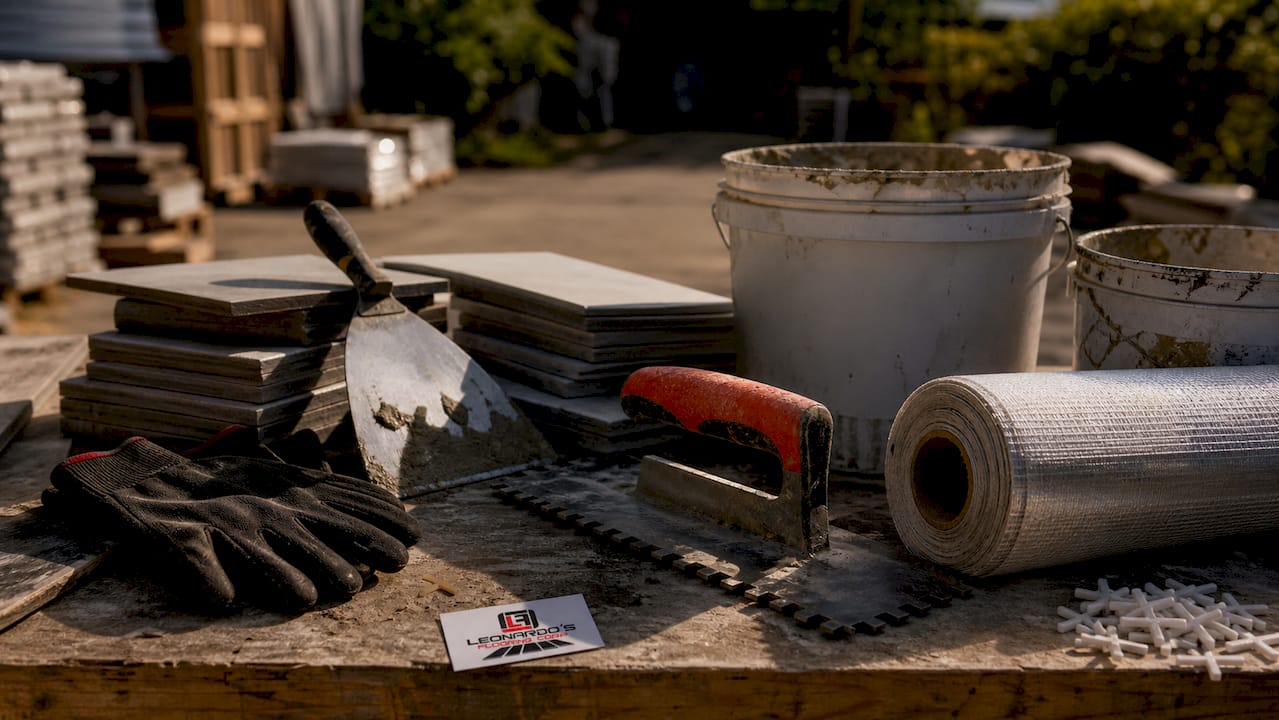
Stage 2: Subfloor leveling. Self-leveling compound corrects low spots and high points. The TCNA Handbook specifies a maximum variation of 1/8 inch over 10 feet for standard tile and 1/16 inch over 10 feet for large-format tile. Chicago’s older building stock frequently fails this test without correction.
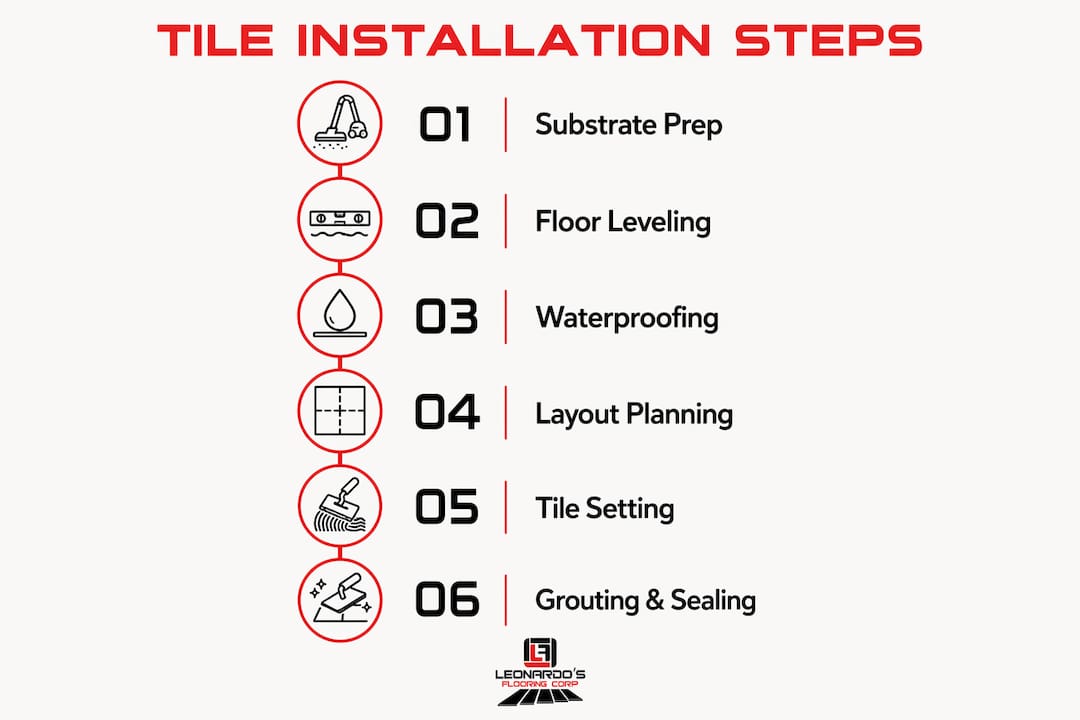
Stage 3: Waterproofing membrane installation. Wet areas require a full waterproofing membrane before any tile goes down. Waterproofing failures are a leading cause of bathroom remodeling defects. Brands like Schluter and Wedi are widely accepted membrane systems for this stage. Your contractor should specify the system in writing before work begins.
Stage 4: Layout and dry run. The installer plans the tile layout to center the pattern and minimize cuts at visible edges. A dry run catches layout problems before mortar is mixed.
Stage 5: Mortar application and tile setting. ANSI A108.5 standards require a minimum 95% bond coat coverage in wet areas and at least 80% in dry areas. Thin-set mortar is back-buttered on large-format tiles to meet coverage requirements. Proper coverage prevents hollow spots that crack under load.
Stage 6: Grouting and sealing. Grout is applied after the mortar cures, typically 24 hours. Epoxy grout resists staining in kitchens and commercial spaces. Sanded grout suits joints wider than 1/8 inch. Sealing follows once grout cures fully.
Pro Tip: Ask your contractor to show you the bond coat coverage on a pulled tile before the floor is complete. A reputable installer will not hesitate. An installer who refuses is telling you something important.
The waterproofing system you choose determines how long your bathroom or wet-area floor performs without leaks or mold. Membrane selection is not a detail to leave to the lowest bidder.
How do you find and hire professional tile installers in Chicago?
Hiring the right tile installer in Chicago requires more than reading reviews. Verification of credentials protects you legally and financially.
- Verify the Illinois contractor license. Active licensure must be confirmed through official City of Chicago portals, not photocopies. A license that lapsed last year is not a valid license today.
- Request a certificate of insurance directly from the carrier. Ask the insurer to send the COI to you directly. A contractor who hands you a photocopy may be presenting an outdated or altered document.
- Check for CTI certification. The Ceramic Tile Institute of America’s Certified Tile Installer credential demonstrates hands-on competency beyond a general contractor license.
- Review their experience with large-format tile and Chicago condos. Ask for references from projects in similar buildings. HOA compliance experience is a specific skill, not a given.
- Scrutinize unusually low bids. Bids 30% or more below market value signal corner-cutting, unverified subcontractors, or future change orders that recover the margin later.
Understanding the role of flooring contractors helps you ask better questions during the hiring process. A qualified contractor will pull permits, coordinate with your HOA, and provide a written scope of work before asking for a deposit.
Pro Tip: Never pay more than 30% upfront. Structure payments to milestone completions: substrate approval, waterproofing sign-off, and final inspection.
Key Takeaways
Successful tile installation in Chicago requires verified contractors, HOA-compliant materials, proper waterproofing, and a clear understanding of local permit rules before any work begins.
| Point | Details |
|---|---|
| Budget for Chicago’s labor premium | Chicago tile labor runs 25–40% above national averages; plan your budget accordingly. |
| Confirm HOA rules before ordering tile | Condo HOAs require porcelain with ≤0.5% water absorption in wet areas; standard ceramic will be rejected. |
| Pull permits for structural and heated work | Cosmetic replacements are permit-free, but subfloor changes and radiant floors require city permits. |
| Verify contractor credentials officially | Confirm licenses through City of Chicago portals and request COIs directly from insurance carriers. |
| Order tile early from one dye lot | Lead times run 2–12 weeks; ordering late or from mixed lots causes delays and color mismatches. |
What I’ve learned from watching Chicago tile projects go sideways
The most common mistake I see is homeowners treating the HOA approval as an afterthought. They hire a contractor, order tile, and then discover their building requires a full acoustic underlayment specification submitted six weeks in advance. The tile sits in a warehouse. The contractor charges a restocking fee. The project slips by two months.
The second mistake is chasing the low bid. A contractor who quotes $11 per square foot in a market where skilled labor alone costs $10–$18 per square foot is not offering you a deal. They are offering you a problem that will cost more to fix than the original project. I have seen this play out enough times that I now consider a suspiciously low bid a disqualifying factor, not a starting point for negotiation.
The third thing most articles miss: material selection and contractor selection should happen in parallel, not sequentially. Your contractor needs to know the tile format to price the job accurately. You need to know the HOA requirements to choose the right tile. Starting one without the other creates rework and surprises.
Chicago tile work done right is genuinely durable. Porcelain floors in well-maintained Chicago condos outlast the buildings themselves. The process is not complicated, but it is unforgiving of shortcuts. Invest in the right materials, the right contractor, and the right sequence, and you will not think about your floors again for decades.
— Jim
Leonardosflooringcorp: professional flooring guidance you can trust
Tile is one of the most technical flooring categories, and getting it right the first time matters. Leonardosflooringcorp brings over 10 years of flooring installation experience to every project, with a track record of 125+ five-star reviews built on transparent proposals and quality workmanship.

Whether you are planning a bathroom tile repair, a full kitchen floor replacement, or a commercial tile project, Leonardosflooringcorp delivers fixed-price proposals with no hidden change orders. Every project is handled by licensed professionals who treat your floor like it belongs in their own home. Explore Leonardosflooringcorp’s professional tile installation services to see what a properly scoped, properly executed tile project looks like from start to finish.
FAQ
How much does tile installation cost in Chicago?
Professional tile installation in Chicago costs between $12 and $58 per square foot, with labor alone running $10–$18 per square foot due to union scale and high-rise complexity.
Do I need a permit for tile installation in Chicago?
Cosmetic tile replacements do not require a permit. Permits are required for structural subfloor changes, radiant floor heating, or plumbing relocation, with heated floor sub-permits processed in 3–5 business days.
What tile is required in Chicago condo wet areas?
Chicago condo HOAs require porcelain tile with ≤0.5% water absorption in showers and wet areas. Standard ceramic tile does not meet this threshold and will not pass HOA review.
How do I verify a tile contractor’s license in Chicago?
Confirm active licensure through official City of Chicago portals and request a certificate of insurance sent directly from the carrier, not a photocopy from the contractor.
What soundproofing is required for tile floors in Chicago high-rises?
Chicago high-rise condos require hard flooring to meet STC 50+ and IIC 50+ ratings. Acoustic underlayment documentation must be submitted to the HOA before tile installation begins.