
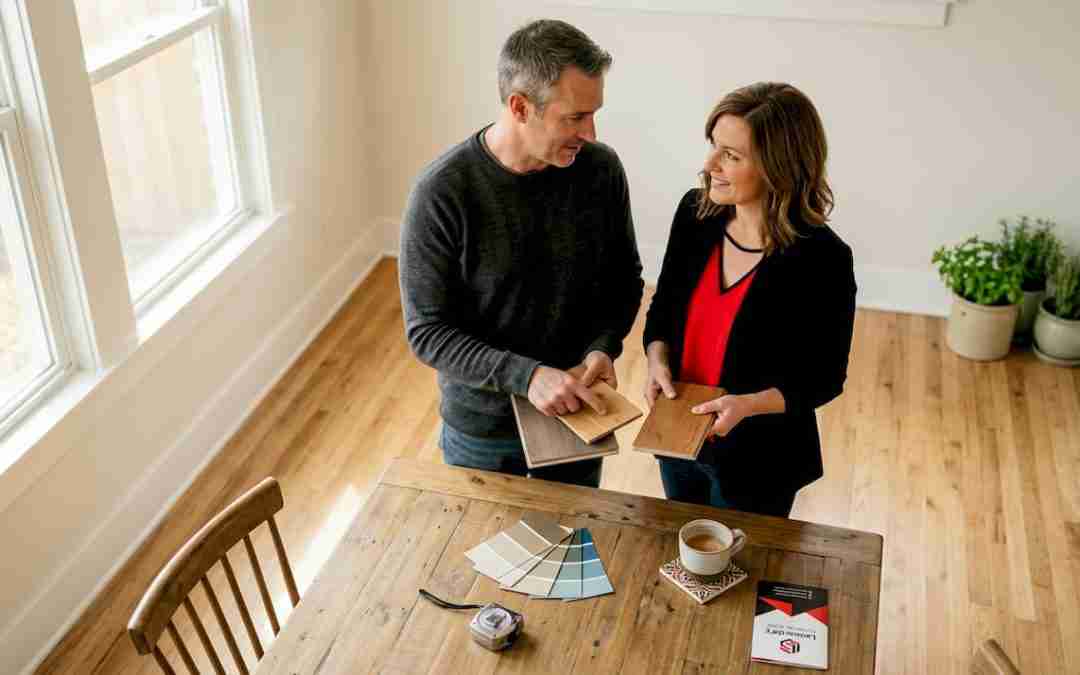
Most homeowners think updating flooring is about looks. It’s not. Knowing why update your flooring matters goes much deeper than picking a color or matching a style. Your floors reveal your home’s age, affect its structural health, influence indoor air quality, and sit at the center of any serious resale conversation. If you’re a Denver homeowner or property manager, the stakes are even higher. Colorado’s dry climate, temperature swings, and competitive real estate market make flooring decisions consequential in ways that a generic online guide won’t tell you.
Table of Contents
- Key takeaways
- Why update your flooring: aesthetics and design impact
- Durability and functionality over the long run
- Health and indoor air quality benefits
- How new flooring increases home value in Denver
- Replacement vs. refinishing: how to choose
- My take on why flooring upgrades deliver so much
- Ready to update your Denver floors?
- FAQ
Key takeaways
| Point | Details |
|---|---|
| Floors signal home age | Outdated flooring is the fastest way buyers and appraisers identify an older home. |
| Structural benefits exist | Replacing floors exposes the subfloor so you can fix squeaks, soft spots, and hidden damage. |
| Health improvements matter | New or refinished floors reduce allergens, dust, and mold trapped in old materials. |
| Resale value increases | Homes with updated floors sell faster and at higher prices in the Denver market. |
| Material choice is climate-specific | Denver’s dry air and temperature shifts demand flooring with strong moisture and wear resistance. |
Why update your flooring: aesthetics and design impact
Floors cover more square footage than any painted wall in your home. That fact alone explains why changing them produces such a dramatic visual shift. According to contractors, floors reveal a home’s age more reliably than almost any other feature, and updating them is one of the fastest ways to modernize an older space.
Denver homes that were built in the 1970s through the 1990s often still carry original carpet, vinyl, or early-generation laminate. These materials don’t just look dated. They carry the visual weight of everything that happened in those rooms for decades. Swapping them out for current hardwood, wide-plank luxury vinyl, or large-format tile immediately recalibrates how a room feels. It’s not a surface change. It’s a full reset.
Here’s how popular flooring choices compare on visual impact for Denver-area interiors:
| Flooring type | Visual effect | Best room use |
|---|---|---|
| Solid or engineered hardwood | Warm, classic, high-end | Living rooms, bedrooms |
| Large-format tile | Open, modern, clean | Kitchens, bathrooms, basements |
| Wide-plank luxury vinyl | Contemporary, versatile | Whole-home renovation |
| Laminate | Traditional warmth, budget-friendly | Bedrooms, common areas |
Denver gets around 300 days of sunshine per year. That natural light is your biggest interior design asset, and the right flooring finish amplifies it. Lighter tones and matte finishes spread daylight across a room. Darker, high-gloss surfaces absorb it. Choosing your flooring with your home’s natural light in mind makes a bigger design difference than almost any furniture decision.
Pro Tip: When selecting flooring for sun-exposed rooms, ask your installer to show you how samples look at noon. Denver light is intense and will shift how wood tones and tile grout read compared to a showroom’s fluorescent lighting.
Durability and functionality over the long run
Here’s where most flooring conversations go wrong. People focus on whether the floor looks worn, not on what the wear actually means structurally.
Old or damaged flooring doesn’t just look bad. It becomes a liability. Ignoring early water damage signs like soft spots, musty odors, or discolored patches leads to hidden mold growth and subfloor deterioration that escalates repair complexity and cost fast. What starts as a $500 floor repair can become a $5,000 subfloor and mold remediation project within a single season.
Watch for these warning signs that your floors are costing you more than they should:
- Soft or spongy spots under foot traffic, especially near bathrooms or kitchen sinks
- Visible warping or cupping in wood or laminate panels
- Persistent odors that cleaning can’t resolve
- Creaking or shifting that worsens over time
- Cracked or crumbling grout in tile areas that lets moisture reach the subfloor
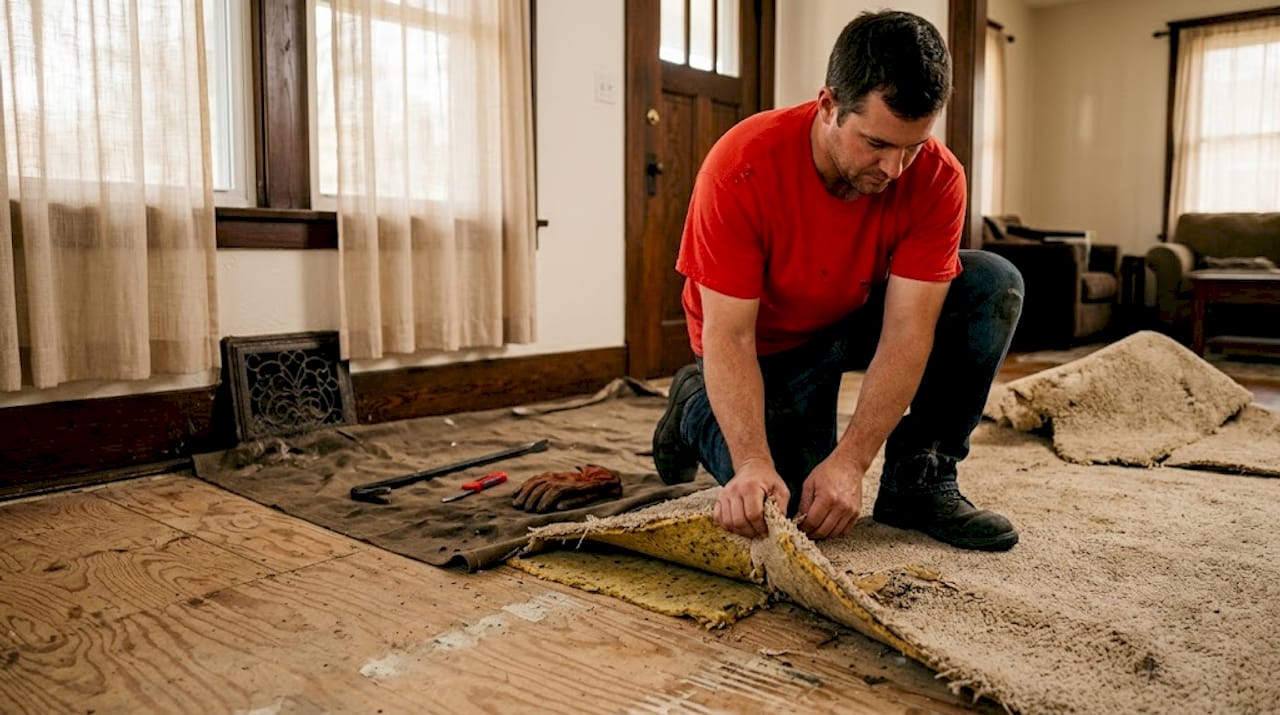
One of the underappreciated benefits of full floor replacement is what happens when you pull the old material up. Exposing the subfloor gives you a critical chance to fix loose panels, nail down shifting sections, and stop squeaks that no surface-level repair can address. It’s the only time you’ll have direct access without a major construction project.
Denver’s climate adds another layer of consideration. The Front Range sees significant temperature variation between seasons and extremely low relative humidity for much of the year. That dry air causes wood to contract. Poorly installed or deteriorating flooring that isn’t dimensionally stable will gap, warp, and split over time in ways that simply wouldn’t happen in a more temperate climate.
Pro Tip: When replacing flooring in Denver, always let new materials acclimate in the room for at least 48 to 72 hours before installation. This is especially true for solid hardwood, which responds most dramatically to humidity changes.
Health and indoor air quality benefits
This is the reason most homeowners never think to mention when someone asks why renovate your floors. But it’s often the most compelling one, particularly for families with children, pets, or anyone dealing with allergies or asthma.
Old carpet is a holding environment for dust mites, pet dander, mold spores, and allergens that standard vacuuming doesn’t fully remove. The longer carpet stays in place, the deeper those particles embed in the backing and padding. Replacing carpet with hard surface flooring removes that reservoir entirely.
Refinishing existing hardwood floors offers a related benefit. Modern refinishing methods reduce airborne dust compared to older sanding techniques and use low-VOC finishes that don’t off-gas harmful compounds into your indoor air. The result is a floor that’s not only cleaner visually but genuinely healthier to live on.
When selecting new flooring with health in mind, prioritize these features:
- Hard surface materials (hardwood, tile, vinyl) over carpet whenever possible
- Low-VOC finishes and adhesives that limit off-gassing after installation
- Antimicrobial treatments available on some vinyl and tile products
- Sealed grout lines in tile installations to prevent mold from taking hold
- Moisture-resistant underlayment that blocks subfloor mold from migrating upward
New flooring seals cracks that collect debris and reduces the microbial load in your home. For allergy sufferers and pet owners, this isn’t a cosmetic upgrade. It’s a genuine quality-of-life change.
The benefits of new flooring on indoor air environments are well-documented, and in Denver’s already dry air, reducing particulate matter in the home has an outsized effect on how your family breathes day to day.
How new flooring increases home value in Denver
Denver’s real estate market has remained competitive. In that environment, first impressions at showing time carry serious financial weight. Buyers form opinions within seconds of walking through the door, and the floor is literally the first surface they walk across.
Here’s how flooring updates connect directly to your bottom line when it’s time to sell:
- Faster sale timelines. Homes with modern, well-maintained flooring move faster because buyers can visualize living there without a renovation project looming.
- Higher appraisal values. Appraisers consistently rate flooring updates as top contributors to perceived property value, meaning your investment may show up directly in your appraisal number.
- Reduced buyer negotiating power. Dated or damaged flooring gives buyers a concrete reason to negotiate the price down. New flooring removes that leverage.
- Competitive edge in a crowded market. When comparable homes are listed nearby, updated floors are a visible differentiator that photographs well and shows well.
The return on investment for flooring varies by material. Hardwood consistently delivers the strongest ROI in Denver’s market, partly because buyers recognize the value and partly because flooring updates modernize the home in a way that reads as premium without requiring a full renovation. Luxury vinyl plank also performs well because of its durability and the clean, contemporary look buyers currently favor.
If you’re a property manager rather than a homeowner preparing to sell, the calculus shifts slightly but the conclusion stays the same. Updated flooring in rental units reduces turnover, supports higher rental pricing, and decreases maintenance calls related to floor damage.
Replacement vs. refinishing: how to choose
Not every flooring situation calls for a full replacement. Understanding when to refinish versus when to replace is one of the smartest calls you can make as a homeowner.
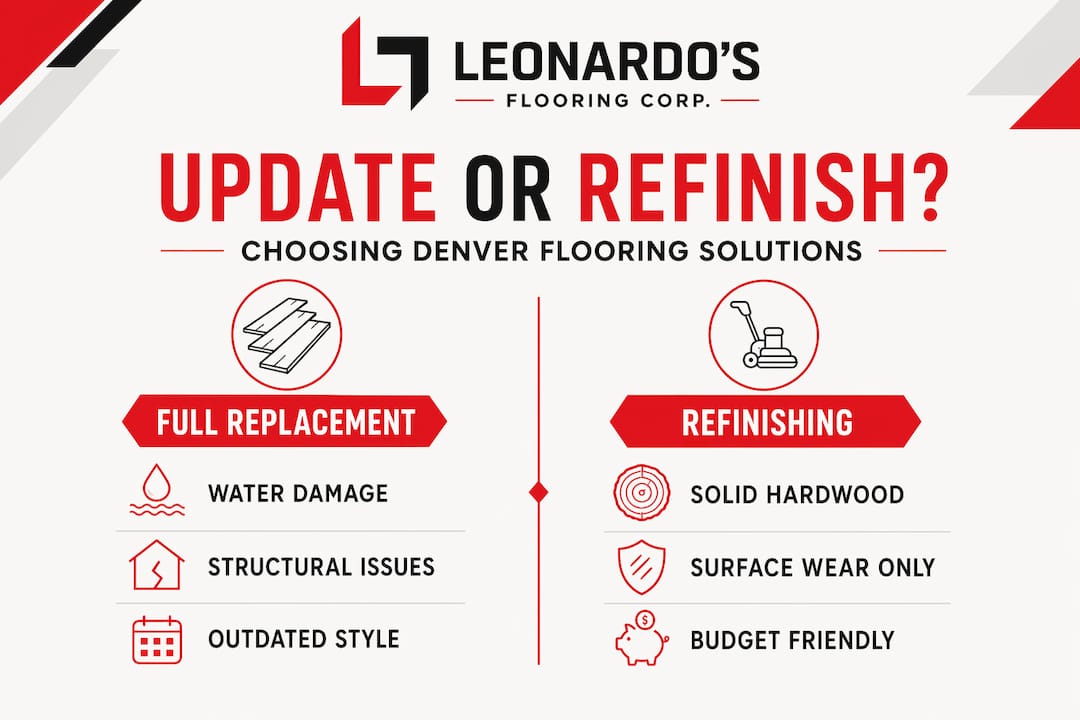
| Situation | Recommended approach | Reason |
|---|---|---|
| Solid hardwood in good structural shape | Refinish | Restores appearance, lower cost, eco-friendly |
| Carpet beyond 10 years or water-damaged | Replace | No refinishing option; health and structure concerns |
| Tile with cracked subfloor beneath | Replace | Cracked subfloor will keep breaking tiles |
| Laminate with swelling or warping | Replace | Laminate cannot be sanded or refinished |
| Engineered hardwood with surface wear only | Refinish (if top layer allows) | Less disruptive and cost-effective |
Refinishing is often the smarter choice both financially and environmentally when the underlying floor is sound. It saves material costs, reduces waste, and can be done faster than a full replacement. When refinishing isn’t an option, full replacement gives you the chance to upgrade the material entirely and fix subfloor problems at the same time.
For Denver homeowners choosing new materials, laminate floors offer strong dimensional stability in dry climates, while vinyl flooring provides excellent moisture resistance for basements or ground-level spaces subject to humidity fluctuations. Selecting a material suited to Denver’s climate is as important as the visual choice. Material choice directly impacts longevity given the region’s dry air and temperature swings.
Pro Tip: Before choosing a material, identify the highest-traffic path through the room. That’s the zone where wear resistance matters most. A beautiful floor that deteriorates in 3 years in a high-traffic hallway was the wrong material regardless of price.
My take on why flooring upgrades deliver so much
I’ve been involved in flooring projects across the Denver metro for years, and one pattern holds true across nearly every job I’ve seen. Homeowners consistently underestimate how much impact the floor has on the overall feel of a space, and they equally underestimate how much a failing floor is silently costing them.
The biggest mistake I see is waiting. People know their floors are past their prime. They can feel the soft spot. They can smell the old carpet. But they hold off because the project feels too big or too expensive. What I’ve learned is that the delay almost always makes it more expensive. Water finds its way into that soft spot. The subfloor starts to go. Then you’re not replacing flooring anymore. You’re doing a structural repair.
My honest opinion? Flooring is one of the highest-perceived-value upgrades you can make in a home. Not because it looks nice, though it does. But because it’s something you interact with every single step you take inside your home. Done right and timed well, a flooring update pays for itself in resale value, health benefits, and the daily satisfaction of walking through a home that feels solid and current.
— Jim
Ready to update your Denver floors?
If this article confirmed what you’ve been thinking, the next step is getting expert eyes on your space. Leonardosflooringcorp has spent over 10 years helping Denver homeowners and property managers make exactly these decisions, from choosing the right material to professional flooring installation that lasts.
Whether you’re replacing aging carpet, refinishing hardwood, or starting a full renovation, the team at Leonardosflooringcorp will walk you through every option without pressure and without surprises. As certified Home Depot Contractors with 125+ five-star reviews, they handle hardwood, laminate, vinyl, tile, epoxy, and subfloor preparation for both residential and commercial properties across the Denver metro. Quality installation reduces future maintenance costs and increases satisfaction long after the project is done. Reach out to get started.
FAQ
Why update your flooring instead of just cleaning it?
Cleaning addresses surface dirt but cannot remove allergens embedded in old padding or repair structural damage beneath the floor. Updating flooring fixes both aesthetic and functional problems that cleaning cannot touch.
How much does new flooring increase home value?
Appraisers consistently rate flooring updates as top contributors to perceived property value, and homes with modern flooring typically sell faster and at stronger prices than comparable properties with dated floors.
When should I replace floors vs. refinish them?
Replace floors when there is water damage, mold, structural deterioration, or when the material cannot be sanded. Refinishing solid hardwood is the smarter and more eco-friendly choice when the underlying floor is still structurally sound.
What flooring works best in Denver’s climate?
Denver’s dry air and temperature swings favor dimensionally stable materials. Engineered hardwood, luxury vinyl plank, and laminate all handle humidity fluctuations better than solid hardwood, making them strong choices for Front Range homes.
Why update commercial flooring differently than residential?
Commercial spaces face higher foot traffic and different liability considerations, so durability and ease of maintenance matter more than in residential settings. Materials like luxury vinyl tile, epoxy coatings, and commercial-grade carpet tile are selected specifically for those demands.