
Not all floors fail for the same reason. When a floor buckles, chips, swells, or feels hollow underfoot, the culprit is almost always the core, not the surface. Most homeowners focus on color and texture when choosing floors, which makes sense visually, but the core is what actually determines how that floor performs under pressure, moisture, and daily life. This guide covers core flooring materials explained through the lens of real-world use. You will learn exactly how SPC, WPC, HDF, and MDF cores differ in composition, durability, comfort, and where each one belongs in your home or commercial space.
Table of Contents
- Key takeaways
- Core flooring materials explained: SPC vs WPC
- SPC and WPC performance in real spaces
- Laminate flooring cores: HDF vs MDF
- Comparing all four core materials
- Choosing the right core for your specific space
- My honest take on what most buyers get wrong
- Let Leonardosflooringcorp help you choose and install the right floor
- FAQ
Key takeaways
| Point | Details |
|---|---|
| Core type drives performance | SPC, WPC, HDF, and MDF cores differ dramatically in density, moisture resistance, and durability. |
| SPC beats WPC for tough spaces | Stone-based SPC cores handle high traffic and moisture better than wood-foamed WPC cores. |
| HDF outlasts MDF in laminates | HDF laminate cores resist swelling and joint failure far longer than MDF in real-world conditions. |
| Wear layer thickness matters | A 20-mil wear layer extends rigid core vinyl life to 20 to 25 years compared to 15 to 20 years for 12-mil. |
| Subfloor prep is non-negotiable | No core material performs well over a poorly prepared or uneven subfloor. |
Core flooring materials explained: SPC vs WPC
If you are shopping for vinyl plank flooring, you will run into the terms SPC and WPC almost immediately. Both fall under the rigid core category, and both are fully waterproof. That is where the similarities stop.
SPC stands for Stone Plastic Composite. The core is made from a blend of limestone powder and PVC, resulting in an extremely dense, hard panel. SPC core density runs approximately 1.9 to 2.1 g/cm³, which is one of the densest options available in residential flooring. That density is what gives SPC its rigidity and dimensional stability.
WPC stands for Wood Plastic Composite. The core uses wood flour and PVC that is processed through a foaming stage, creating a lighter, softer panel. WPC core density lands around 0.85 to 1.05 g/cm³, roughly half the density of SPC. The foamed structure means WPC boards are typically thicker, even though they weigh less.
Here is a direct comparison of the two:
| Feature | SPC | WPC |
|---|---|---|
| Core composition | Limestone and PVC | Wood flour, PVC, foaming agents |
| Core density (g/cm³) | 1.9 to 2.1 | 0.85 to 1.05 |
| Typical thickness | 4 to 6 mm | 6 to 8 mm |
| Weight | Heavier | Lighter |
| Rigidity | Very high | Moderate |
| Underfoot feel | Hard and firm | Softer and warmer |
| Waterproof | Yes | Yes |
The manufacturing difference matters more than most buyers realize. SPC boards are extruded under high pressure with minimal air pockets, while WPC boards use a foaming process that introduces micro-cavities throughout the core. That structural difference is what separates their performance profiles in meaningful ways.
SPC and WPC performance in real spaces
Understanding composition is useful, but what you actually need to know is how each core holds up in daily life. The differences come through clearly once you map each core to a specific use case.
Durability and dent resistance: SPC is more resistant to heavy furniture impacts and temperature fluctuations, making it the better choice for sunrooms, entryways, and commercial spaces. WPC’s foamed core compresses more easily under point loads like furniture legs, which can leave permanent indentations over time.
Water resistance: Both cores are 100% waterproof at the plank level, but installation joints and edges are where moisture finds its way in. WPC’s thicker core provides a slight buffer, but neither type should sit in standing water indefinitely without attention to the seams.
Comfort and acoustics: WPC’s foamed core provides cushioning and natural noise reduction, which is why it tends to feel better in bedrooms and living rooms where you walk barefoot. SPC transmits more sound and feels cooler and harder underfoot, similar to tile.
Installation and subfloor tolerance: This is one area where WPC has a real practical advantage. WPC’s thicker core can compensate for minor bumps and dips better than SPC, which makes it more forgiving during renovations where subfloor leveling is limited. SPC’s rigidity actually telegraphs surface imperfections upward, so any bump in the subfloor becomes visible or audible in the finished floor.
Temperature stability: SPC handles extreme temperature swings better, which makes it the right pick for spaces with radiant floor heating or variable climate exposure like sunrooms and three-season rooms.
Pro Tip: If your space has radiant heat, confirm the flooring’s maximum temperature rating before installing. Most SPC floors are rated for radiant heat; many WPC products have lower tolerances due to the foamed core’s behavior at elevated temperatures.
Laminate flooring cores: HDF vs MDF
Laminate flooring operates differently from vinyl. Instead of a vinyl composite core, laminate uses a fiberboard core with a photographic layer on top and a wear layer to protect the surface. The core quality is everything. Two fiberboard types dominate the market: HDF and MDF.
HDF stands for High Density Fiberboard. The manufacturing process compresses wood fibers under intense heat and pressure to achieve a density exceeding 800 kg/m³. The result is a board that is harder, more stable, and more resistant to moisture absorption than most people expect from a wood-based product.
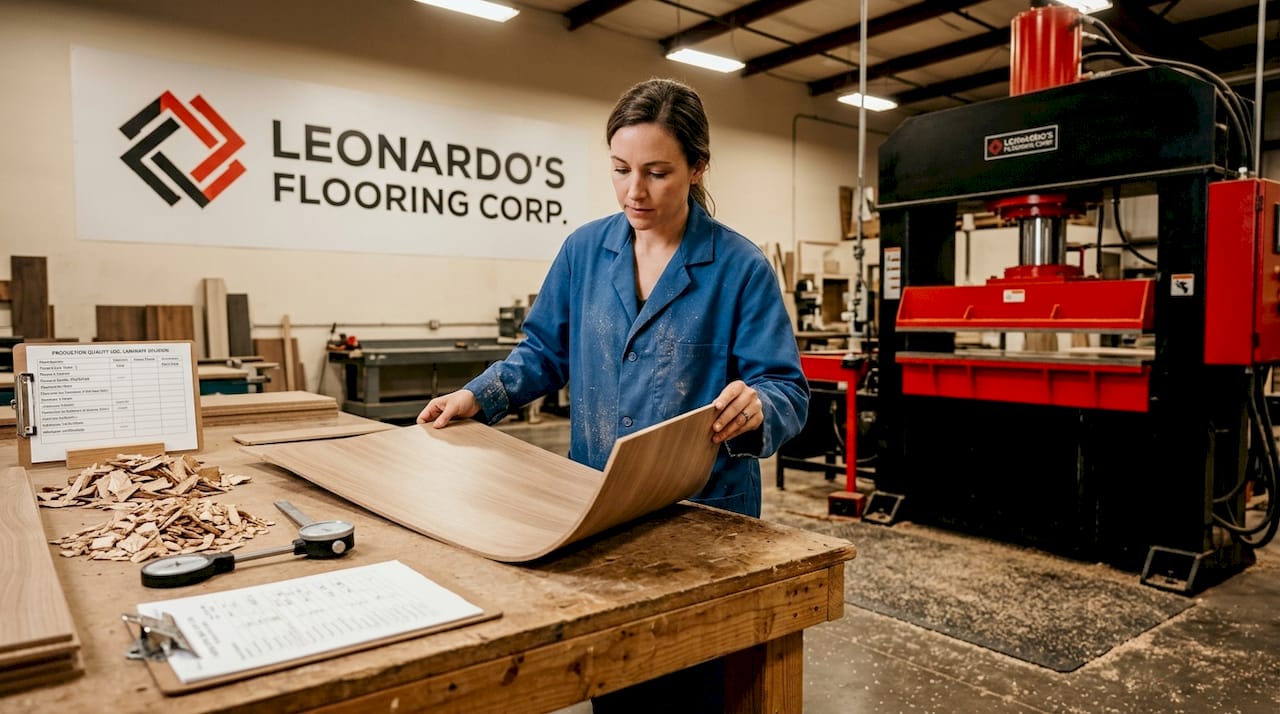
MDF stands for Medium Density Fiberboard. It uses a similar process but with less compression, producing a softer, more porous board. MDF laminates cost less, but they come with real trade-offs in performance.
Here is a side-by-side look at how they compare in practical terms:
| Property | HDF | MDF |
|---|---|---|
| Density | Over 800 kg/m³ | 600 to 800 kg/m³ |
| Moisture swelling after exposure | 8 to 12% | 15 to 25% |
| Locking joint integrity | High, resists chipping | Moderate, joints degrade faster |
| Impact resistance | High | Moderate |
| Cost | Higher | Lower |
| Best use case | High-traffic rooms, moderate moisture areas | Low-traffic, dry rooms |
HDF laminate cores resist deformation, supporting click-lock profiles securely under foot traffic for 15 to 25 years. MDF cores degrade faster at the locking joints, which leads to visible gaps, squeaks, and edge chipping much earlier in the floor’s life. For a deeper look at how core density affects laminate floor durability, it pays to match core type to the room’s actual demands.
One myth worth addressing directly: HDF laminate is water resistant, not waterproof. Even moisture-resistant HDF variants with hydrophobic treatments have absorption limits. A bathroom leak or a flooded basement will still damage them. For genuinely wet areas, rigid core vinyl is the correct choice, not laminate regardless of core quality.
Pro Tip: Look for laminate products marketed as “green core” or “hydrophobic core.” These use wax-impregnated HDF that dramatically slows moisture absorption, buying you much more time to address spills before damage sets in.
Comparing all four core materials
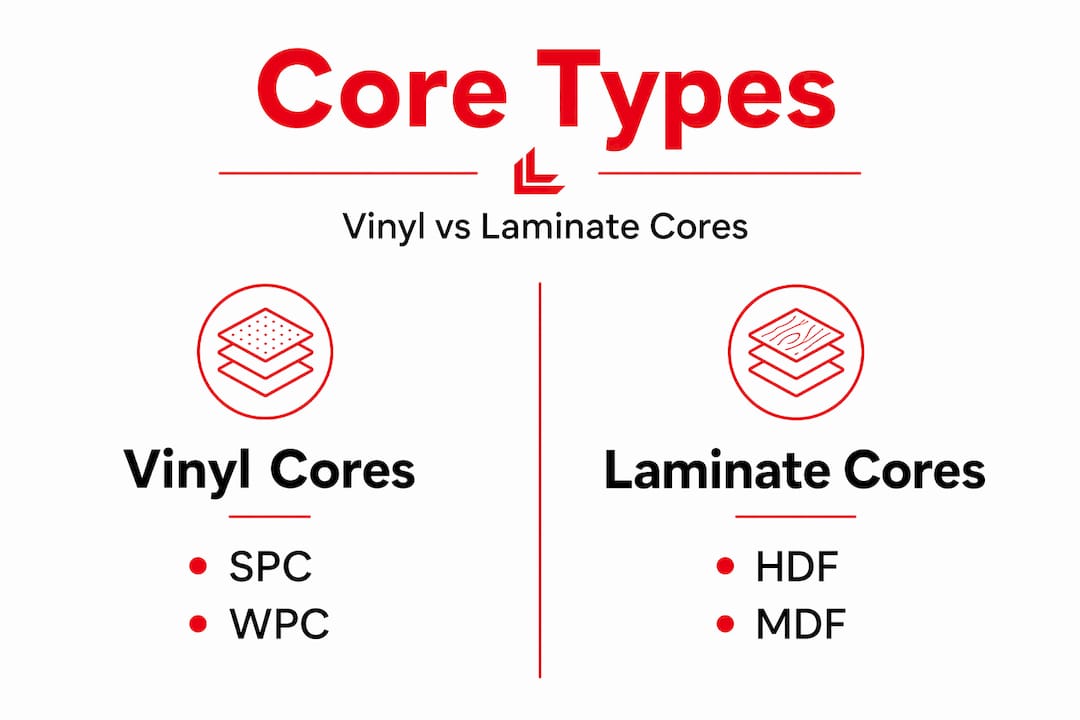
With all four core types on the table, SPC, WPC, HDF, and MDF, you need a clear picture of how they stack up across the factors that actually drive purchasing decisions for homeowners and commercial buyers alike.
| Factor | SPC | WPC | HDF Laminate | MDF Laminate |
|---|---|---|---|---|
| Waterproof | Yes | Yes | No (water resistant) | No |
| Durability | Excellent | Good | Very good | Moderate |
| Comfort underfoot | Firm | Soft | Moderate | Moderate |
| Sound absorption | Moderate | Good | Moderate | Moderate |
| Subfloor tolerance | Low | Moderate | Low | Low |
| Typical lifespan | 20 to 25 years | 15 to 20 years | 15 to 25 years | 10 to 15 years |
| Price range | Moderate to high | Moderate to high | Moderate | Low to moderate |
| Best use case | Kitchens, baths, commercial | Bedrooms, living rooms | Living areas, bedrooms | Dry, low-traffic rooms |
Wear layer thickness is another variable that cuts across the SPC and WPC categories. A 12-mil wear layer generally lasts 15 to 20 years in moderate residential settings, while a 20-mil layer pushes that to 20 to 25 years. If you have pets, kids, or high foot traffic, do not buy a 12-mil floor and expect it to last as long as the marketing suggests.
From a flooring material reviews standpoint, the core flooring comparison comes down to a simple rule: the wetter, harder, or more trafficked the space, the denser and more moisture-stable the core needs to be. Surface aesthetics can be matched across all four types. The core is what actually protects your investment.
Choosing the right core for your specific space
Technical comparisons are useful, but what matters at the end of the day is matching the right core to the right room. Here is a practical flooring materials guide broken down by common spaces:
- Kitchens and bathrooms: Go with SPC rigid core vinyl every time. These rooms combine moisture, temperature swings, and foot traffic in a way that punishes any wood-based core. SPC’s density and full waterproofing make it the best flooring option for these spaces.
- Basements: SPC again. Concrete subfloors can release moisture vapor even when the surface feels dry. SPC handles that vapor without swelling or warping.
- Bedrooms and living rooms: WPC works beautifully here. You get the warmer, quieter feel underfoot without sacrificing too much in durability. HDF laminate is also an excellent choice in bedrooms if moisture is not a factor.
- Commercial and high-traffic residential spaces: Industry standard for heavy use is a 20-mil wear layer paired with SPC core. This combination handles the punishment commercial environments deliver.
- Home offices or flex rooms: Either SPC or HDF laminate works well depending on your comfort priorities and budget.
Subfloor preparation cannot be overlooked regardless of which core you select. Manufacturers recommend flatness tolerances around 3/16 inch over 10 feet for click-lock flooring. Miss that standard and you will hear clicking, feel movement, and eventually see joint separation no matter how good the floor itself is.
Pro Tip: Leave proper expansion gaps around all walls and fixed objects. Thermal expansion is real, and rigid core floors that look perfect in winter will buckle in summer if they have no room to move.
My honest take on what most buyers get wrong
I have been in this industry long enough to see the same pattern repeat. A homeowner picks a beautiful floor, pays to have it installed, and then watches it fail within two years. Almost every time, the problem was not the surface. It was the core combined with a preparation shortcut.
What surprises me most is how many people treat core type as a secondary detail. In my experience, choosing the wrong core for a space creates problems that no amount of good maintenance can fix. Putting an MDF laminate in a basement because it was cheaper is a decision you feel within the first winter. Choosing WPC for a commercial lobby because it is softer underfoot is a decision you regret within the first year.
I have also seen the other extreme. People spend significantly more on SPC assuming that density alone solves everything, and then skip proper subfloor leveling. A subfloor issue under SPC shows up faster and louder than almost any other flooring type because that rigid core has nowhere to flex. The floor itself is fine. The prep work let it down.
My real advice is to stop leading with aesthetics and start with the room’s function. Think about moisture exposure, foot traffic, and how flat your subfloor actually is before you fall in love with a particular color or texture. The advantages of core flooring only materialize when the right core meets the right conditions. Treat it as a long-term structural decision, not a style decision, and you will almost always be happy with the result.
— Jim
Let Leonardosflooringcorp help you choose and install the right floor
At Leonardosflooringcorp, we have spent over a decade helping Denver homeowners and businesses navigate exactly these decisions. We carry SPC and WPC rigid core vinyl, HDF laminate options, and hardwood flooring, and we know how each core performs in Colorado’s specific climate conditions.
What sets our work apart is what happens before the first plank goes down. Our subfloor preparation services address flatness, moisture vapor, and structural issues that most installers skip over. That prep work is what makes the finished floor last. With 125+ five-star reviews and no cookie-cutter approaches, we will match the right core material to your space, your budget, and your timeline. Contact Leonardosflooringcorp today for a personalized consultation and a transparent project estimate.
FAQ
What is the difference between SPC and WPC flooring?
SPC uses a dense limestone and PVC core with a density around 1.9 to 2.1 g/cm³, making it harder and more dimensionally stable. WPC uses a foamed wood flour and PVC core at roughly 0.85 to 1.05 g/cm³, making it softer, quieter, and more comfortable underfoot.
Is HDF laminate actually waterproof?
No. HDF laminate is water resistant, not waterproof. Even hydrophobic-treated HDF cores will swell under prolonged moisture exposure, with standard HDF swelling 8 to 12% after water contact. For wet areas, rigid core vinyl is the correct choice.
Which core flooring material is best for high-traffic areas?
SPC rigid core vinyl with a 20-mil wear layer is the strongest choice for high-traffic residential and commercial spaces, offering superior dent resistance and a lifespan of 20 to 25 years.
Why does subfloor preparation matter so much for rigid core flooring?
SPC and HDF laminate floors require subfloor flatness within 3/16 inch over 10 feet. Any imperfection beneath a rigid core transfers directly to the surface, causing noise, movement, and eventual joint failure.
Can I install SPC flooring over radiant heat?
Yes, most SPC floors are compatible with radiant heat systems. Always check the manufacturer’s maximum temperature rating first, as WPC products can have lower tolerances due to the behavior of the foamed core at higher temperatures.