

Luxury vinyl plank (LVP) flooring is a synthetic, multi-layer plank product engineered to replicate hardwood’s appearance while delivering 100% waterproof performance at a fraction of the cost. LVP is the best-selling flooring category in North America in 2026, outselling hardwood, tile, and laminate combined. That dominance comes from a straightforward formula: realistic wood visuals, click-lock installation that most homeowners can handle in a weekend, and a price range of $2.50–$5.00 per square foot for quality material. Two core technologies drive the modern market: Stone Plastic Composite (SPC) and Wood Plastic Composite (WPC). Understanding both is the key to choosing the right floor for your space.
What is luxury vinyl plank flooring, really?
Luxury vinyl plank flooring is defined by its layered construction, not just its appearance. Each plank stacks four distinct layers: a wear layer on top, a high-definition print layer beneath it, a rigid core in the middle, and a backing or attached underlayment at the bottom. The print layer uses photographic imaging to replicate oak, walnut, hickory, and other wood species with enough realism to fool most guests. The rigid core is what separates modern LVP from the thin, flexible vinyl sheets of the 1980s and 1990s.
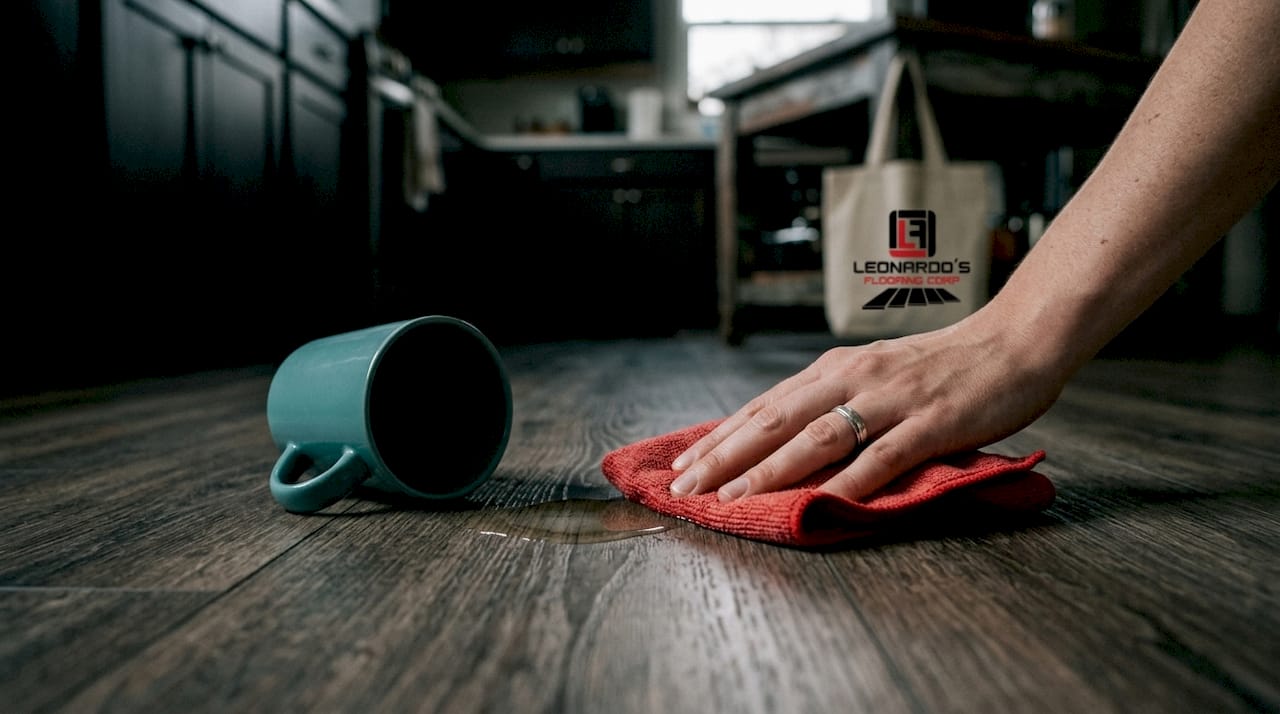
LVP withstands spills, pet accidents, and minor flooding without warping or swelling, which is the single biggest advantage over hardwood and laminate. That waterproof quality comes directly from the synthetic core, not from any surface coating. The click-lock edge profile on each plank allows planks to snap together without glue or nails, creating a floating floor that sits on top of the subfloor rather than being fastened to it. This floating method makes LVP removable and replaceable in ways that glued-down tile or nailed hardwood simply are not.
SPC vs. WPC: which core type is right for you?
The core material determines how a plank performs under real-world conditions. SPC uses a dense limestone composite that resists denting and stays dimensionally stable even in rooms with wide temperature swings. WPC uses a wood-fiber composite that adds cushion underfoot but sacrifices some of that rigidity. SPC outsells WPC 3-to-1 in the current market, and that ratio reflects where most homeowners install LVP: kitchens, bathrooms, basements, and commercial spaces where moisture and traffic are the primary concerns.
| Feature | SPC Core | WPC Core |
|---|---|---|
| Typical thickness | 4–6 mm | 6–8 mm |
| Underfoot feel | Firm, rigid | Softer, more cushioned |
| Moisture resistance | Excellent | Very good |
| Dimensional stability | Superior | Moderate |
| Best use case | High traffic, wet areas | Bedrooms, living rooms |
| Price point | Lower to mid | Mid to higher |
WPC is not a lesser product. In a bedroom or living room where comfort matters more than flood resistance, the softer feel of WPC is a genuine advantage. The thicker profile also bridges minor subfloor imperfections more forgivingly than SPC. The decision comes down to room type and how much temperature variation the space experiences.
Pro Tip: In Colorado’s dry climate, SPC is the stronger choice for most rooms. Its dimensional stability handles low-humidity winters without the minor gapping that WPC can develop.
How does the wear layer affect durability?
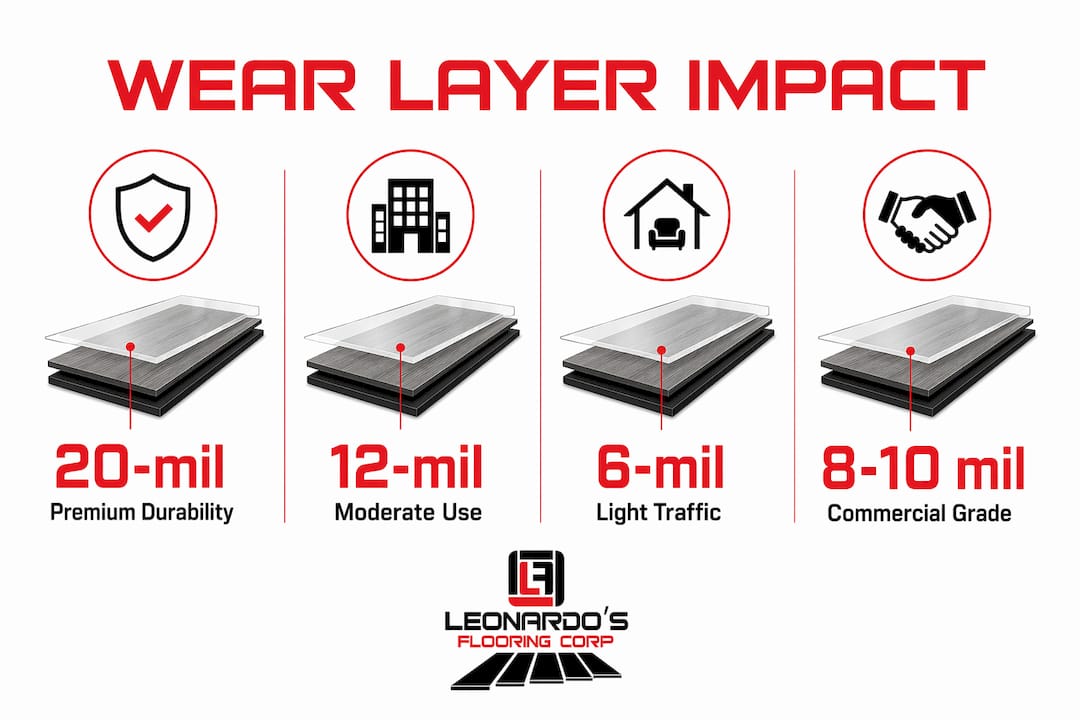
The wear layer is the clear urethane coating on top of every LVP plank, and wear layer thickness is the true predictor of how long a floor holds up, not the overall plank thickness. This distinction matters because many buyers pick up a thick 8 mm plank and assume it will outlast a thinner one. That assumption is wrong. A 4 mm plank with a 20-mil wear layer outperforms a 7 mm plank with a 6-mil wear layer in any high-traffic scenario.
Wear layers are measured in mils, where one mil equals one-thousandth of an inch. Here is how the tiers break down in practice:
- 6–8 mil: Light residential use only. Suitable for low-traffic bedrooms or guest rooms.
- 12 mil: Standard residential. Handles everyday family foot traffic, pets, and furniture movement.
- 20 mil: Heavy residential or light commercial. Recommended for kitchens, hallways, and rental properties.
- 28 mil and above: Full commercial grade. Used in retail spaces, offices, and high-traffic public areas.
The 20-mil wear layer is the industry benchmark for heavy residential and light commercial use. Spending a few extra dollars per square foot to reach that threshold pays off over years of use through better scratch resistance, reduced fading from UV exposure, and a longer warranty from most manufacturers.
Pro Tip: Choose LVP with an attached underlayment pad if your subfloor is concrete. The pad adds sound absorption and a small amount of thermal insulation, making the floor noticeably more comfortable in winter.
How to install luxury vinyl plank flooring the right way
Installation quality determines whether a beautiful floor stays beautiful for 15 years or starts failing in 18 months. The most common cause of click-lock failure is a subfloor that is not flat. The subfloor must be flat within 3/16 inch over 10 feet; any deviation beyond that causes the locking joints to stress, crack, and eventually separate. Grinding down high spots and filling low spots with floor leveling compound before you lay a single plank is not optional.
Follow these steps for a clean, lasting installation:
- Measure and plan your layout. Calculate the room width against the plank width. Edge rows must be at least 3 inches wide for structural and visual soundness. If your math shows a sliver row at one wall, shift the starting row to split the difference evenly between both walls.
- Acclimate the planks. WPC cores need 24–48 hours in the room at installation temperature. SPC cores require little to no acclimation due to their dimensional stability, but leaving them in the room overnight is still good practice.
- Prep the subfloor. Sweep, check for flatness with a long straightedge, and address any high or low spots. Subfloor defects as small as 3/16 inch cause visible issues and reduce the floor’s lifespan.
- Set your expansion gaps. Use plastic spacers along every wall. SPC requires a 1/4-inch gap; WPC needs 3/8 inch to accommodate its slightly greater thermal movement.
- Install row by row. Angle the tongue of each plank into the groove of the previous row and press down to lock. Use a rubber mallet and tapping block to seat stubborn joints. Never strike the plank directly.
- Stagger the joints. End joints between adjacent rows must be offset by at least 8 inches. Shorter offsets create a structurally weak pattern and look visually choppy.
- Cut the final pieces. A utility knife and straightedge handle most cuts cleanly. Score the plank face twice, then snap it over a hard edge. A pull bar helps lock the last row against the wall.
Professional labor for LVP runs $1.50–$3.00 per square foot. For a 500-square-foot project, doing it yourself saves between $750 and $1,500 in labor alone. That said, large open-plan spaces and rooms with complex angles genuinely benefit from professional installation to avoid layout errors that waste material.
Pro Tip: Rent a laser level for large rooms. It gives you a perfectly straight reference line across the entire floor and prevents the slow drift that causes rows to go visibly crooked by the time you reach the far wall.
LVP vs. hardwood, laminate, and tile: honest comparison
LVP sits at a specific point in the flooring market: more durable and water-resistant than hardwood or laminate, more comfortable and easier to install than tile, but not the top choice for resale value in primary living areas. Understanding those trade-offs prevents buyer’s remorse.
| Flooring Type | Cost (Material) | Water Resistance | Lifespan | Resale Value | Best Rooms |
|---|---|---|---|---|---|
| LVP | $2.50–$5.00/sq ft | 100% waterproof | 10–20 years | Moderate | Kitchens, baths, basements |
| Engineered Hardwood | $4–$9/sq ft | Low | 20–30 years | High | Living rooms, bedrooms |
| Solid Hardwood | $6–$12/sq ft | Very low | 50+ years | Highest | Primary living areas |
| Laminate | $1.50–$4/sq ft | Low to moderate | 10–25 years | Low to moderate | Bedrooms, low-traffic areas |
| Porcelain Tile | $3–$7/sq ft | Excellent | 30–50 years | High | Bathrooms, entryways |
Real estate appraisers still place a higher premium on solid hardwood in primary living spaces. That gap is real and worth factoring in if you plan to sell within five years. For kitchens, bathrooms, basements, and rental properties, LVP is the smarter financial choice because its waterproof performance eliminates the damage risk that makes hardwood a liability in those rooms.
One misconception worth correcting: LVP is not indestructible. Sustained UV sunlight and heavy furniture can cause fading and surface indentation over time. Use furniture pads, area rugs in high-sun zones, and UV-blocking window film to protect your investment. Maintenance is straightforward: sweep regularly, damp-mop with a pH-neutral cleaner, and avoid steam mops, which can force moisture into the seams.
You can explore kitchen flooring options in more detail if LVP’s moisture resistance is the primary reason you are considering it for that room.
Key takeaways
LVP flooring delivers the best combination of waterproof performance, installation ease, and cost for kitchens, bathrooms, basements, and rental properties, but wear layer thickness and subfloor prep determine whether that performance holds up long-term.
| Point | Details |
|---|---|
| Wear layer beats plank thickness | A 20-mil wear layer on a thin plank outperforms a thick plank with a 6-mil layer. |
| SPC dominates for wet and high-traffic rooms | SPC’s limestone core resists moisture and denting better than WPC in demanding spaces. |
| Subfloor flatness is non-negotiable | Any deviation beyond 3/16 inch over 10 feet will cause click-lock joints to fail. |
| LVP costs less but earns less at resale | Hardwood still commands a higher appraisal premium in primary living areas. |
| Expansion gaps prevent buckling | Use 1/4-inch gaps for SPC and 3/8-inch gaps for WPC along every wall. |
What 10 years of flooring installs taught me about LVP
After a decade of installing floors across the Denver metro, I have one consistent observation: the jobs that go wrong almost always go wrong before the first plank goes down. Skipping subfloor prep is the single most expensive shortcut a homeowner can take. I have seen brand-new floors start clicking and separating within six months because the concrete underneath had a 1/4-inch dip that nobody addressed. Fixing it after the fact means pulling up the entire floor.
The second thing I have learned is that buyers consistently shop by plank thickness and ignore wear layer. A salesperson will hand you a thick, heavy plank and it feels premium. But if that plank carries a 6-mil wear layer, it will show scratches within a year in a busy household. Always ask for the wear layer spec before you commit to a product.
On the DIY versus professional question, I am genuinely neutral. LVP is one of the more forgiving floors to install yourself, and the savings are real. Where I recommend calling in a professional is for rooms over 400 square feet with multiple doorways, transitions, and angles. Layout errors compound across a large space, and fixing a bad layout means starting over. For a full flooring installation in a complex space, the labor cost is worth it.
One last thing: do not ignore the resale value data. LVP is the right call for moisture-prone rooms and rental units. But if you are renovating a primary living room in a home you plan to sell, hardwood flooring value is a real factor that LVP cannot fully replace. Use the right material in the right room, and you will get the best of both worlds.
— Jim
Get your LVP installed right the first time in denver
Leonardosflooringcorp has installed LVP floors across hundreds of Denver-area homes and commercial properties over the past decade. We handle every step: subfloor leveling, acclimation planning, layout calculation, and the full vinyl flooring installation from first plank to final trim. If your project involves a challenging subfloor, multiple room transitions, or a tight timeline, our team brings the tools and experience to get it done without surprises. We also install hardwood floors, laminate, tile, and epoxy coatings across the Denver metro. Request a free estimate and we will walk you through your options before you spend a dollar on materials.
FAQ
What is luxury vinyl plank flooring made of?
LVP is a synthetic, multi-layer product consisting of a urethane wear layer, a photographic print layer, a rigid SPC or WPC core, and a backing or attached underlayment. No natural wood is used in its construction.
How long does luxury vinyl plank flooring last?
Quality LVP lasts 10–20 years depending on wear layer thickness, traffic levels, and maintenance. A 20-mil wear layer in a residential setting typically reaches the upper end of that range.
Can you install LVP over existing flooring?
LVP can float over most existing hard floors if the surface is flat, clean, and structurally sound. The combined height must not create transition problems at doorways or adjacent rooms.
Is luxury vinyl plank good for basements?
SPC-core LVP is one of the best choices for basements because its limestone composite core resists moisture absorption, swelling, and warping even in below-grade environments where humidity fluctuates.
How do you maintain luxury vinyl plank floors?
Sweep or vacuum regularly and damp-mop with a pH-neutral cleaner. Avoid steam mops, abrasive cleaners, and wax-based products, all of which can damage the wear layer or force moisture into seams.