
Flooring is the single interior upgrade with the highest documented return on investment in residential real estate. Understanding how flooring impacts home value means knowing that the right material choice can add $10,000–$20,000 to a $400,000 home, according to Opendoor’s research. Appraisers treat floors as permanent fixtures, not cosmetic details. That distinction changes everything about how you should think about flooring before a sale or renovation.
How flooring impacts home value: ROI by material
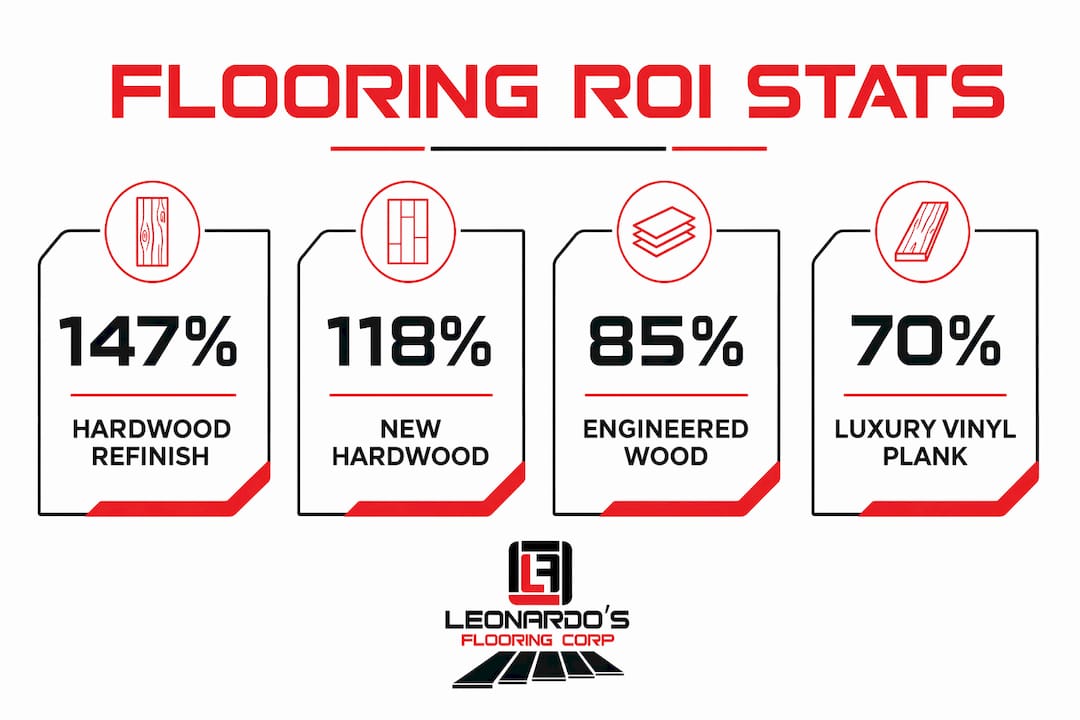
Flooring’s effect on property value is measurable, not theoretical. Refinishing hardwood floors yields an average ROI of 147%, the highest of any interior upgrade. That means for every $3,000 you spend on refinishing, you recover roughly $4,400 in added value. New hardwood installation delivers 118% ROI, still well above most kitchen or bathroom upgrades.
Luxury Vinyl Plank (LVP) and engineered hardwood deliver 70%–85% ROI at a fraction of the cost of solid hardwood. LVP installs at $5–$12 per square foot and adds roughly 5–7% to home value. For a mid-tier Denver property, that math works strongly in your favor.
The table below compares the top flooring types by cost, ROI, and durability.
| Flooring Type | Avg. Install Cost (per sq ft) | Avg. ROI | Durability |
|---|---|---|---|
| Hardwood (refinish) | $3–$5 | 147% | 20–100 years |
| Hardwood (new install) | $8–$15 | 118% | 25–100 years |
| Luxury Vinyl Plank (LVP) | $5–$12 | 70%–85% | 20–25 years |
| Engineered Hardwood | $6–$12 | 70%–85% | 20–30 years |
| Laminate | $3–$8 | 50%–75% | 10–25 years |
Refinishing outperforms replacement in ROI because the cost is lower while the perceived value gain is nearly identical. Buyers cannot always tell the difference between refinished and new hardwood. That gap between perception and cost is where your profit lives.
Pro Tip: Before ordering new flooring, pull up a corner of your carpet in a closet or hallway. Many older Denver homes have original hardwood underneath. Refinishing that floor instead of replacing it can save thousands and still yield the highest ROI in the category.
How does flooring affect home appraisal?
Appraisers classify flooring as a permanent fixture, which means it directly affects a home’s condition rating and functional utility score. These two factors feed directly into the appraised value. A worn or stained floor does not just look bad. It signals deferred maintenance, which appraisers penalize.
Appraisers also increasingly factor in material longevity and lifetime warranties when valuing a property. A floor with a 25-year residential warranty lowers the expected maintenance cost over the ownership period. Lower projected costs translate directly into a higher appraised value. This is why premium LVP products with manufacturer warranties outperform budget alternatives at appraisal time.
Flooring and home appraisal are also connected through visual consistency. Homes with cohesive flooring across main living areas appraise higher than those with abrupt material changes. A living room in hardwood that transitions to mismatched tile in the hallway signals piecemeal renovation, which appraisers and buyers both read as lower quality.
The buyer psychology side of this is equally important:
- First impressions are floor-level. Buyers look down within seconds of entering a home. The condition of the floor sets the tone for everything they see next.
- Updated floors signal a like-new home. Real estate agents rank flooring as the second most important psychological factor after structural integrity in shaping buyer perception.
- Damaged floors inflate buyer cost estimates. Buyers consistently overestimate flooring replacement costs, which causes them to lower their offers or walk away entirely.
- Acoustic and tactile quality matter. Solid hardwood and quality LVP feel stable underfoot. Hollow-sounding laminate or soft carpet in main areas signals lower build quality.
“Flooring sets the mood and creates a perception of a home being like-new, which is a strong psychological attractor for buyers.” — HomeLight
Which flooring material fits your home’s price point?
Matching the right material to your home’s price tier is how you avoid over-investing or under-delivering. The goal is to meet buyer expectations for your market segment, not to exceed them at a cost that you cannot recover.
Luxury and historic homes
Solid hardwood is the standard expectation in homes priced above $600,000 or in historic neighborhoods. Denver’s Washington Park and Capitol Hill districts are good examples. Buyers in these markets expect wide-plank white oak or walnut, and they will discount a home that substitutes LVP in main living areas. The flooring selection guide from Leonardosflooringcorp covers material grades and species that perform best in this segment.
Mid-tier homes and rentals
LVP is the right call for homes priced between $300,000 and $600,000 and for investment properties. It delivers 5–7% value gains at a lower install cost, handles moisture better than hardwood, and holds up under tenant use. For a deeper look at what makes LVP a strong investment, the LVP buyer’s guide from Leonardosflooringcorp breaks down product grades and installation specs.
Budget-conscious sellers
Refinishing existing hardwood is almost always the best move when the subfloor is in good condition. The cost is lower, the ROI is higher, and the result looks identical to a new floor to most buyers. If hardwood is not present, quality laminate in main areas with tile in wet zones is a cost-effective combination that still improves appraisal outcomes.
The table below maps flooring types to home price ranges and regional considerations.
| Home Price Range | Best Flooring Choice | Regional Notes |
|---|---|---|
| Under $300,000 | Laminate or LVP | Prioritize durability; avoid carpet in main areas |
| $300,000–$600,000 | LVP or engineered hardwood | LVP handles Colorado’s dry climate well |
| $600,000+ | Solid hardwood | Wide-plank species preferred in luxury markets |
| Rental/Investment | LVP | Moisture resistance and durability reduce turnover costs |
| Historic homes | Refinished original hardwood | Preserves character; highest ROI in this category |
Pro Tip: Colorado’s low humidity causes solid hardwood to contract and gap more than in humid climates. Engineered hardwood and LVP are dimensionally more stable in Denver’s climate, which means fewer callbacks and longer-lasting results.
What steps should you take before upgrading your floors?
A flooring upgrade without a clear plan wastes money. Follow these steps to get the best return on your investment.
- Check what’s under your carpet first. Pull up a corner in a low-traffic area. If you find hardwood, get a refinishing quote before pricing new floors. Refinishing costs less and yields 147% ROI on average.
- Prioritize entryways and main living areas. Buyers spend the most time in these spaces. A great floor in the living room and kitchen does more for buyer perception than new carpet in three bedrooms.
- Coordinate with other finishes. Floor color and texture should align with cabinet tones, wall colors, and trim. Mismatched finishes reduce perceived quality even when individual elements are high grade.
- Choose flooring with a manufacturer warranty. Appraisers factor in warranties when assessing long-term maintenance costs. A 25-year residential warranty on LVP or engineered hardwood adds measurable appraisal value.
- Use a licensed installer. Poor installation voids warranties, creates squeaks and gaps, and signals low quality to appraisers. Professional installation is not optional if your goal is maximum resale value.
- Run a cost-versus-value analysis before committing. Refinishing a 1,000-square-foot hardwood floor costs roughly $3,000–$5,000. New LVP for the same area runs $5,000–$12,000. The ROI difference justifies the extra due diligence.
Key takeaways
Flooring upgrades deliver the highest ROI of any interior improvement, with refinished hardwood at 147% and LVP adding 5–7% to home value at a fraction of the cost of solid wood.
| Point | Details |
|---|---|
| Refinishing beats replacement | Refinishing hardwood yields 147% ROI, higher than any other interior upgrade. |
| LVP is the mid-market winner | LVP adds 5–7% to home value at $5–$12 per square foot with 25-year durability. |
| Appraisers treat floors as fixtures | Flooring condition directly affects appraisal ratings and functional utility scores. |
| Cohesive flooring appraises higher | Consistent material across main living areas signals quality and boosts appraised value. |
| Check for hidden hardwood first | Existing hardwood under carpet is often refinishable, saving money and maximizing ROI. |
Why flooring is the interior upgrade i always recommend first
After years of working on flooring projects across Denver, I keep coming back to the same observation: flooring is the one upgrade that buyers feel before they consciously register it. There is a concept in real estate called the “interior threshold effect,” which describes how the condition of the floor shapes a buyer’s entire emotional response to a home within the first few seconds of entry. I have seen buyers fall in love with modest homes because the floors were clean, consistent, and well-finished. I have also seen strong homes sit on the market because the carpet was dated or the hardwood was scuffed.
The insight most sellers miss is that refinishing existing hardwood is almost always the right first move. Sellers assume they need new floors to impress buyers. They do not. A properly refinished floor looks new, feels new, and appraises nearly as high as a new installation at roughly half the cost. That gap is pure margin.
My other strong opinion: do not cut corners on installation. I have seen beautiful flooring products fail within two years because the subfloor was not properly prepared or the installer skipped acclimation. The floor is only as good as the work underneath it. Choose a contractor who prepares the subfloor correctly, follows manufacturer specs, and stands behind the work. That is what separates a floor that holds its value from one that becomes a liability at resale.
— Jim
Get the most from your flooring investment in denver
If you are preparing to sell, refinancing, or simply protecting your equity, the floor under your feet is one of the most financially significant decisions in your home.
Leonardosflooringcorp has spent over 10 years installing and refinishing floors across the Denver metro as trusted Home Depot Contractors. Whether you need hardwood floor installation to maximize your resale value or a full flooring assessment before listing, the team at Leonardosflooringcorp brings the expertise to get it right the first time. With 125+ five-star reviews and a commitment to honest, tailored service, Leonardosflooringcorp is the partner Denver homeowners and investors trust when the stakes are high. Contact Leonardosflooringcorp today to discuss your project and get a clear plan for maximizing your return.
FAQ
Does flooring type affect home appraisal value?
Yes. Appraisers classify flooring as a permanent fixture that directly affects condition ratings and functional utility scores. Premium materials with manufacturer warranties appraise higher because they lower projected maintenance costs.
What flooring gives the best return on investment?
Refinishing existing hardwood yields the highest ROI at 147%, followed by new hardwood installation at 118%. LVP and engineered hardwood deliver 70%–85% ROI and are the best options for mid-tier homes and rentals.
Does damaged flooring lower home sale price?
Damaged or dated floors cause buyers to overestimate replacement costs, which leads to lower offers or lost sales. Flooring is not easily replaced post-purchase, so buyers factor that friction directly into their offers.
Is LVP a good choice for investment properties in denver?
LVP is the top choice for Denver rentals and investment properties. It installs at $5–$12 per square foot, adds 5–7% to home value, and handles Colorado’s dry climate better than solid hardwood.
Should i replace carpet before selling my home?
Check for hardwood under the carpet before replacing it. If hardwood is present, refinishing it costs less and yields a higher ROI than new carpet or new flooring installation.