

Floor underlayment is a thin material layer installed between your subfloor and finished flooring that controls moisture, reduces sound, adds cushioning, and improves thermal insulation. Knowing what to know about floor underlayments before you start a project saves you from costly mistakes, voided warranties, and floors that fail early. The right underlayment works quietly beneath laminate, engineered hardwood, luxury vinyl plank (LVP), and other flooring types to protect your investment from the ground up. Leonardosflooringcorp has seen firsthand how skipping or mismatching this layer causes problems that no amount of beautiful flooring can hide.
What to know about floor underlayments: types and benefits
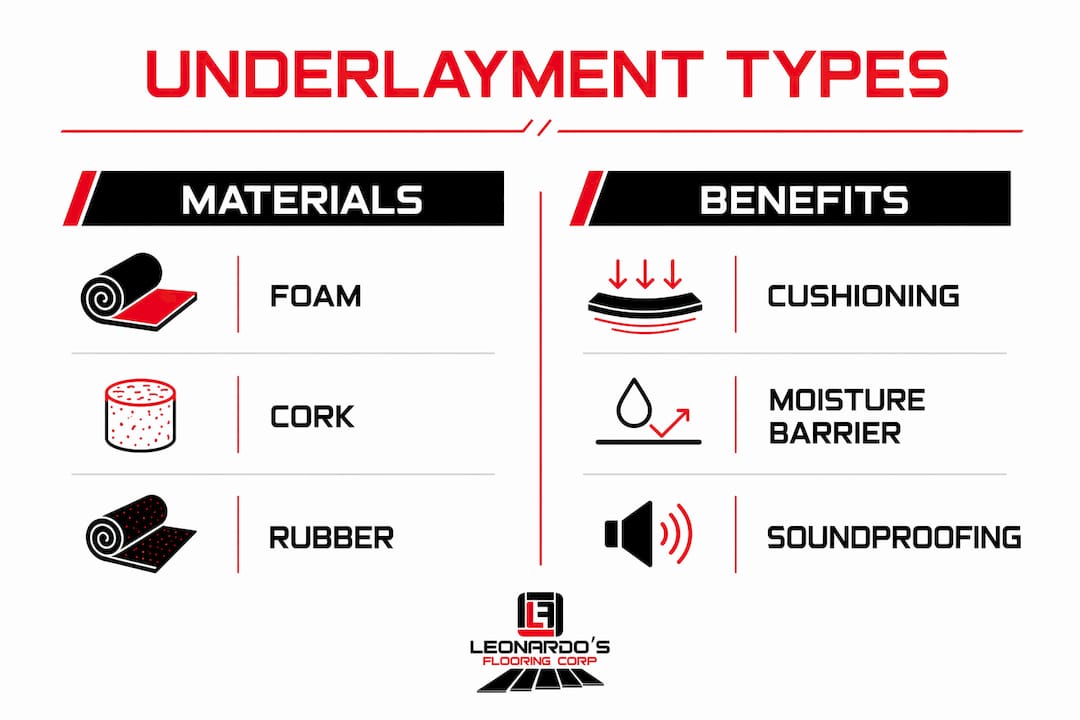
The six most common underlayment materials are foam, cork, rubber, felt, fiber, and plastic vapor barrier film. Each serves a different purpose, and choosing the wrong one for your subfloor or flooring type creates problems from day one.
Foam is the most affordable option and works well for laminate and LVP on wood subfloors. It provides basic cushioning and minor sound dampening. Cork is a natural, eco-friendly material that outperforms foam on both sound absorption and thermal insulation. Rubber underlayment delivers the highest density and is the top choice for heavy-traffic areas where impact noise is a real concern. Felt underlayment is thick and dense, making it a strong performer under hardwood for both comfort and acoustics. Fiber underlayment is a recycled option that balances moisture resistance with cushioning. Plastic vapor barrier film is not a cushioning product at all. It is a dedicated moisture shield used under floating floors on concrete.
| Type | Primary benefit | Ideal application | Relative cost |
|---|---|---|---|
| Foam | Cushioning, minor sound dampening | Laminate, LVP on wood subfloor | Low |
| Cork | Sound absorption, thermal insulation | Laminate, engineered hardwood | Medium |
| Rubber | Impact noise reduction, durability | High-traffic areas, multi-family | Medium to high |
| Felt | Comfort, acoustics | Solid and engineered hardwood | Medium |
| Fiber | Moisture resistance, cushioning | Laminate over wood or concrete | Medium |
| Plastic vapor barrier | Moisture blocking | Floating floors over concrete | Low |
Pro Tip: Cork and rubber are the two best eco-conscious choices. Cork is biodegradable and renewable. Rubber underlayment is often made from recycled tires, which keeps it out of landfills.
The benefits of floor underlayments go beyond comfort. Underlayment’s cushioning effect improves comfort and reduces fatigue, especially for thin flooring products, but it should not compromise floor stability.
How to choose underlayment thickness for your flooring type
Thickness is one of the most misunderstood factors in underlayment selection. Thicker does not mean better. The recommended thickness varies by floor type: laminate needs 2–3mm, LVP needs 1.5–2mm, and engineered hardwood needs 2–3mm. Using excessive thickness damages the locking joints that hold floating floors together.
Here is how thickness plays out across the most common flooring types:
- Laminate flooring: Use 2–3mm. Thicker foam under laminate creates too much flex, which stresses the click-lock joints over time.
- Luxury vinyl plank (LVP): Stay at 1.5–2mm. LVP is a rigid product and does not need much cushioning. Extra thickness makes it feel spongy and increases joint breakage risk.
- Engineered hardwood: Use 2–3mm felt or cork for the best combination of comfort and stability.
- Solid hardwood (nailed or stapled): Underlayment is typically a rosin paper or felt layer, not a foam pad. The nailing pattern holds the floor, not the underlayment.
For rigid-core flooring like SPC and WPC, extra padding beyond pre-attached underlayment causes floors to feel mushy and increases joint breakage risk. This is one of the most common and expensive DIY errors Leonardosflooringcorp sees on job sites.
Pro Tip: If your flooring comes with pre-attached underlayment, do not add another layer on top. One layer is the rule. Adding a second layer voids most manufacturer warranties and creates an unstable surface.
Checking your flooring manufacturer’s warranty documentation before purchasing underlayment is the single most important step in the selection process. Many warranties specify exact thickness limits and approved materials.
Why moisture protection is the most critical underlayment decision
Moisture vapor rising from concrete subfloors is the leading cause of flooring failure in below-grade and slab-on-grade installations. Concrete is porous. Even when it looks and feels dry, it transmits vapor that warps wood, grows mold under vinyl, and degrades adhesives over time.
The current industry standard requires a 6 mil plastic vapor barrier beneath floating floors over concrete subfloors, even when the flooring has pre-attached underlayment. The attached pad handles acoustics and comfort. It does not block moisture vapor. These are two separate functions, and confusing them is a costly mistake.
Follow this installation sequence for concrete subfloors:
- Clean and level the concrete. Fix any cracks or high spots before laying anything down.
- Roll out the 6 mil plastic vapor barrier across the entire floor, running it 4–6 inches up the walls.
- Overlap seams by at least 8 inches and seal every seam with moisture barrier tape.
- Lay your underlayment on top of the vapor barrier, or proceed directly to flooring if it has pre-attached underlayment.
- Never tape the underlayment to the vapor barrier. They need to move independently under a floating floor.
Pro Tip: Do not trust the “moisture-resistant” label on pre-attached underlayment pads. Pre-attached pads on SPC, WPC, and laminate flooring do not replace the need for a vapor barrier on concrete subfloors. A separate 6 mil barrier is still required.
Wood subfloors on upper levels typically do not need a vapor barrier. The risk comes from concrete and ground-level installations. When in doubt, a simple calcium chloride moisture test on your concrete slab gives you a definitive answer before you commit to a flooring system.
How does underlayment affect soundproofing and thermal comfort?
Underlayment is the most accessible tool homeowners have for improving acoustic performance without a full renovation. The industry measures impact sound reduction using the Impact Insulation Class (IIC) rating. For effective soundproofing, acoustic underlayment should target an IIC rating of 65 or higher as tested by ASTM E492 standards. Anything below that threshold delivers noticeable impact noise between floors.
Here is how different materials perform for sound and heat:
- Cork: Excellent IIC performance, good thermal resistance, and a natural material. Best for bedrooms and living rooms where quiet matters.
- Rubber: The highest IIC ratings available. Ideal for condos, apartments, or any multi-story home where downstairs neighbors are a concern.
- Dense fiber: Strong acoustic performance at a lower price point than rubber. A solid middle-ground choice.
- Thin foam: Low IIC ratings. Fine for ground-floor rooms where sound transmission is not a priority.
One counterintuitive fact: thicker underlayment does not necessarily provide better sound reduction. Material density and composition drive performance more than thickness alone. Some 2mm acoustic underlayments outperform thicker 3mm foam pads for noise control.
For radiant heating systems, the calculation changes. Thin cork or high-density films with low thermal resistance are the right choice. They allow heat to transfer efficiently from the system to the floor surface. Thick foam acts as insulation and blocks the heat you are paying to generate. Most radiant heat systems also cap floor temperature at 85°F, so the underlayment’s R-value must stay low enough to keep the system efficient.
What are the best practices for installing floor underlayment?
Proper installation determines whether your underlayment performs as designed or creates new problems. The most important rule: underlayment cannot fix a bad subfloor. Major dips or ridges exceeding 3/16 inch over 10 feet require repair before you lay any underlayment. Skipping this step causes the finished floor to flex, creak, and eventually crack at the joints.
Follow these steps for a clean installation:
- Sweep and inspect the subfloor. Remove all debris, nails, and staples. Check for soft spots, squeaks, and high points.
- Level the subfloor. Use floor leveling compound for low spots. Sand down high spots. Do not rely on underlayment to smooth out unevenness.
- Install the vapor barrier first (on concrete only). Overlap seams by 8 inches and tape every joint.
- Roll out underlayment in the same direction as the flooring planks. Butt edges together without overlapping. Overlapping creates a ridge that telegraphs through the finished floor.
- Tape the seams with the tape specified by the underlayment manufacturer.
- Do not install over old flooring. Old vinyl, tile, or carpet creates an unstable base and adds unwanted height that affects door clearances and transitions.
Pro Tip: Review common hardwood installation mistakes before starting any flooring project. Many of the most expensive errors happen at the underlayment and subfloor stage, not during the finish flooring installation.
Stacking multiple underlayment layers causes instability and voids most flooring warranties. One layer is always the correct answer. If you need more acoustic or thermal performance, choose a higher-quality single layer rather than doubling up on cheaper material.
Key takeaways
The right underlayment, matched to your specific flooring type and subfloor condition, is the single most important factor in long-term floor performance.
| Point | Details |
|---|---|
| Match thickness to flooring type | Laminate and engineered hardwood need 2–3mm; LVP needs 1.5–2mm to protect locking joints. |
| Concrete always needs a vapor barrier | A 6 mil plastic vapor barrier is required on concrete subfloors, even under pre-attached underlayment. |
| Density beats thickness for sound | Target an IIC rating of 65+ and choose cork or rubber for the best acoustic results. |
| Never stack underlayment layers | Adding a second layer voids warranties and creates an unstable, spongy floor surface. |
| Fix the subfloor first | Gaps or ridges over 3/16 inch across 10 feet must be repaired before any underlayment goes down. |
What I’ve learned after years of watching underlayment decisions go wrong
Most homeowners treat underlayment as an afterthought. They spend weeks choosing the right flooring and then grab whatever foam roll is on sale at the hardware store. That decision costs them more in the long run than the money they saved.
The biggest misconception I see is that underlayment and subfloor preparation are interchangeable. They are not. Underlayment has a narrow functional role. It manages moisture vapor, absorbs impact sound, adds a thin cushion, and provides minor thermal resistance. It cannot level a floor, fix a squeaky subfloor, or compensate for a concrete slab that is actively transmitting moisture. Those problems require proper subfloor preparation before a single roll of underlayment touches the ground.
The second mistake I see constantly is ignoring the manufacturer’s warranty requirements. Flooring warranties are specific. They name approved underlayment thicknesses, approved materials, and vapor barrier requirements. Installing the wrong product does not just risk floor damage. It eliminates your ability to make a warranty claim when something goes wrong. Read the documentation before you buy anything.
My honest advice: spend the extra $30–$50 on a quality cork or rubber underlayment if sound or comfort matters to you. The difference between cheap foam and a quality acoustic product is noticeable every single day you walk across that floor. And always, always address the subfloor before you worry about what goes on top of it.
— Jim
Leonardosflooringcorp: professional installation that gets underlayment right
Getting underlayment right requires more than reading a guide. It requires a level subfloor, the correct vapor barrier, and the right material matched to your specific flooring system.

Leonardosflooringcorp has handled laminate flooring installation and hardwood floor installation across the Denver metro for over 10 years. Every project starts with a thorough subfloor assessment, so the underlayment and finished floor perform exactly as designed. With 125+ five-star reviews and a reputation built on honest, tailored work, Leonardosflooringcorp gives you results that last. Contact us today for a consultation on your next flooring project.
FAQ
What is floor underlayment and do I always need it?
Floor underlayment is a thin material layer installed between the subfloor and finished flooring that provides moisture protection, sound reduction, and cushioning. Most floating floors, including laminate and LVP, require it, though some flooring types come with underlayment pre-attached.
Can I use the same underlayment for every flooring type?
No. Different flooring types require different underlayment thicknesses and materials. LVP needs a thinner, firmer product at 1.5–2mm, while laminate and engineered hardwood perform best with 2–3mm cork or felt.
Do I need a vapor barrier if my flooring has pre-attached underlayment?
Yes. Pre-attached underlayment on SPC, WPC, and laminate flooring does not replace a vapor barrier on concrete subfloors. A separate 6 mil plastic vapor barrier is still required to block moisture vapor transmission.
What IIC rating should I look for in acoustic underlayment?
Target an IIC rating of 65 or higher, as tested by ASTM E492 standards, for effective impact sound reduction between floors. Cork and rubber underlayments consistently reach this threshold.
Can I install underlayment over old flooring or an uneven subfloor?
Underlayment cannot compensate for major subfloor unevenness exceeding 3/16 inch over 10 feet, and installing over old flooring creates an unstable base. Always repair and level the subfloor before installation.